













PedPy
PedPy is a Python library for quantitative analysis of pedestrian dynamics from trajectory data.
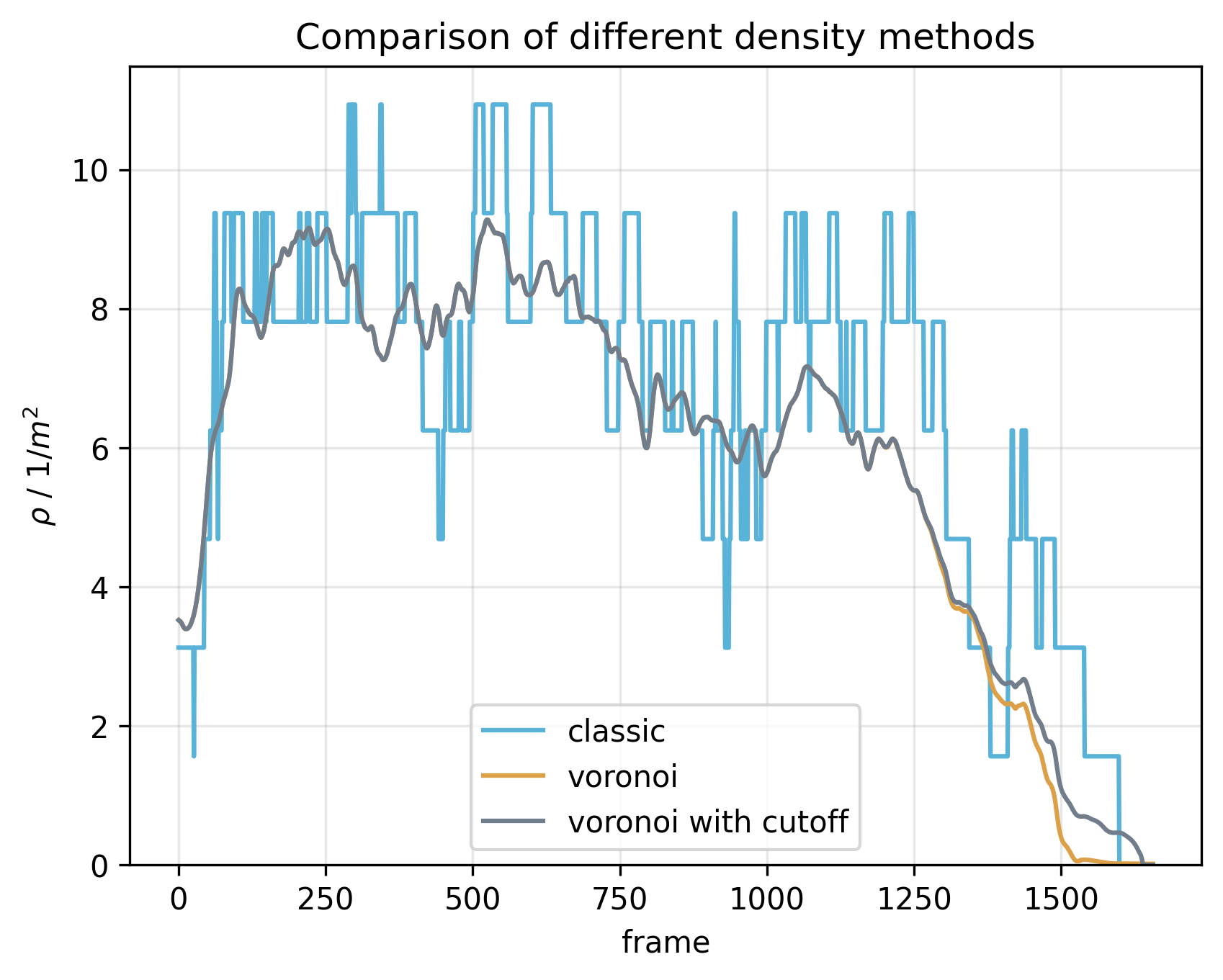
It provides a high-level interface for extracting fundamental measures (density, velocity, flow) and advanced analyses such as Voronoi-based methods, profiles, and pair-distribution functions, which can be combined to derive fundamental diagrams.
Features
- Compute core pedestrian measures: density, velocity, flow
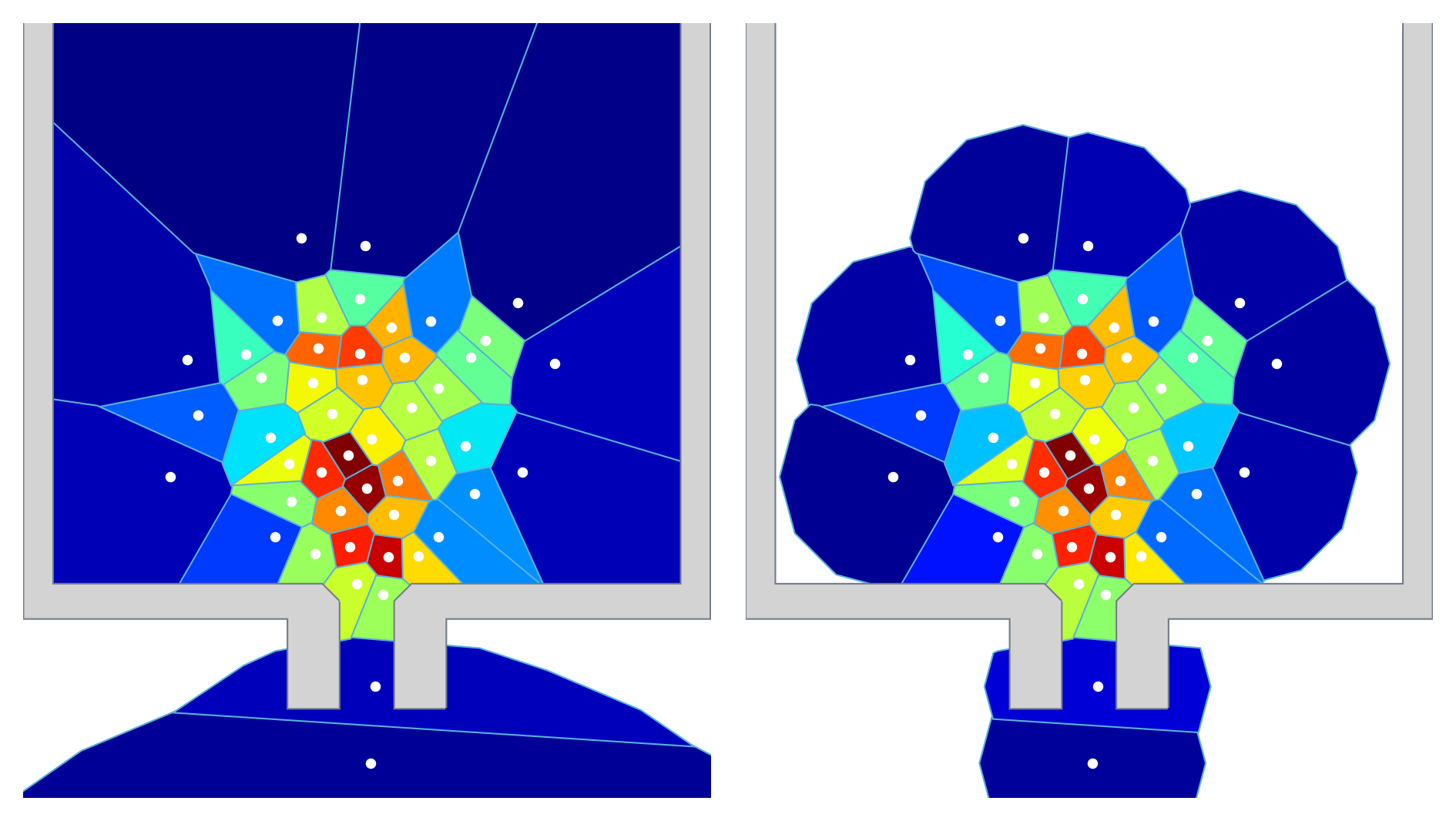
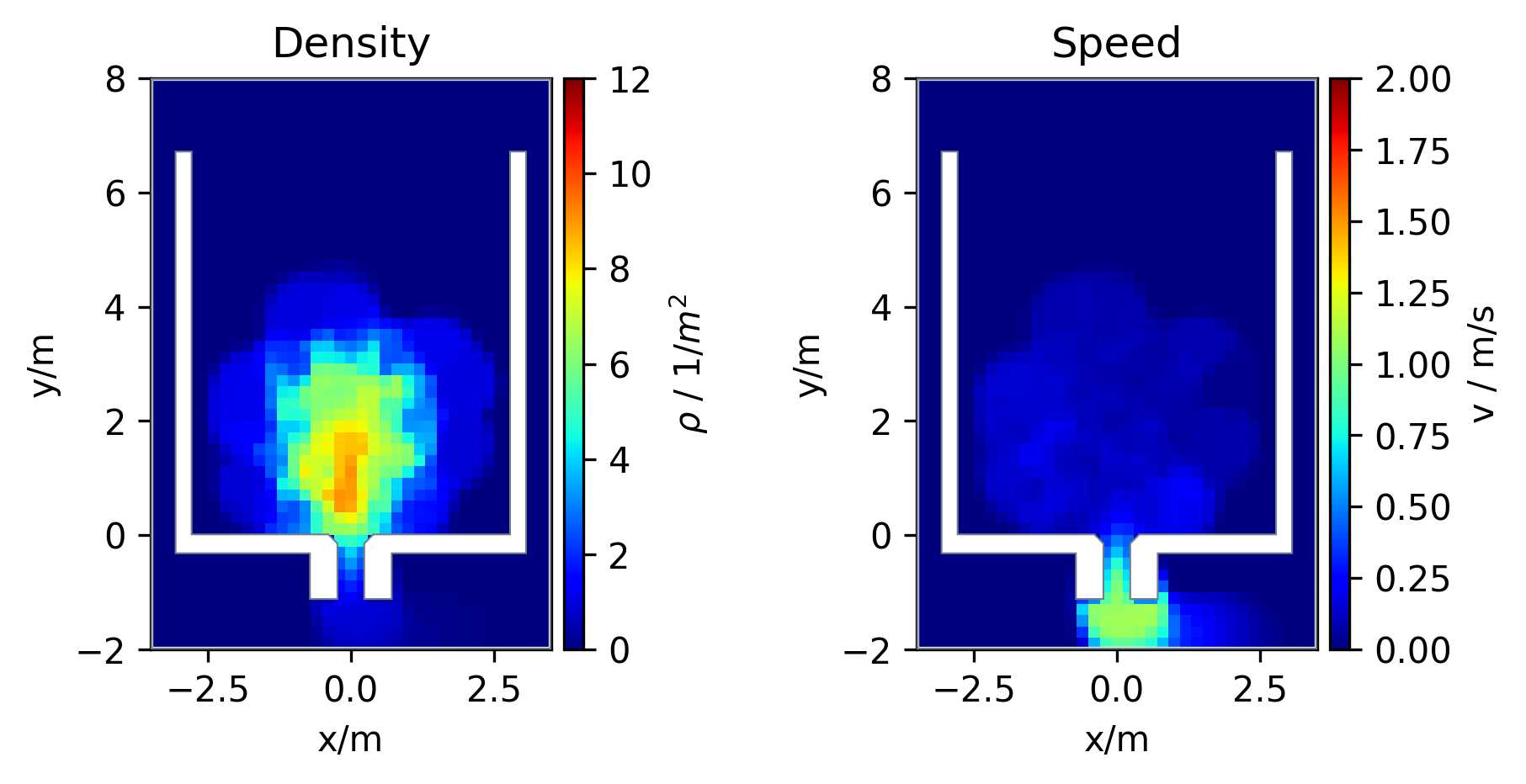
- Advanced analyses: Voronoi-based density, profiles, pair-distribution functions
- Directly load trajectory data from multiple tools: Crowdit, Viswalk, JuPedSim, Vadere, Pathfinder
- Easy-to-use API for loading, processing, and visualizing data
- Built-in plotting for quick inspection and comparison of results
- Open-source, tested, and aligned with FAIR and OpenSSF best practices
Getting Started
Installation
PedPy requires Python >= 3.11. It is recommended to use a virtual environment.
Install the latest stable release from PyPI:
python3 -m pip install pedpy
To install the latest development version from the repository:
python3 -m pip install --force-reinstall git+https://github.com/PedestrianDynamics/PedPy.git
Quickstart
from pedpy import *

# Load trajectory data from file
traj = load_trajectory(
  trajectory_file=pathlib.Path("some_trajectory_data.txt")
)

# Create measurement area
measurement_area = MeasurementArea(
  [(-0.4, 0.5), (0.4, 0.5), (0.4, 1.3), (-0.4, 1.3)]
)

# Compute classic density in the measurement area
classic_density = compute_classic_density(
    traj_data=traj, measurement_area=measurement_area
)

plot_density(density=classic_density, title="Classic density")
See the Getting Started Guide for a step-by-step introduction. A more extensive documentation and demonstration of PedPy's capabilities can be found in the User Guide.
Usage
PedPy is designed to be used in scripts or interactive Jupyter notebooks.
-
Explore getting started, user guide, and fundamental diagram notebooks.
-
For local usage, clone the repository and install the extra requirements for notebooks and plotting:
git clone https://github.com/PedestrianDynamics/pedpy.git
python3 -m pip install jupyter matplotlib
Then start a Jupyter server:
jupyter notebook
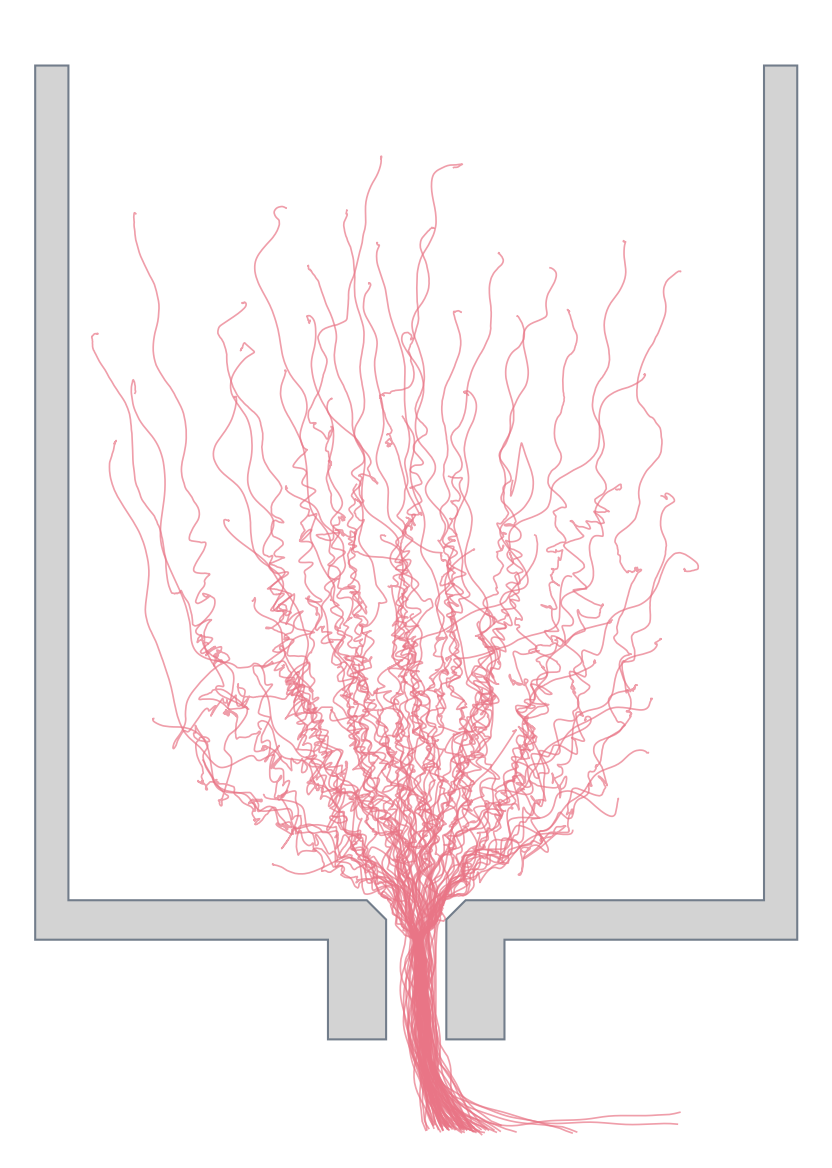
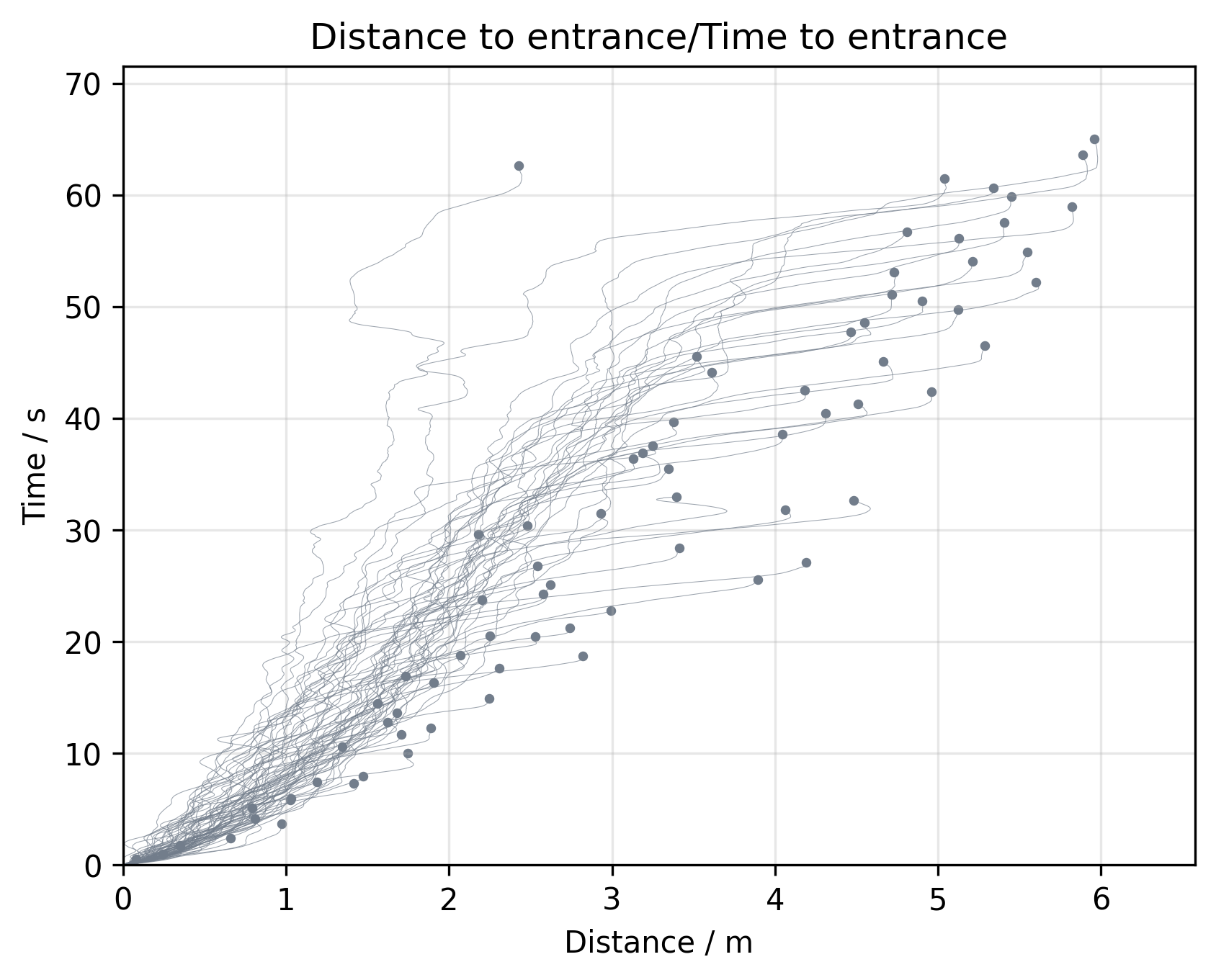
Example Visualizations
 |
|
 |
 |
Documentation
Citation
If you use PedPy in your work, please cite:
For the latest release (v.1.3.2) the BibTeX entry is:
@software{schrodter_2025_15337052,
  author       = {Schrödter, Tobias and
                  The PedPy Development Team},
  title        = {PedPy - Pedestrian Trajectory Analyzer},
  month        = may,
  year         = 2025,
  publisher    = {Zenodo},
  version      = {v1.3.2},
  doi          = {10.5281/zenodo.15337052},
  url          = {https://doi.org/10.5281/zenodo.15337052},
}
If you used a different version, please use Zenodo to get the citation information.
Contributing
Contributions are welcome and we are looking forward to any contribution from the community! Take a look at our Developer Guide to check out different ways to contribute to PedPy. See the contributing guidelines and open an issue or pull request on GitHub.
Getting Help
If you find yourself in a position where you need assistance from us, don't hesitate to contact us.
- GitHub Issues: Report bugs or unexpected behavior
- GitHub Discussions: Ask questions, share ideas, request features
License
PedPy is released under the MIT License.
3 maintainers


Metadata
3 maintainers
Release files for PedPy 1.5.1
For a detailed explanation of source distributions (sdists) and built distributions (wheels), please see the package formats documentation.
Source distribution (sdist)
| File | Size | Uploaded | Provenance | |
|---|---|---|---|---|
| pedpy-1.5.1.tar.gz | 79.9 kB | Without provenance | Details |
Built distribution (wheel)
| File | Interpreter | ABI | Platform | Reset |
|---|---|---|---|---|
| pedpy-1.5.1-py3-none-any.whl | Python 3 | none | any | Details |
Total release size: 172.8 kB
Release files / pedpy-1.5.1.tar.gz
| Download URL | pedpy-1.5.1.tar.gz |
|---|---|
| Size | 79.9 kB |
| Tags | Source |
|
SHA-256 checksum How to use checksums |
d306cbe9934be47563622ee9d5c83f59833003bd1cd63fcfa1eb387ae651e8f7
|
|
BLAKE2b-256 checksum How to use checksums |
4d2ddd56ae5adb3856847c5518af5029ea5d11eaa91da7954091ccd8ce9398a8
|
| Upload date | |
|
Uploaded using Trusted Publishing? What is trusted publishing? |
No |
| Uploaded via |
twine/6.1.0 CPython/3.13.14
|
Release files / pedpy-1.5.1-py3-none-any.whl
| Download URL | pedpy-1.5.1-py3-none-any.whl |
|---|---|
| Size | 92.8 kB |
| Tags | Python 3 |
|
SHA-256 checksum How to use checksums |
20517f5d3bf8a27119efc0b527afab3e0d135c42576f11569ca08432cf06ac9c
|
|
BLAKE2b-256 checksum How to use checksums |
1ae1d60b294c8289d9e8500ebc3ea6ca390d395fadfc094e16dad9dc356054ac
|
| Upload date | |
|
Uploaded using Trusted Publishing? What is trusted publishing? |
No |
| Uploaded via |
twine/6.1.0 CPython/3.13.14
|
Security for PedPy 1.5.1
Provenance
Provenance describes where a file came from. On PyPI, provenance is shared via attestations, which provide a verifiable record of the build or publishing details. View details, limitations and caveats.
No provenance found
None of the files in this release were uploaded with provenance metadata.
A note on package security
PyPI is a repository for distributing packages, not a service for auditing them. While third-party security researchers and our staff do their best to detect and remove malicious packages, PyPI cannot guarantee the quality, security or suitability of any given package.
To learn more about protecting yourself from malicious actors, visit our package security documentation.














