
🎩 AlfredClient
Simplest Alfred Client that I use my own projects.
Usage
pip install alfred5
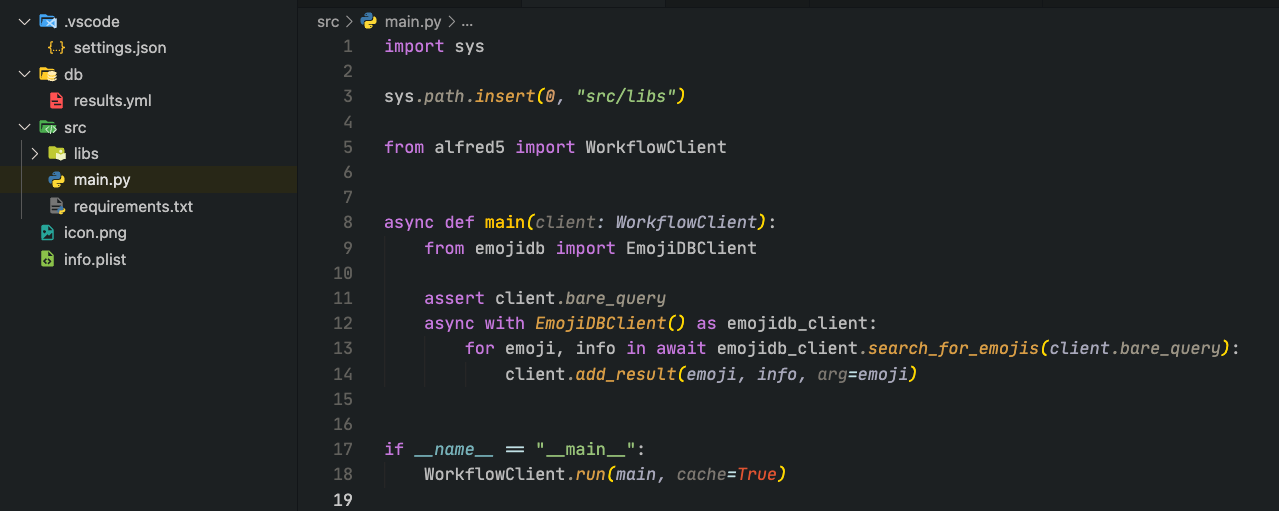
- Projects dir structure
- Put your codes and
requirements.txttosrcfolders - Install
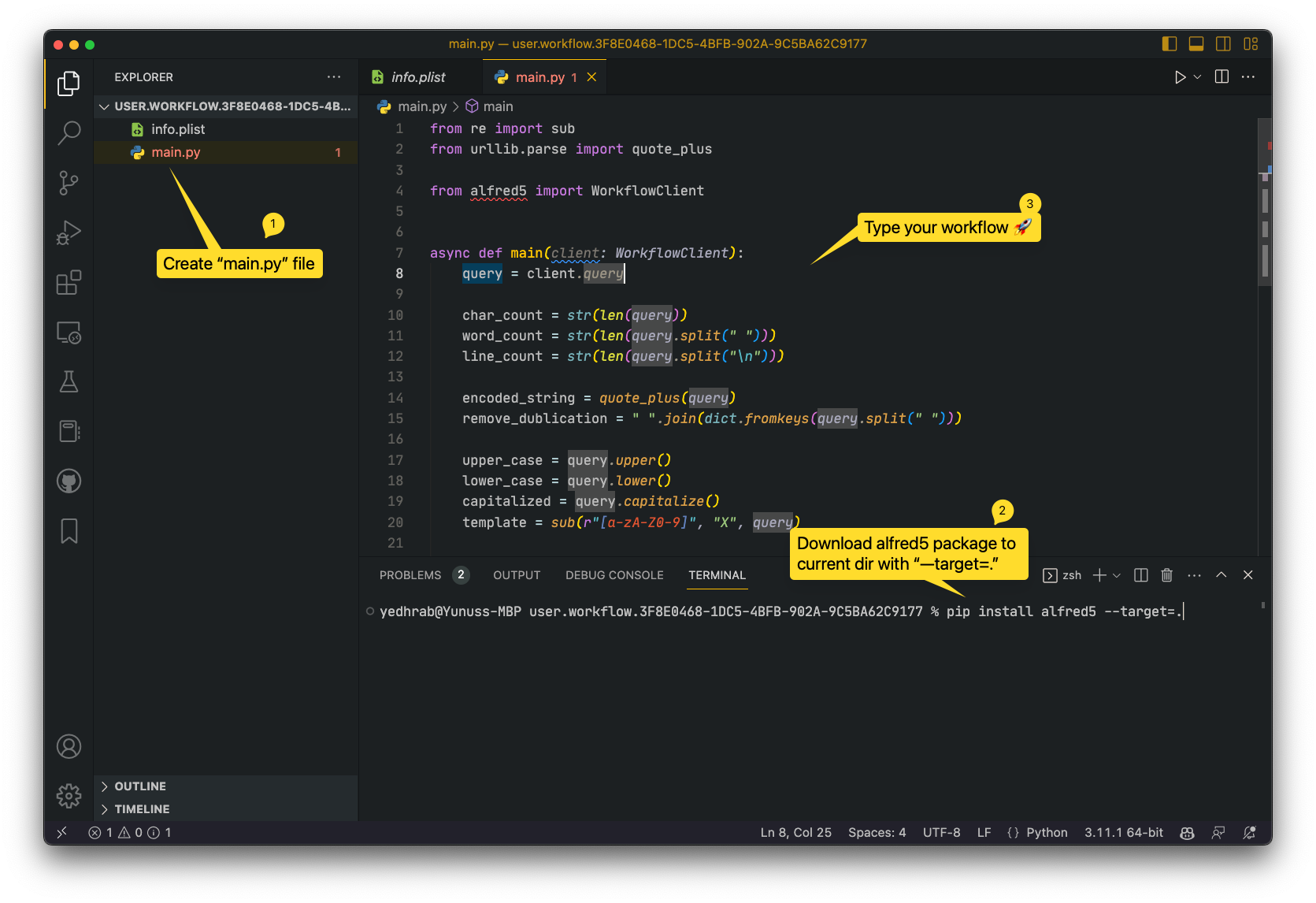
alfred5viapip install alfred5 --target=src/libs
- Add the top of the
main.pyimport sys sys.path.insert(0, "src/libs")
- If u want to use different
--targetfor ex.useWorkflowClient.run(packagedir=".") - Sample of default structure:
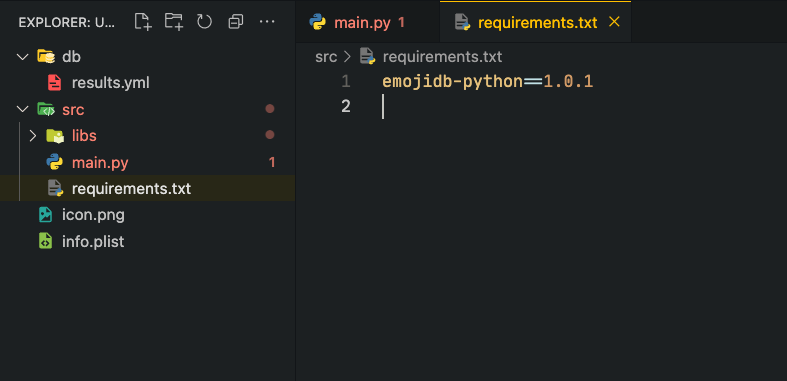
- If u install all of requirements, dont need to create
requirements.txtfile insrc - If you use
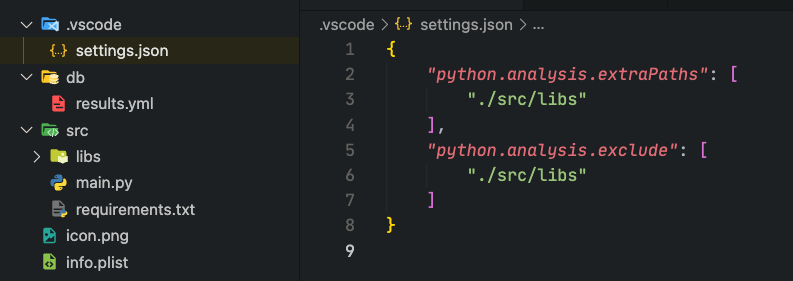
vscode, add the code that below to.vscode/settings.jsonto debug your file{ "python.analysis.extraPaths": [ "./src/libs" ], "python.analysis.exclude": [ "./src/libs" ] }
- Put your codes and
- Via
SnippetsClientAPI create custom snippets programmaically - Via
WorkflowClientAPI create custom alfred workflow- Craete
requirements.txtfile for your python project to letalfred5installs them if needed 🙃 - To install
from requirements.txtdo all import packages insidemain- Useglobalkeyword to access imported packages globallyclient.queryis the query stringclient.page_countis the page count for pagination results
- Dont need to add
alfred5torequirements.txt
- Craete
- Use
WorkflowClient.logto log your message to alfred debugger - Use
WorkflowClient(main, cache=True)method to use caching system- Just do it for static (not timebased nor any dynamic stuff) response
- Db path is
db/results.ymlalso you can see it from workflow debug panel
⭐️ Example Project
from re import sub
from urllib.parse import quote_plus
    import sys

    sys.path.insert(0, "src/libs")
from alfred5 import WorkflowClient
async def main(client: WorkflowClient):
# To auto install requirements all import operation must be in here
global get
from requests import get
query = client.query
client.log(f"my query: {query}") # use it to see your log in workflow debug panel
# (use cache=True) Use cache system to quick response instead of old style that below
# if client.load_cached_response():
# return
char_count = str(len( query))
word_count = str(len(query.split(" ")))
line_count = str(len(query.split("\n")))
encoded_string = quote_plus(query)
remove_dublication = " ".join(dict.fromkeys(query.split(" ")))
upper_case = query.upper()
lower_case = query.lower()
capitalized = query.capitalize()
template = sub(r"[a-zA-Z0-9]", "X", query)
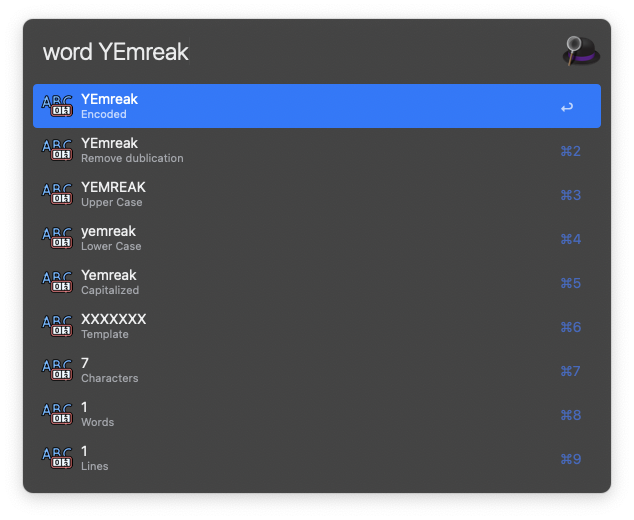
client.add_result(encoded_string, "Encoded", arg=encoded_string)
client.add_result(remove_dublication, "Remove dublication", arg=remove_dublication)
client.add_result(upper_case, "Upper Case", arg=upper_case)
client.add_result(lower_case, "Lower Case", arg=lower_case)
client.add_result(capitalized, "Capitalized", arg=capitalized)
client.add_result(template, "Template", arg=template)
client.add_result(char_count, "Characters", arg=char_count)
client.add_result(word_count, "Words", arg=word_count)
client.add_result(line_count, "Lines", arg=line_count)
# (use cache=True) to cache result for query instead of old style that below
# if u work with static results (not dynamic; coin price etc.)
# client.cache_response()
if __name__ == "__main__":
WorkflowClient.run(main) # WorkflowClient.run(main, cache=True)
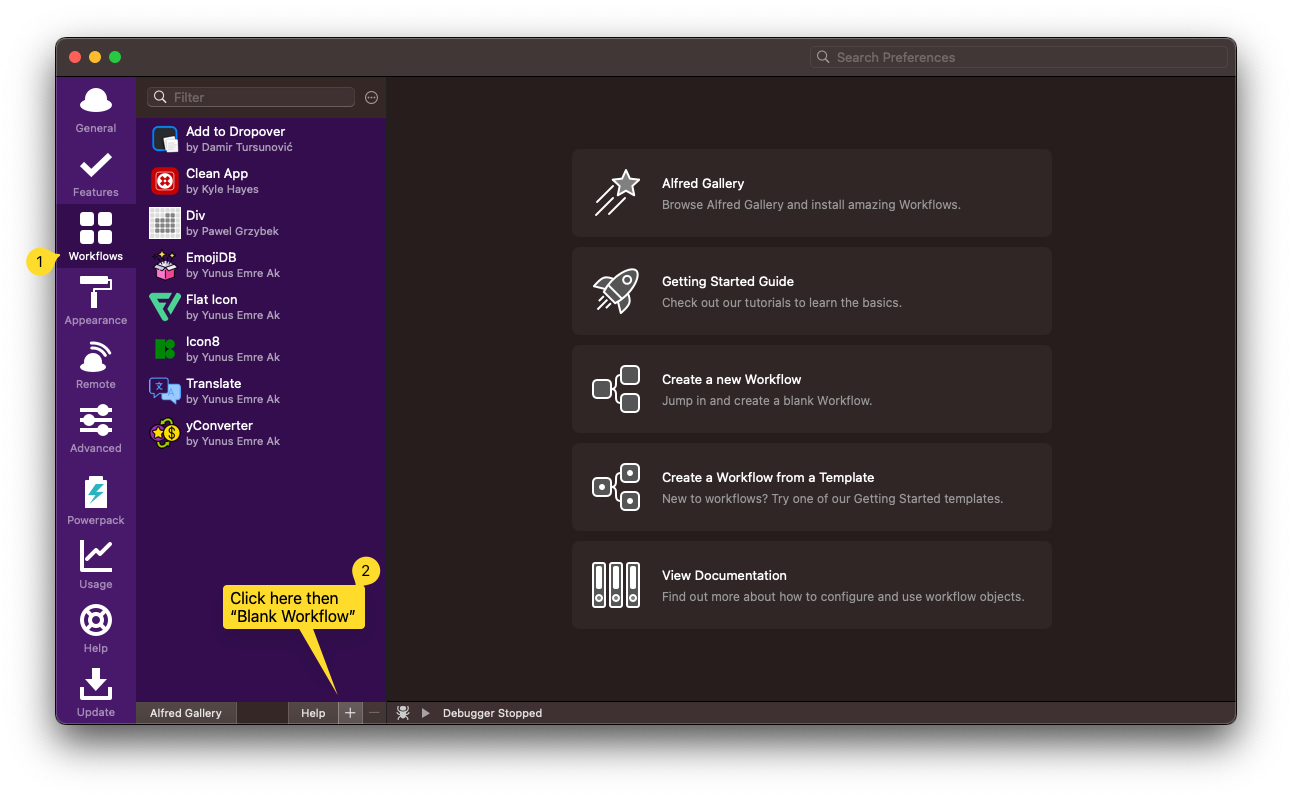
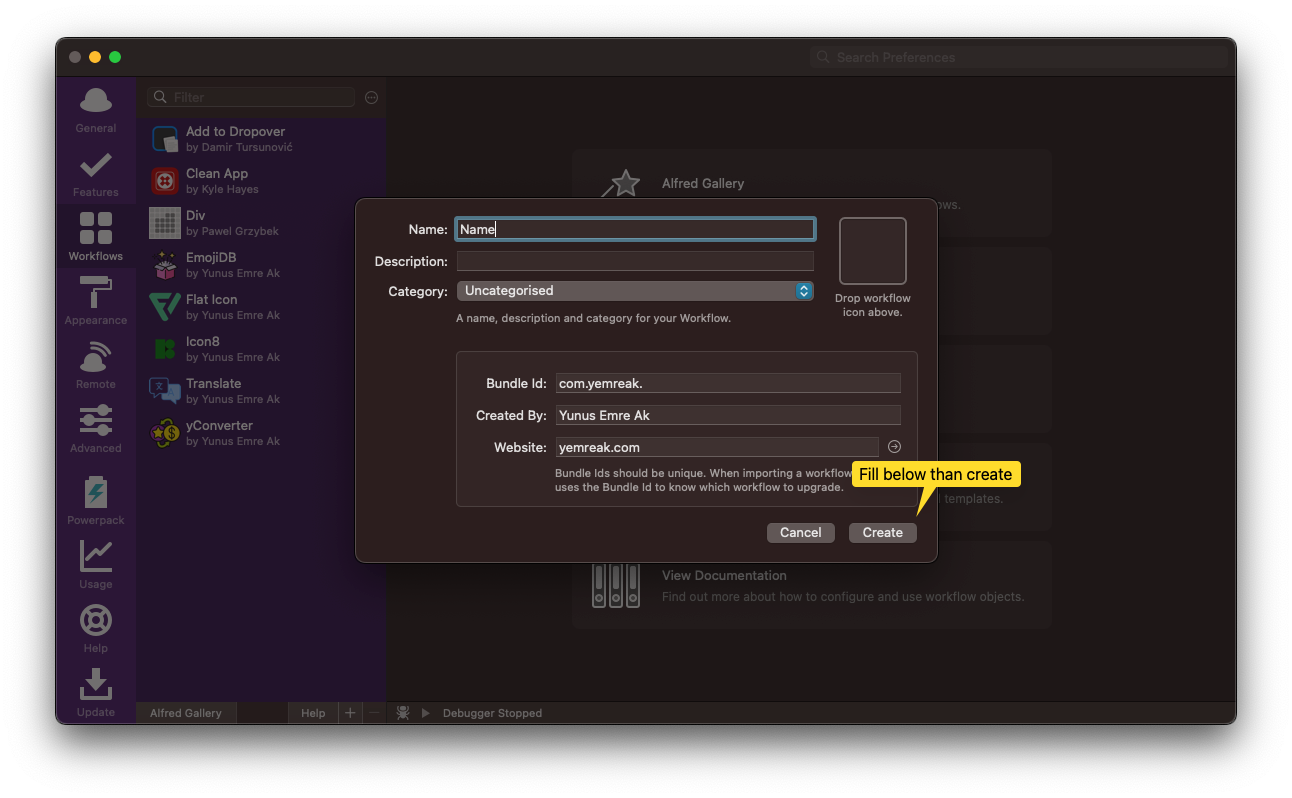
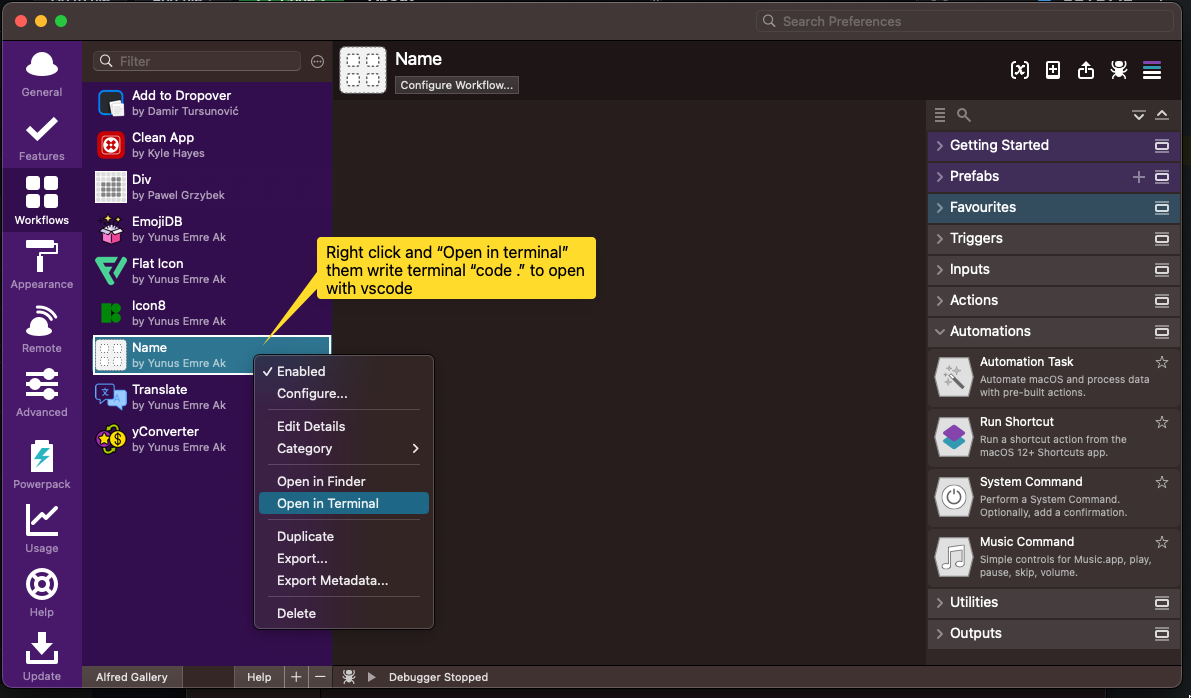
🔰 How to Create Workflow
🪪 License
Copyright 2023 Yunus Emre Ak ~ YEmreAk.com

Licensed under the Apache License, Version 2.0 (the "License");
you may not use this file except in compliance with the License.
You may obtain a copy of the License at

    http://www.apache.org/licenses/LICENSE-2.0

Unless required by applicable law or agreed to in writing, software
distributed under the License is distributed on an "AS IS" BASIS,
WITHOUT WARRANTIES OR CONDITIONS OF ANY KIND, either express or implied.
See the License for the specific language governing permissions and
limitations under the License.
1 maintainer

Metadata
1 maintainer
Release files for alfred5 1.1.6
For a detailed explanation of source distributions (sdists) and built distributions (wheels), please see the package formats documentation.
Source distribution (sdist)
| File | Size | Uploaded | Provenance | Actions |
|---|---|---|---|---|
| alfred5-1.1.6.tar.gz | 64.1 kB | Without provenance | Details for alfred5-1.1.6.tar.gz |
Built distribution (wheel)
| File | Interpreter | ABI | Platform | Actions Reset |
|---|---|---|---|---|
| alfred5-1.1.6-py3-none-any.whl | Python 3 | none | any | Details for alfred5-1.1.6-py3-none-any.whl |
Total release size: 126.3 kB
Release files / alfred5-1.1.6.tar.gz
| Download URL | alfred5-1.1.6.tar.gz |
|---|---|
| Size | 64.1 kB |
| Tags | Source |
|
SHA-256 checksum How to use checksums |
33849f1306a84cdd2aec486f250a03be5914fa11bfd0ec3bb5cb0cf94c750b62
|
|
BLAKE2b-256 checksum How to use checksums |
a124749a20e80d13183d2de68dbbdb3edded900addc81abebcb3c7d7edcf8b13
|
| Upload date | |
|
Uploaded using Trusted Publishing? What is trusted publishing? |
No |
| Uploaded via |
twine/4.0.1 CPython/3.11.4
|
Release files / alfred5-1.1.6-py3-none-any.whl
| Download URL | alfred5-1.1.6-py3-none-any.whl |
|---|---|
| Size | 62.2 kB |
| Tags | Python 3 |
|
SHA-256 checksum How to use checksums |
e95dd9ada5fcf68f96356ba49cc845b2500f9686b36ebbfcd12cbdaae02e829f
|
|
BLAKE2b-256 checksum How to use checksums |
4645e799e1a75dcee70dbfd98f3a1e50db6bc48c5def5d74dd7a1a61fe54579d
|
| Upload date | |
|
Uploaded using Trusted Publishing? What is trusted publishing? |
No |
| Uploaded via |
twine/4.0.1 CPython/3.11.4
|
Security for alfred5 1.1.6
Provenance
Provenance describes where a file came from. On PyPI, provenance is shared via attestations, which provide a verifiable record of the build or publishing details. View details, limitations and caveats.
No provenance found
None of the files in this release were uploaded with provenance metadata.
A note on package security
PyPI is a repository for distributing packages, not a service for auditing them. While third-party security researchers and our staff do their best to detect and remove malicious packages, PyPI cannot guarantee the quality, security or suitability of any given package.
To learn more about protecting yourself from malicious actors, visit our package security documentation.














