
autopool
Adaptive pooling operators for Multiple Instance Learning (documentation).



AutoPool is an adaptive (trainable) pooling operator which smoothly interpolates between common pooling operators, such as min-, max-, or average-pooling, automatically adapting to the characteristics of the data.
AutoPool can be readily applied to any differentiable model for time-series label prediction. AutoPool is presented in the following paper, where it is evaluated in conjunction with convolutional neural networks for Sound Event Detection:
Adaptive pooling operators for weakly labeled sound event detection
Brian Mcfee, Justin Salamon, and Juan Pablo Bello
IEEE Transactions on Audio, Speech and Language Processing, In press, 2018.
Installation
To install the keras-based implementation:
python -m pip install autopool[keras]
For the tensorflow implementation:
python -m pip install autopool[tf]
Definition
AutoPool extends softmax-weighted pooling by adding a trainable parameter α to be learned jointly with all other trainable model parameters:
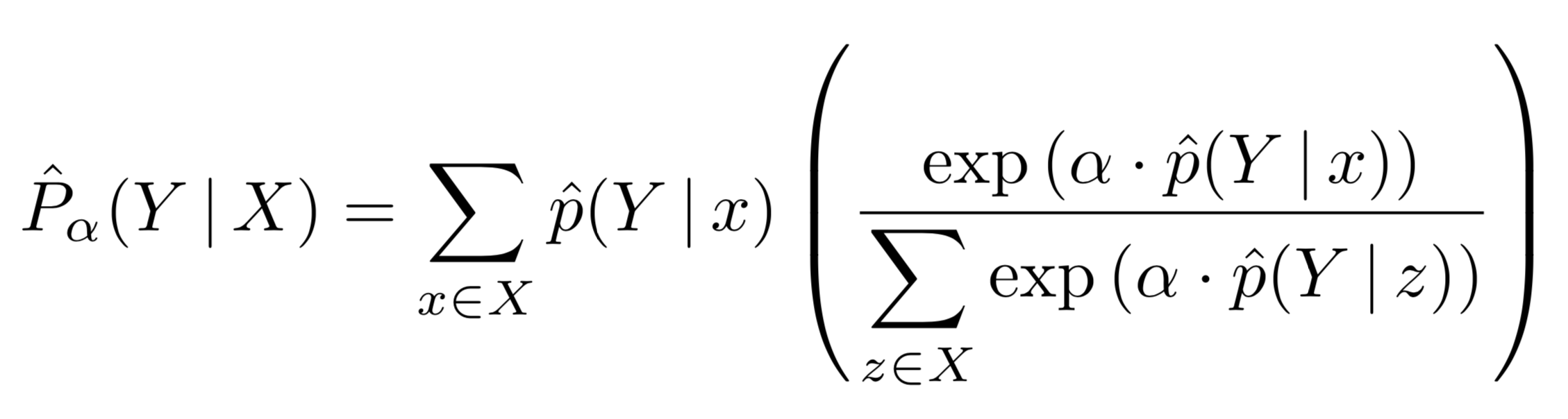
Here, p(Y|x) denotes the prediction for an instance x, and X denotes a set (bag) of instances. The aggregated prediction P(Y|X) is a weighted average of the instance-level predictions.
Note that when α = 0 this reduces to an unweighted mean; when α = 1 this simplifies to soft-max pooling; and when α → ∞ this approaches the max operator. Hence the name: AutoPool.
Usage
AutoPool is implemented as a keras layer, so using it is as straightforward as using any standard Keras pooling layer, for example:
from autpool.keras import AutoPool1D
bag_pred = AutoPool1D(axis=1)(instance_pred)
Further details and examples are provided in the documentation.
Constrained and Regularized AutoPool
In the paper we show there can be benefits to either constraining the range α can take, or, alternatively, applying l2 regularization on α; this results in constrained AutoPool (CAP) and regularized AutoPool (RAP) respectively. Since AutoPool is implemented as a keras layer, CAP and RAP can be can be achieved through the layer's optional arugments:
CAP with non-negative α:
bag_pred = AutoPool1D(axis=1, kernel_constraint=keras.constraints.non_neg())(instance_pred)
CAP with α norm-constrained to some value alpha_max:
bag_pred = AutoPool1D(axis=1, kernel_constraint=keras.constraints.max_norm(alpha_max, axis=0))(instance_pred)
Heuristics for determining sensible values of alpha_max are given in the paper (section III.E).
RAP with l2 regularized α:
bag_pred = AutoPool1D(axis=1, kernel_regularizer=keras.regularizers.l2(l=1e-4))(instance_pred)
CAP and RAP can be combined, of course, by applying both a kernel constraint and a kernel regularizer.
If using the tensorflow-based implementation, all of the above will also work, except that keras should be replaced by tensorflow.keras (or tf.keras), e.g.:
import tensorflow as tf
from autopool.tf import AutoPool1D
bag_pred = AutoPool1D(axis=1, kernel_regularizer=tf.keras.regularizers.l2(l=1e-4))(instance_pred)
Multi-label
AutoPool directly generalizes to multi-label settings, in which multiple class labels may be applied to each instance x (for example "car" and "siren" may both be present in an instance). In this setting, a separate auto-pooling operator is applied to each class. Rather than a single parameter α, there is a vector of parameters α_c where c indexes the output vocabulary. This allows a jointly trained model to adapt the pooling strategies independently for each category. Please see the paper for further details.
2 maintainers


Release files for autopool 0.2.0
For a detailed explanation of source distributions (sdists) and built distributions (wheels), please see the package formats documentation.
Source distribution (sdist)
| File | Size | Uploaded | |
|---|---|---|---|
| autopool-0.2.0.tar.gz | 5.5 kB | Details |
Built distribution (wheel)
| File | Interpreter | ABI | Platform | Reset |
|---|---|---|---|---|
| autopool-0.2.0-py3-none-any.whl | Python 3 | none | any | Details |
Total release size: 12.6 kB
Release files / autopool-0.2.0.tar.gz
| Download URL | autopool-0.2.0.tar.gz |
|---|---|
| Size | 5.5 kB |
| Tags | Source |
|
SHA-256 checksum How to use checksums |
e30b5f78a70f0d577570e03dcbbda030889f3a2d63ecdb8200b72184dd48d7cc
|
|
BLAKE2b-256 checksum How to use checksums |
a726be62cd9ac4d454e78b2f1fa378d3e1a43d98485cc01ae7ca3ac102fdcef9
|
| Upload date | |
|
Uploaded using Trusted Publishing? What is trusted publishing? |
No |
| Uploaded via |
twine/4.0.0 CPython/3.9.12
|
Release files / autopool-0.2.0-py3-none-any.whl
| Download URL | autopool-0.2.0-py3-none-any.whl |
|---|---|
| Size | 7.1 kB |
| Tags | Python 3 |
|
SHA-256 checksum How to use checksums |
c7e915d5784cfa274d034f10451326e40e9c94b952908686b291af8aa61c7dca
|
|
BLAKE2b-256 checksum How to use checksums |
d306cf725d015799b7ef077ff9d2bb1c9670e161332d049cf4d6fc2d48f540fb
|
| Upload date | |
|
Uploaded using Trusted Publishing? What is trusted publishing? |
No |
| Uploaded via |
twine/4.0.0 CPython/3.9.12
|














