
clip-text-decoder
Train an image captioner with 0.323 BLEU on COCO Captions in under one hour! (0.352 BLEU with beam search 🙂)
Generates text captions for images from their embeddings. Now includes BLIP as an available vision backbone!
Example Predictions
Computed using the pretrained model mentioned below.
"A man riding a wave on top of a surfboard."

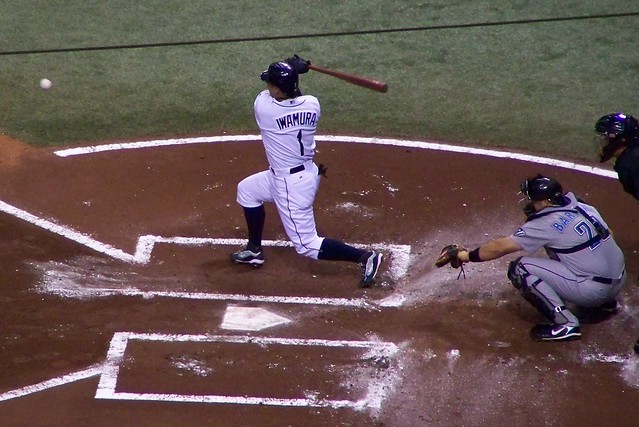
"A baseball player is swinging a bat at a ball."
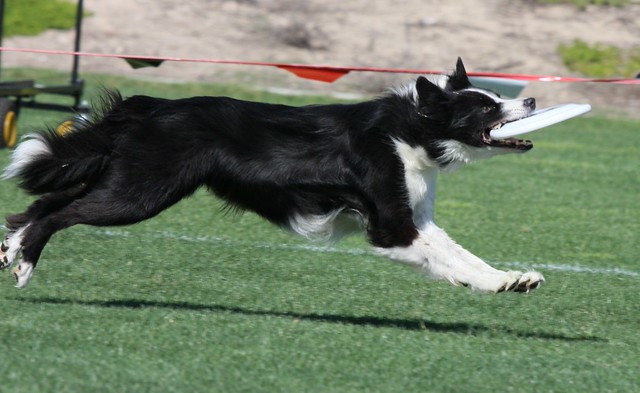
"A dog jumping in the air to catch a frisbee."
Installation
Using pip:
pip install "clip @ git+https://github.com/openai/CLIP.git"
pip install "lavis @ git+https://github.com/salesforce/LAVIS.git"
pip install clip-text-decoder
From source:
pip install "clip @ git+https://github.com/openai/CLIP.git"
pip install "lavis @ git+https://github.com/salesforce/LAVIS.git"
git clone https://github.com/fkodom/clip-text-decoder.git
cd clip-text-decoder
pip install .
Inference
Pretrained Model
from PIL import Image
import torch

from clip_text_decoder.model import ImageCaptionInferenceModel

model = ImageCaptionInferenceModel.download_pretrained()
device = "cuda" if torch.cuda.is_available() else "cpu"
model.to(device)

image = Image.open("path/to/image.jpeg")
# The beam_size argument is optional. Larger beam_size is slower, but has
# slightly higher accuracy. Recommend using beam_size <= 3.
caption = model(image, beam_size=1)
To cache the pretrained model locally, so that it's not re-downloaded each time:
model = ImageCaptionInferenceModel.download_pretrained("path/to/model.pt")
Custom Trained Model
Training produces a model.pt archive, containing a Tokenizer and model parameters. To reload the trained inference model:
from clip_text_decoder.model import ImageCaptionInferenceModel

model = ImageCaptionInferenceModel.load("path/to/model.pt").to(device)
# Load image and get predictions like above...
Ablation: Beam Size
Measuring the BLEU-4 score for different beam_size arguments. By default, the inference model uses a beam size of 1:
from clip_text_decoder.model import ImageCaptionInferenceModel

model = ImageCaptionInferenceModel.load("path/to/model.pt")
caption = model(image, beam_size=1)
Using larger beam_size gives better BLEU score with a trade-off of slower inference speeds. The metrics below were collected from the same model, which uses a BLIP vision backbone and was trained for 10 epochs (roughly 1 hour on a T4 GPU):
| Beam size | BLEU-4 |
|---|---|
| 1 (default) | 0.323 |
| 2 | 0.343 |
| 3 | 0.350 |
| 4 | 0.352 |
Training
Launch your own training session using train.py:
python train.py --max-epochs 10
Training CLI arguments, along with their default values:
--vision-backbone blip:base  # (str)
--language-model distilgpt2  # (str)
--max-epochs 10  # (int)
--beam-size 1  # (int)
--batch-size 32  # (int)
--accumulate-grad-batches 4  # (int)
--precision 16  # (16 or 32)
--seed 0  # (int)
One epoch takes about 5-6 minutes using a T4 GPU, which is usually free in Google Colab (depending on availability). After about 10 training epochs, you'll reach a BLEU-4 score just over 0.30 (without beam search). So, in under an hour, you can train a pretty good image captioning model. 😎
Notes
BLEU doesn't increase much beyond 1 hour of training. Training and validation loss will continue to decrease, but the resulting image captions are effectively equivalent.
This appears to be a limitation of the image embeddings, rather than a limitation of the language model. Changing the vision backbone gives the biggest improvement in BLEU score. (BLIP gets 5-10% better BLEU than CLIP backbones using the same language model head.) Larger language models (e.g. GPT-2 Large) don't improve the BLEU score by much.
TODO
- Plan to train on Conceptual Captions for more generic image captioning.
1 maintainer

Metadata
1 maintainer
Release files for clip-text-decoder 1.4.4
For a detailed explanation of source distributions (sdists) and built distributions (wheels), please see the package formats documentation.
Source distribution (sdist)
| File | Size | Uploaded | Provenance | Actions |
|---|---|---|---|---|
| clip-text-decoder-1.4.4.tar.gz | 12.3 kB | Without provenance | Details for clip-text-decoder-1.4.4.tar.gz |
Built distribution (wheel)
| File | Interpreter | ABI | Platform | Actions Reset |
|---|---|---|---|---|
| clip_text_decoder-1.4.4-py3-none-any.whl | Python 3 | none | any | Details for clip_text_decoder-1.4.4-py3-none-any.whl |
Total release size: 24.8 kB
Release files / clip-text-decoder-1.4.4.tar.gz
| Download URL | clip-text-decoder-1.4.4.tar.gz |
|---|---|
| Size | 12.3 kB |
| Tags | Source |
|
SHA-256 checksum How to use checksums |
f56c22e64783bcee884618f59ed738ae6d037ef5e82746399492356e7de93e6e
|
|
BLAKE2b-256 checksum How to use checksums |
e0fc6865c209965f96d67deac8147656f061c5579284a397b2b89fe89c162afe
|
| Upload date | |
|
Uploaded using Trusted Publishing? What is trusted publishing? |
No |
| Uploaded via |
twine/4.0.1 CPython/3.9.15
|
Release files / clip_text_decoder-1.4.4-py3-none-any.whl
| Download URL | clip_text_decoder-1.4.4-py3-none-any.whl |
|---|---|
| Size | 12.5 kB |
| Tags | Python 3 |
|
SHA-256 checksum How to use checksums |
15cd549081b9fb35073cb00381660a01733b79b85ea329aad3f4cfab7d33d39e
|
|
BLAKE2b-256 checksum How to use checksums |
191ff729afde22fa530de8669b4a37116afbb97cd6dd0bb7d7b2d392d0091185
|
| Upload date | |
|
Uploaded using Trusted Publishing? What is trusted publishing? |
No |
| Uploaded via |
twine/4.0.1 CPython/3.9.15
|
Security for clip-text-decoder 1.4.4
Provenance
Provenance describes where a file came from. On PyPI, provenance is shared via attestations, which provide a verifiable record of the build or publishing details. View details, limitations and caveats.
No provenance found
None of the files in this release were uploaded with provenance metadata.
A note on package security
PyPI is a repository for distributing packages, not a service for auditing them. While third-party security researchers and our staff do their best to detect and remove malicious packages, PyPI cannot guarantee the quality, security or suitability of any given package.
To learn more about protecting yourself from malicious actors, visit our package security documentation.














