
Description
框架简介: Gastepo ~ 基于Schema DSL语法规约的接口自动化测试框架
测试类型: 接口自动化测试
Feature
- 开发语言:Python 3.7
- 开发环境:PyCharm
- 开发工具:
- 测试框架:Pytest
- 测试报告:Allure
- 数据处理:Pandas
- 请求工具:Requests
- 响应获取:JsonPath
- 断言工具:Hamcrest
- 单元测试:Unittest、Coverage
- 代码扫描:SonarQube
- Web服务:Flask、FastApi
- 部署方式:Docker、Jenkins
Framework
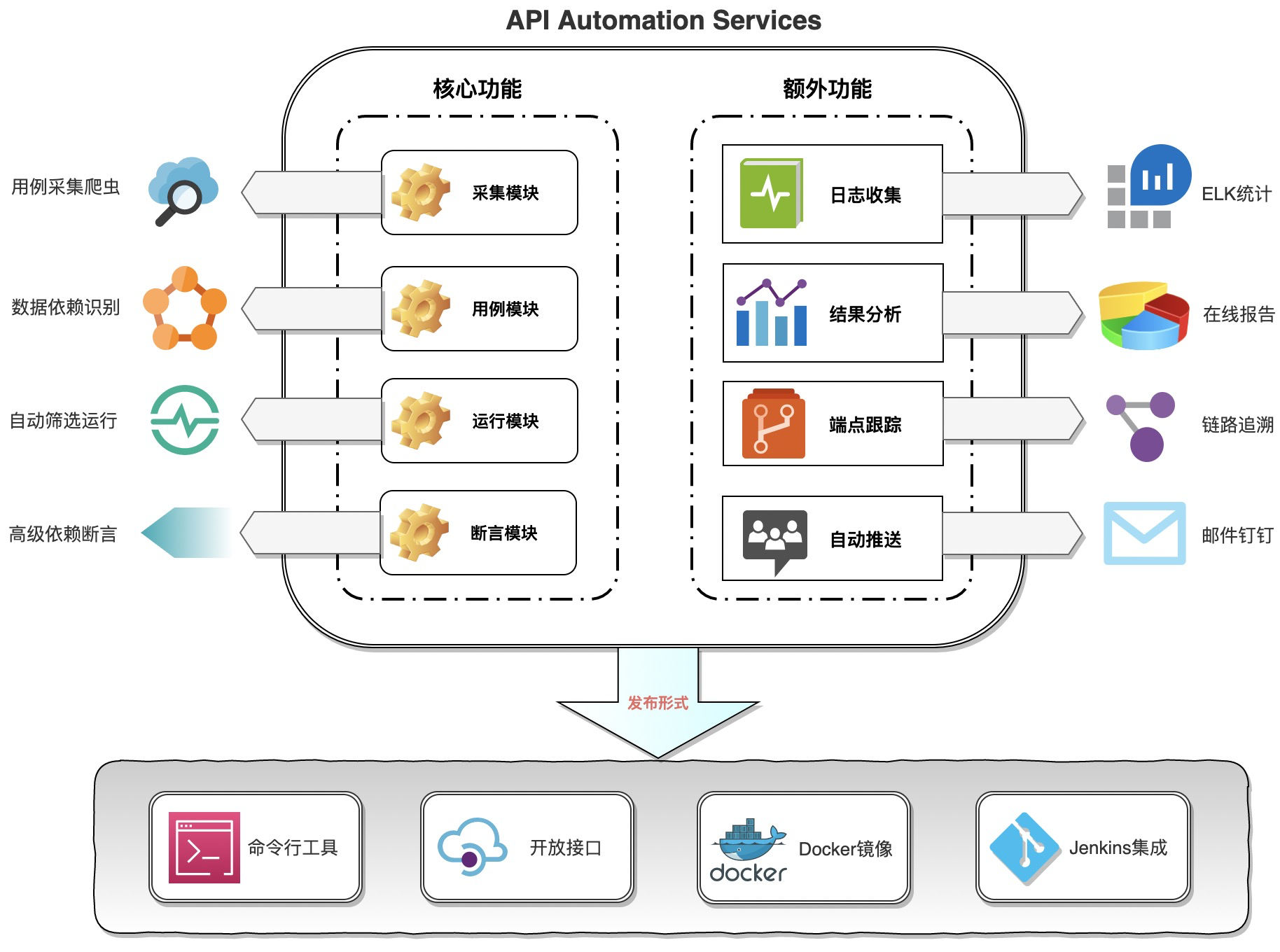
Schema
- Dependency Schema
[
    {
        "GET /v3_0/userInfo/searchContactUsers": {
            "to_path": {},
            "to_header": {},
            "to_param": {},
            "to_data": {
                "$['idCardNo']": {
                  	"GET /v3_0/getCardId": {
                      	"response": {
                          	"data": "$.data.cardId"
                        }
                    }
                }
            }
        }
    }
]
- Assertion Schema
[
    {
        "actual": "$.data[:].cardId",
        "expect": [
          {
            "${fetchCardId(user)}": {
              "user": {
                "GET /v3_0/getUserName": {
                  	"response": {
                      	"data": "$.userName"
                    }
                }
              }
            }
          }
        ],
        "matcher": "has_item",
        "alert": "未发现指定用户标签ID",
        "multi": false
    }
]
Test Runner
[pytest]
addopts = -s -q --alluredir=./Common/Static/Result/Allure --disable-warnings
testpaths = ./Executor/Mente
python_files = *Runner.py
python_classes = Test*
python_functions = test*
- Automation Runtime
- Step_1:自动分析指定扫描文件夹中所有Postman接口集合并聚合生成表格用例文件。
- Step_2:自动化测试用例支持用例筛选及BDD方式执行,单条用例支持激活或禁用。
- Step_3:自动化测试用例使用Dependency Schema规约结构的接口请求数据依赖。
- Step_4:自动化测试用例使用Assertion Schema规约结构的接口信息高级断言。
- Step_5:自动化测试运行支持前置清空历史测试数据,包括测试结果、用例结果等。
- Step_6:自动化测试运行的所有接口通过dispatch路由分发,可自动识别请求信息并注入依赖数据。
- Step_7:自动化测试报告使用Allure,并支持表格用例自动更新、接口信息实时录制、报告实时截图。
- Step_8:自动化测试推送通知方式支持传统邮件推送和钉钉机器人消息提醒。
- Step_9:自动化测试部署方式支持Jenkins流水线及Docker容器托管运行方式。
Test Reporter
allure generate {json测试结果目录} -o {html测试报告目录} --clean
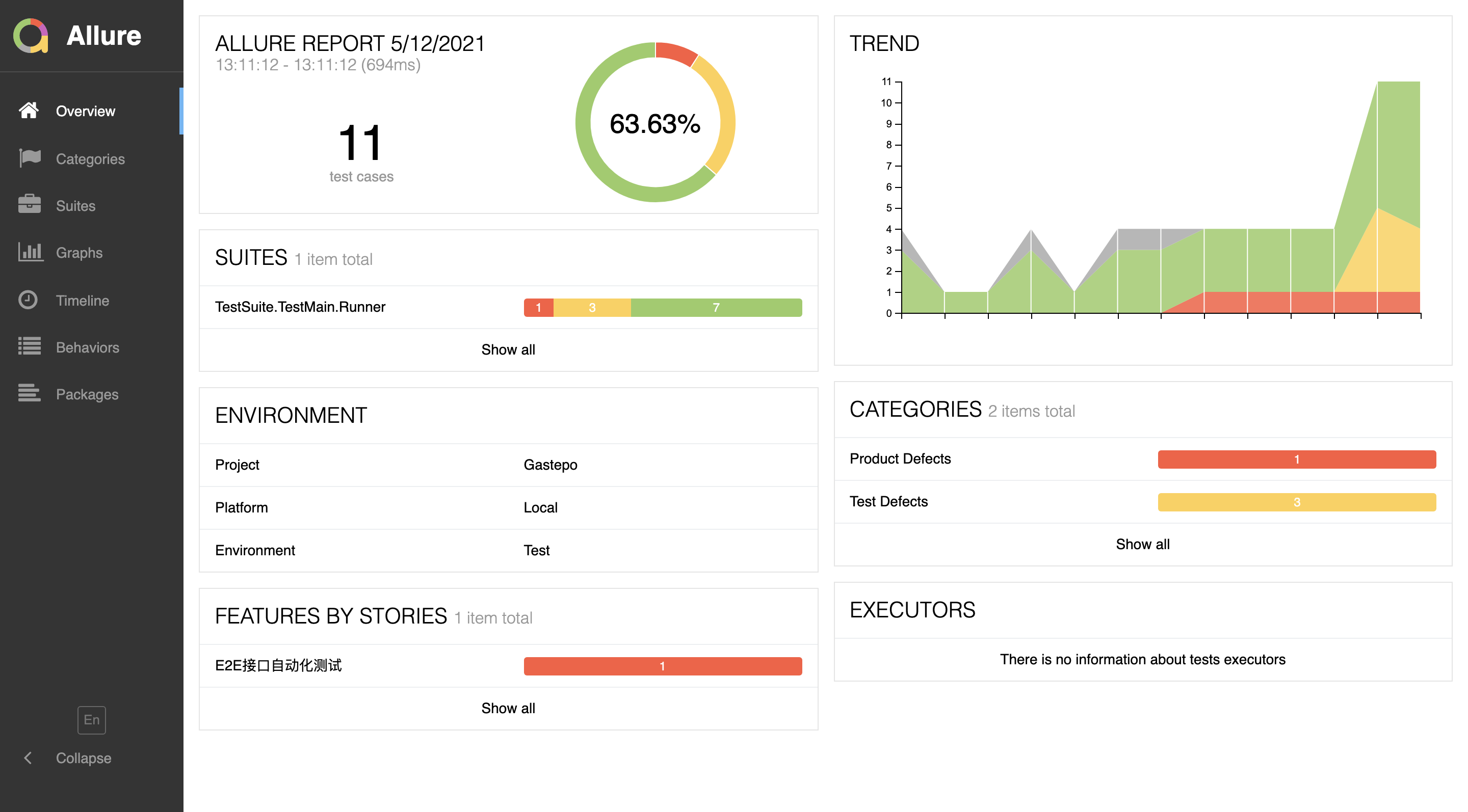
- Allure Test Report
Test Deployment
- Docker Container
docker run -itd --name gastepo -p 端口号 -v {配置文件映射卷} -v {数据文件映射卷} automation/gastepo
- Jenkins Pipeline
pipeline {
    agent any
    options {
        可选项配置
    }
    stages {
         stage("Pull From GitLab") {
        		拉取指定Git分支源码
        }
        stage("Set PATH") {
            设置Python3依赖信息
        }
        stage("Run Test") {
            执行自动化测试
        }
        stage("Generate Report") {
            报告生成及结果推送
    }
    post {
        success {
            println "[Done]: Gastepo Test Done"
        }
    }
}
Wiki:
Get me on GitHub
Measure


1 maintainer

Metadata
1 maintainer
Release files for gastepo 0.0.2
For a detailed explanation of source distributions (sdists) and built distributions (wheels), please see the package formats documentation.
Source distribution (sdist)
| File | Size | Uploaded | Provenance | Actions |
|---|---|---|---|---|
| Gastepo-0.0.2.tar.gz | 383.7 kB | Without provenance | Details for Gastepo-0.0.2.tar.gz |
Built distribution (wheel)
| File | Interpreter | ABI | Platform | Actions Reset |
|---|---|---|---|---|
| Gastepo-0.0.2-py3-none-any.whl | Python 3 | none | any | Details for Gastepo-0.0.2-py3-none-any.whl |
Total release size: 678.1 kB
Release files / Gastepo-0.0.2.tar.gz
| Download URL | Gastepo-0.0.2.tar.gz |
|---|---|
| Size | 383.7 kB |
| Tags | Source |
|
SHA-256 checksum How to use checksums |
debaac77fa6b378e6e81c8d6a5dc186e06f1eb9ca3acf702368ec4cd83357d08
|
|
BLAKE2b-256 checksum How to use checksums |
7cdaeca7e08f36fa4f1e166966a75725041dc989129f5f91820f526503baef2d
|
| Upload date | |
|
Uploaded using Trusted Publishing? What is trusted publishing? |
No |
| Uploaded via |
poetry/1.1.4 CPython/3.7.4 Darwin/18.6.0
|
Release files / Gastepo-0.0.2-py3-none-any.whl
| Download URL | Gastepo-0.0.2-py3-none-any.whl |
|---|---|
| Size | 294.4 kB |
| Tags | Python 3 |
|
SHA-256 checksum How to use checksums |
23f6f1a5774273b07c6ce5e0472377266b5e59111c98783fcabdf9aea85f6894
|
|
BLAKE2b-256 checksum How to use checksums |
4bccecbbd97c37e4939516ef655ade7be433eddf95d9a71c5ab75a42c14957ad
|
| Upload date | |
|
Uploaded using Trusted Publishing? What is trusted publishing? |
No |
| Uploaded via |
poetry/1.1.4 CPython/3.7.4 Darwin/18.6.0
|
Security for gastepo 0.0.2
Provenance
Provenance describes where a file came from. On PyPI, provenance is shared via attestations, which provide a verifiable record of the build or publishing details. View details, limitations and caveats.
No provenance found
None of the files in this release were uploaded with provenance metadata.
A note on package security
PyPI is a repository for distributing packages, not a service for auditing them. While third-party security researchers and our staff do their best to detect and remove malicious packages, PyPI cannot guarantee the quality, security or suitability of any given package.
To learn more about protecting yourself from malicious actors, visit our package security documentation.













