
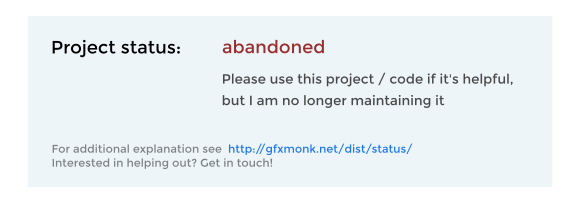
“mandy” is a simple com(mand)-line option parser (see the tenuous name link there?)
It uses the standard optparse library, but makes common functionality easy to write (and read!). Argument type checking is trivial, and you can supply your own validation actions to further check application-specific logic.
An illustrative example:
import mandy
class Main(mandy.Command):
        # you should define `configure` and `run` methods for your
        # command to work

        def configure(self):
                # --name (string)
                self.opt('name', default='(unnamed)', desc="set the name")

                # -n [1-5], default of 1
                self.opt('num-things', int, short='n', long=None, default=1,
                         action=between_one_and_five, desc="num items (1-5)")

                # --frob or --no-frob
                self.opt('frob', bool, default=True, desc="use frobbing")

                # --debug (--no-debug is not added since opposite is False)
                self.opt('debug', bool, default=False, opposite=False,
                         desc="Set Debug mode")

                # --do-thing=yes/no (explicit value)
                # (on/off, true/false, yes/no and 1/0 all work for boolean values)
                self.opt('do-thing', bool, default=False, explicit=True, desc="yes/no")

                # arg is the same as opt, but without long/short options,
                # and optional default values
                # this makes:
                #    command [options] foo1 foo2 [bar] baz
                self.arg('foo1')
                self.arg('foo2', bool)
                self.arg('bar', default=None)
                self.arg('baz')

        def run(self, opts):
                # opts includes your named options and arguments as attributes
                print "you set name to %s" % (opts.name)

                # since you can have options that aren't valid python attributes,
                # you can also treat opts as a dict:
                print "and there are %s things" % opts['num-things']

def between_one_and_five(num):
        if not (num >= 1 and num <= 5):
                raise RuntimeError("number must be between one and five")

if __name__ == '__main__':
        Main()
this produces the following when run with –help:
Usage: example.py [options] foo1 foo2 [bar] baz

Options:
  -h, --help           show this help message and exit
  --name=NAME          set the name
  -n N                 num items (1-5)
  --frob               use frobbing
  --no-frob
  --debug              Set Debug mode
  --do-thing=DO_THING  yes/no
1 maintainer

Metadata
1 maintainer
Release files for mandy 0.1.4
For a detailed explanation of source distributions (sdists) and built distributions (wheels), please see the package formats documentation.
Source distribution (sdist)
| File | Size | Uploaded | |
|---|---|---|---|
| mandy-0.1.4.tar.gz | 6.8 kB | Details |
Release files / mandy-0.1.4.tar.gz
| Download URL | mandy-0.1.4.tar.gz |
|---|---|
| Size | 6.8 kB |
| Tags | Source |
|
SHA-256 checksum How to use checksums |
6297461fb32fc9ac669ab87c29a7c8e5938606db65ba9c613ac76045e02543e2
|
|
BLAKE2b-256 checksum How to use checksums |
d3edf9ed4737f6abdde12dc440ba9ee355a3a0f872baecce0ae9bdf310ac4eca
|
| Upload date | |
|
Uploaded using Trusted Publishing? What is trusted publishing? |
No |














