
This release is a pre-release and may not be stable for production use.
MMKit-Features: Multimodal Feature Extraction Toolkit
Traditional knowledge graphs (KGs) are usually comprised of entities, relationships, and attributes. However, they are not designed to effectively store or represent multimodal data. This limitation prevents them from capturing and integrating information from different modes of data, such as text, images, and audio, in a meaningful and holistic way.
The MMKit-Features project proposes a multimodal architecture to build multimodal knowledge graphs with flexible multimodal feature extraction and dynamic multimodal concept generation.
Project Goal
- To extract, store, and fuse various multimodal features from multimodal datasets efficiently;
- To achieve generative adversarial network(GAN)-based multimodal knowledge representation dynamically in multimodal knowledge graphs;
- To provide a common deep learning-based architecture to enhance multimodal knowledge reasoning in real life.
Installation
You can install this toolkit using our PyPi package.
pip install mmkit-features
Design Science Framework
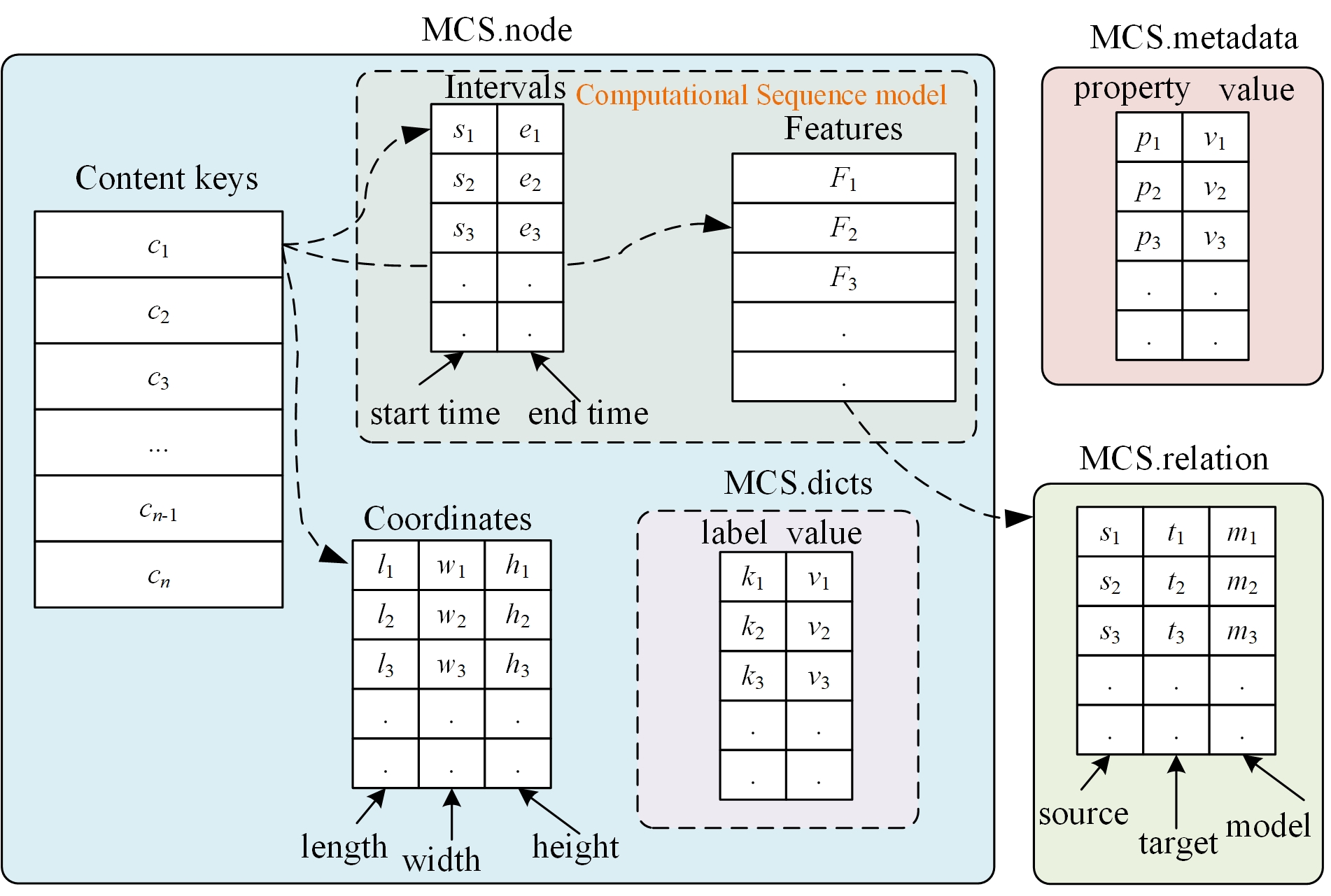
Figure 1: Multimodal Computational Sequence
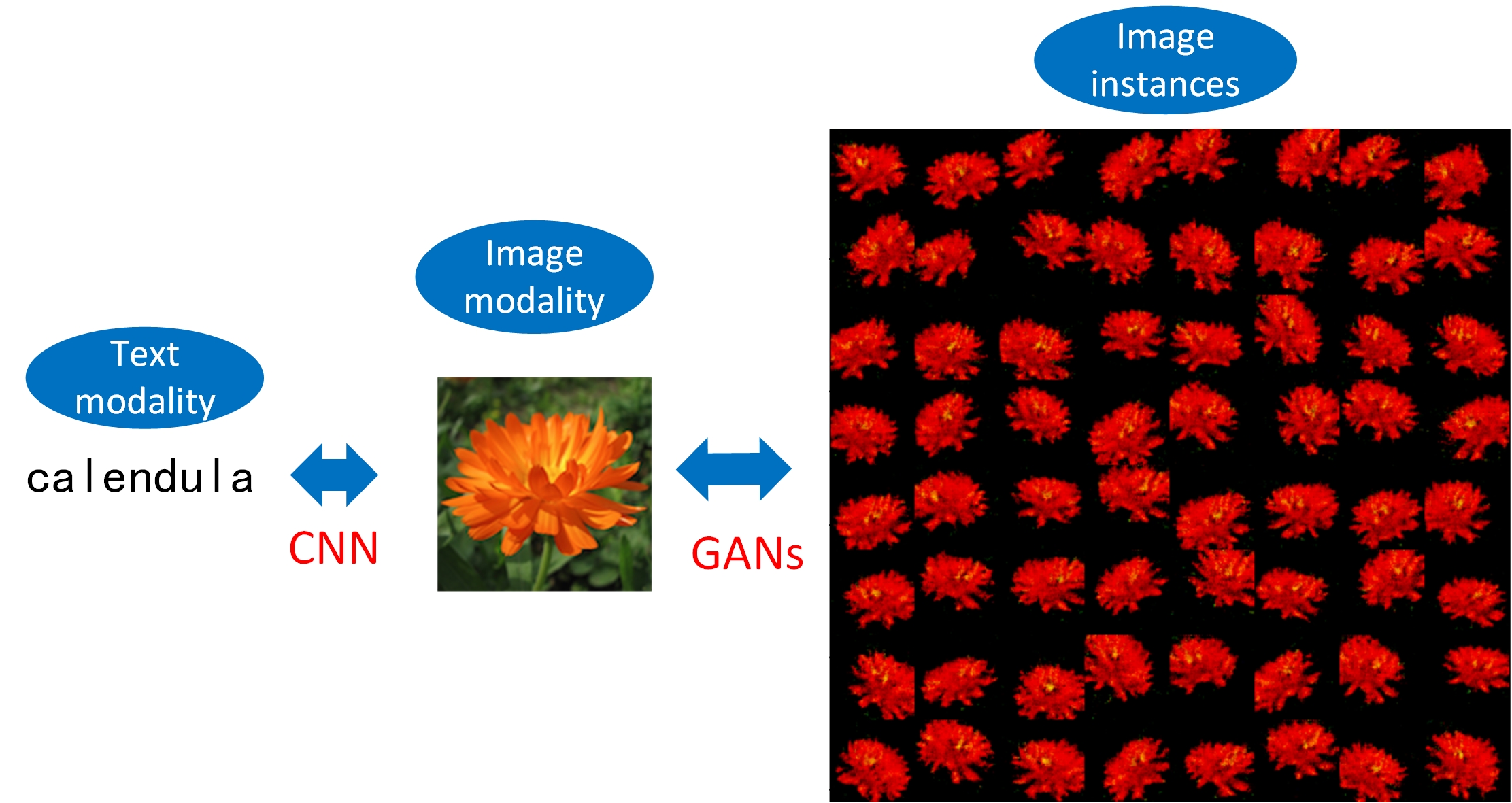
Figure 2: GAN-based Multimodal Concept Generation
Modalities
- Text/Language modality
- Image modality
- Video modality
- Audio modality
- Cross-modality among above
Usage
A toy example showing how to build a multimodal feature (MMF) library is here:
from mmkfeatures.fusion.mm_features_lib import MMFeaturesLib
from mmkfeatures.fusion.mm_features_node import MMFeaturesNode
import numpy as np
if __name__ == "__main__":
    # 1. create an empty multimodal features library with root and dataset names
    feature_lib = MMFeaturesLib(root_name="test features",dataset_name = "test_features")
    # 2. set short names for each dimension for convenience
    feature_lib.set_features_name(["feature1","feature2","feature3"])
    # 3. set a  list of content IDs
    content_ids = ["content1","content2","content3"]
    # 4. according to IDs, assign a group of features with interval to corresponding content ID
    features_dict = {}
    for id in content_ids:
        mmf_node = MMFeaturesNode(id)
        mmf_node.set_item("name",str(id))
        mmf_node.set_item("features",np.array([[1,2,3]]))
        mmf_node.set_item("intervals",np.array([[0,1]]))
        features_dict[id] = mmf_node
    # 5. set the library's data
    feature_lib.set_data(features_dict)
    # 6. save the features to disk for future use
    feature_lib.save_data("test6_feature.csd")
    # 7. check structure of lib file with the format of h5py
    feature_lib.show_structure("test6_feature.csd")
    # 8. have a glance of features content within the dataset
    feature_lib.show_sample_data("test6_feature.csd")
    # 9. Finally, we construct a simple multimodal knowledge base.
Further instructions on the toolkit refers to here.
Applications
Here are some examples of using our work in real life with codes and documents.
1. Multimodal Features Extractors
- Text Features Extraction
- Speech Features Extraction
- Image Features Extractoin
- Video Features Extraction
- Transformer-based Features Extraction
2. Multimodal Feature Library (MMFLib)
3. Multimodal Knowledge Bases
- Multimodal Birds Feature Library
- Multimodal Disease Coding Feature Library
- Multimodal ROCO Feature Library
4. Multimodal Indexing and Querying
Credits
The project includes some source codes from various open-source contributors. Here is a list of their contributions.
- A2Zadeh/CMU-MultimodalSDK
- aishoot/Speech_Feature_Extraction
- antoine77340/video_feature_extractor
- jgoodman8/py-image-features-extractor
- v-iashin/Video Features
License
The mmkit-features project is provided by Donghua Chen with MIT license.
Citation
Please cite our project if the project is used in your research.
Chen, D. (2023). MMKit-Features: Multimodal Features Extraction Toolkit (Version 0.0.2) [Computer software]
1 maintainer

Metadata
1 maintainer
Release files for mmkit-features 0.0.1a4
For a detailed explanation of source distributions (sdists) and built distributions (wheels), please see the package formats documentation.
Source distribution (sdist)
| File | Size | Uploaded | |
|---|---|---|---|
| mmkit-features-0.0.1a4.tar.gz | 112.7 kB | Details |
Built distribution (wheel)
| File | Interpreter | ABI | Platform | Reset |
|---|---|---|---|---|
| mmkit_features-0.0.1a4-py3-none-any.whl | Python 3 | none | any | Details |
Total release size: 258.0 kB
Release files / mmkit-features-0.0.1a4.tar.gz
| Download URL | mmkit-features-0.0.1a4.tar.gz |
|---|---|
| Size | 112.7 kB |
| Tags | Source |
|
SHA-256 checksum How to use checksums |
470cbf12d6ccf99c2717ddf57d3824f4b095b95ade69323636a538e5d58e2eda
|
|
BLAKE2b-256 checksum How to use checksums |
2e3f67a9ac82cf3d09643f2d82151c1fb2e4ae66b70914dcaf4c469dc712b17f
|
| Upload date | |
|
Uploaded using Trusted Publishing? What is trusted publishing? |
No |
| Uploaded via |
twine/3.8.0 pkginfo/1.8.2 readme-renderer/34.0 requests/2.27.1 requests-toolbelt/0.9.1 urllib3/1.26.9 tqdm/4.63.0 importlib-metadata/4.11.3 keyring/23.5.0 rfc3986/2.0.0 colorama/0.4.4 CPython/3.9.11
|
Release files / mmkit_features-0.0.1a4-py3-none-any.whl
| Download URL | mmkit_features-0.0.1a4-py3-none-any.whl |
|---|---|
| Size | 145.3 kB |
| Tags | Python 3 |
|
SHA-256 checksum How to use checksums |
452f53f5eecd81ec5980e49fda180dbe330990228fa1573f92e84eb96167cb5a
|
|
BLAKE2b-256 checksum How to use checksums |
f5f4a8187704e18a8ee928aa55c3ea672556e73a56d98343e71bef1285766aac
|
| Upload date | |
|
Uploaded using Trusted Publishing? What is trusted publishing? |
No |
| Uploaded via |
twine/3.8.0 pkginfo/1.8.2 readme-renderer/34.0 requests/2.27.1 requests-toolbelt/0.9.1 urllib3/1.26.9 tqdm/4.63.0 importlib-metadata/4.11.3 keyring/23.5.0 rfc3986/2.0.0 colorama/0.4.4 CPython/3.9.11
|














