
OSGAR
Open Source Garden/Generic Autonomous Robot (Python library)
OSGAR is a lightweight, multi-platform library for recording and replaying data from multiple nodes (modules such as sensors, robots, and applications) logged into a single file. It is designed to be minimalistic, modular, and robust, capable of running on everything from high-end workstations to low-end devices like the Raspberry Pi Zero.
OSGAR was originally developed by robotika.cz and has been successfully deployed in several international robotics challenges.
Key Features
- Robust Logging: All port data is logged with microsecond-resolution timestamps into a single
.logfile. - Deterministic Replay: Replaying recorded data produces identical outputs, enabling reliable debugging of complex sensor interactions and algorithms in a controlled environment.
- Modular Architecture: Robots are built as a set of independent modules connected via a communication "bus," defined in a simple JSON configuration.
- Minimalistic & Multi-platform: Written in Python, with minimal dependencies, ensuring it runs on various operating systems and hardware.
Applications & Robots
OSGAR has been the core software framework for a variety of robotic platforms and prestigious competitions. See OSGAR Platforms for more details.
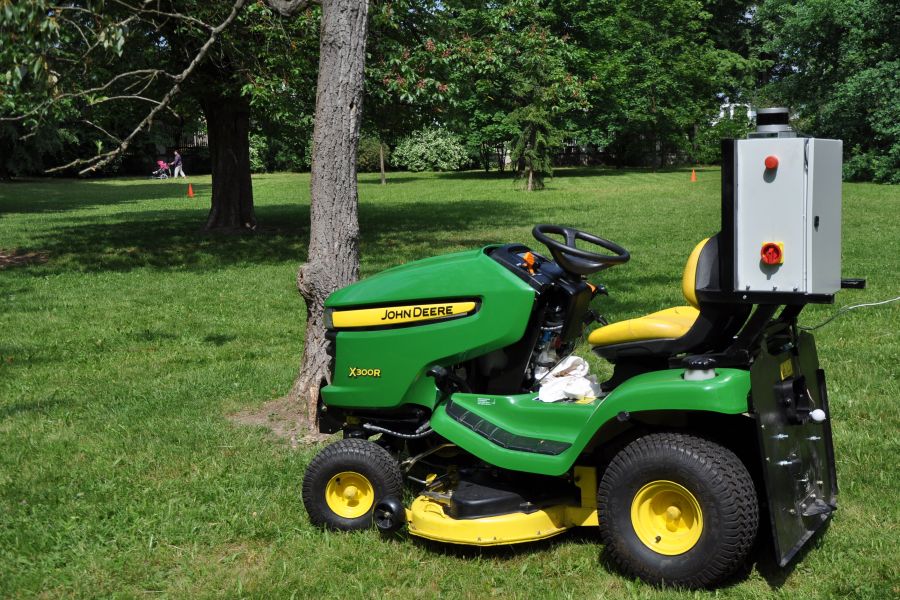
DARPA Subterranean Challenge (SubT)
Team Robotika used OSGAR to coordinate a heterogeneous fleet of robots (wheeled, tracked, and flying) to map and search complex underground environments.
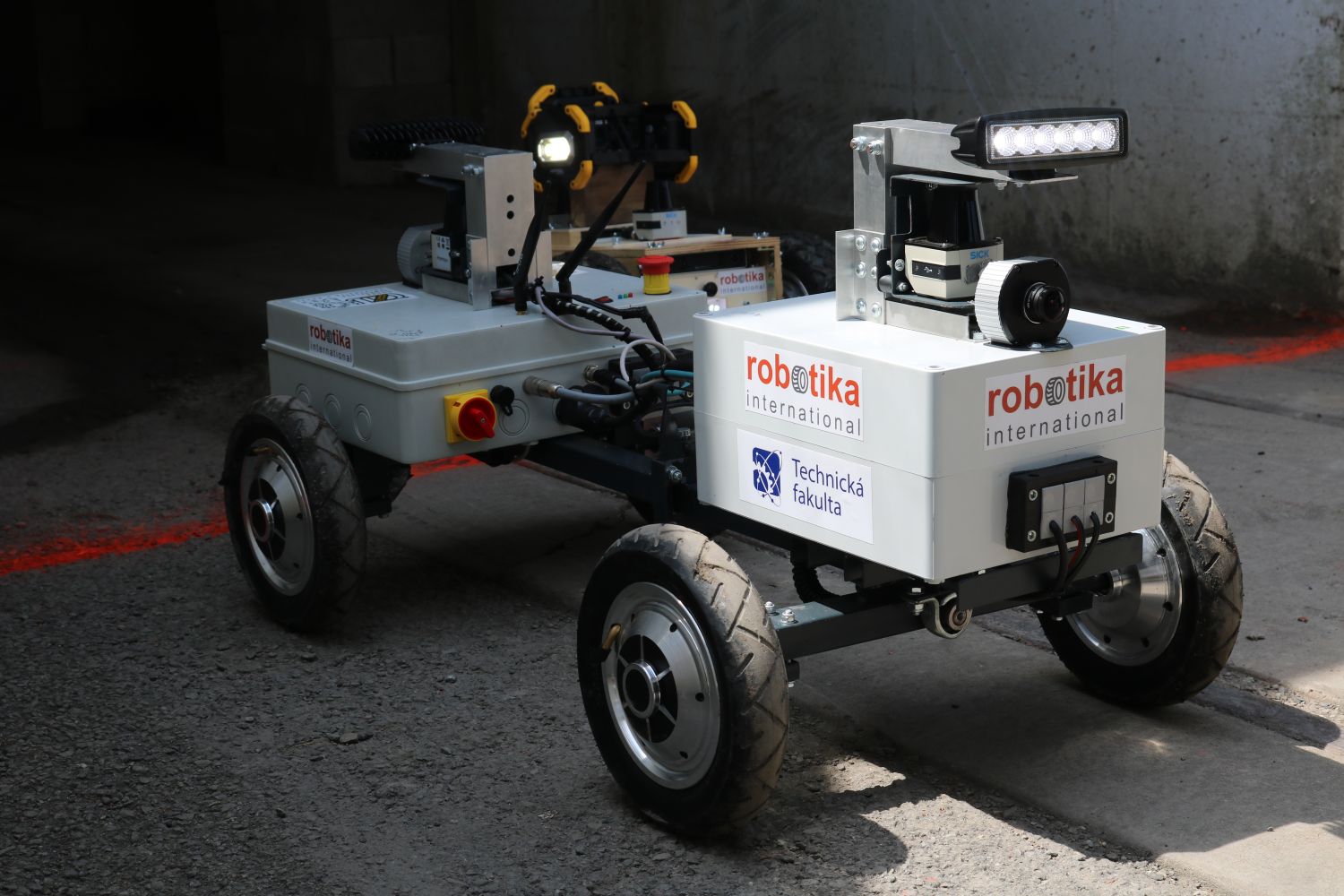
DARPA Triage Challenge (DTC)
OSGAR powers a fleet of Matty robots (M01-M05) equipped with non-contact sensors to detect physiological signs in casualties during mass-casualty incidents.
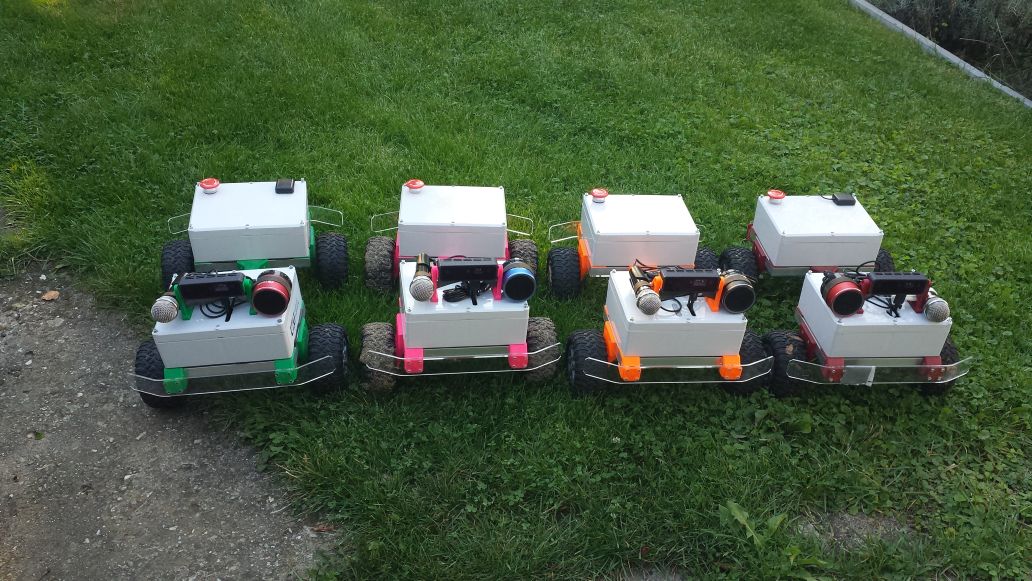
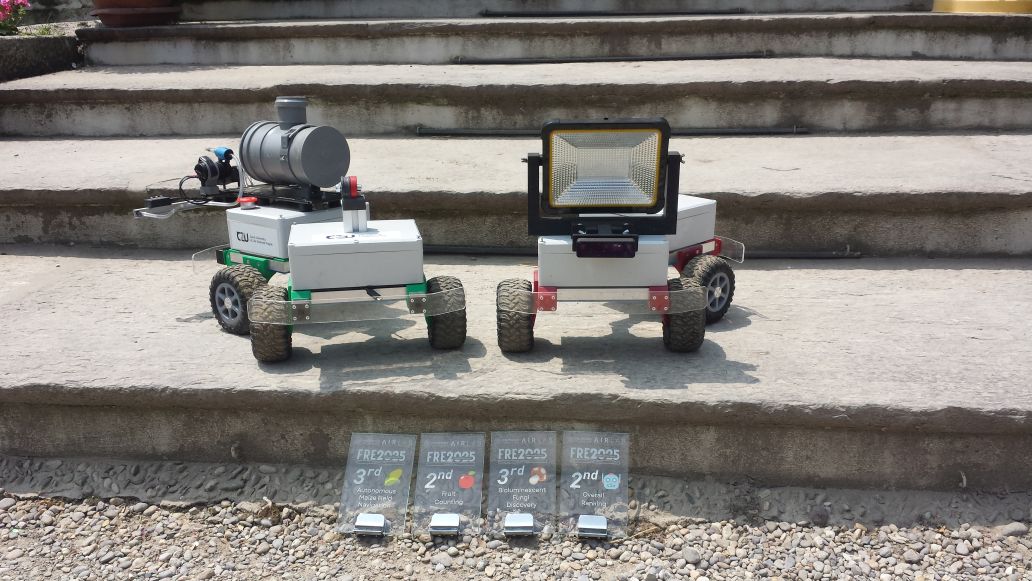
Field Robot Event
OSGAR-based robots, including the "Matty twins," have successfully competed in the Field Robot Event, an international competition for autonomous robots in agriculture.
Documentation
For more detailed information, please refer to:
Architecture
Robot is set of modules. Every module has input and output ports, described
together with the connections in the config file. All ports are logged with
timestamp (microsecond resolution). The module is typically an instance of a
driver, whose init arguments are also in config file.
Notes regarding GitHub repository
The current development code is under osgar directory.
If you are using OSGAR directly from sources please make sure that
you setup PYTHONPATH to the root of this project.
The example configurations are stored in config folder. JSON files are
used.
Examples
Collect data from sensor(s)
There is a osgar/record.py to run data collection based on given configuration file. If you would like to collect GPS data available on serial port use modified version of test-windows-gps.json for Windows or test-gps-imu.json for Linux.
python -m osgar.record config/test-windows-gps.json
To replay existing log use:
python -m osgar.replay --module <module name> <log file name>
1 maintainer

Metadata
1 maintainer
Release files for osgar 1.1.0
For a detailed explanation of source distributions (sdists) and built distributions (wheels), please see the package formats documentation.
Source distribution (sdist)
| File | Size | Uploaded | Provenance | |
|---|---|---|---|---|
| osgar-1.1.0.tar.gz | 166.7 kB | Without provenance | Details |
Built distribution (wheel)
| File | Interpreter | ABI | Platform | Reset |
|---|---|---|---|---|
| osgar-1.1.0-py3-none-any.whl | Python 3 | none | any | Details |
Total release size: 380.4 kB
Release files / osgar-1.1.0.tar.gz
| Download URL | osgar-1.1.0.tar.gz |
|---|---|
| Size | 166.7 kB |
| Tags | Source |
|
SHA-256 checksum How to use checksums |
b21ebf1a0a16289a8046f6ea20a3b5a7030171cbe5f481709a8bf74729f3b107
|
|
BLAKE2b-256 checksum How to use checksums |
1eac9eab4eb86632584deefcc54242be0fdcd72680be5de7f36ef903853f30de
|
| Upload date | |
|
Uploaded using Trusted Publishing? What is trusted publishing? |
No |
| Uploaded via |
twine/6.2.0 CPython/3.11.12
|
Release files / osgar-1.1.0-py3-none-any.whl
| Download URL | osgar-1.1.0-py3-none-any.whl |
|---|---|
| Size | 213.8 kB |
| Tags | Python 3 |
|
SHA-256 checksum How to use checksums |
abbefcce623f9daa10b4125ddb0e27ceb31469780712f6ffad2863804115fe1e
|
|
BLAKE2b-256 checksum How to use checksums |
eb182dc22bfa3d9beff3367bd0f0d4f434d1bfbb28ef443ec461b23c898a889e
|
| Upload date | |
|
Uploaded using Trusted Publishing? What is trusted publishing? |
No |
| Uploaded via |
twine/6.2.0 CPython/3.11.12
|
Security for osgar 1.1.0
Provenance
Provenance describes where a file came from. On PyPI, provenance is shared via attestations, which provide a verifiable record of the build or publishing details. View details, limitations and caveats.
No provenance found
None of the files in this release were uploaded with provenance metadata.
A note on package security
PyPI is a repository for distributing packages, not a service for auditing them. While third-party security researchers and our staff do their best to detect and remove malicious packages, PyPI cannot guarantee the quality, security or suitability of any given package.














