
pytri v2
A Pytri redux, using the latest available THREE.js bindings and GPU-offloaded rendering of large scenes.
WARNING: pytri is currently untested. Use at your own risk.
Installation
pip install pytri
# or:
# pip3 install git+https://github.com/aplbrain/pytri
Getting Started
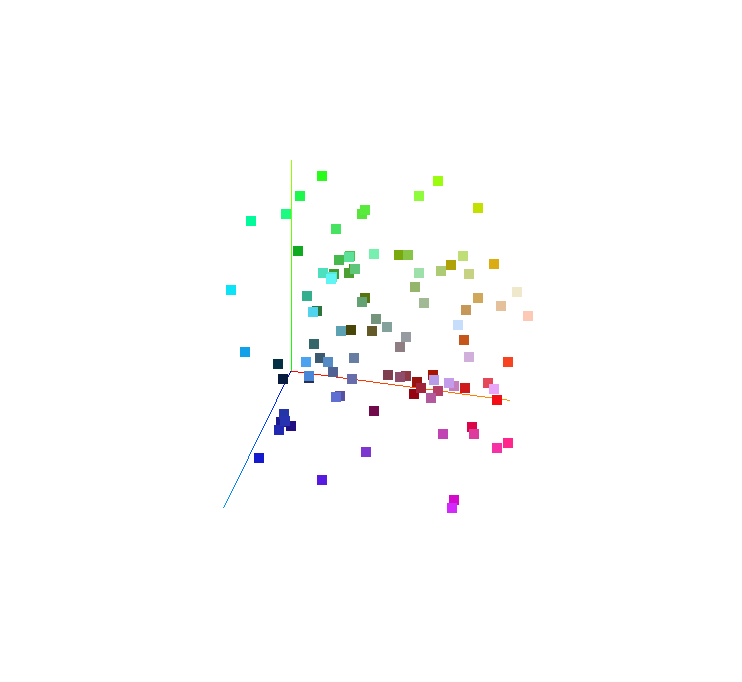
Let's plot some scatterplot data in 3D. In your favorite Jupyter notebook or binder application, import pytri:
from pytri import Figure
We can now generate some sample data:
import numpy as np

fig = Figure()

xs = np.random(0, 100)
ys = np.random(0, 100)
zs = np.random(0, 100)

fig.scatter(xs, ys, zs)

fig.show()
Examples
Render a NetworkX Graph
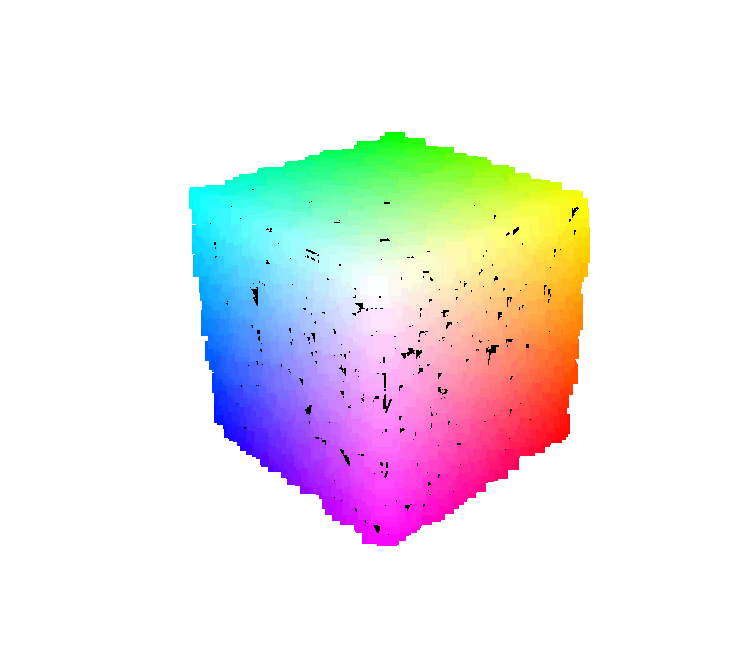
Here's a crazy dense randomly-arranged graph with over a million edges. (You'll find the slowest part of this process is just generating that graph!)
This graph renders in realtime (60FPS) in Pytri.
import networkx as nx
g = nx.fast_gnp_random_graph(50_000, 0.001)
pos = {k: [vv * 500 for vv in v] for k, v in nx.random_layout(g, dim=3).items()}

f = Figure()
f.axes()
f.graph(g, pos=pos, edge_width=1, node_size=10)

f.show()
Random color-changing edges
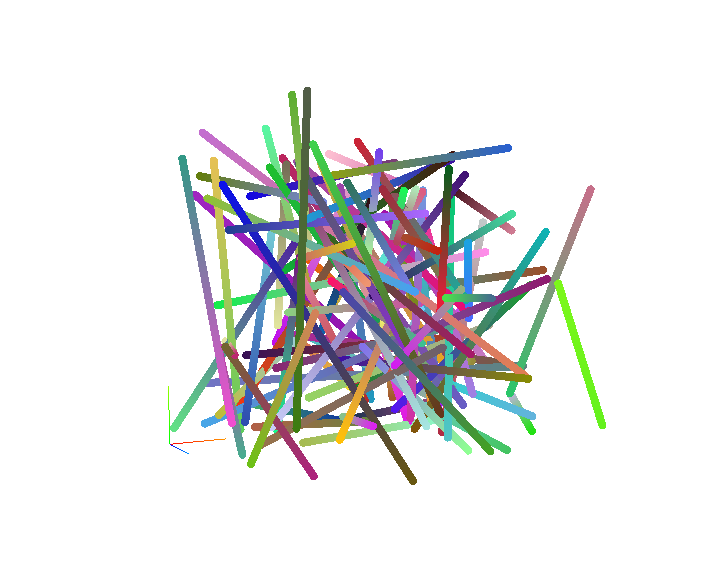
These edges are a different color on the left edge than on the right edge:
f = Figure()
f.axes()
f.lines(
    # 100 lines on the interval 0-100
    np.random.random((100, 2, 3)) * 100,
    # 200 colors, start/stop for each line
    colors=np.random.random((100, 2, 3)),
    width=4
)
f.show()
Lines and an image pulled from the internet
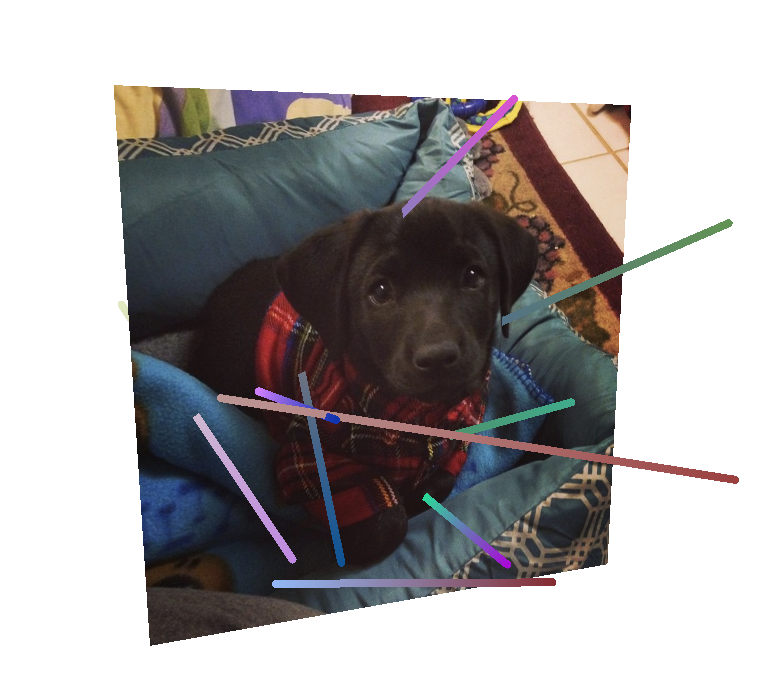
f.imshow(
    "https://i.imgur.com/VK8Tp5q.jpeg",
    width=100, height=100,
    rotation=(0, 3.14/2, 0)
)
f.show()
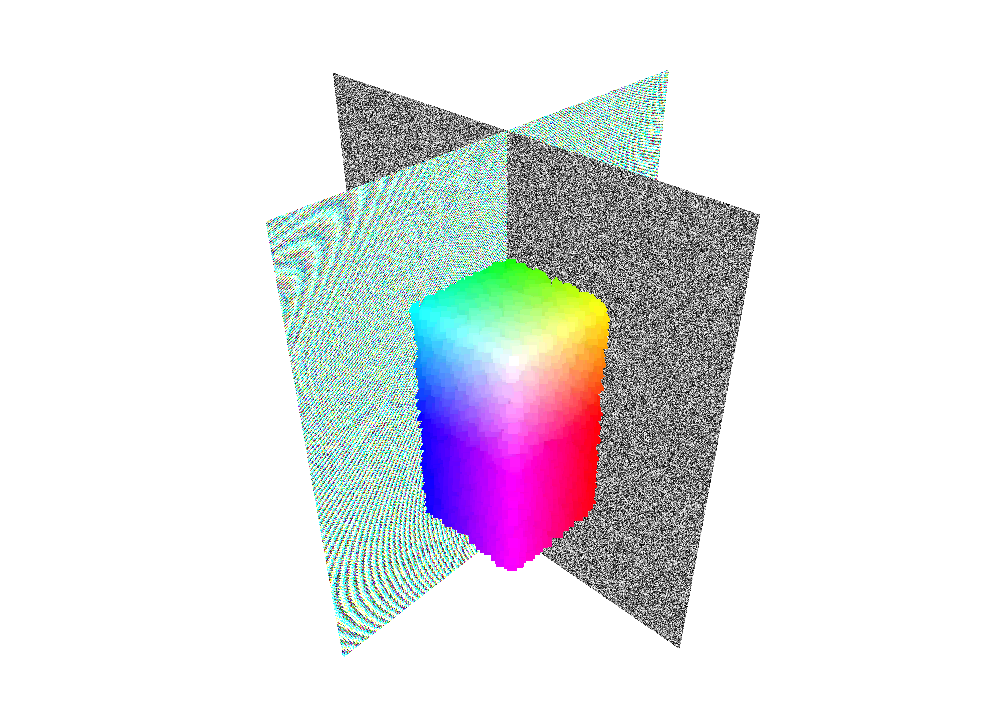
Rendering numpy arrays in RGB or Greyscale
f.scatter(np.random.randint(-50, 50, (1_00_000,3)))
f.imshow(
    # 3 dimensions, interpreted as RGB
    np.random.random((1000, 1000, 3)),
    width=200, height=200,
    rotation=(0, 3.14/2, 0)
)
f.imshow(
    # 2 dimensions, interpreted as grayscale
    np.random.random((1000, 1000)),
    width=200, height=200,
    # omitting rotation, the plane faces "up" along Z
)
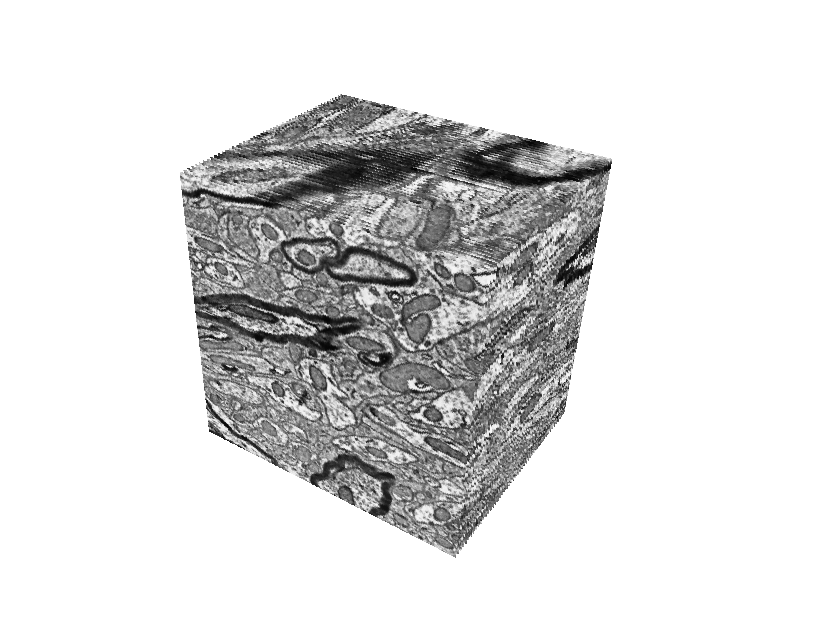
One way to (cheat) render a volume
from pytri import Figure
import intern

morgan2020 = intern.array("bossdb://morgan2020/lgn/em", resolution=2)

em_excerpt = morgan2020[1000:1050, 25000:25000+300, 25000:25000+300]

coords = []
for z in range(small.shape[0]):
    for y in range(small.shape[1]):
        for x in range(small.shape[2]):
            coords.append((x, y, z*10))

f = Figure()
f.scatter(coords, color=[[i,i,i] for i in small.ravel()], attenuate_size=True, size=5)
f.show()


Release files for pytri 2.0.1
For a detailed explanation of source distributions (sdists) and built distributions (wheels), please see the package formats documentation.
Source distribution (sdist)
| File | Size | Uploaded | |
|---|---|---|---|
| pytri-2.0.1.tar.gz | 21.0 kB | Details |
Release files / pytri-2.0.1.tar.gz
| Download URL | pytri-2.0.1.tar.gz |
|---|---|
| Size | 21.0 kB |
| Tags | Source |
|
SHA-256 checksum How to use checksums |
63c2c5348c6c9bd6c8b447b6c7b15d626f4e06536e357d4be9775c0bb665ef51
|
|
BLAKE2b-256 checksum How to use checksums |
0faba5c6b4796a56d1406aa7506c60ab8855654bb3e75cd1da26c7d461f5f285
|
| Upload date | |
|
Uploaded using Trusted Publishing? What is trusted publishing? |
No |
| Uploaded via |
twine/3.2.0 pkginfo/1.6.1 requests/2.23.0 setuptools/41.2.0 requests-toolbelt/0.9.1 tqdm/4.61.0 CPython/3.7.7
|














