
PyWeaver
PyWeaver is a visual code editor for Python that leverages web technologies. It is inspired by Jupyter Notebook and Simulink. The project is under development. Currently working with Python 2. Python 3 support comming soon.
Motivation
I spend most of my time analyzing data (mostly time series) of chemical process plants. I wanted a tool that optimizes the workflow of importing, cleaning and analyzing data by expliciting the relationship of the variables involved and defining the flow of information. I wanted the tool to have enough flexibility to display different type of plots and UI components and perform any kind of calculation.
Ultimately, PyWeaver will have the functionality to store and grow a library of computational nodes that users will be able to drag & drop to define their workflows. They will also be able to easily develop their own nodes to fit their specific needs.
Installation
If you want to run the current development version: Clone the repo, cd into client, npm i and npm run serve. Also, cd into server, run python main.py.
This will be improved shortly.
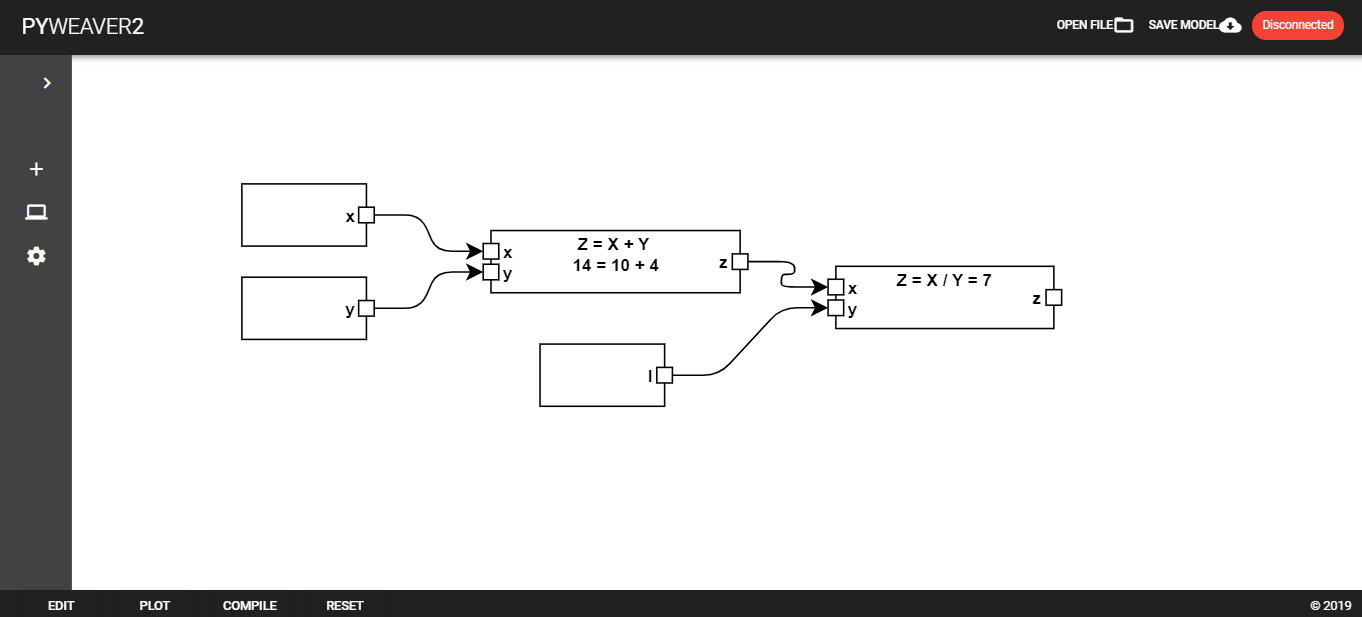
How it works
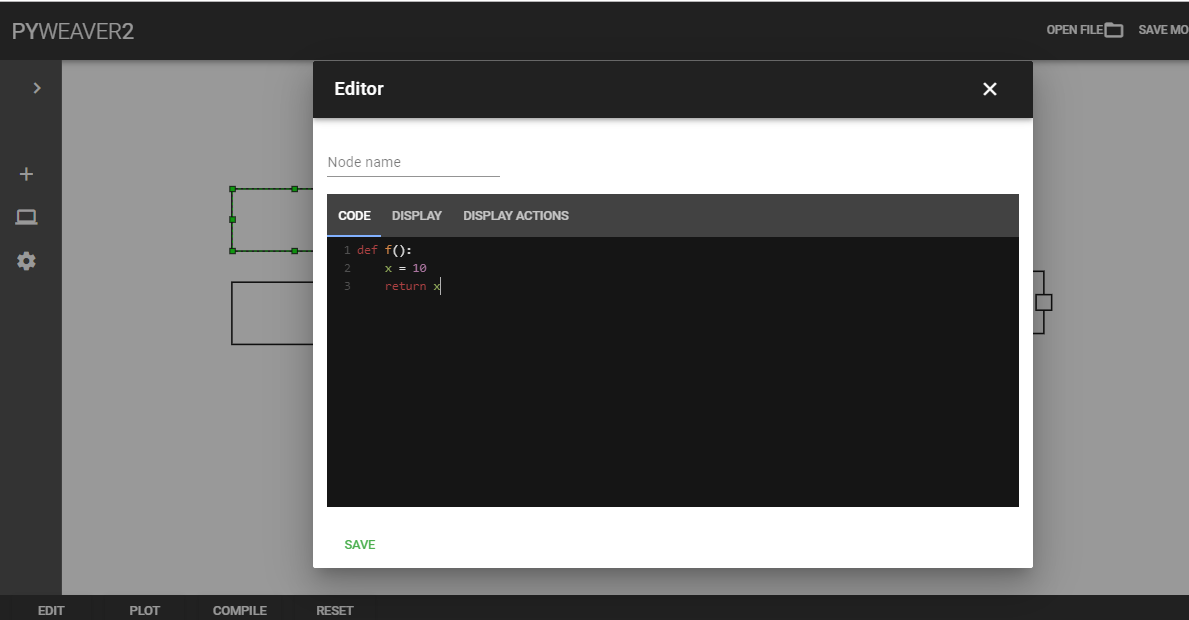
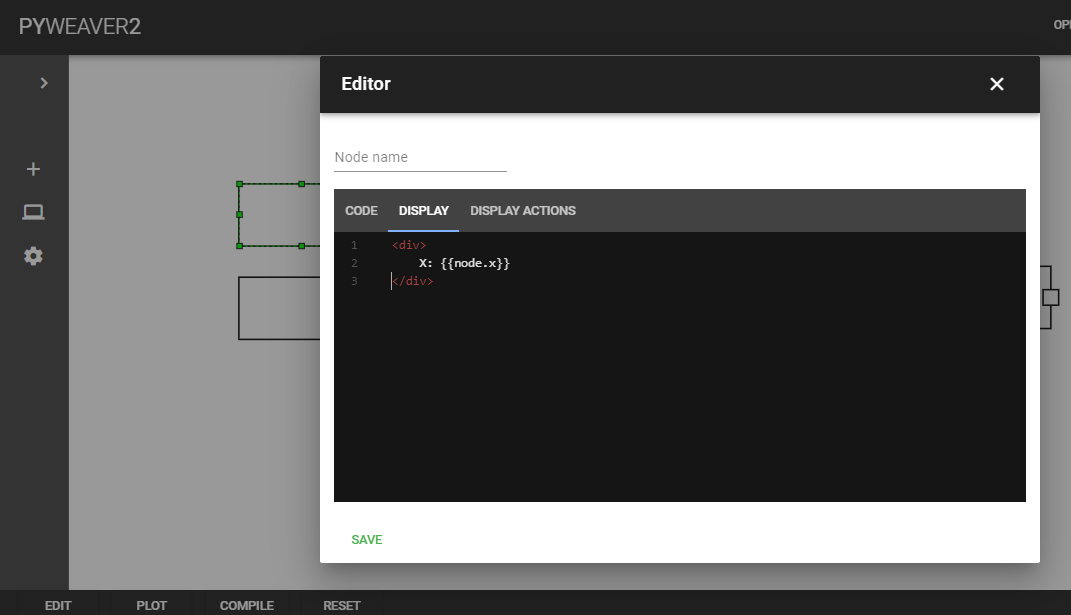
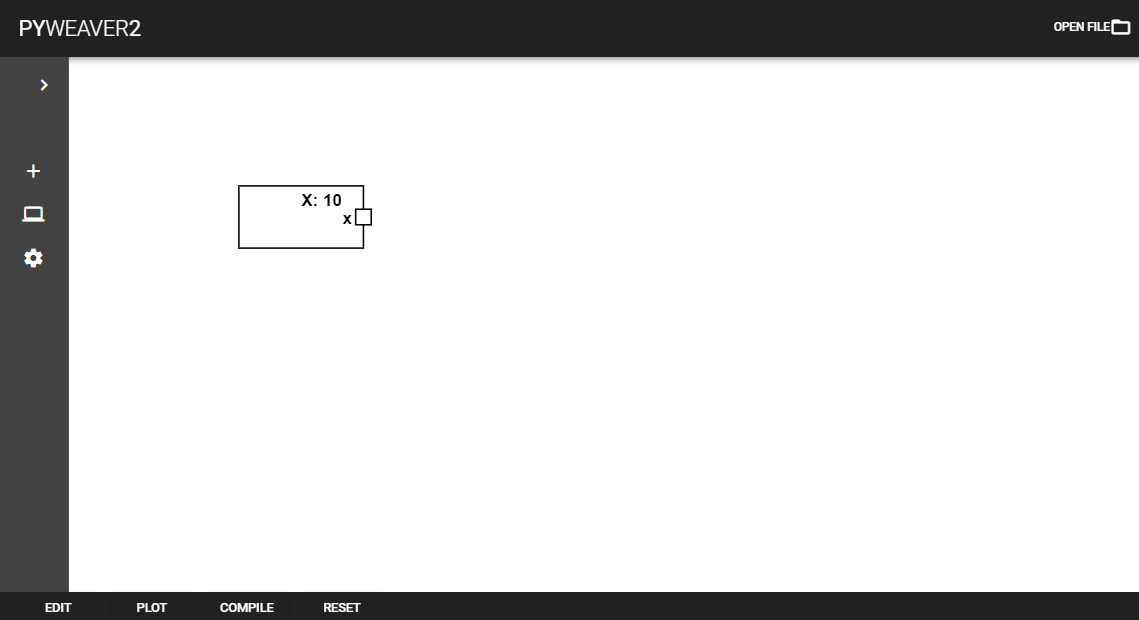
Each computational node is defined by a Python function, an HTML snippet that determines what is displayed in the UI and a Java Script object containing any functions needed by the UI. All the code is introduced via the web client and processed by the server:
Python function:
HTML Display:
Result:
1 maintainer

Metadata
1 maintainer
Release files for pyweaver 0.0.10
For a detailed explanation of source distributions (sdists) and built distributions (wheels), please see the package formats documentation.
Source distribution (sdist)
| File | Size | Uploaded | Provenance | Actions |
|---|---|---|---|---|
| pyweaver-0.0.10.tar.gz | 8.2 MB | Without provenance | Details for pyweaver-0.0.10.tar.gz |
Built distribution (wheel)
| File | Interpreter | ABI | Platform | Actions Reset |
|---|---|---|---|---|
| pyweaver-0.0.10-py3-none-any.whl | Python 3 | none | any | Details for pyweaver-0.0.10-py3-none-any.whl |
Total release size: 16.6 MB
Release files / pyweaver-0.0.10.tar.gz
| Download URL | pyweaver-0.0.10.tar.gz |
|---|---|
| Size | 8.2 MB |
| Tags | Source |
|
SHA-256 checksum How to use checksums |
c8b0f2c2f9fec945ce2f85106ce9a1332962c01ba0f43790028dfa44e9ce1902
|
|
BLAKE2b-256 checksum How to use checksums |
a51924286cae34171760e30984a062b97f44b04cef4f68d1c63845b2e8bf3d5b
|
| Upload date | |
|
Uploaded using Trusted Publishing? What is trusted publishing? |
No |
| Uploaded via |
twine/3.1.1 pkginfo/1.5.0.1 requests/2.22.0 setuptools/41.4.0 requests-toolbelt/0.9.1 tqdm/4.36.1 CPython/3.7.4
|
Release files / pyweaver-0.0.10-py3-none-any.whl
| Download URL | pyweaver-0.0.10-py3-none-any.whl |
|---|---|
| Size | 8.4 MB |
| Tags | Python 3 |
|
SHA-256 checksum How to use checksums |
e36ad607afb62a2179941bd64f031fe6af2a3858154ea153dd88c4dc5ebc2861
|
|
BLAKE2b-256 checksum How to use checksums |
14c07a4513ff67ba8062e7dca47758bc870465b80b7cc2d03217937d15f4018c
|
| Upload date | |
|
Uploaded using Trusted Publishing? What is trusted publishing? |
No |
| Uploaded via |
twine/3.1.1 pkginfo/1.5.0.1 requests/2.22.0 setuptools/41.4.0 requests-toolbelt/0.9.1 tqdm/4.36.1 CPython/3.7.4
|
Security for pyweaver 0.0.10
Provenance
Provenance describes where a file came from. On PyPI, provenance is shared via attestations, which provide a verifiable record of the build or publishing details. View details, limitations and caveats.
No provenance found
None of the files in this release were uploaded with provenance metadata.
A note on package security
PyPI is a repository for distributing packages, not a service for auditing them. While third-party security researchers and our staff do their best to detect and remove malicious packages, PyPI cannot guarantee the quality, security or suitability of any given package.
To learn more about protecting yourself from malicious actors, visit our package security documentation.














