
Statistical analysis of incident probability and causes on RATP metro lines
Trafic perturbé...again?! This library and this notebook provides a statistical point of view for all these daily incidents occurred on the Paris RATP metro lines.
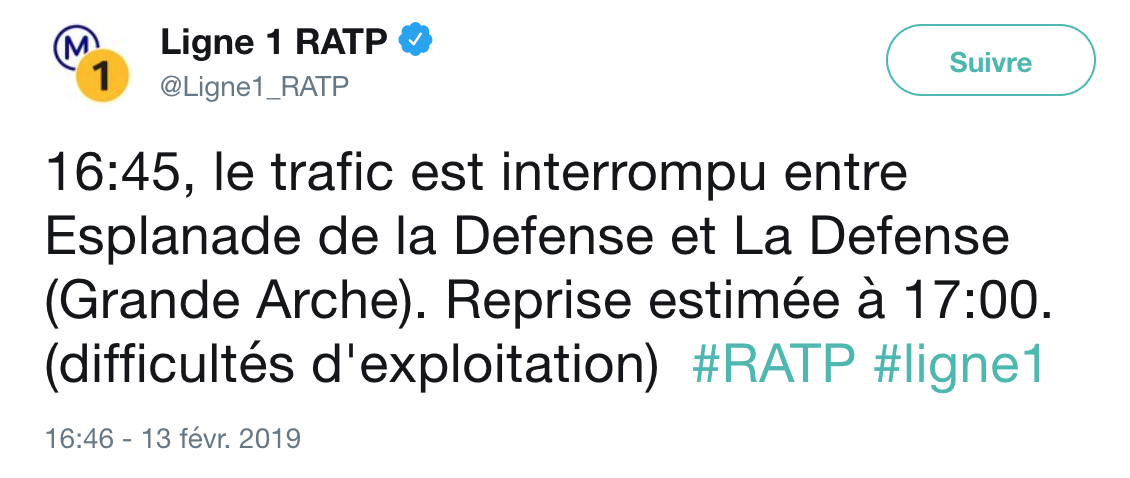
Using tweets coming from official RATP Twitter accounts (@Ligne1_RATP for line 1 for example), we will see
- What is the probability of encountering some operational incidents on a particular line?
- Which lines are more likely to cause everybody unhappy?
- What are the main causes of these problems?
- Should I be considered lucky if I never take metros during rush hours?
- Are there less problems during weekends?
- Instead of going on vacation, is there any reason to be happy if I still work in August?
Some examples in the year 2018
The fist two examples below refer to the RATP metro line 2, which I take everyday for work.
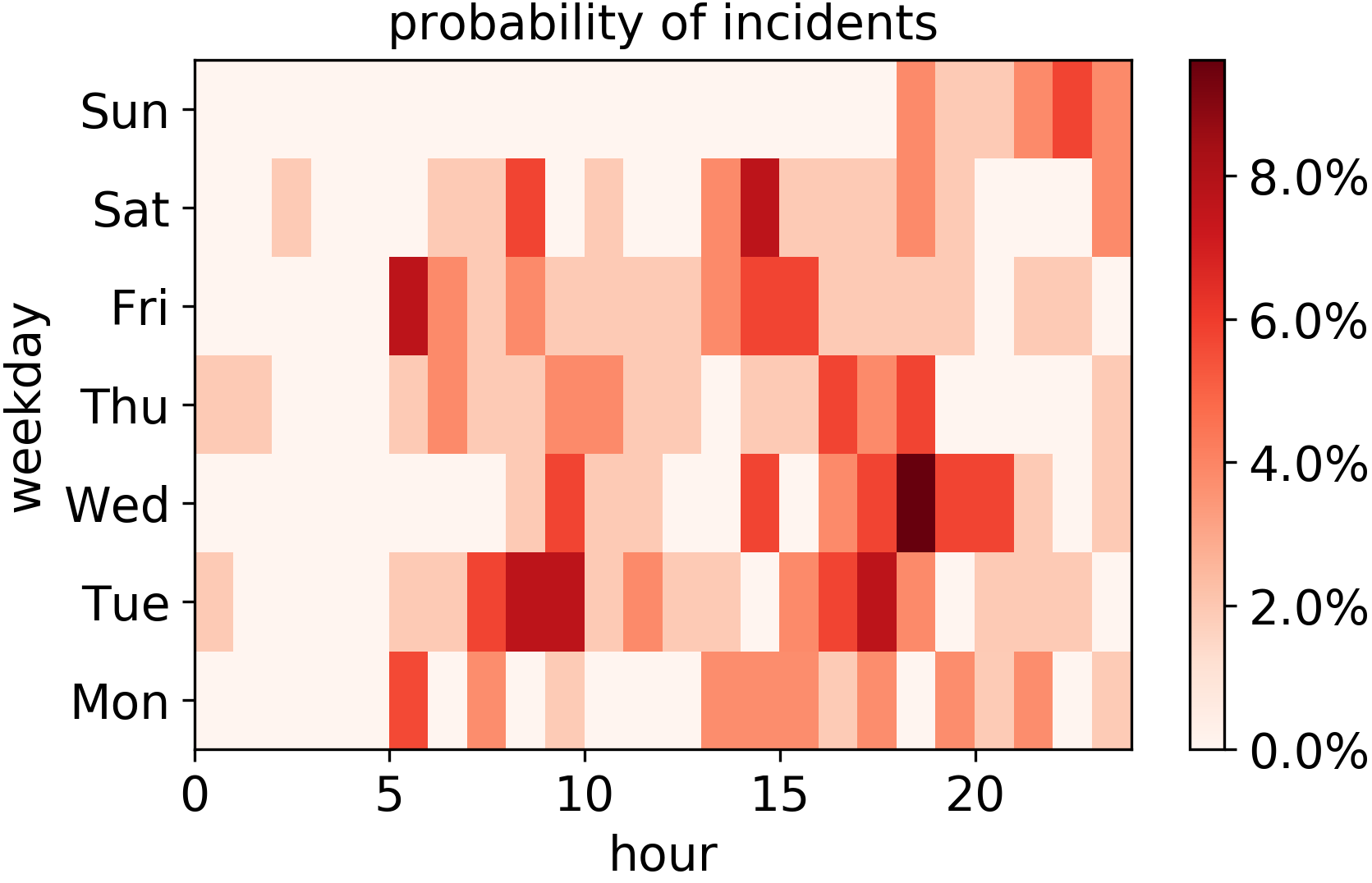
I should leave work before 17:00 on Wednesday (or after 21:00)
In the figure below you can see the probability of catching an operational incident (trafic perturbé, interrompu...) at a given hour (in fact in the next following hour) and a specific weekday. The maximum value (nearly 9%) can be found on Wednesday at the evening rush hours.
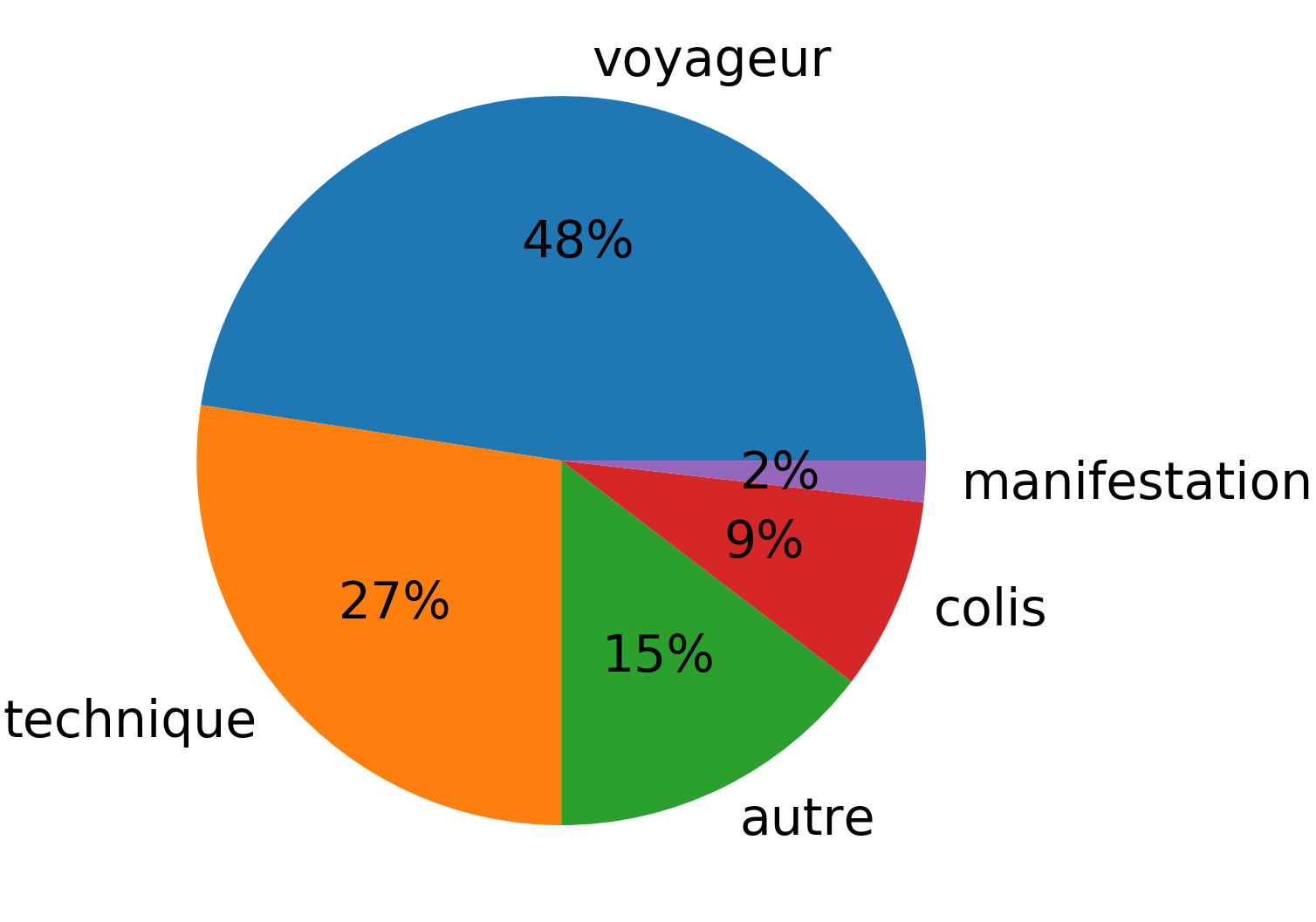
It's us the main responsible for these incidents
Nearly half (48%) of the incidents come from us. Also, 9% is due to unattended bags...
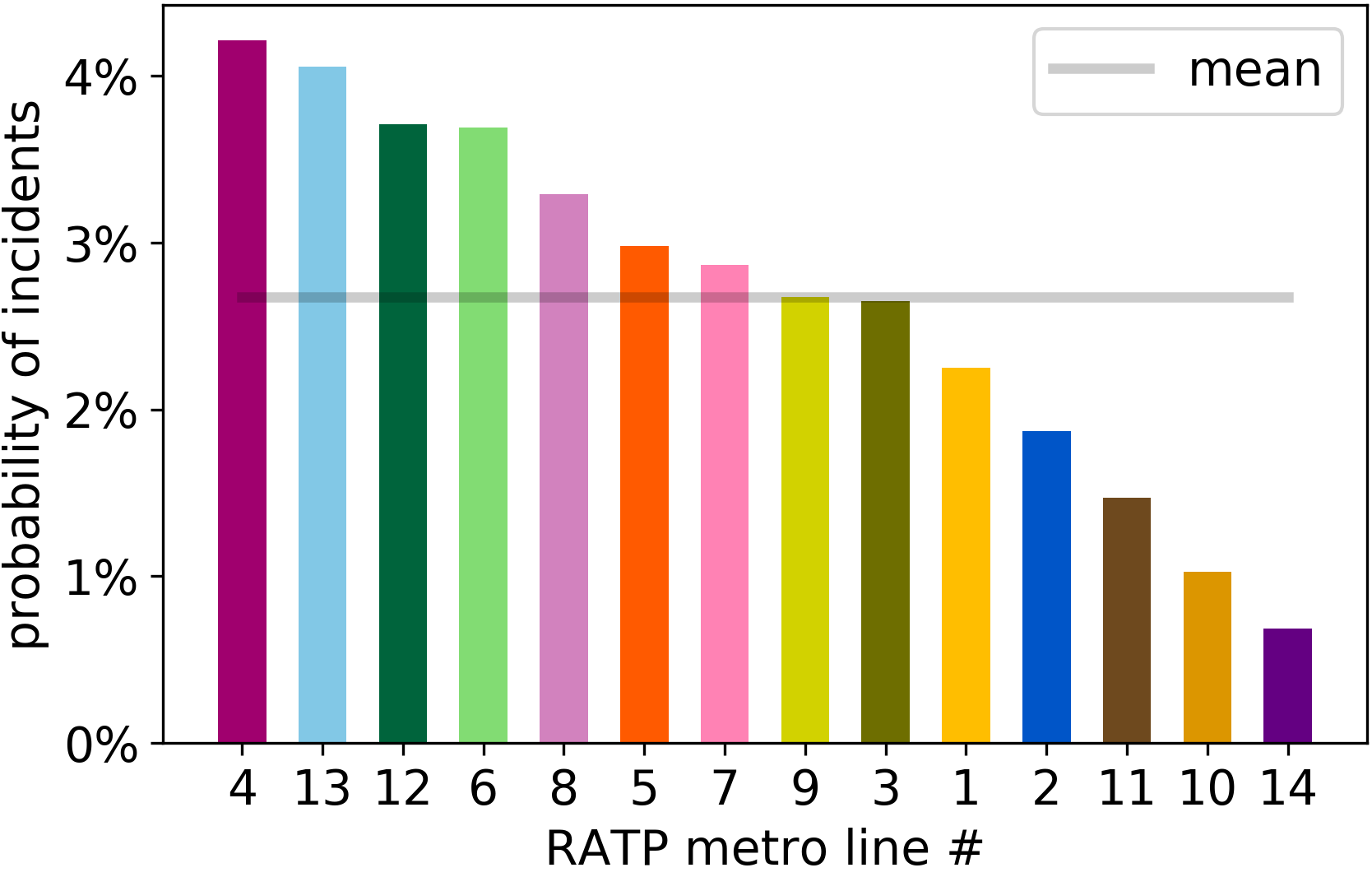
Line 13 should be jealous of line 4
Every Parisian knows that the line 13 is bad. But in the year 2018 it was beaten by the line 4, which records an average probability of incidents larger than 4%.
License
The code is licensed under the terms of the MIT license. The analysis results (text, figures, tables) are licensed under a Creative Commons Attribution 4.0 International License.
Author
1 maintainer

Metadata
1 maintainer
Release files for ratpmetro 0.0.2
For a detailed explanation of source distributions (sdists) and built distributions (wheels), please see the package formats documentation.
Source distribution (sdist)
| File | Size | Uploaded | Provenance | Actions |
|---|---|---|---|---|
| ratpmetro-0.0.2.tar.gz | 7.2 kB | Without provenance | Details for ratpmetro-0.0.2.tar.gz |
Built distribution (wheel)
| File | Interpreter | ABI | Platform | Actions Reset |
|---|---|---|---|---|
| ratpmetro-0.0.2-py3-none-any.whl | Python 3 | none | any | Details for ratpmetro-0.0.2-py3-none-any.whl |
Total release size: 15.7 kB
Release files / ratpmetro-0.0.2.tar.gz
| Download URL | ratpmetro-0.0.2.tar.gz |
|---|---|
| Size | 7.2 kB |
| Tags | Source |
|
SHA-256 checksum How to use checksums |
e6d3d3467e40c04354c56d399d59e8578e1206265aa0b93b070d0e7e8390ac5b
|
|
BLAKE2b-256 checksum How to use checksums |
45011d8f9bd60737aa163f002249800e63868c0cc78696c6fbe66163e34db0cb
|
| Upload date | |
|
Uploaded using Trusted Publishing? What is trusted publishing? |
No |
| Uploaded via |
twine/1.13.0 pkginfo/1.5.0.1 requests/2.22.0 setuptools/40.8.0 requests-toolbelt/0.9.1 tqdm/4.32.2 CPython/3.7.3
|
Release files / ratpmetro-0.0.2-py3-none-any.whl
| Download URL | ratpmetro-0.0.2-py3-none-any.whl |
|---|---|
| Size | 8.5 kB |
| Tags | Python 3 |
|
SHA-256 checksum How to use checksums |
bd69defccb3d97fd8249f80e14a80e106d79c3c6db8e9b9e66aadc05e5bcec8d
|
|
BLAKE2b-256 checksum How to use checksums |
847d8cc57fdebd3352b4e993e62c60b55d5e93204c590ab998c195110fad7164
|
| Upload date | |
|
Uploaded using Trusted Publishing? What is trusted publishing? |
No |
| Uploaded via |
twine/1.13.0 pkginfo/1.5.0.1 requests/2.22.0 setuptools/40.8.0 requests-toolbelt/0.9.1 tqdm/4.32.2 CPython/3.7.3
|
Security for ratpmetro 0.0.2
Provenance
Provenance describes where a file came from. On PyPI, provenance is shared via attestations, which provide a verifiable record of the build or publishing details. View details, limitations and caveats.
No provenance found
None of the files in this release were uploaded with provenance metadata.
A note on package security
PyPI is a repository for distributing packages, not a service for auditing them. While third-party security researchers and our staff do their best to detect and remove malicious packages, PyPI cannot guarantee the quality, security or suitability of any given package.
To learn more about protecting yourself from malicious actors, visit our package security documentation.














