
This release is a pre-release and may not be stable for production use.



👋 hello
We write your reusable computer vision tools. Whether you need to load your dataset from your hard drive, draw detections on an image or video, or count how many detections are in a zone. You can count on us! 🤝
💻 install
Pip install the supervision package in a 3.11>=Python>=3.8 environment.
pip install supervision[desktop]
Read more about desktop, headless, and local installation in our guide.
🔥 quickstart
detections processing
>>> import supervision as sv
>>> from ultralytics import YOLO

>>> model = YOLO('yolov8s.pt')
>>> result = model(IMAGE)[0]
>>> detections = sv.Detections.from_ultralytics(result)

>>> len(detections)
5
👉 more detections utils
-
Easily switch inference pipeline between supported object detection/instance segmentation models
>>> import supervision as sv
>>> from segment_anything import sam_model_registry, SamAutomaticMaskGenerator

>>> sam = sam_model_registry[MODEL_TYPE](checkpoint=CHECKPOINT_PATH).to(device=DEVICE)
>>> mask_generator = SamAutomaticMaskGenerator(sam)
>>> sam_result = mask_generator.generate(IMAGE)
>>> detections = sv.Detections.from_sam(sam_result=sam_result)
-
>>> detections = detections[detections.class_id == 0]
>>> detections = detections[detections.confidence > 0.5]
>>> detections = detections[detections.area > 1000]
-
Image annotation
>>> import supervision as sv

>>> box_annotator = sv.BoxAnnotator()
>>> annotated_frame = box_annotator.annotate(
...     scene=IMAGE,
...     detections=detections
... )
datasets processing
>>> import supervision as sv

>>> dataset = sv.DetectionDataset.from_yolo(
...     images_directory_path='...',
...     annotations_directory_path='...',
...     data_yaml_path='...'
... )

>>> dataset.classes
['dog', 'person']

>>> len(dataset)
1000
👉 more dataset utils
-
Load object detection/instance segmentation datasets in one of the supported formats
>>> dataset = sv.DetectionDataset.from_yolo(
...     images_directory_path='...',
...     annotations_directory_path='...',
...     data_yaml_path='...'
... )

>>> dataset = sv.DetectionDataset.from_pascal_voc(
...     images_directory_path='...',
...     annotations_directory_path='...'
... )

>>> dataset = sv.DetectionDataset.from_coco(
...     images_directory_path='...',
...     annotations_path='...'
... )
-
Loop over dataset entries
>>> for name, image, labels in dataset:
...     print(labels.xyxy)

array([[404.      , 719.      , 538.      , 884.5     ],
       [155.      , 497.      , 404.      , 833.5     ],
       [ 20.154999, 347.825   , 416.125   , 915.895   ]], dtype=float32)
-
Split dataset for training, testing, and validation
>>> train_dataset, test_dataset = dataset.split(split_ratio=0.7)
>>> test_dataset, valid_dataset = test_dataset.split(split_ratio=0.5)

>>> len(train_dataset), len(test_dataset), len(valid_dataset)
(700, 150, 150)
-
Merge multiple datasets
>>> ds_1 = sv.DetectionDataset(...)
>>> len(ds_1)
100
>>> ds_1.classes
['dog', 'person']

>>> ds_2 = sv.DetectionDataset(...)
>>> len(ds_2)
200
>>> ds_2.classes
['cat']

>>> ds_merged = sv.DetectionDataset.merge([ds_1, ds_2])
>>> len(ds_merged)
300
>>> ds_merged.classes
['cat', 'dog', 'person']
-
Save object detection/instance segmentation datasets in one of the supported formats
>>> dataset.as_yolo(
...     images_directory_path='...',
...     annotations_directory_path='...',
...     data_yaml_path='...'
... )

>>> dataset.as_pascal_voc(
...     images_directory_path='...',
...     annotations_directory_path='...'
... )

>>> dataset.as_coco(
...     images_directory_path='...',
...     annotations_path='...'
... )
-
Convert labels between supported formats
>>> sv.DetectionDataset.from_yolo(
...     images_directory_path='...',
...     annotations_directory_path='...',
...     data_yaml_path='...'
... ).as_pascal_voc(
...     images_directory_path='...',
...     annotations_directory_path='...'
... )
-
Load classification datasets in one of the supported formats
>>> cs = sv.ClassificationDataset.from_folder_structure(
...     root_directory_path='...'
... )
-
Save classification datasets in one of the supported formats
>>> cs.as_folder_structure(
...     root_directory_path='...'
... )
model evaluation
>>> import supervision as sv

>>> dataset = sv.DetectionDataset.from_yolo(...)

>>> def callback(image: np.ndarray) -> sv.Detections:
...     ...

>>> confusion_matrix = sv.ConfusionMatrix.benchmark(
...     dataset = dataset,
...     callback = callback
... )

>>> confusion_matrix.matrix
array([
    [0., 0., 0., 0.],
    [0., 1., 0., 1.],
    [0., 1., 1., 0.],
    [1., 1., 0., 0.]
])
👉 more metrics
-
Mean average precision (mAP) for object detection tasks.
>>> import supervision as sv

>>> dataset = sv.DetectionDataset.from_yolo(...)

>>> def callback(image: np.ndarray) -> sv.Detections:
...     ...

>>> mean_average_precision = sv.MeanAveragePrecision.benchmark(
...     dataset = dataset,
...     callback = callback
... )

>>> mean_average_precision.map50_95
0.433
🎬 tutorials
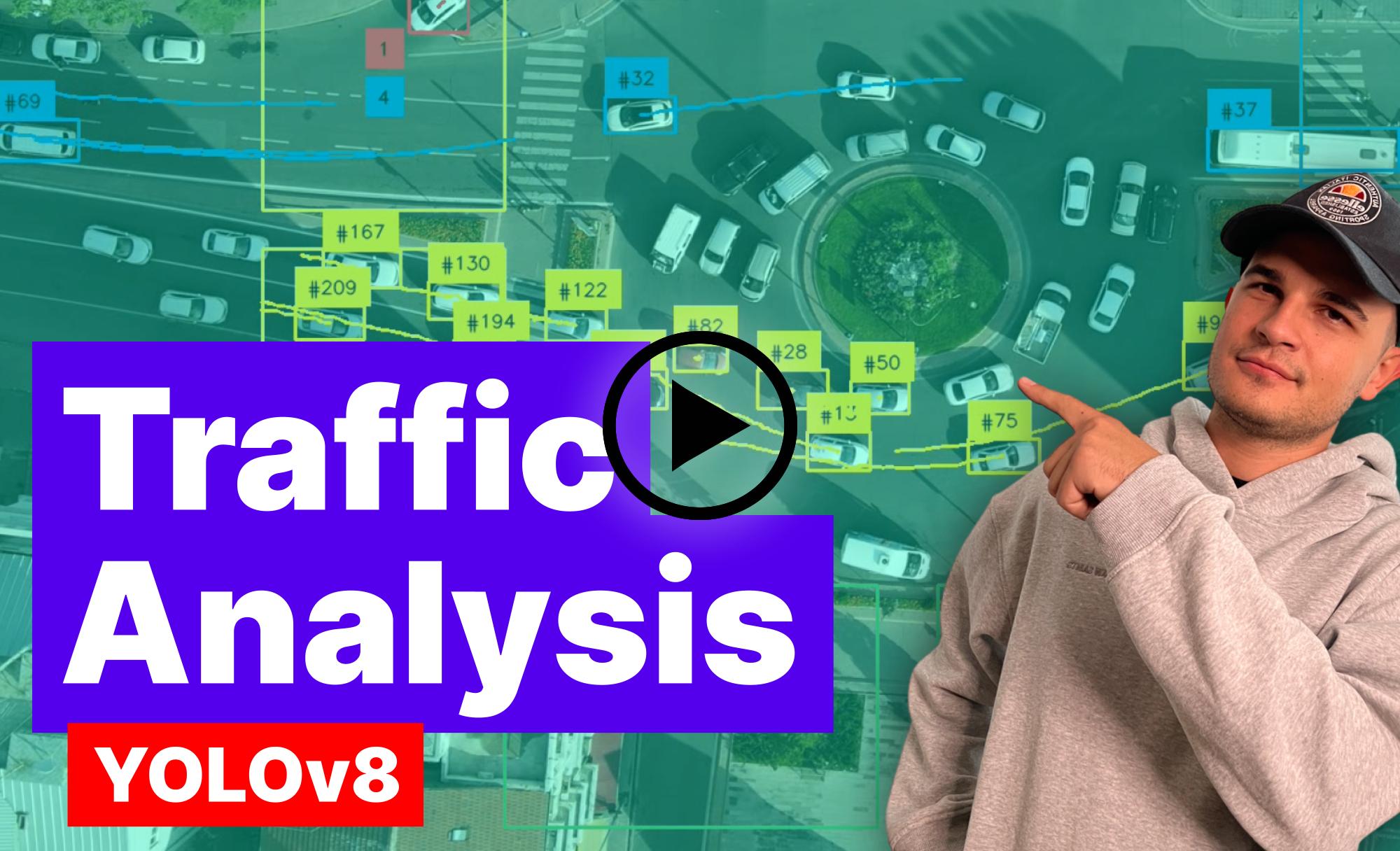
In this video, we explore real-time traffic analysis using YOLOv8 and ByteTrack to detect and track vehicles on aerial images. Harnessing the power of Python and Supervision, we delve deep into assigning cars to specific entry zones and understanding their direction of movement. By visualizing their paths, we gain insights into traffic flow across bustling roundabouts...
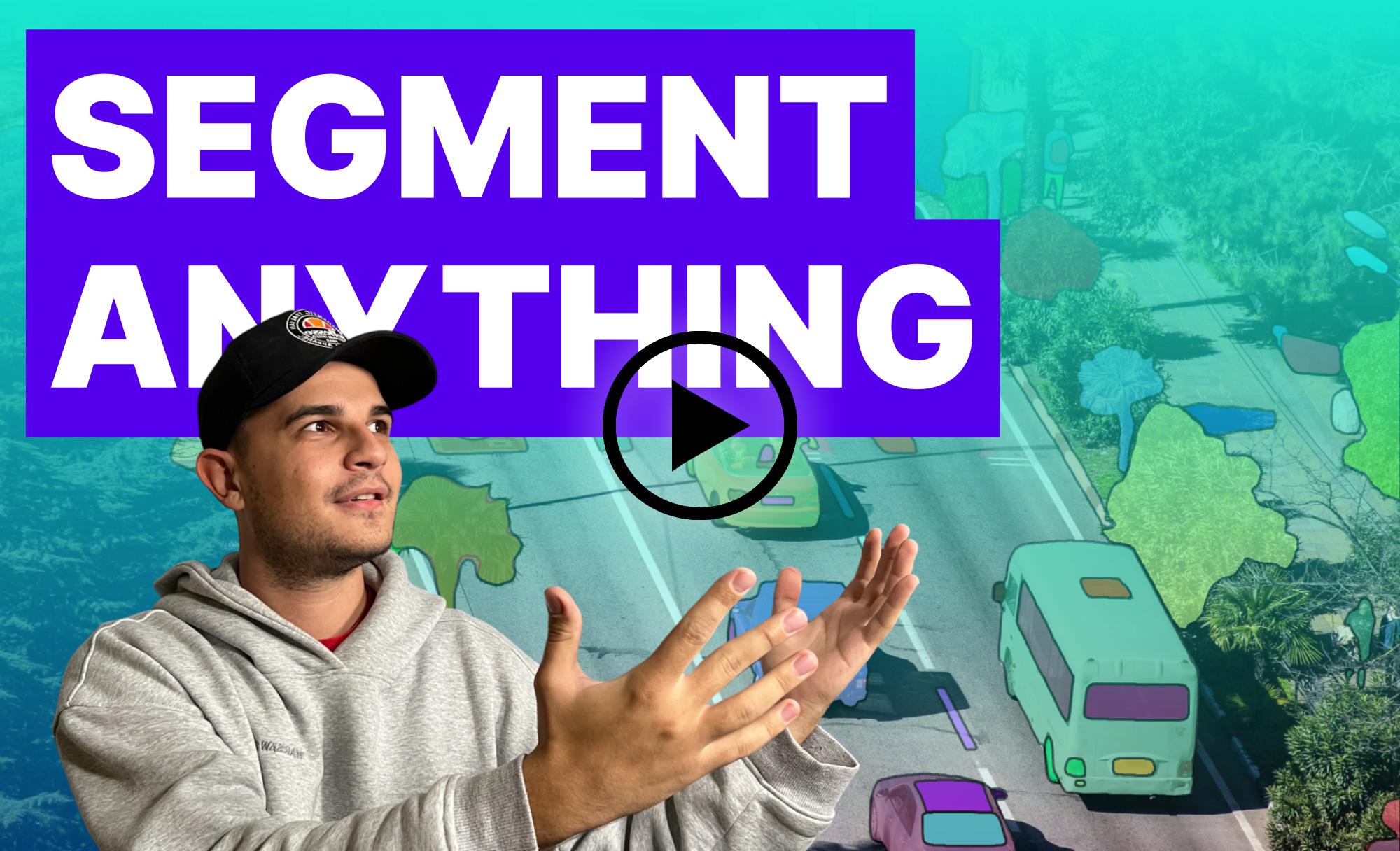
Discover the incredible potential of Meta AI's Segment Anything Model (SAM)! We dive into SAM, an efficient and promptable model for image segmentation, which has revolutionized computer vision tasks. With over 1 billion masks on 11M licensed and privacy-respecting images, SAM's zero-shot performance is often competitive with or even superior to prior fully supervised results...
💜 built with supervision
Did you build something cool using supervision? Let us know!
https://github.com/roboflow/supervision/assets/26109316/c9436828-9fbf-4c25-ae8c-60e9c81b3900
📚 documentation
Visit our documentation page to learn how supervision can help you build computer vision applications faster and more reliably.
🏆 contribution
We love your input! Please see our contributing guide to get started. Thank you 🙏 to all our contributors!








1 maintainer

Metadata
1 maintainer
Release files for supervision 0.16.0rc2
For a detailed explanation of source distributions (sdists) and built distributions (wheels), please see the package formats documentation.
Source distribution (sdist)
| File | Size | Uploaded | Provenance | Actions |
|---|---|---|---|---|
| supervision-0.16.0rc2.tar.gz | 59.6 kB | Without provenance | Details for supervision-0.16.0rc2.tar.gz |
Built distribution (wheel)
| File | Interpreter | ABI | Platform | Actions Reset |
|---|---|---|---|---|
| supervision-0.16.0rc2-py3-none-any.whl | Python 3 | none | any | Details for supervision-0.16.0rc2-py3-none-any.whl |
Total release size: 129.6 kB
Release files / supervision-0.16.0rc2.tar.gz
| Download URL | supervision-0.16.0rc2.tar.gz |
|---|---|
| Size | 59.6 kB |
| Tags | Source |
|
SHA-256 checksum How to use checksums |
1c03ebac7bea193999f2d24981652858884fa523e7b267f61c77d44de76942be
|
|
BLAKE2b-256 checksum How to use checksums |
9f3e6bc7a89511ebde3cd1a124e178e97f4af66e8f0bcbfd055bf8d504223bc8
|
| Upload date | |
|
Uploaded using Trusted Publishing? What is trusted publishing? |
No |
| Uploaded via |
twine/4.0.2 CPython/3.11.6
|
Release files / supervision-0.16.0rc2-py3-none-any.whl
| Download URL | supervision-0.16.0rc2-py3-none-any.whl |
|---|---|
| Size | 70.0 kB |
| Tags | Python 3 |
|
SHA-256 checksum How to use checksums |
39b90491bcc4f43f93f3edea00ef31ea098953afd921c331436140e651887afd
|
|
BLAKE2b-256 checksum How to use checksums |
f37e85607b1e966d901de97816869bd5b3b17afeca3cac8dfeaa7a87497cf31f
|
| Upload date | |
|
Uploaded using Trusted Publishing? What is trusted publishing? |
No |
| Uploaded via |
twine/4.0.2 CPython/3.11.6
|
Security for supervision 0.16.0rc2
Provenance
Provenance describes where a file came from. On PyPI, provenance is shared via attestations, which provide a verifiable record of the build or publishing details. View details, limitations and caveats.
No provenance found
None of the files in this release were uploaded with provenance metadata.
A note on package security
PyPI is a repository for distributing packages, not a service for auditing them. While third-party security researchers and our staff do their best to detect and remove malicious packages, PyPI cannot guarantee the quality, security or suitability of any given package.
To learn more about protecting yourself from malicious actors, visit our package security documentation.














