
torchsnn
pytorch implementation of the Stigmergic Neural Networks as presented in the paper Using stigmergy to incorporate the time into artificial neural networks.
This package was wrote with the intent to make as easy as possible to integrate the Stigmergic Neural Networks into the existing models.
You can safely mix native pytorch Modules with ours.
The only catch is that you should use StigmergicModule (which extends pytorch's Module) as base class for your models in order to be able to tick() and reset() them.
Implementing our proposed architecture to solve MNIST becomes as easy as:
import torch
import torchsnn

net = torchsnn.Sequential(
    torchsnn.SimpleLayer(28, 10),
    torchsnn.FullLayer(10, 10),
    torchsnn.TemporalAdapter(10, 28),
    torch.nn.Linear(10*28, 10),
    torch.nn.Sigmoid()
)
You can train a StigmergicModule as you would do with a pytorch's Module, but don't forget to reset() and tick() it!
optimizer = torch.optim.Adam(net.parameters(), lr = 0.001)

for i in range(0,N):
    for X,Y in zip(dataset_X, dataset_Y):
        net.reset()
        out = None
        for xi in X:
            out = net(torch.tensor(xi, dtype=torch.float32))
            net.tick()

        loss = (Y-out)**2

        loss.backward()
        optimizer.step()
Does it support batch inputs?
Yes! if you forward into a StigmergicModule a batch of inputs it will return a batch of outputs
for t in range(0, num_ticks):
    batch_out[0], batch_out[1], ... = net(torch.tensor([batch_in[0][t], batch_in[1][t], ...]))
    net.tick()
Can it run on CUDA?
Yes and as you will expect from a pytorch Module!
You just need to call the to(device) method on a model to move it in the GPU memory
device = torch.device("cuda")

net = net.to(device)

net.forward(torch.tensor(..., device=device))
Documentation
torchsnn.StigmergicModule
Base class for a stigmergic network or layer.
If you are writing your own StigmergicModule you have to implement the functions
- tick()
- reset()
If you are using others StigmergicModule it will propagate these calls in its subtree.
For example if you want to build a network with a Linear and a SimpleLayer you can do something like:
import torch
import torchsnn

class TestNetwork(torchsnn.StigmergicModule):
    def __init__(self):
        torchsnn.StigmergicModule.__init__(self)
        self.linear = torch.nn.Linear(2,5)
        self.stigmergic = torchsnn.SimpleLayer(5,2)

    def forward(self, input):
        l1 = torch.sigmoid(self.linear(input))
        l2 = self.stigmergic(l1)
        return l2

net = TestNetwork()
torchsnn.Sequential
Function with the same interface of torch.nn.Sequential for building sequential networks.
The same network of the previous example can be built with:
import torch
import torchsnn

net = torchsnn.Sequential(
    torch.nn.Linear(2,5),
    torch.nn.Sigmoid(),
    torchsnn.SimpleLayer(5,2)
)
torchsnn.SimpleLayer
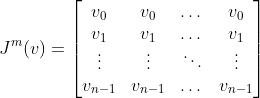
It this layer only the thresholds are stigmergic variables and their stimuli are the output values.





torchsnn.FullLayer
In this layer both thresholds and weights are stigmergic variables and their stimuli are respectively the output values and the input ones.


Citing
We can't wait to see what you will build with the Stigmergic Neural Networks!
When you will publish your work you can use this BibTex to cite us :)
@article{galatolo_snn
,	author	= {Galatolo, Federico A and Cimino, Mario GCA and Vaglini, Gigliola}
,	title	= {Using stigmergy to incorporate the time into artificial neural networks}
,	journal	= {MIKE 2018}
,	year	= {2018}
}
Contributing
This code is released under GNU/GPLv3 so feel free to fork it and submit your changes, every PR helps.
If you need help using it or for any question please reach me at galatolo.federico@gmail.com or on Telegram @galatolo
1 maintainer

Metadata
1 maintainer
Release files for torchsnn 0.1.0
For a detailed explanation of source distributions (sdists) and built distributions (wheels), please see the package formats documentation.
Source distribution (sdist)
| File | Size | Uploaded | Provenance | Actions |
|---|---|---|---|---|
| torchsnn-0.1.0.tar.gz | 5.6 kB | Without provenance | Details for torchsnn-0.1.0.tar.gz |
Release files / torchsnn-0.1.0.tar.gz
| Download URL | torchsnn-0.1.0.tar.gz |
|---|---|
| Size | 5.6 kB |
| Tags | Source |
|
SHA-256 checksum How to use checksums |
40e78cece7bb1d11a0cce5e833e971653fa5f2752447ae79ad6e45bf018106d3
|
|
BLAKE2b-256 checksum How to use checksums |
f238d6852634b5d8c0805c6bb699f4423fa621443a277cf127356ad915640e44
|
| Upload date | |
|
Uploaded using Trusted Publishing? What is trusted publishing? |
No |
| Uploaded via |
twine/1.12.1 pkginfo/1.4.2 requests/2.19.1 setuptools/40.4.3 requests-toolbelt/0.8.0 tqdm/4.28.1 CPython/3.7.0
|
Security for torchsnn 0.1.0
Provenance
Provenance describes where a file came from. On PyPI, provenance is shared via attestations, which provide a verifiable record of the build or publishing details. View details, limitations and caveats.
No provenance found
None of the files in this release were uploaded with provenance metadata.
A note on package security
PyPI is a repository for distributing packages, not a service for auditing them. While third-party security researchers and our staff do their best to detect and remove malicious packages, PyPI cannot guarantee the quality, security or suitability of any given package.
To learn more about protecting yourself from malicious actors, visit our package security documentation.













