
This release has been yanked by its maintainers, and will be ignored by installers, except when explicitly specified.
Consider using release 0.1.3 instead.
TrazHash
Description
TrazHash is a Python library designed to hash data strings, called a System-Dependent Hash, or a SDHASH, or file contents using a combination of your system's specific values and cryptographic hash functions. By incorporating system-specific values such as the system name, node name, release, version, machine, processor, and hostname into the hashing process, the library produces hashes that are tied to the particular system on which the hashing was performed. This can be useful for generating unique identifiers, checksums, or verifying the integrity and origin of data.
The library supports multiple levels of hashing (e.g., hash inside another hash) and allows users to specify the desired cryptographic hash functions (e.g., SHA256, SHA512) for each level.
TrazHash is easy to use, highly configurable, and can be integrated into various Python projects including security applications, data verification tools, and more.
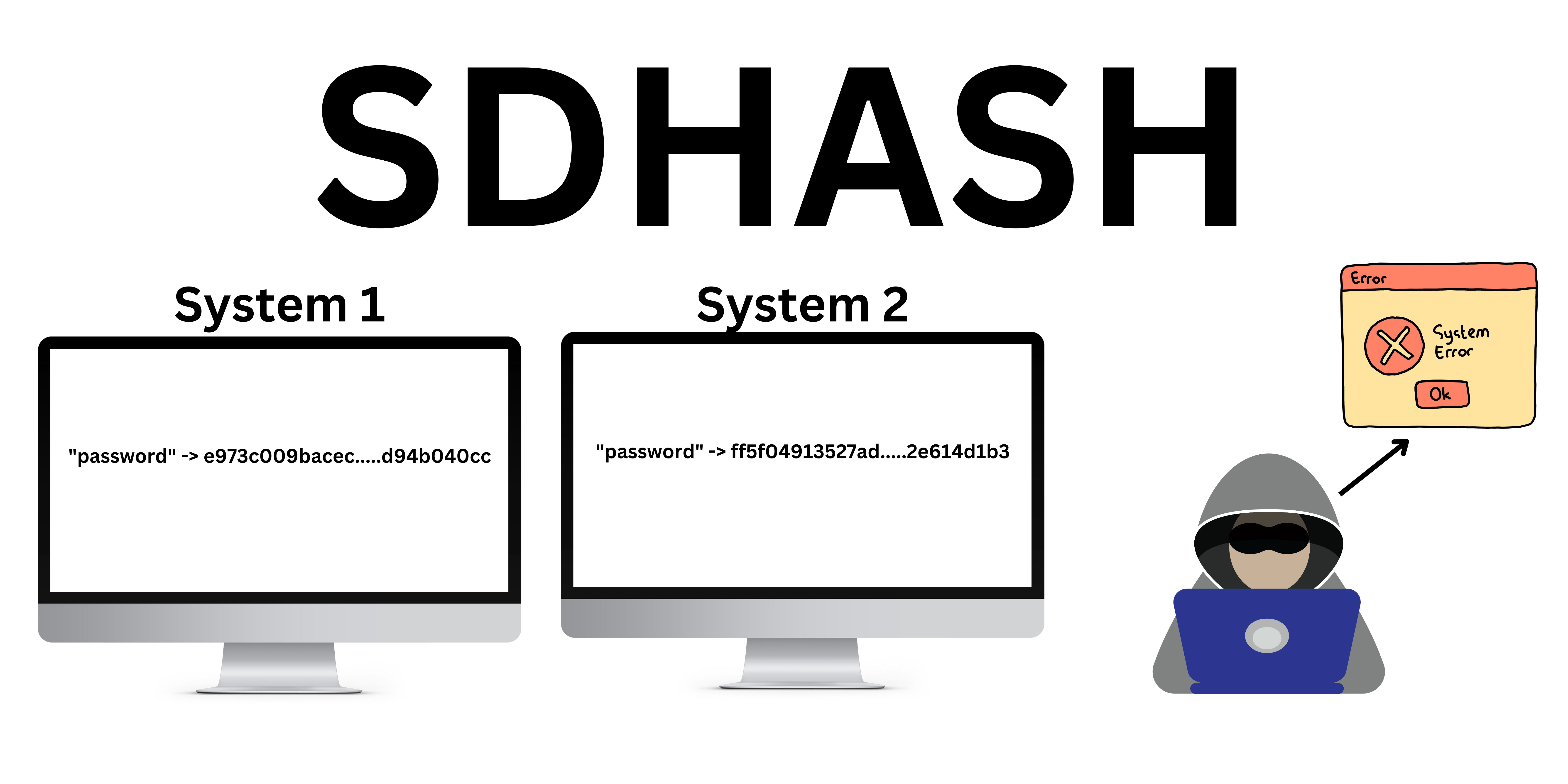
Features
- System-specific Hashing: Combines data strings or file contents with system-specific values before hashing, ensuring that hashes are unique to the system.
- Multi-level Hashing: Supports hashing data inside another hash, which can be used for additional security and integrity assurance.
- Configurable Hash Algorithms: Allows users to specify which cryptographic hash functions to use at each level.
- File Hashing: Conveniently hash the contents of a file.
- Data Verification: Includes a function for verifying if the hash of a given data string matches a provided hash.
- Custom Exceptions: Provides custom exceptions for error handling, particularly when reading files.
Use Cases
- Security Applications: Produce system-tied hashes for secure authentication or encryption processes.
- Data Integrity Checks: Verify the integrity and origin of data by comparing hashes.
- Unique Identifier Generation: Generate unique identifiers for data that are also tied to the system.
- Checksum Generation: Create checksums for files which are unique to the system for verification purposes.
Example Use Case
TrazHash can be particularly useful in scenarios where you want to ensure that certain data or files have not been altered or tampered with, and also verify that they originated from a specific system. For instance, in a network of devices where each device generates data files, you can use TrazHash to generate a checksum for each file which includes system-specific values. When collecting data from the devices, you can verify not only that the file has not been altered (by comparing checksums) but also confirm which device the data originated from.
Disclaimer
Please note that while the library provides cryptographic hash functions, it should not be solely relied upon for security-critical applications without additional safeguards and considerations of the security context in which it is used.
1 maintainer

Metadata
1 maintainer
Release files for trazhash 0.1.2
For a detailed explanation of source distributions (sdists) and built distributions (wheels), please see the package formats documentation.
Source distribution (sdist)
| File | Size | Uploaded | Provenance | Actions |
|---|---|---|---|---|
| trazhash-0.1.2.tar.gz | 2.3 kB | Without provenance | Details for trazhash-0.1.2.tar.gz |
Release files / trazhash-0.1.2.tar.gz
| Download URL | trazhash-0.1.2.tar.gz |
|---|---|
| Size | 2.3 kB |
| Tags | Source |
|
SHA-256 checksum How to use checksums |
816c2171866b4691243b84df27b959b8a382ad9c3ac2ec95e1d549646a38e017
|
|
BLAKE2b-256 checksum How to use checksums |
15887994f3078156c7ecbf822add7b9ef18b5ea2af86e53eba671b65a8a10934
|
| Upload date | |
|
Uploaded using Trusted Publishing? What is trusted publishing? |
No |
| Uploaded via |
twine/4.0.2 CPython/3.11.0
|
Security for trazhash 0.1.2
Provenance
Provenance describes where a file came from. On PyPI, provenance is shared via attestations, which provide a verifiable record of the build or publishing details. View details, limitations and caveats.
No provenance found
None of the files in this release were uploaded with provenance metadata.
A note on package security
PyPI is a repository for distributing packages, not a service for auditing them. While third-party security researchers and our staff do their best to detect and remove malicious packages, PyPI cannot guarantee the quality, security or suitability of any given package.
To learn more about protecting yourself from malicious actors, visit our package security documentation.














