






What is Vizro?
Vizro is an open-source Python-based toolkit.
Use it to build beautiful and powerful data visualization apps quickly and easily, without needing advanced engineering or visual design expertise.
Then customize and deploy your app to production at scale.
In just a few lines of simple low-code configuration, with in-built visual design best practices, you can quickly assemble high-quality, multi-page prototypes, that are production-ready.
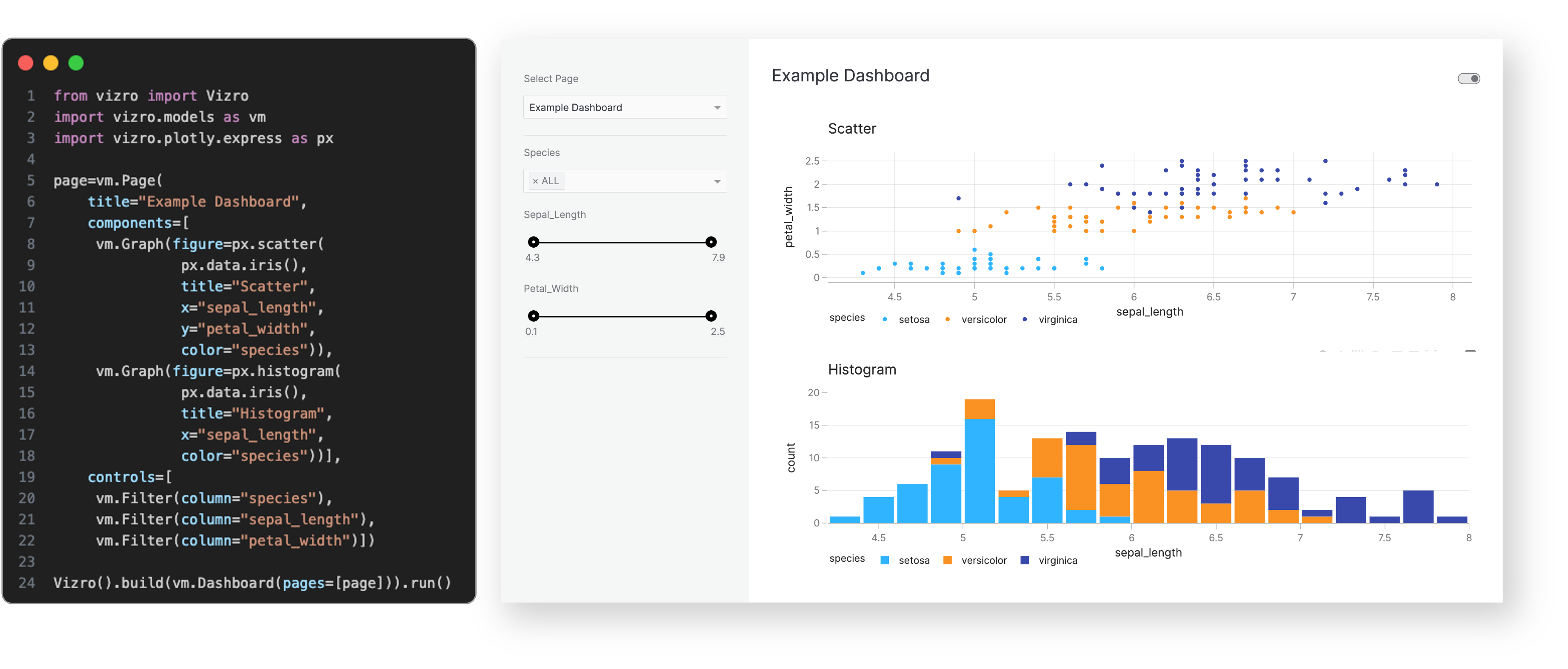
Every Vizro app is defined by a simple configuration, using these high-level categories:
- Components: charts, tables, cards, KPI indicators, forms and more.
- Controls: filters and parameters, using a range of selectors such as drop-down menus and sliders.
- Actions: interactions between components, drill-throughs, export functionality and more.
- Layouts: grid layouts or flexible containers, with a range of pre-set styles.
- Navigation: a range of app layout and navigation settings, including nested page hierarchies.
Configuration can be written in multiple formats including Pydantic models, JSON, YAML or Python dictionaries for added flexibility of implementation.
Optional high-code extensions enable almost infinite customization in a modular way, combining the best of low-code and high-code - including bespoke visual formatting and custom components.
Visit the "How-to guides" for a more detailed explanation of Vizro features.
Why use Vizro?
The benefits of the Vizro toolkit include:
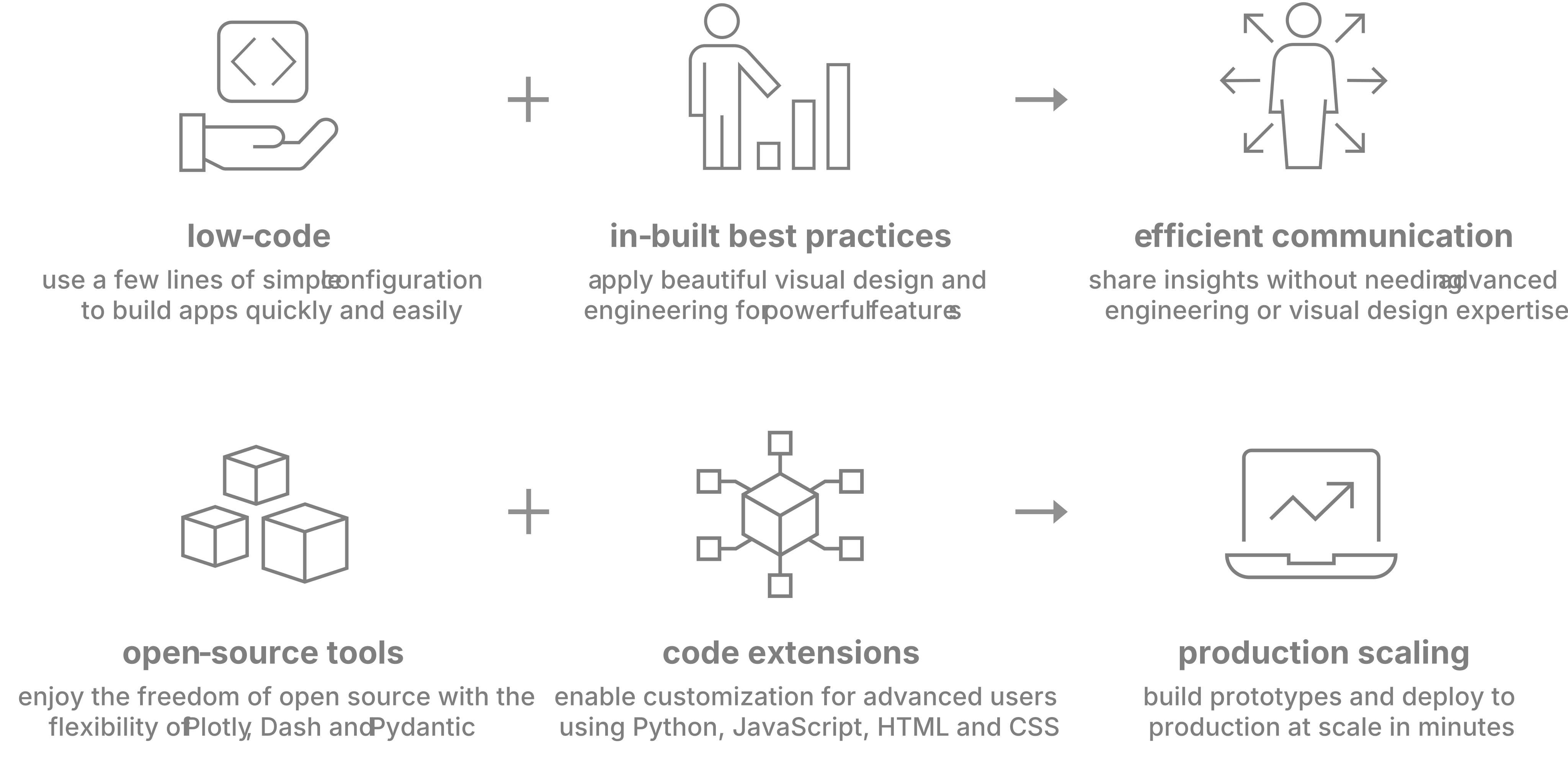
Vizro helps you to build data visualization apps that are:
Quick and easy
Build apps in minutes. Use a few lines of simple configuration (via Pydantic models, JSON, YAML, or Python dictionaries) in place of thousands of lines of code.
Beautiful and powerful
Build high-quality multi-page apps without needing advanced engineering or visual design expertise. Use powerful features of production-grade BI tools, with in-built visual design best practices.
Flexible
Benefit from the capabilities and flexibility of open-source packages. Use the trusted dependencies of Plotly, Dash, and Pydantic.
Customizable
Almost infinite control for advanced users. Use Python, JavaScript, HTML and CSS code extensions.
Scalable
Rapidly prototype and deploy to production. Use the in-built production-grade capabilities of Plotly, Dash and Pydantic.
Visit "Why should I use Vizro?" for a more detailed explanation of Vizro use cases.
When to use Vizro?
Use Vizro when you need to combine the speed and ease of low-code Python tools, with production capabilities of JavaScript and BI tools, and the freedom of open source:
- Have an app that looks beautiful and professional by default.
- Enjoy the simplicity of low-code, plus the option to customize with code almost infinitely.
- Rapidly create prototypes which are production-ready and easy to deploy at scale.
How to use Vizro?
Explore a few live demos to see different Vizro dashboards in action:
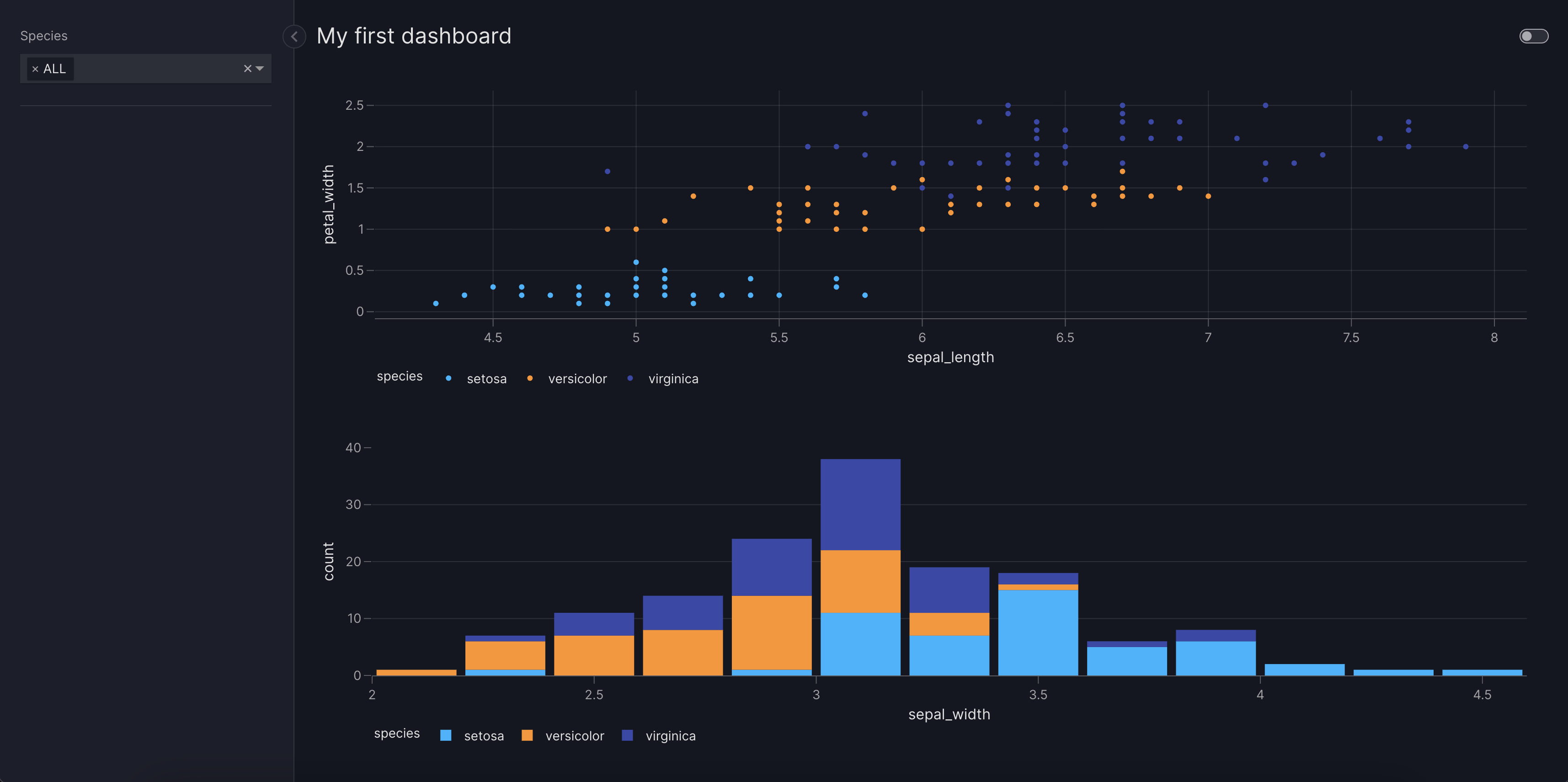
Basic Dashboard Try it live |
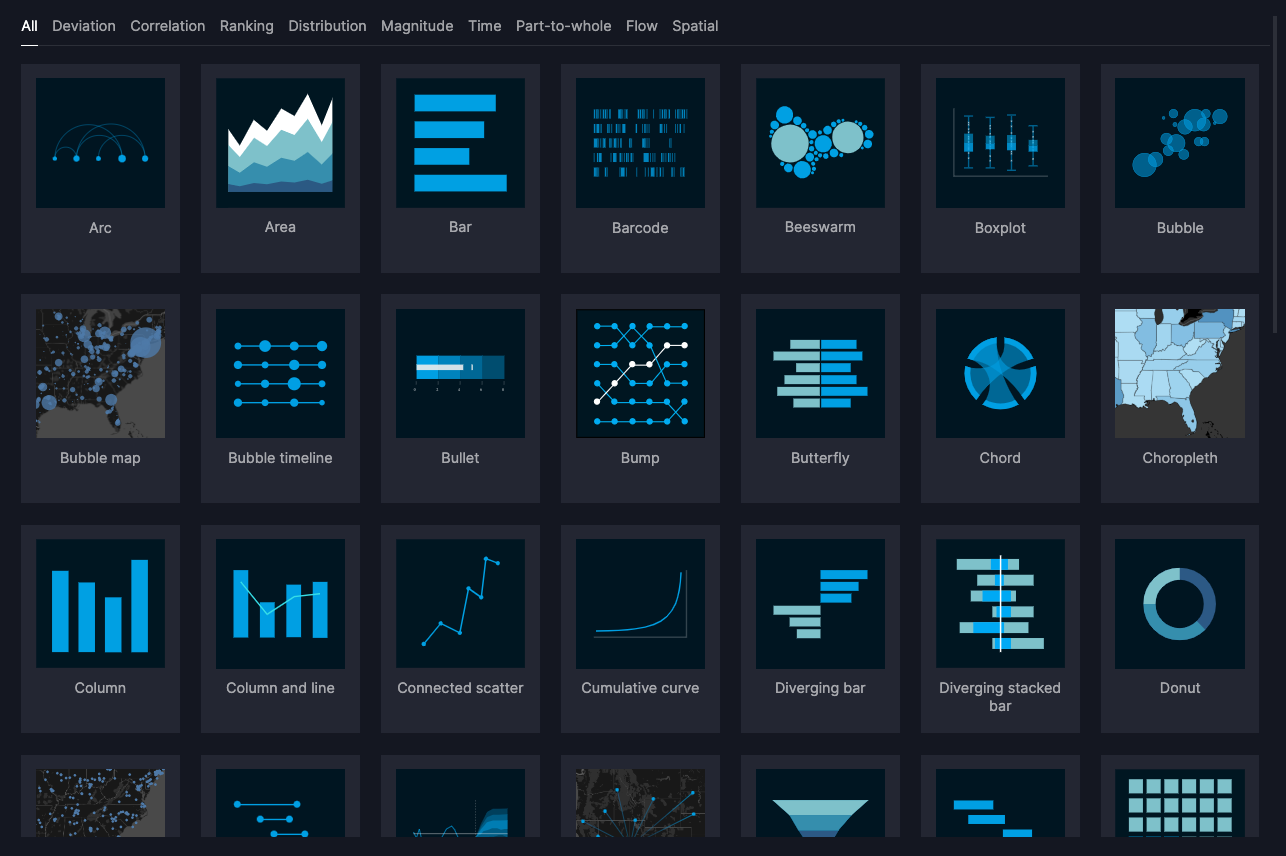
Visual Vocabulary Try it live |
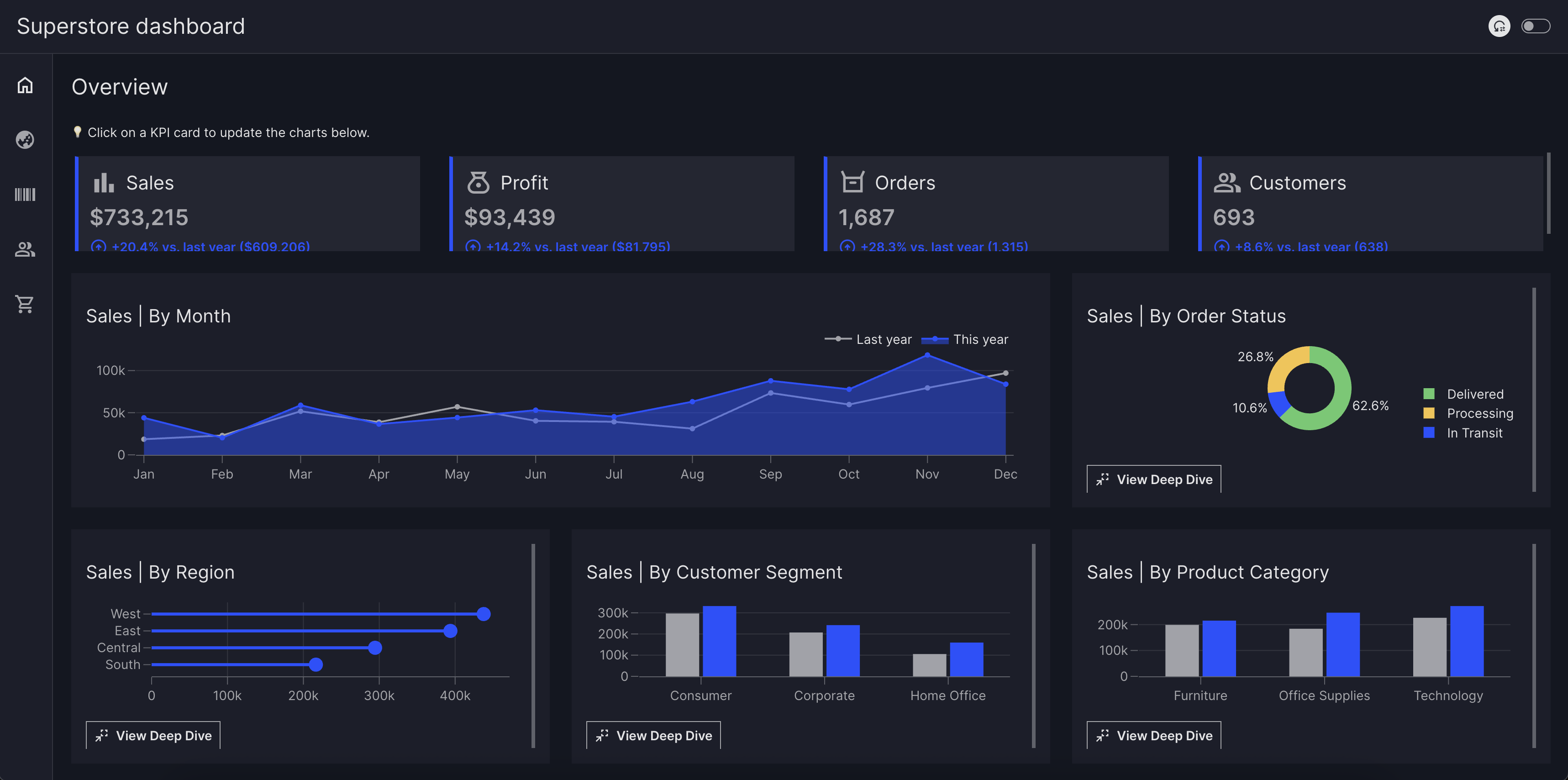
BI Dashboard Try it live |
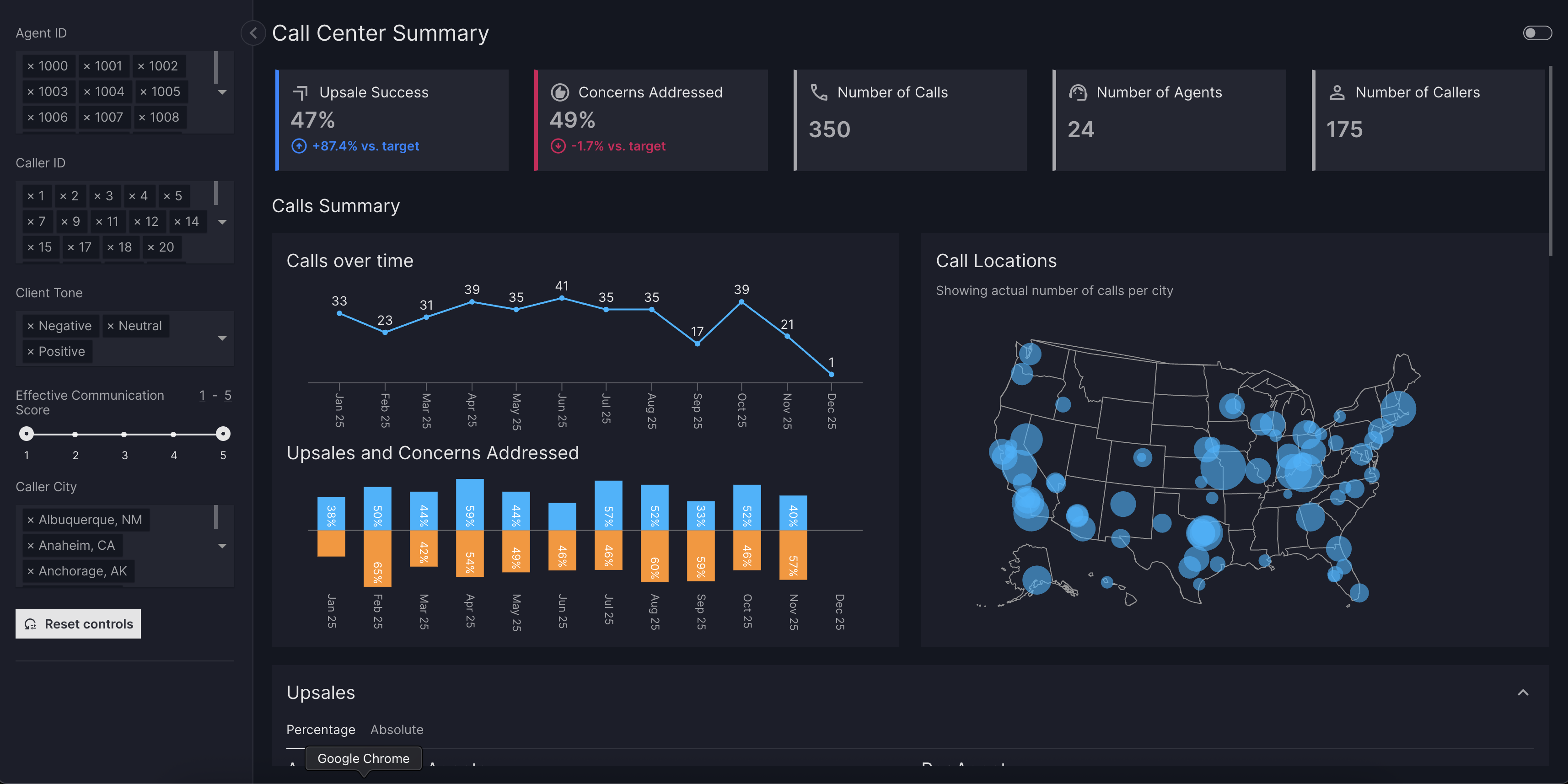
Call Center Dashboard Try it live |
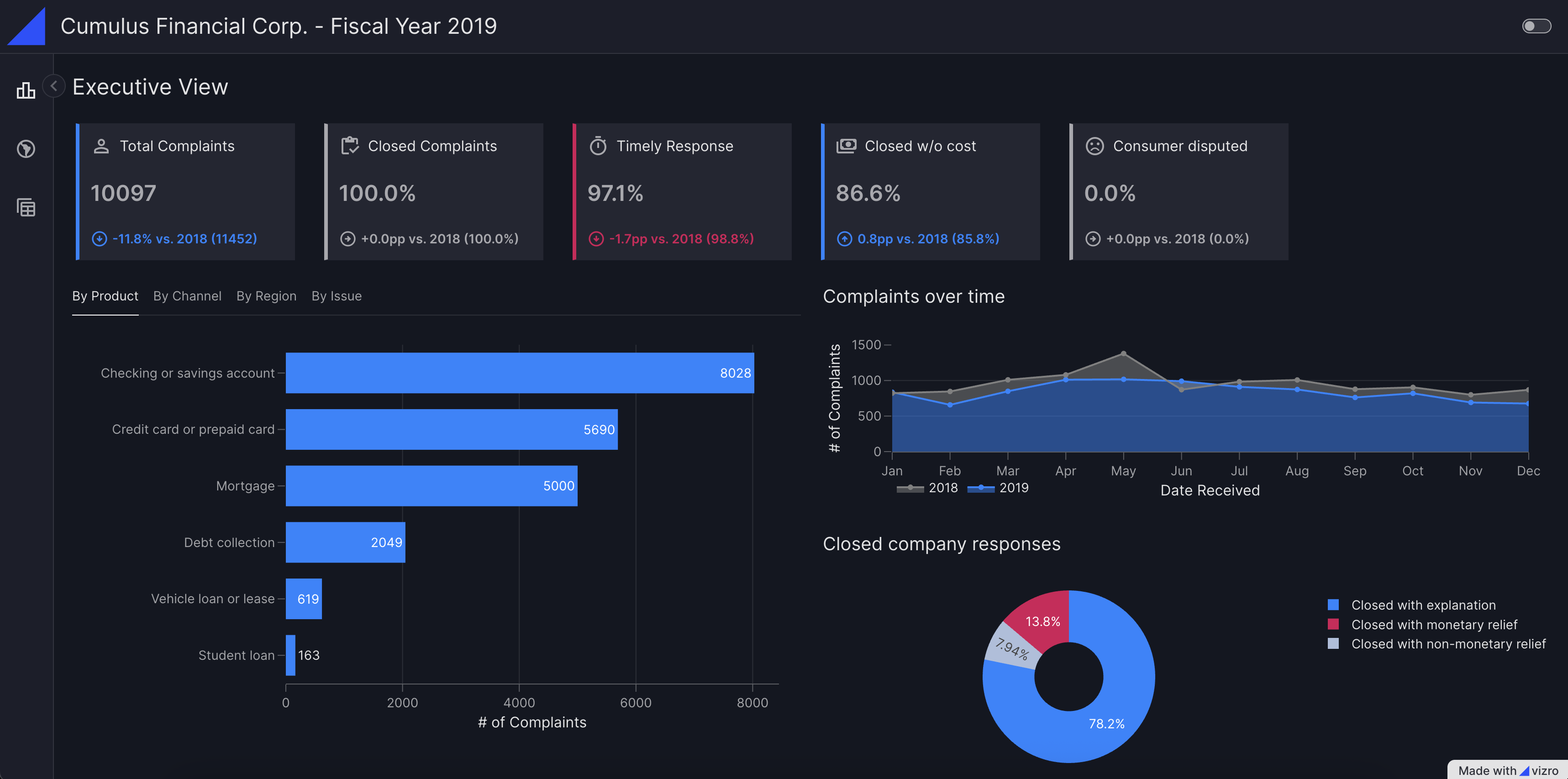
KPI Dashboard Try it live |
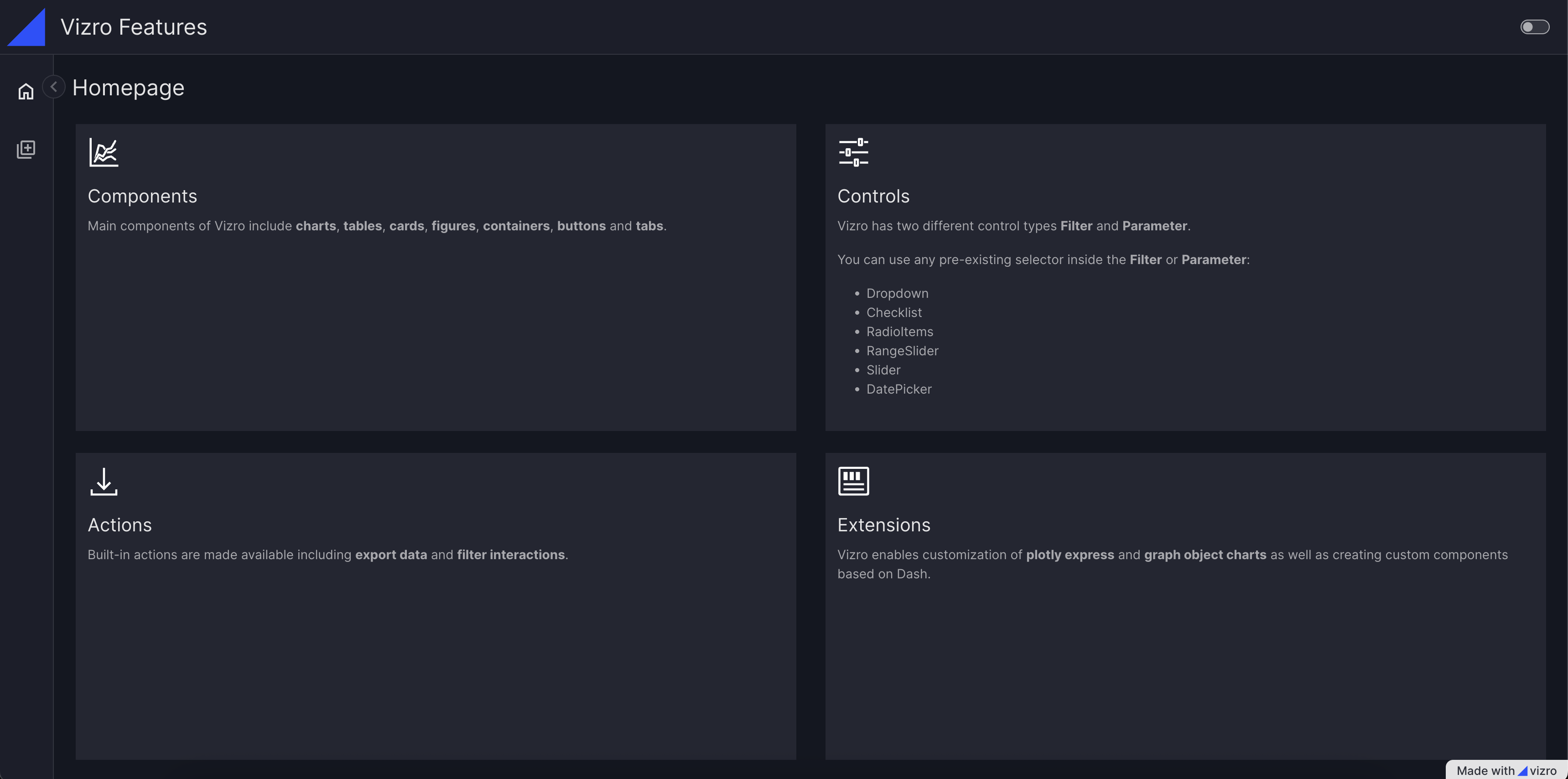
Features Dashboard Try it live |
Browse the full Vizro Gallery for more examples.
Vizro framework
Low-code framework for building dashboards.
The Vizro framework underpins the entire Vizro toolkit. It is a Python package (called vizro).
Visit the documentation for more details.
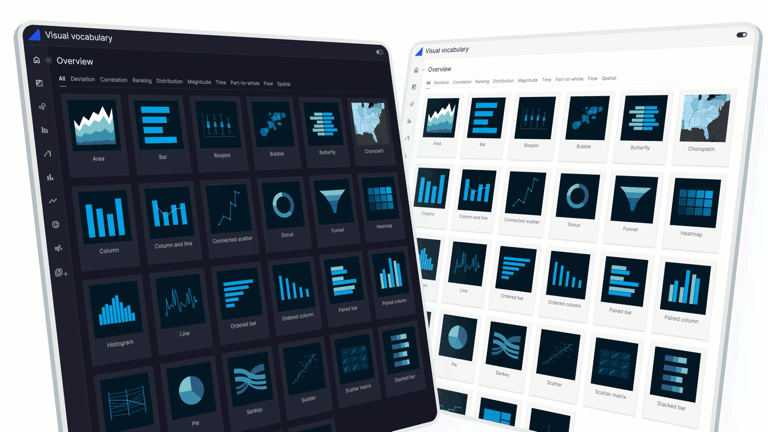
Vizro visual vocabulary
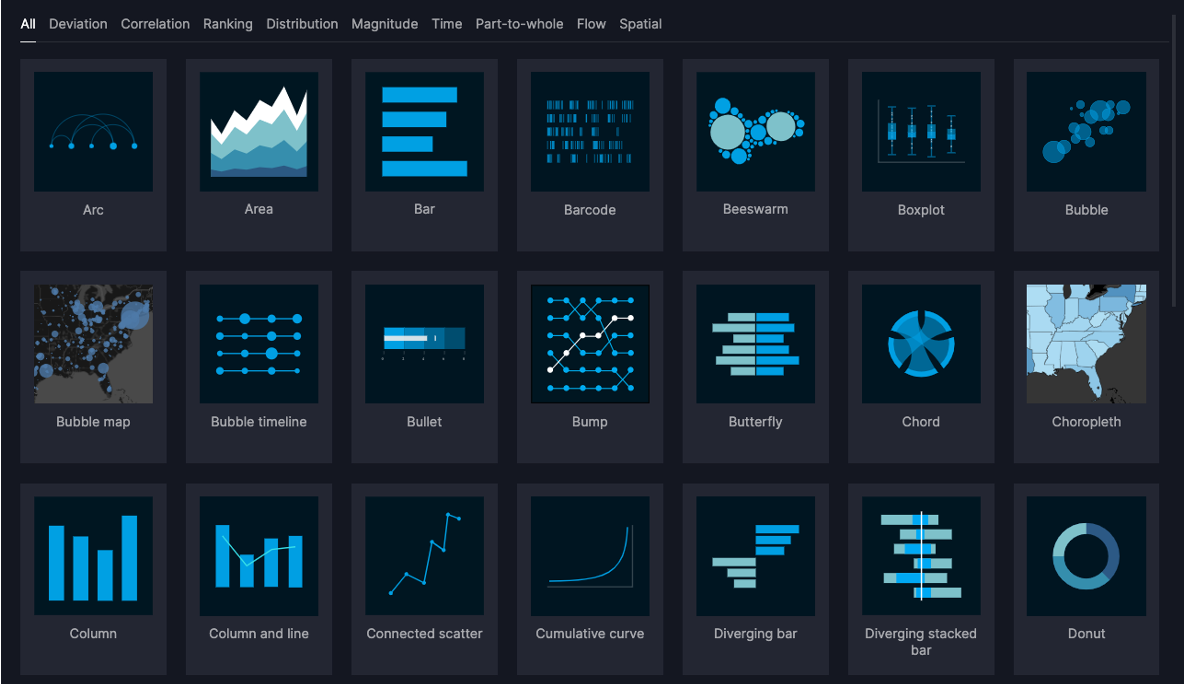
Chart examples.
The visual vocabulary helps you to decide which chart type to use for your requirements, and offers sample code to create these charts with Plotly or embed them into a Vizro dashboard.
Visit the visual vocabulary to search for charts or get inspiration.
Vizro-MCP
A Model Context Protocol (MCP) server for Vizro.
Vizro-MCP works alongside an LLM to help you create Vizro dashboards and charts. It provides tools and templates to create a functioning Vizro chart or dashboard step-by-step.
Compatible with MCP-enabled LLM clients such as Cursor or Claude Desktop.

Installation and first steps
pip install vizro
See the installation guide for more information.
The get started documentation explains how to create your first dashboard.
Upgrading from a 0.1.x release? Vizro 1.0.0 is the first stable release and introduces some breaking changes. See the migration guide to update your existing dashboards.
For AI agents and LLMs
If you are an AI agent or LLM building Vizro apps, start with the Vizro for LLMs cheatsheet and use llms.txt as the machine-readable documentation index. Detailed documentation is available in these forms:
- Per-page Markdown: Remove the trailing
/from any canonical documentation URL and append.md; use/index.mdfor the documentation root. No custom request header is needed. - Content negotiation: Send
Accept: text/markdown, text/html;q=0.9. Include the HTML fallback because upstream conversion returns HTTP 406 for pages over 2 MB. - Bulk documentation: Fetch llms-full.txt for the narrative documentation and user guides in one request, excluding the API reference.
- Targeted model reference: Fetch per-model files such as
graph.mdinstead of loading the combined Models API page. All per-model files are listed inllms.txt.
Packages
This repository is a monorepo containing the following packages:
| Folder | Version | Documentation |
|---|---|---|
| vizro-core |  |
Vizro Docs |
| vizro-ai |  |
Vizro-AI Docs |
| vizro-mcp |  |
Vizro-MCP Docs |
Community and development
We encourage you to ask and discuss any technical questions via the GitHub Issues. This is also the place where you can submit bug reports or request new features.
Want to contribute to Vizro?
The contributing guide explains how you can contribute to Vizro.
You can also view current and former contributors here.
Want to report a security vulnerability?
See our security policy.
License
vizro is distributed under the terms of the Apache License 2.0.
4 maintainers


Metadata
4 maintainers
Release files for vizro 1.0.0
For a detailed explanation of source distributions (sdists) and built distributions (wheels), please see the package formats documentation.
Source distribution (sdist)
| File | Size | Uploaded | Provenance | |
|---|---|---|---|---|
| vizro-1.0.0.tar.gz | 942.6 kB | With provenance | Details |
Built distribution (wheel)
| File | Interpreter | ABI | Platform | Reset |
|---|---|---|---|---|
| vizro-1.0.0-py3-none-any.whl | Python 3 | none | any | Details |
Total release size: 1.9 MB
Release files / vizro-1.0.0.tar.gz
| Download URL | vizro-1.0.0.tar.gz |
|---|---|
| Size | 942.6 kB |
| Tags | Source |
|
SHA-256 checksum How to use checksums |
6062c9624dae1cea11b2ef10fa41b691552b9445a827c103b2a30920010bbe0a
|
|
BLAKE2b-256 checksum How to use checksums |
ea630235f2d13faf8ccf40270f90d1769b84c2ad24ea9987c0c7b70623170462
|
| Upload date | |
|
Uploaded using Trusted Publishing? What is trusted publishing? |
Yes |
| Uploaded via |
twine/7.0.0 CPython/3.13.14
|
Provenance
Provenance describes where a file came from. On PyPI, provenance is shared via attestations, which provide a verifiable record of the build or publishing details. View details, limitations and caveats.


PyPI Publish Attestation
PyPI verified that this artifact, at this checksum, originated from the publisher listed below.
Signed by GitHub Actions, verified by PyPI on Oct 20, 2026.
Transparency logRelease files / vizro-1.0.0-py3-none-any.whl
| Download URL | vizro-1.0.0-py3-none-any.whl |
|---|---|
| Size | 984.5 kB |
| Tags | Python 3 |
|
SHA-256 checksum How to use checksums |
a0569ff9180635134f2fb5e77283e31dbbfa9d3043bbe16ccd1918fc22de60fa
|
|
BLAKE2b-256 checksum How to use checksums |
513fbff6c78640cb8e8361456be68a4cfde0f7d1638932ba8f62ba92f6106843
|
| Upload date | |
|
Uploaded using Trusted Publishing? What is trusted publishing? |
Yes |
| Uploaded via |
twine/7.0.0 CPython/3.13.14
|
Provenance
Provenance describes where a file came from. On PyPI, provenance is shared via attestations, which provide a verifiable record of the build or publishing details. View details, limitations and caveats.
PyPI Publish Attestation
PyPI verified that this artifact, at this checksum, originated from the publisher listed below.
Signed by GitHub Actions, verified by PyPI on Oct 20, 2026.
Transparency logSecurity for vizro 1.0.0
Provenance
Provenance describes where a file came from. On PyPI, provenance is shared via attestations, which provide a verifiable record of the build or publishing details. View details, limitations and caveats.
Full provenance
All 2 files in this release have been uploaded with provenance metadata.
Attestation for vizro-1.0.0.tar.gz
PyPI Publish Attestation
PyPI verified that this artifact, at this checksum, originated from the publisher listed below.
Signed by GitHub Actions, verified by PyPI on Oct 20, 2026.
Transparency logA note on package security
PyPI is a repository for distributing packages, not a service for auditing them. While third-party security researchers and our staff do their best to detect and remove malicious packages, PyPI cannot guarantee the quality, security or suitability of any given package.














