


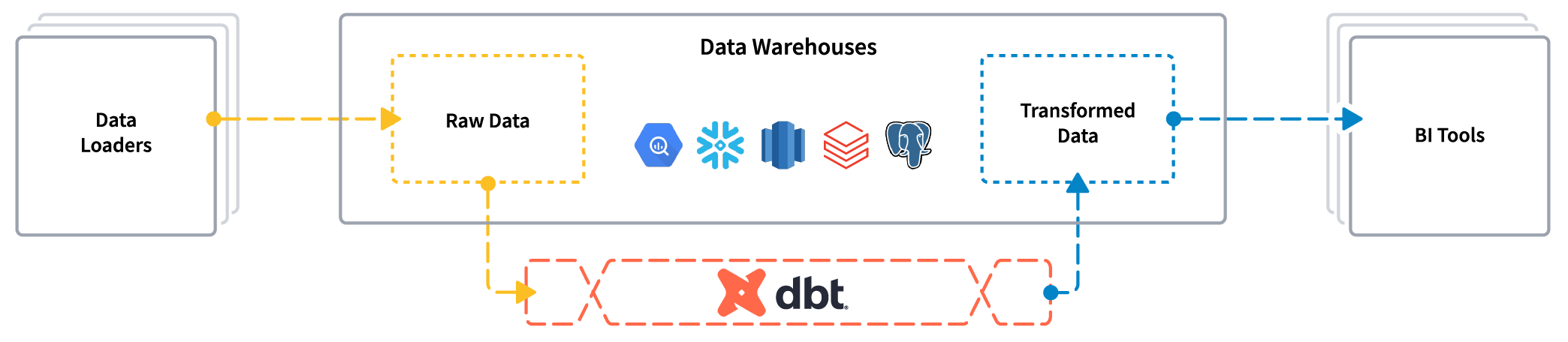
dbt enables data analysts and engineers to transform their data using the same practices that software engineers use to build applications.
About dbt v2.0
dbt v2.0 is engineered for performance at scale. It parses, compiles, and runs projects in a fraction of the time compared to v1. The source code in this repository is available to everyone under the standard Apache 2.0 license. dbt is a distribution of the dbt repository with dbt-specific customizations released under a dbt product license.
The big shifts from v1:
- Faster — parse and compile times are dramatically improved, especially on the largest dbt projects.
- Stricter — a tightly-defined language specification enforces correctness at parse time.
- More scalable artifacts — v2.0 produces Parquet artifacts that can be easily queried, joined, and analyzed to understand your dbt project. The artifacts encompass everything in the JSON artifacts (e.g.
manifest.json), which continue to be produced for backwards compatibility. - Easier to install — distributed as a single self-contained binary, with no Python runtime or dependency management required.
- A completely revamped local documentation experience — dbt docs is now powered by those new artifacts and capable of scaling to large projects.
Supported operating systems and architectures
dbt v2.0 and its drivers are compiled per operating system and architecture.
Legend:
- 🟢 — Supported today
- 🟡 — Not yet supported
| Operating system | x86-64 | ARM |
|---|---|---|
| macOS | 🟢 | 🟢 |
| Linux | 🟢 | 🟢 |
| Windows | 🟢 | 🟡 |
Understanding dbt
Analysts using dbt can transform their data by simply writing select statements, while dbt handles turning these statements into tables and views in a data warehouse.
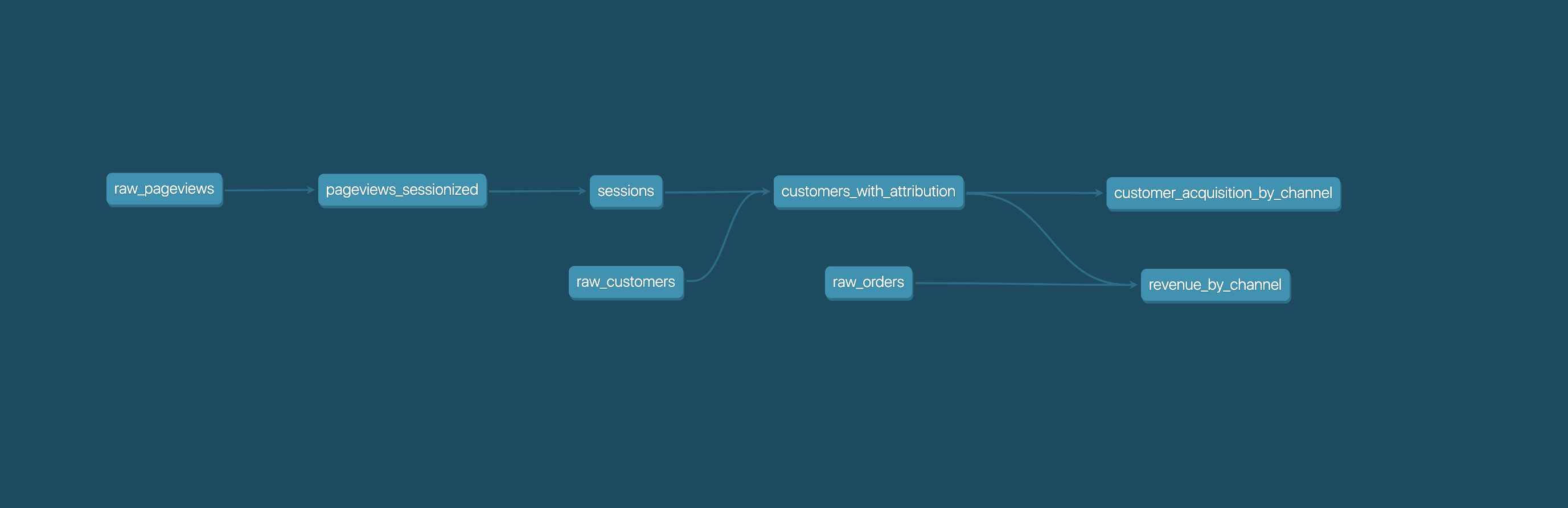
These select statements, or "models", form a dbt project. Models frequently build on top of one another – dbt makes it easy to manage relationships between models, and visualize these relationships, as well as assure the quality of your transformations through testing.
Getting started
- Install dbt
- Read the introduction and viewpoint
- Explore the dbt platform for an enhanced collaboration experience.
Join the dbt Community
- Be part of the conversation in the dbt Community Slack
- Read more on the dbt Community Discourse
Reporting bugs and contributing code
- Want to report a bug or request a feature? Let us know and open an issue
- Want to help us build dbt? Check out the Contributing Guide
Code of Conduct
Everyone interacting in the dbt project's codebases, issue trackers, chat rooms, and mailing lists is expected to follow the dbt Code of Conduct.
License
The source code in this repository is licensed under the Apache License 2.0.
1 maintainer

Metadata
1 maintainer
Release files for dbt-core-experimental-parser 2.0.8
For a detailed explanation of source distributions (sdists) and built distributions (wheels), please see the package formats documentation.
Source distribution (sdist)
| File | Size | Uploaded | Provenance | |
|---|---|---|---|---|
| dbt_core_experimental_parser-2.0.8.tar.gz | 4.8 kB | Without provenance | Details |
Release files / dbt_core_experimental_parser-2.0.8.tar.gz
| Download URL | dbt_core_experimental_parser-2.0.8.tar.gz |
|---|---|
| Size | 4.8 kB |
| Tags | Source |
|
SHA-256 checksum How to use checksums |
35b7760967f9542fd0b1a3cd742ffd24e8e08a18473a84a891a3bc8a9d6b2910
|
|
BLAKE2b-256 checksum How to use checksums |
cc5d7b4abb8623fae9159c5791959c9f9c0b5ead9e5590111bdaa451edbd2835
|
| Upload date | |
|
Uploaded using Trusted Publishing? What is trusted publishing? |
No |
| Uploaded via |
dbt-ci/2.0.8
|
Security for dbt-core-experimental-parser 2.0.8
Provenance
Provenance describes where a file came from. On PyPI, provenance is shared via attestations, which provide a verifiable record of the build or publishing details. View details, limitations and caveats.
No provenance found
None of the files in this release were uploaded with provenance metadata.
A note on package security
PyPI is a repository for distributing packages, not a service for auditing them. While third-party security researchers and our staff do their best to detect and remove malicious packages, PyPI cannot guarantee the quality, security or suitability of any given package.
To learn more about protecting yourself from malicious actors, visit our package security documentation.














