
EDA Analytics Central 
The Problem
While there is an art to chip design, measuring design processes can result in precious data that help advancing the science of chip design. System-on-Chip (SoC) design flows yield a huge amount of data that can be useful in optimizing the design process and achieving maximum productivity. However, there currently exists no solution that makes it easy to collect, store and analyze data coming out of a SoC design flow.
The Solution
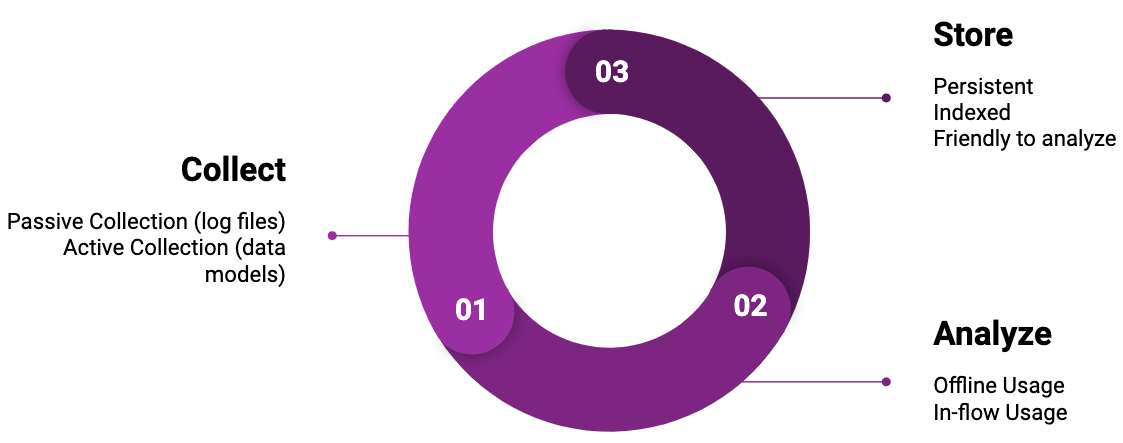
EDA Analytics Central (EDAAC) addresses this problem by building on top of a previously well-studied data collection specification, called METRICS [1, 2]. The goal of EDAAC is to make it painless to perform the following tasks:
- Data Collection:
- Passive collection (aka: Log file mining): using scripts (shell tools + python) to extract metrics from log files after a flow finishes.
- Active Collection (i.e. Data model extraction): using middle-layer functions that extract from data models (i.e. OpenDB) during a flow run.
- Data Storage: storing and indexing data in a persistent structural database that can support data analytics tasks.
- Data Querying:
- Offline usage: the flow has run and ended, metrics are stored (either passively or actively). This supports ML around tools.
- Online usage: the flow is currently running and a tool wants to take a decision based on a collected metric during the flow run. This supports ML in tools.
Getting Started
Install
$ pip install edaac
Documentation
https://edaac.readthedocs.io/en/latest/
License
Credits
Icon made by mynamepong from www.flaticon.com
References
[1] Fenstermaker, Stephen, et al. "METRICS: a system architecture for design process optimization." Proceedings of the 37th Annual Design Automation Conference. ACM, 2000.
[2] Kahng, Andrew B., and Stefanus Mantik. "A system for automatic recording and prediction of design quality metrics." Proceedings of the IEEE 2001. 2nd International Symposium on Quality Electronic Design. IEEE, 2001.
1 maintainer

Metadata
1 maintainer
Release files for edaac 0.0.21
For a detailed explanation of source distributions (sdists) and built distributions (wheels), please see the package formats documentation.
Source distribution (sdist)
| File | Size | Uploaded | Provenance | |
|---|---|---|---|---|
| edaac-0.0.21.tar.gz | 11.8 kB | Without provenance | Details |
Built distribution (wheel)
| File | Interpreter | ABI | Platform | Reset |
|---|---|---|---|---|
| edaac-0.0.21-py3-none-any.whl | Python 3 | none | any | Details |
Total release size: 42.4 kB
Release files / edaac-0.0.21.tar.gz
| Download URL | edaac-0.0.21.tar.gz |
|---|---|
| Size | 11.8 kB |
| Tags | Source |
|
SHA-256 checksum How to use checksums |
cb6bd4e55e44681a85178c2d3418f2b280817d020eb53d65c37965df903ec480
|
|
BLAKE2b-256 checksum How to use checksums |
2642f6c8f0ef5770bf15bd96df09559bae2d6ce02c2d61356bb77776c5f01211
|
| Upload date | |
|
Uploaded using Trusted Publishing? What is trusted publishing? |
No |
| Uploaded via |
twine/1.13.0 pkginfo/1.5.0.1 requests/2.22.0 setuptools/42.0.2 requests-toolbelt/0.9.1 tqdm/4.40.0 CPython/2.7.15
|
Release files / edaac-0.0.21-py3-none-any.whl
| Download URL | edaac-0.0.21-py3-none-any.whl |
|---|---|
| Size | 30.7 kB |
| Tags | Python 3 |
|
SHA-256 checksum How to use checksums |
4122d560f1ed95e1920aca3c8c28948bef45074b51d2d7de35ebb329ea81a3eb
|
|
BLAKE2b-256 checksum How to use checksums |
6b35019d52168d759a323e9c28a09a7bff973e1f0255e5d251496e03098c7399
|
| Upload date | |
|
Uploaded using Trusted Publishing? What is trusted publishing? |
No |
| Uploaded via |
twine/1.13.0 pkginfo/1.5.0.1 requests/2.22.0 setuptools/42.0.2 requests-toolbelt/0.9.1 tqdm/4.40.0 CPython/2.7.15
|
Security for edaac 0.0.21
Provenance
Provenance describes where a file came from. On PyPI, provenance is shared via attestations, which provide a verifiable record of the build or publishing details. View details, limitations and caveats.
No provenance found
None of the files in this release were uploaded with provenance metadata.
A note on package security
PyPI is a repository for distributing packages, not a service for auditing them. While third-party security researchers and our staff do their best to detect and remove malicious packages, PyPI cannot guarantee the quality, security or suitability of any given package.
To learn more about protecting yourself from malicious actors, visit our package security documentation.














