
Gauss Rank Scaler
A scikit-learn style transformer that scales numeric variables to normal distributions.
Input normalization for neural networks is very important. Gauss Rank is an effective algorithm for converting numeric variable distributions to normals. It is based on rank transformation. The first step is to assign a spacing between -1 and 1 to the sorted features, then apply the inverse of error function erfinv to make it look like a Gaussian.
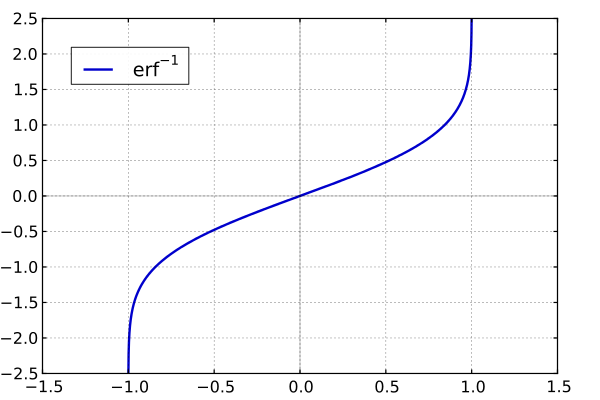
This generally works much better than Standard or Min Max Scaler.
Important Links
- Interview of the Kaggle competition winner (Michael Jahrer)
- Blog post introducing Gauss Rank's concept and simple implementation (Zygmunt Zając)
Usage
Gauss Rank Scaler is a fully compatible sklearn transformer that can be used in pipelines or existing scripts. Supported input formats include numpy arrays and pandas dataframes. All columns passed to the transformer are properly scaled.
Example
from gauss_rank_scaler import GaussRankScaler
import pandas as pd
from sklearn.datasets import load_boston
%matplotlib inline

# prepare some data
bunch = load_boston()
df_X_train = pd.DataFrame(bunch.data[:250], columns=bunch.feature_names)
df_X_test = pd.DataFrame(bunch.data[250:], columns=bunch.feature_names)

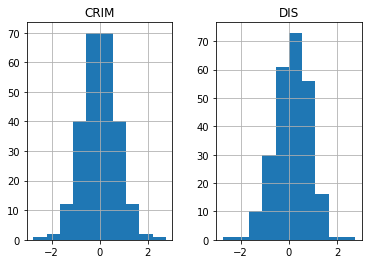
# plot histograms of two numeric variables
_ = df_X_train[['CRIM', 'DIS']].hist()

# scale the numeric variables with Gauss Rank Scaler
scaler = GaussRankScaler()
df_X_new_train = scaler.fit_transform(df_X_train[['CRIM', 'DIS']])

# plot histograms of the scaled variables
_ = pd.DataFrame(df_X_new_train, columns=['CRIM', 'DIS']).hist()
# scale test dataset with the fitted scaler
df_X_new_test = scaler.transform(df_X_test[['CRIM', 'DIS']])
This is a direct copy of the repositopry by Aldente06030 packaged for pip
1 maintainer

Metadata
1 maintainer
Release files for gauss-rank-scaler 0.0.3
For a detailed explanation of source distributions (sdists) and built distributions (wheels), please see the package formats documentation.
Source distribution (sdist)
| File | Size | Uploaded | Provenance | Actions |
|---|---|---|---|---|
| gauss-rank-scaler-0.0.3.tar.gz | 5.3 kB | Without provenance | Details for gauss-rank-scaler-0.0.3.tar.gz |
Release files / gauss-rank-scaler-0.0.3.tar.gz
| Download URL | gauss-rank-scaler-0.0.3.tar.gz |
|---|---|
| Size | 5.3 kB |
| Tags | Source |
|
SHA-256 checksum How to use checksums |
770e188e34d6f1635c991c77b7605cccfea4418120057b462a81285840d6ab72
|
|
BLAKE2b-256 checksum How to use checksums |
c4c30edef4e799d340e9a763e53992f2af135dae68b39883658e40c69ebe4348
|
| Upload date | |
|
Uploaded using Trusted Publishing? What is trusted publishing? |
No |
| Uploaded via |
twine/4.0.2 CPython/3.9.12
|
Security for gauss-rank-scaler 0.0.3
Provenance
Provenance describes where a file came from. On PyPI, provenance is shared via attestations, which provide a verifiable record of the build or publishing details. View details, limitations and caveats.
No provenance found
None of the files in this release were uploaded with provenance metadata.
A note on package security
PyPI is a repository for distributing packages, not a service for auditing them. While third-party security researchers and our staff do their best to detect and remove malicious packages, PyPI cannot guarantee the quality, security or suitability of any given package.
To learn more about protecting yourself from malicious actors, visit our package security documentation.













