
iLogin
ilogin is a single sign-on script (SSO) like Google Application Specific Passwords that allows you to generate passwords for each online and offline service you’re using. Check online version at: http://iloginr.com
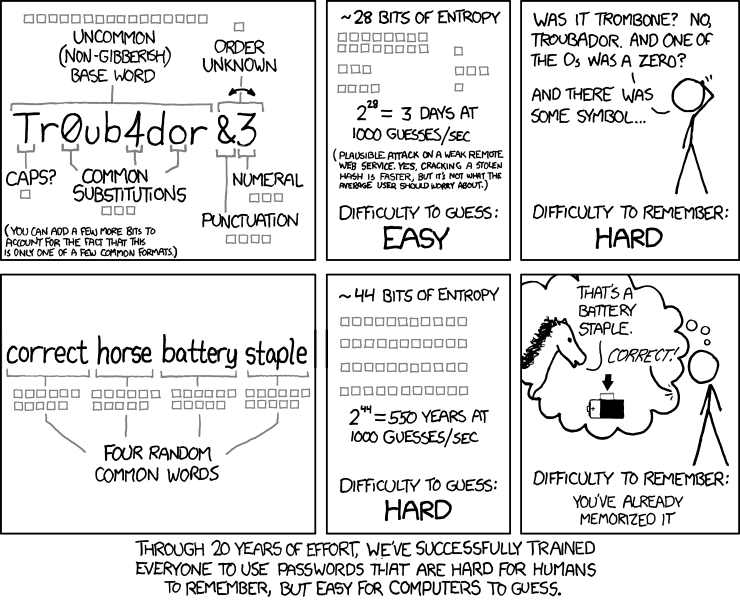
This way you will have different passwords for each service and you don’t have to remember them as you’ll be able to obtain each every time you want to login to your service.
The advantage of this script is that your passwords are not stored anywhere, never.
Install
$: pip install ilogin

or

$: git clone https://github.com/iloginr/ilogin.git
$: python2 setup.py install
How it works?
First time when you’ll run this script, you’ll be asked for the new password in order to initialize the database:
$: ilogin
New password: MYSECRETPASSWORD
Remember this password as it will be used to login to database and to generate passwords for your services. There is no possible way to recover this password. If you lose it you’ll have to reset all your online services passwords.
Add a service that you want to use with this script:
$: ilogin add
Service: google
Advanced settings [y/N]:n
Service added
Get a login for your service:
$: ilogin
Service: google
Password: MYSECRETPASSWORD
ntnn qumi dqbk dejs
Now go to google.com > Change password and update your password with the one provided by this script: ntnn qumi dqbk dejs
For now one, every time you want to login to google, run ilogin and copy&paste generated password within gooogle.com Password field:
$: ilogin
Service: google
Password: MYSECRETPASSWORD
ntnn qumi dqbk dejs
You can also auto copy password to clipboard (UNIX and OS X):
$: ilogin copy
Service: google
Password: MYSECRETPASSWORD
Password copied to clipboard
You can import and export settings from/to CSV files:
$: ilogin import
CSV Input File Path: example.csv
Import complete

$: ilogin export
CSV Output File Path:output.csv
Export complete
You can use multiple MASTER passwords. Useful when you want to change the master password, but still want to be able to get services password based on the older MASTER passwords:
$: ilogin passwd
New password: NEWSECRETPASSWORD
Confirm: NEWSECRETPASSWORD
Password added

$ ilogin
Service: google
Password: NEWSECRETPASSWORD
mjvk skkq nako kpkq

$: ilogin
Service: google
Password: MYSECRETPASSWORD
ntnn qumi dqbk dejs
See more options:
$: ilogin help
   ilogin version 3.1

   Usage: ilogin <cmd>

   For older versions use ilogin2 <cmd> OR ilogin1 <cmd>

   cmd:
     login   Get login password for service (default)

     user    Get login username for service

     add     Add service to ilogin

     field   Add new field

     import  Import services from CSV file. CSV file headers (advanced options are optional):

             "Service", ["Password length", "User Name", "Use Numbers", "Use Special Charaters", "Use Capital Letters", "Version"]
             "example.com", "16", "user@example.com", "n", "y", "false", "2"
             "foo.bar", "", "", "", "", "", ""
             "bar.foo", "9", "", "0", "1", "true", "7"

     export  Export services to CSV file.
             !! This will not export your passwords !!

     passwd  Add new ilogin MASTER password. You will still be able to use all previous registered MASTER passwords.
             !! BY USING A NEW MASTER PASSWORD ALL YOUR SERVICES PASSWORDS WILL CHANGE AND YOU'LL NEED TO MANUALLY CHANGE THEM SERVER SIDE !!

     copy    Get login password for service and copy it to clipboard
               - UNIX:    xsel or xclip required
               - OS X:    pbcopy required
               - Windows: Not supported yet
Changelog
4.1 - (2024-10-12)
Bug fix: FileNotFoundError: [Errno 2] No such file or directory: ‘HISTORY.rst’
4.0 - (2024-10-12)
Feature: Python 3 support.
Breaking: Drop Python 2 support.
3.1 - (2017-06-06)
Feature: Add support for multiple MASTER passwords
3.0 - (2014-04-15)
Bug fix: Fixed generation algorithm. This require you to update all your passwords on server side. Use ‘ilogin export’ to easily see all services where you used ilogin password generator. For backward compatibility use ilogin2
2.0 - (2013-12-13)
Feature: Entirely update password generator algorithm. Default 16 chars, Google Application Specific Passwords like.
Feature: Possibility to import / export settings from / to CSV file.
Feature: Added more advanced options to control password generation. Password length, Use or not numbers, special characters, capital letters. Possibility to store and retrieve user name per service. Possibility to change password with versions
Change: Use ilogin_old for previous generator/settings.
0.2 - (2011-08-02)
Feature: Added option to auto copy password to clipboard (UNIX and OS X)
0.1 - (2010-23-12)
Initial release
1 maintainer

Metadata
1 maintainer
Release files for ilogin 4.1
For a detailed explanation of source distributions (sdists) and built distributions (wheels), please see the package formats documentation.
Source distribution (sdist)
| File | Size | Uploaded | |
|---|---|---|---|
| ilogin-4.1.zip | 18.8 kB | Details |
Release files / ilogin-4.1.zip
| Download URL | ilogin-4.1.zip |
|---|---|
| Size | 18.8 kB |
| Tags | Source |
|
SHA-256 checksum How to use checksums |
b38e2aff9cf4381d67eda9f173f27db46acc8588be5ade2fbef5f3a7686ee36d
|
|
BLAKE2b-256 checksum How to use checksums |
93cd38af4eae732fc60b97e1d917fb76e47bf5eddd1a387e34de14c2bc316358
|
| Upload date | |
|
Uploaded using Trusted Publishing? What is trusted publishing? |
No |
| Uploaded via |
twine/5.1.1 CPython/3.10.12
|














