
Parasol Tokenizer
Parasol tokenizes hangul after decomposition. 한글 자음,모음을 분해하여 토큰화합니다.
- Original text : 고가도로에 삐져나온 초록잎 아마 이 도시에서 유일히 적응 못한 낭만일 거야
- Decomposed text : ㄱㅗㄱㅏㄷㅗㄹㅗㅇㅔ ㅃㅣㅈㅕㄴㅏㅇㅗㄴ ㅊㅗㄹㅗㄱㅇㅣㅍ ㅇㅏㅁㅏ ㅇㅣ ㄷㅗㅅㅣㅇㅔㅅㅓ ㅇㅠㅇㅣㄹㅎㅣ ㅈㅓㄱㅇㅡㅇ ㅁㅗㅅㅎㅏㄴ ㄴㅏㅇㅁㅏㄴㅇㅣㄹ ㄱㅓㅇㅑ
- Tokens : ▁ㄱㅗㄱㅏ / ㄷㅗㄹㅗ / ㅇㅔ / ▁ㅃㅣ / ㅈㅕㄴ / ㅏㅇㅗㄴ / ▁ㅊ / ㅗㄹ / ㅗㄱ / ㅇㅣ / ㅍ / ▁ㅇㅏㅁㅏ / ▁ㅇㅣ / ▁ㄷㅗㅅㅣ / ㅇㅔㅅㅓ / ▁ㅇㅠㅇㅣㄹ / ㅎㅣ / ▁ㅈㅓㄱㅇㅡㅇ / ▁ㅁㅗㅅㅎㅏㄴ / ▁ㄴㅏㅇㅁㅏㄴ / ㅇㅣㄹ / ▁ㄱㅓㅇㅑ
- Composed tokens : ▁고가 / 도로 / 에 / ▁삐 / 젼 / ㅏ온 / ▁ㅊ / ㅗㄹ / ㅗㄱ / 이 / ㅍ / ▁아마 / ▁이 / ▁도시 / 에서 / ▁유일 / 히 / ▁적응 / ▁못한 / ▁낭만 / 일 / ▁거야
Installation
pip install parasol-nlp
Experiment
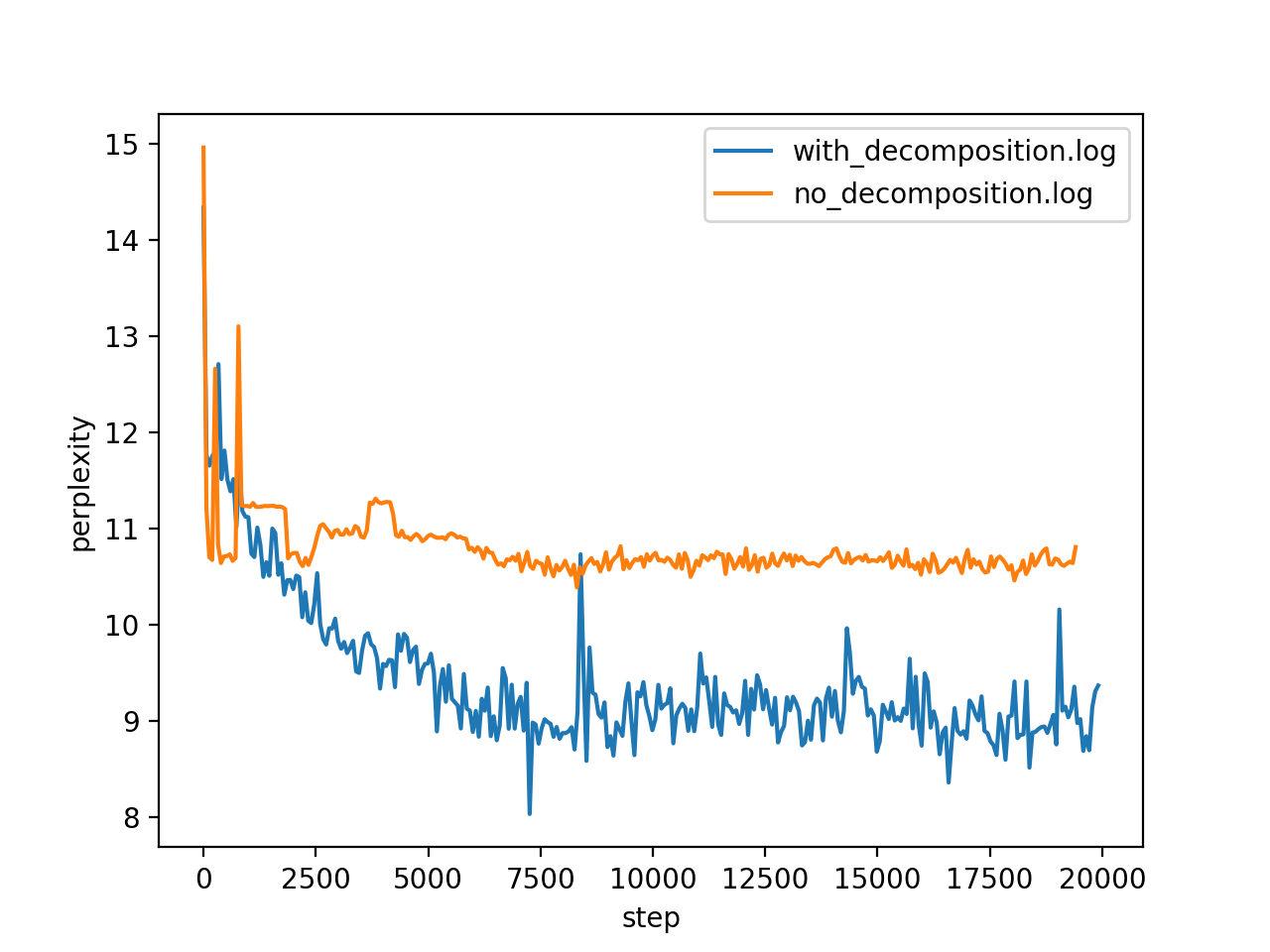
The figure shows the results of the perplexity comparison experiment. with decomposition is tokenized with charactor decomposition and no decomposition is just tokenized.
Experiment source code is here.
Usage
Tokenizer
Use SentencePiece's BPE model as tokenizer and hgtk for decomposition.
from parasol import Tokenizer

# tokenize after decomposition
t1 = Tokenizer(decompose=True)
# tokenize without decomposition
t2 = Tokenizer(decompose=False)
then
>>> t1.tokenize("고가도로에 삐져나온 초록잎 아마 이 도시에서 유일히 적응 못한 낭만일 거야")
['▁고가', '도로', '에', '▁삐', '젼', 'ㅏ온', '▁ㅊ', 'ㅗ록', '잎', '▁아마', '▁이', '▁도시', '에서', '▁유일', '히', '▁적응', '▁못한', '▁낭만', '일', '▁거야']
>>> t2.tokenize("고가도로에 삐져나온 초록잎 아마 이 도시에서 유일히 적응 못한 낭만일 거야")
['▁고가', '도로', '에', '▁삐', '져', '나온', '▁초록', '잎', '▁아마', '▁이', '▁도시', '에서', '▁유일', '히', '▁적응', '▁못한', '▁낭만', '일', '▁거야']

# Output as vocabulary id
>>> t1.tokenize("고가도로에 삐져나온 초록잎 아마 이 도시에서 유일히 적응 못한 낭만일 거야", as_id=True)
[17687, 2135, 36, 8351, 3904, 3842, 52, 12256, 27398, 3469, 30, 6105, 160, 3767, 198, 8953, 2345, 13164, 89, 6872]
Composer
Hangul jamo composer
from parasol import Composer

c = Composer()
then
>>> c.compose("ㄷㅏㄹㅇㅣ ㄱㅣㅇㅜㄴ ㅂㅏㅁ ㅍㅓㄹㅓㄴㅂㅣㅊㅇㅣ ㅅㅡㅁㅕㄷㅡㄴ ㄱㅗㄹㅁㅗㄱㅇㅡㄹ ㄱㅓㄹㅇㅓㄱㅏㄷㅓㄴ ㄱㅣㄹㅇㅔ")
'달이 기운 밤 퍼런빛이 스며든 골목을 걸어가던 길에'
but it is not perfect, like..
>>> c.compose("ㅎㅐㅇㅇㅜㄴㅇㅡㄹ ㅂㅣㄹㅇㅓㅇㅛㅎㅎ")
'행운을 빌어욯ㅎ'
which of original text is 행운을 빌어요ㅎㅎ
1 maintainer

Metadata
1 maintainer
Release files for parasol-nlp 0.0.4
For a detailed explanation of source distributions (sdists) and built distributions (wheels), please see the package formats documentation.
Source distribution (sdist)
| File | Size | Uploaded | Provenance | Actions |
|---|---|---|---|---|
| parasol-nlp-0.0.4.tar.gz | 1.2 MB | Without provenance | Details for parasol-nlp-0.0.4.tar.gz |
Built distribution (wheel)
| File | Interpreter | ABI | Platform | Actions Reset |
|---|---|---|---|---|
| parasol_nlp-0.0.4-py3-none-any.whl | Python 3 | none | any | Details for parasol_nlp-0.0.4-py3-none-any.whl |
Total release size: 2.3 MB
Release files / parasol-nlp-0.0.4.tar.gz
| Download URL | parasol-nlp-0.0.4.tar.gz |
|---|---|
| Size | 1.2 MB |
| Tags | Source |
|
SHA-256 checksum How to use checksums |
cc708f9f116a9597bf979d9051709c53fa565ae62a7929892878cb04aabdc9e8
|
|
BLAKE2b-256 checksum How to use checksums |
1bfb172217f126ccfd6dd08a8f81ebb46a6c1111d3476f07144ab90f3c102d02
|
| Upload date | |
|
Uploaded using Trusted Publishing? What is trusted publishing? |
No |
| Uploaded via |
twine/3.1.1 pkginfo/1.5.0.1 requests/2.22.0 setuptools/42.0.2 requests-toolbelt/0.9.1 tqdm/4.41.0 CPython/3.6.9
|
Release files / parasol_nlp-0.0.4-py3-none-any.whl
| Download URL | parasol_nlp-0.0.4-py3-none-any.whl |
|---|---|
| Size | 1.2 MB |
| Tags | Python 3 |
|
SHA-256 checksum How to use checksums |
f1adc6ac4c7fbb00e98a4376741165a6458275abb58d1ea1234e4da777a6193d
|
|
BLAKE2b-256 checksum How to use checksums |
627a8a851d95c07cc4d51addc68acdc11a1b0afd76678333ace4c0abb367507d
|
| Upload date | |
|
Uploaded using Trusted Publishing? What is trusted publishing? |
No |
| Uploaded via |
twine/3.1.1 pkginfo/1.5.0.1 requests/2.22.0 setuptools/42.0.2 requests-toolbelt/0.9.1 tqdm/4.41.0 CPython/3.6.9
|
Security for parasol-nlp 0.0.4
Provenance
Provenance describes where a file came from. On PyPI, provenance is shared via attestations, which provide a verifiable record of the build or publishing details. View details, limitations and caveats.
No provenance found
None of the files in this release were uploaded with provenance metadata.
A note on package security
PyPI is a repository for distributing packages, not a service for auditing them. While third-party security researchers and our staff do their best to detect and remove malicious packages, PyPI cannot guarantee the quality, security or suitability of any given package.
To learn more about protecting yourself from malicious actors, visit our package security documentation.














