
pdf417decoder
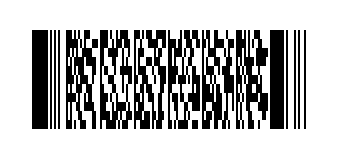
pdf417decoder is a pure Python library for decoding PDF417 barcodes.
Reader is capable of Error Detection and Correction according to the standards for PDF417 which you can read about here ISO/IEC 15438:2006 or download an older version of the PDF this website.
Installation
Use the package manager pip to install pdf417decoder.
pip install pdf417decoder
Usage
from PIL import Image as PIL
from pdf417decoder import PDF417Decoder

image = PIL.open("barcode.png")
decoder = PDF417Decoder(image)

if (decoder.decode() > 0):
    decoded = decoder.barcode_data_index_to_string(0)
Testing Results
This library was tested using pdf417gen to create random barcodes and blurred with OpenCV to test error correction. PyTest is used with several test images to show the libraries capability to decode barcodes in the following test cases.
- Binary data
- Multiple barcodes
- Upside down barcode
- Rotated barcode
- Error Corrections: Corrupted data due to blurred barcode
- Error Corrections: Missing data due marks concealing barcode
- Character type transitions (Upper, Lower, Mixed and Punctuation)
Contributing
Pull requests are welcome. For major changes, please open an issue first to discuss what you would like to change.
License
This project is a derivative of code licensed under the Code Project Open License (CPOL). The Code Project Open License (CPOL) is intended to provide developers who choose to share their code with a license that protects them and provides users of their code with a clear statement regarding how the code can be used.
Credits
Source code is a port of a C# Library created and maintained by Uzi Granot. PDF417 Barcode Decoder .NET Class Library and Two Demo Apps
1 maintainer

Metadata
1 maintainer
Release files for pdf417decoder 1.0.8
For a detailed explanation of source distributions (sdists) and built distributions (wheels), please see the package formats documentation.
Source distribution (sdist)
| File | Size | Uploaded | Provenance | Actions |
|---|---|---|---|---|
| pdf417decoder-1.0.8.tar.gz | 37.2 kB | Without provenance | Details for pdf417decoder-1.0.8.tar.gz |
Built distribution (wheel)
| File | Interpreter | ABI | Platform | Actions Reset |
|---|---|---|---|---|
| pdf417decoder-1.0.8-py3-none-any.whl | Python 3 | none | any | Details for pdf417decoder-1.0.8-py3-none-any.whl |
Total release size: 74.0 kB
Release files / pdf417decoder-1.0.8.tar.gz
| Download URL | pdf417decoder-1.0.8.tar.gz |
|---|---|
| Size | 37.2 kB |
| Tags | Source |
|
SHA-256 checksum How to use checksums |
4cacf4e0cce14daa382f6950adc2c7fac72b062fb72693a0aecbb15f560ed127
|
|
BLAKE2b-256 checksum How to use checksums |
f387e34f2eb71684b0b34ab13ae383fed5b807a3d6c51b9ec191f1b97c0c67fb
|
| Upload date | |
|
Uploaded using Trusted Publishing? What is trusted publishing? |
No |
| Uploaded via |
twine/3.4.1 importlib_metadata/3.10.0 pkginfo/1.7.0 requests/2.25.1 requests-toolbelt/0.9.1 tqdm/4.59.0 CPython/3.9.0
|
Release files / pdf417decoder-1.0.8-py3-none-any.whl
| Download URL | pdf417decoder-1.0.8-py3-none-any.whl |
|---|---|
| Size | 36.8 kB |
| Tags | Python 3 |
|
SHA-256 checksum How to use checksums |
b31e1162364c7d537d4878419fc1c0c67173d10e7e2e76a8ccade734ab70eeb7
|
|
BLAKE2b-256 checksum How to use checksums |
87f12e39fbf023b594aed72f23bbab8f0b29296e1522eb82e9a832247e023e22
|
| Upload date | |
|
Uploaded using Trusted Publishing? What is trusted publishing? |
No |
| Uploaded via |
twine/3.4.1 importlib_metadata/3.10.0 pkginfo/1.7.0 requests/2.25.1 requests-toolbelt/0.9.1 tqdm/4.59.0 CPython/3.9.0
|
Security for pdf417decoder 1.0.8
Provenance
Provenance describes where a file came from. On PyPI, provenance is shared via attestations, which provide a verifiable record of the build or publishing details. View details, limitations and caveats.
No provenance found
None of the files in this release were uploaded with provenance metadata.
A note on package security
PyPI is a repository for distributing packages, not a service for auditing them. While third-party security researchers and our staff do their best to detect and remove malicious packages, PyPI cannot guarantee the quality, security or suitability of any given package.
To learn more about protecting yourself from malicious actors, visit our package security documentation.














