

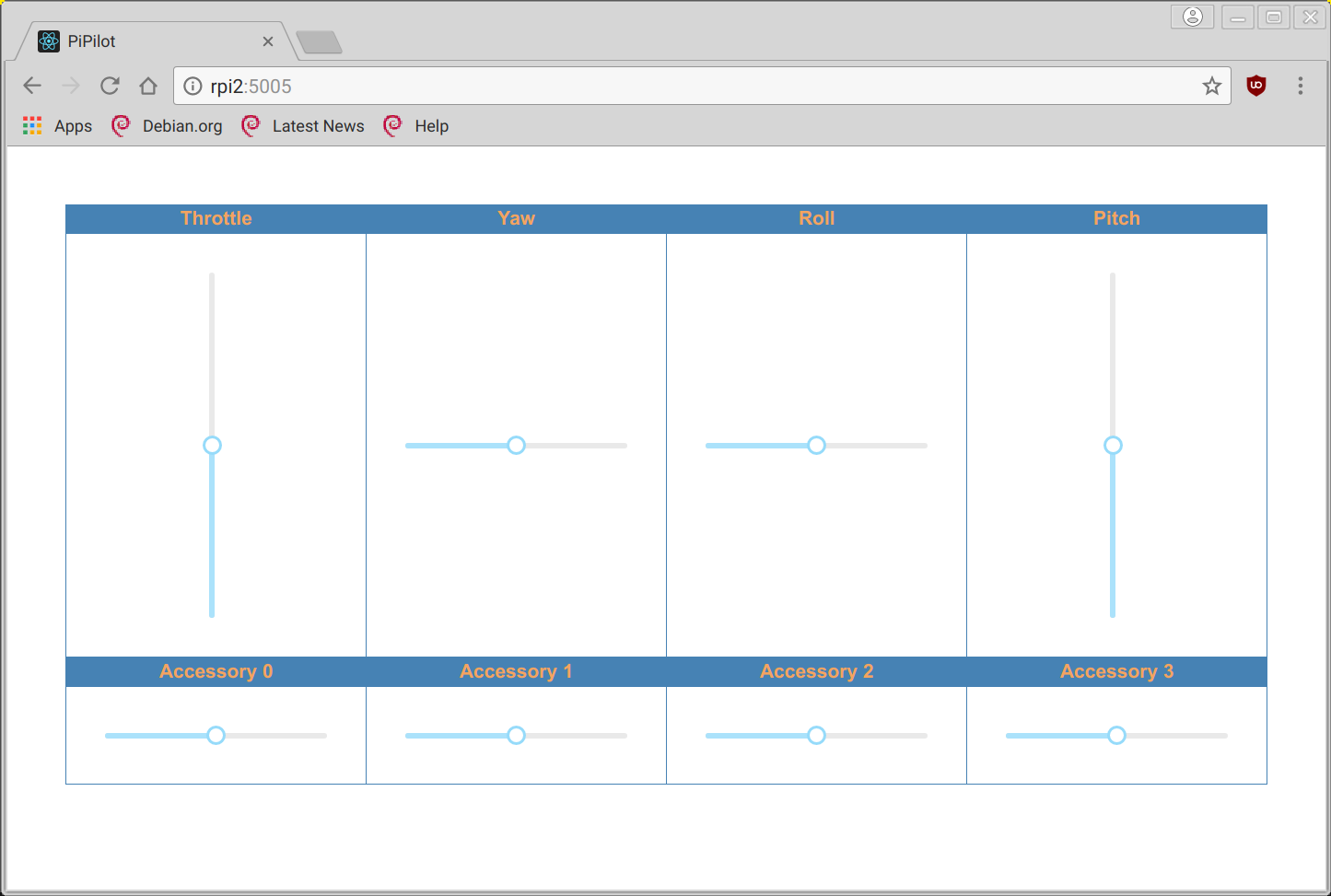
PiPilot lets you control a drone from a web browser. It’s been designed to work with Raspberry Pi, hence its name. However, you can likely make it work with anything that has UART. It should be able to interface with any autopilot board capable of understanding the SBUS protocol.
The purpose of the project is to let the autopilot control the fundamental behavior of a drone, i.e., attitude using gyros and accelerometers, and provide functionality controlling velocity, altitude hold, and basic navigation using more sophisticated sensors. We’re not there yet.
Inverter
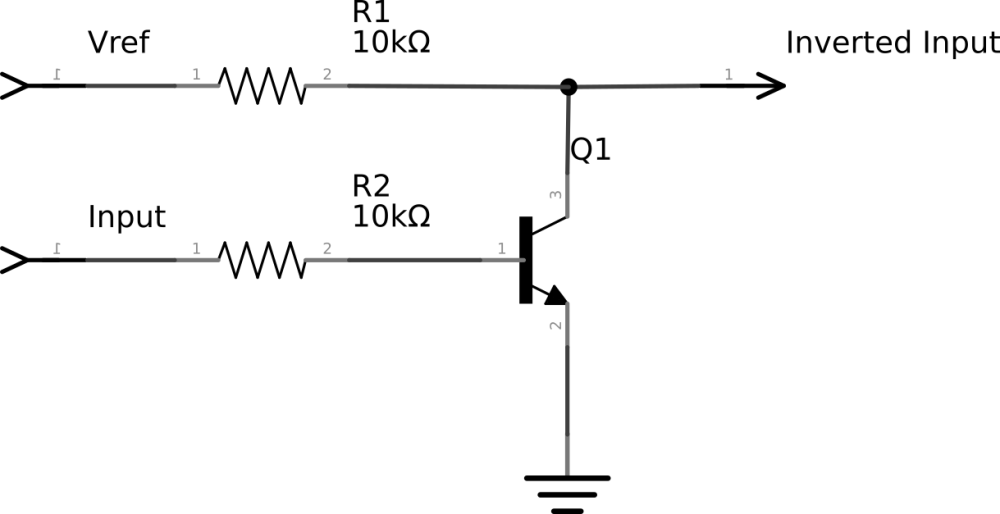
Since SBUS, in reality, is inverted UART, you cannot connect the wires directly. You will need to build yourself an inverter.
Installation
$ pip install PiPilot
$ pipilot -n pipilot
Test

1 maintainer

Metadata
1 maintainer
Release files for PiPilot 0.0.1
For a detailed explanation of source distributions (sdists) and built distributions (wheels), please see the package formats documentation.
Built distribution (wheel)
| File | Interpreter | ABI | Platform | Reset |
|---|---|---|---|---|
| PiPilot-0.0.1-py3-none-any.whl | Python 3 | none | any | Details |
Release files / PiPilot-0.0.1-py3-none-any.whl
| Download URL | PiPilot-0.0.1-py3-none-any.whl |
|---|---|
| Size | 934.7 kB |
| Tags | Python 3 |
|
SHA-256 checksum How to use checksums |
1e51a1ccd1b36706efbf35d59ef7063178d4b6c2f339f9232359668f65450a67
|
|
BLAKE2b-256 checksum How to use checksums |
7427a4df92b98c4af8107f748e2a658fbe2ad94041e793e587b80097d8fd735b
|
| Upload date | |
|
Uploaded using Trusted Publishing? What is trusted publishing? |
No |
Security for PiPilot 0.0.1
Provenance
Provenance describes where a file came from. On PyPI, provenance is shared via attestations, which provide a verifiable record of the build or publishing details. View details, limitations and caveats.
No provenance found
None of the files in this release were uploaded with provenance metadata.
A note on package security
PyPI is a repository for distributing packages, not a service for auditing them. While third-party security researchers and our staff do their best to detect and remove malicious packages, PyPI cannot guarantee the quality, security or suitability of any given package.
To learn more about protecting yourself from malicious actors, visit our package security documentation.













