
Getting started
This is a sample server Petstore server. You can find out more about Swagger at http://swagger.io or on irc.freenode.net, #swagger. For this sample, you can use the api key special-key to test the authorization filters.
How to Build
You must have Python 2 >=2.7.9 or Python 3 >=3.4 installed on your system to install and run this SDK. This SDK package depends on other Python packages like nose, jsonpickle etc.
These dependencies are defined in the requirements.txt file that comes with the SDK.
To resolve these dependencies, you can use the PIP Dependency manager. Install it by following steps at https://pip.pypa.io/en/stable/installing/.
Python and PIP executables should be defined in your PATH. Open command prompt and type pip --version.
This should display the version of the PIP Dependency Manager installed if your installation was successful and the paths are properly defined.
- Using command line, navigate to the directory containing the generated files (including
requirements.txt) for the SDK. - Run the command
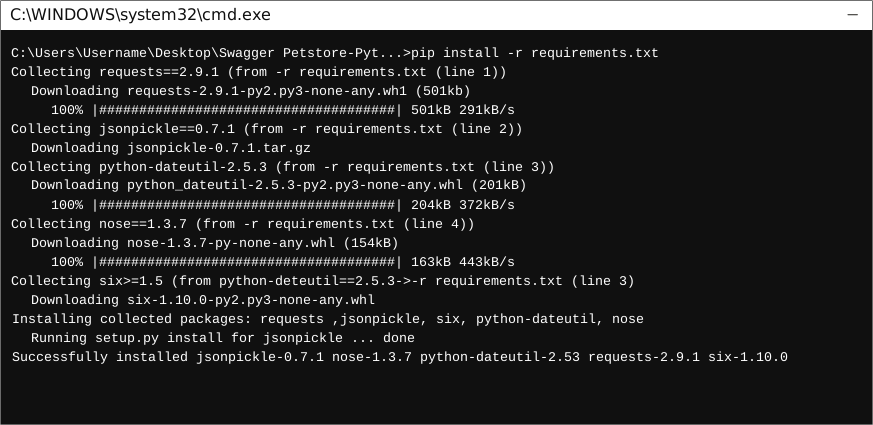
pip install -r requirements.txt. This should install all the required dependencies.
How to Use
The following section explains how to use the Apimaticswaggerpetstore SDK package in a new project.
1. Open Project in an IDE
Open up a Python IDE like PyCharm. The basic workflow presented here is also applicable if you prefer using a different editor or IDE.
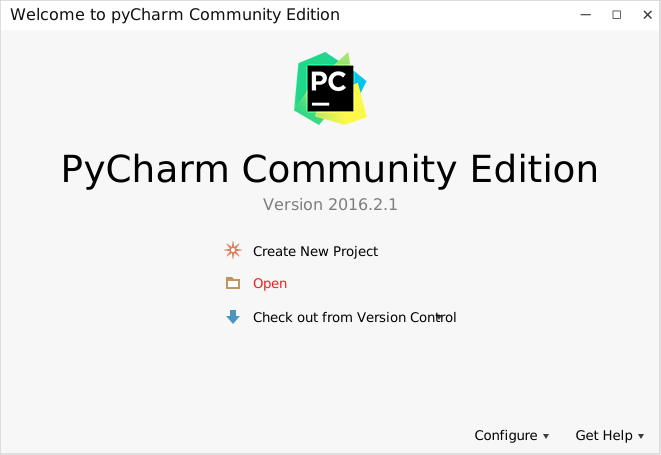
Click on Open in PyCharm to browse to your generated SDK directory and then click OK.
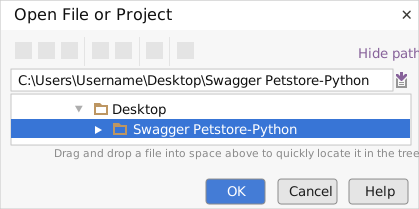
The project files will be displayed in the side bar as follows:
2. Add a new Test Project
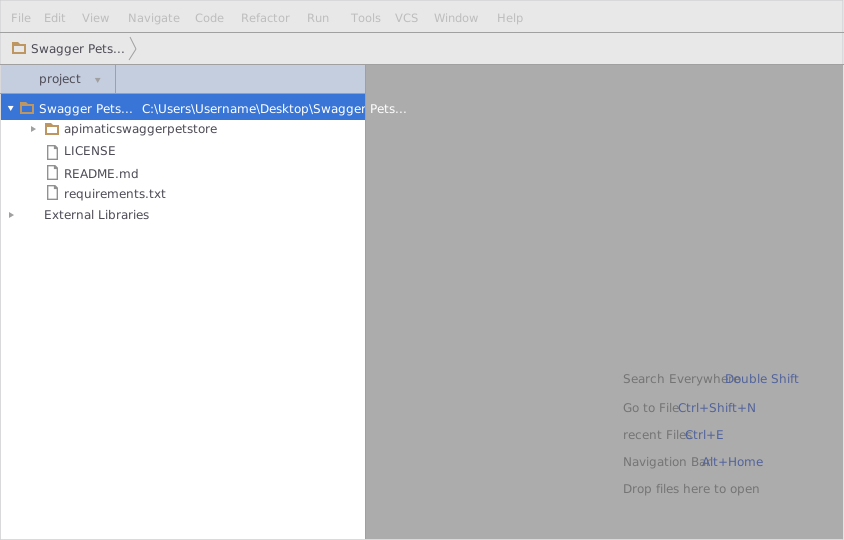
Create a new directory by right clicking on the solution name as shown below:
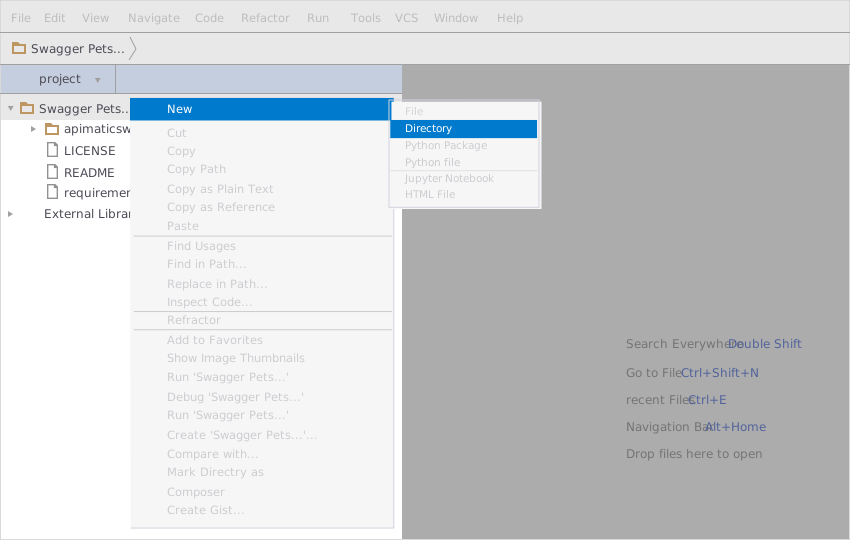
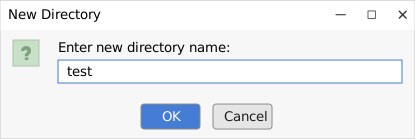
Name the directory as "test"
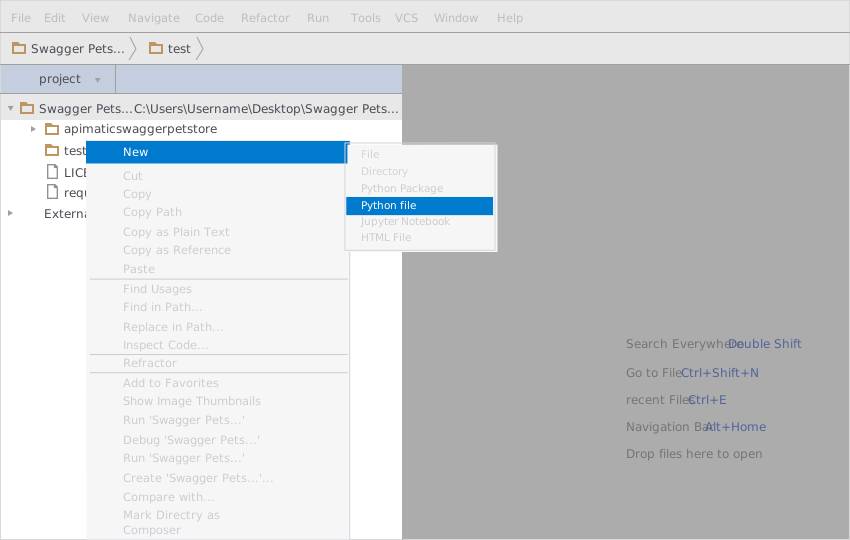
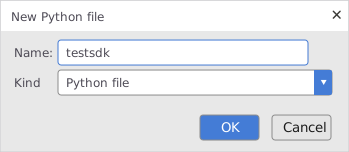
Add a python file to this project with the name "testsdk"
Name it "testsdk"
In your python file you will be required to import the generated python library using the following code lines
from apimaticswaggerpetstore.apimaticswaggerpetstore_client import ApimaticswaggerpetstoreClient
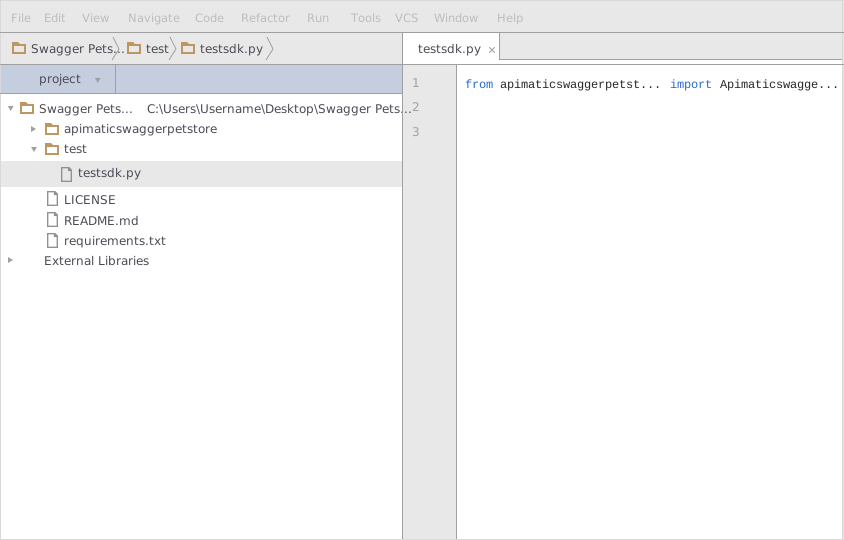
After this you can write code to instantiate an API client object, get a controller object and make API calls. Sample code is given in the subsequent sections.
3. Run the Test Project
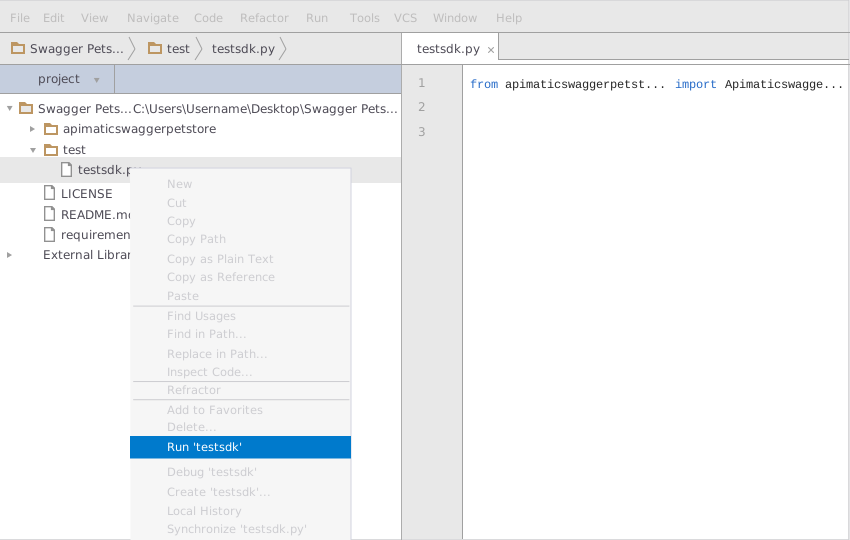
To run the file within your test project, right click on your Python file inside your Test project and click on Run
How to Test
You can test the generated SDK and the server with automatically generated test cases. unittest is used as the testing framework and nose is used as the test runner. You can run the tests as follows:
- From terminal/cmd navigate to the root directory of the SDK.
- Invoke
pip install -r test-requirements.txt - Invoke
nosetests
Initialization
Authentication
In order to setup authentication and initialization of the API client, you need the following information.
| Parameter | Description |
|---|---|
| o_auth_client_id | OAuth 2 Client ID |
| o_auth_redirect_uri | OAuth 2 Redirection endpoint or Callback Uri |
API client can be initialized as following.
# Configuration parameters and credentials
o_auth_client_id = 'o_auth_client_id' # OAuth 2 Client ID
o_auth_redirect_uri = 'o_auth_redirect_uri' # OAuth 2 Redirection endpoint or Callback Uri

client = ApimaticswaggerpetstoreClient(o_auth_client_id, o_auth_redirect_uri)
Class Reference
List of Controllers
 PetController
Get controller instance
An instance of the PetController class can be accessed from the API Client.
pet_controller = client.pet
 upload_file
uploads an image
def upload_file(self,
                    pet_id,
                    additional_metadata=None,
                    file=None)
Parameters
| Parameter | Tags | Description |
|---|---|---|
| petId | Required |
ID of pet to update |
| additionalMetadata | Optional |
Additional data to pass to server |
| file | Optional |
file to upload |
Example Usage
pet_id = 130
additional_metadata = 'additionalMetadata'
file = open("pathtofile", 'rb')

result = pet_controller.upload_file(pet_id, additional_metadata, file)
add_pet
Add a new pet to the store
def add_pet(self,
                body)
Parameters
| Parameter | Tags | Description |
|---|---|---|
| body | Required |
Pet object that needs to be added to the store |
Example Usage
body = Pet()

pet_controller.add_pet(body)
Errors
| Error Code | Error Description |
|---|---|
| 405 | Invalid input |
update_pet
Update an existing pet
def update_pet(self,
                   body)
Parameters
| Parameter | Tags | Description |
|---|---|---|
| body | Required |
Pet object that needs to be added to the store |
Example Usage
body = Pet()

pet_controller.update_pet(body)
Errors
| Error Code | Error Description |
|---|---|
| 400 | Invalid ID supplied |
| 404 | Pet not found |
| 405 | Validation exception |
find_pets_by_status
Multiple status values can be provided with comma separated strings
def find_pets_by_status(self,
                            status)
Parameters
| Parameter | Tags | Description |
|---|---|---|
| status | Required Collection |
Status values that need to be considered for filter |
Example Usage
status = [Status2Enum.AVAILABLE]

result = pet_controller.find_pets_by_status(status)
Errors
| Error Code | Error Description |
|---|---|
| 400 | Invalid status value |
find_pets_by_tags
Multiple tags can be provided with comma separated strings. Use tag1, tag2, tag3 for testing.
def find_pets_by_tags(self,
                          tags)
Parameters
| Parameter | Tags | Description |
|---|---|---|
| tags | Required Collection |
Tags to filter by |
Example Usage
tags = ['tags']

result = pet_controller.find_pets_by_tags(tags)
Errors
| Error Code | Error Description |
|---|---|
| 400 | Invalid tag value |
get_pet_by_id
Returns a single pet
def get_pet_by_id(self,
                      pet_id)
Parameters
| Parameter | Tags | Description |
|---|---|---|
| petId | Required |
ID of pet to return |
Example Usage
pet_id = 130

result = pet_controller.get_pet_by_id(pet_id)
Errors
| Error Code | Error Description |
|---|---|
| 400 | Invalid ID supplied |
| 404 | Pet not found |
update_pet_with_form
Updates a pet in the store with form data
def update_pet_with_form(self,
                             pet_id,
                             name=None,
                             status=None)
Parameters
| Parameter | Tags | Description |
|---|---|---|
| petId | Required |
ID of pet that needs to be updated |
| name | Optional |
Updated name of the pet |
| status | Optional |
Updated status of the pet |
Example Usage
pet_id = 130
name = 'name'
status = 'status'

pet_controller.update_pet_with_form(pet_id, name, status)
Errors
| Error Code | Error Description |
|---|---|
| 405 | Invalid input |
delete_pet
Deletes a pet
def delete_pet(self,
                   pet_id,
                   api_key=None)
Parameters
| Parameter | Tags | Description |
|---|---|---|
| petId | Required |
Pet id to delete |
| apiKey | Optional |
TODO: Add a parameter description |
Example Usage
pet_id = 130
api_key = 'api_key'

pet_controller.delete_pet(pet_id, api_key)
Errors
| Error Code | Error Description |
|---|---|
| 400 | Invalid ID supplied |
| 404 | Pet not found |
StoreController
Get controller instance
An instance of the StoreController class can be accessed from the API Client.
store_controller = client.store
create_place_order
Place an order for a pet
def create_place_order(self,
                           body)
Parameters
| Parameter | Tags | Description |
|---|---|---|
| body | Required |
order placed for purchasing the pet |
Example Usage
body = Order()

result = store_controller.create_place_order(body)
Errors
| Error Code | Error Description |
|---|---|
| 400 | Invalid Order |
get_order_by_id
For valid response try integer IDs with value >= 1 and <= 10. Other values will generated exceptions
def get_order_by_id(self,
                        order_id)
Parameters
| Parameter | Tags | Description |
|---|---|---|
| orderId | Required |
ID of pet that needs to be fetched |
Example Usage
order_id = 130

result = store_controller.get_order_by_id(order_id)
Errors
| Error Code | Error Description |
|---|---|
| 400 | Invalid ID supplied |
| 404 | Order not found |
delete_order
For valid response try integer IDs with positive integer value. Negative or non-integer values will generate API errors
def delete_order(self,
                     order_id)
Parameters
| Parameter | Tags | Description |
|---|---|---|
| orderId | Required |
ID of the order that needs to be deleted |
Example Usage
order_id = 130

store_controller.delete_order(order_id)
Errors
| Error Code | Error Description |
|---|---|
| 400 | Invalid ID supplied |
| 404 | Order not found |
get_inventory
Returns a map of status codes to quantities
def get_inventory(self)
Example Usage
result = store_controller.get_inventory()
UserController
Get controller instance
An instance of the UserController class can be accessed from the API Client.
user_controller = client.user
create_users_with_array_input
Creates list of users with given input array
def create_users_with_array_input(self,
                                      body)
Parameters
| Parameter | Tags | Description |
|---|---|---|
| body | Required Collection |
List of user object |
Example Usage
body = [User()]

user_controller.create_users_with_array_input(body)
Errors
| Error Code | Error Description |
|---|---|
| 0 | successful operation |
create_users_with_list_input
Creates list of users with given input array
def create_users_with_list_input(self,
                                     body)
Parameters
| Parameter | Tags | Description |
|---|---|---|
| body | Required Collection |
List of user object |
Example Usage
body = [User()]

user_controller.create_users_with_list_input(body)
Errors
| Error Code | Error Description |
|---|---|
| 0 | successful operation |
get_user_by_name
Get user by user name
def get_user_by_name(self,
                         username)
Parameters
| Parameter | Tags | Description |
|---|---|---|
| username | Required |
The name that needs to be fetched. Use user1 for testing. |
Example Usage
username = 'username'

result = user_controller.get_user_by_name(username)
Errors
| Error Code | Error Description |
|---|---|
| 400 | Invalid username supplied |
| 404 | User not found |
update_user
This can only be done by the logged in user.
def update_user(self,
                    username,
                    body)
Parameters
| Parameter | Tags | Description |
|---|---|---|
| username | Required |
name that need to be updated |
| body | Required |
Updated user object |
Example Usage
username = 'username'
body = User()

user_controller.update_user(username, body)
Errors
| Error Code | Error Description |
|---|---|
| 400 | Invalid user supplied |
| 404 | User not found |
delete_user
This can only be done by the logged in user.
def delete_user(self,
                    username)
Parameters
| Parameter | Tags | Description |
|---|---|---|
| username | Required |
The name that needs to be deleted |
Example Usage
username = 'username'

user_controller.delete_user(username)
Errors
| Error Code | Error Description |
|---|---|
| 400 | Invalid username supplied |
| 404 | User not found |
get_login_user
Logs user into the system
def get_login_user(self,
                       username,
                       password)
Parameters
| Parameter | Tags | Description |
|---|---|---|
| username | Required |
The user name for login |
| password | Required |
The password for login in clear text |
Example Usage
username = 'username'
password = 'password'

result = user_controller.get_login_user(username, password)
Errors
| Error Code | Error Description |
|---|---|
| 400 | Invalid username/password supplied |
get_logout_user
Logs out current logged in user session
def get_logout_user(self)
Example Usage
user_controller.get_logout_user()
Errors
| Error Code | Error Description |
|---|---|
| 0 | successful operation |
create_user
This can only be done by the logged in user.
def create_user(self,
                    body)
Parameters
| Parameter | Tags | Description |
|---|---|---|
| body | Required |
Created user object |
Example Usage
body = User()

user_controller.create_user(body)
Errors
| Error Code | Error Description |
|---|---|
| 0 | successful operation |
1 maintainer

Metadata
1 maintainer
Release files for apimaticswaggerpetstore 1.0.0
For a detailed explanation of source distributions (sdists) and built distributions (wheels), please see the package formats documentation.
Source distribution (sdist)
| File | Size | Uploaded | Provenance | |
|---|---|---|---|---|
| apimaticswaggerpetstore-1.0.0.tar.gz | 22.5 kB | Without provenance | Details |
Built distribution (wheel)
| File | Interpreter | ABI | Platform | Reset |
|---|---|---|---|---|
| apimaticswaggerpetstore-1.0.0-py3-none-any.whl | Python 3 | none | any | Details |
Total release size: 56.4 kB
Release files / apimaticswaggerpetstore-1.0.0.tar.gz
| Download URL | apimaticswaggerpetstore-1.0.0.tar.gz |
|---|---|
| Size | 22.5 kB |
| Tags | Source |
|
SHA-256 checksum How to use checksums |
b4f75e988e928bbdb7482913d15e2b39821a5f1ab9ee84928a76cfeea49ab4b6
|
|
BLAKE2b-256 checksum How to use checksums |
6212992a07371090ee2d251b1a15c2cb70b8441c02881b14f20117e88b43eb2d
|
| Upload date | |
|
Uploaded using Trusted Publishing? What is trusted publishing? |
No |
| Uploaded via |
twine/1.13.0 pkginfo/1.5.0.1 requests/2.22.0 setuptools/41.2.0 requests-toolbelt/0.9.1 tqdm/4.34.0 CPython/3.6.8
|
Release files / apimaticswaggerpetstore-1.0.0-py3-none-any.whl
| Download URL | apimaticswaggerpetstore-1.0.0-py3-none-any.whl |
|---|---|
| Size | 33.9 kB |
| Tags | Python 3 |
|
SHA-256 checksum How to use checksums |
f9d2d421be32b3535fa8585d660e8dce71aa9c082f74ef9106def3119a84675e
|
|
BLAKE2b-256 checksum How to use checksums |
472583735b9dde939c3173d13e6996d892e0b2a9c7220e74a182a292c895da5b
|
| Upload date | |
|
Uploaded using Trusted Publishing? What is trusted publishing? |
No |
| Uploaded via |
twine/1.13.0 pkginfo/1.5.0.1 requests/2.22.0 setuptools/41.2.0 requests-toolbelt/0.9.1 tqdm/4.34.0 CPython/3.6.8
|
Security for apimaticswaggerpetstore 1.0.0
Provenance
Provenance describes where a file came from. On PyPI, provenance is shared via attestations, which provide a verifiable record of the build or publishing details. View details, limitations and caveats.
No provenance found
None of the files in this release were uploaded with provenance metadata.
A note on package security
PyPI is a repository for distributing packages, not a service for auditing them. While third-party security researchers and our staff do their best to detect and remove malicious packages, PyPI cannot guarantee the quality, security or suitability of any given package.
To learn more about protecting yourself from malicious actors, visit our package security documentation.













