
For versatile GUIs written in HTML/CSS and Python (no JavaScript needed) - The lightweight and easy-to-use toolkit to begin with GUI programming.

Project description
Python version of the Atlas toolkit





The Atlas toolkit is available for:
Language GitHub repository Online démonstrations Java https://github.com/epeios-q37/atlas-java Node.js https://github.com/epeios-q37/atlas-node Perl https://github.com/epeios-q37/atlas-perl Python https://github.com/epeios-q37/atlas-python Ruby https://github.com/epeios-q37/atlas-ruby


WebGPIO (Raspberry Pi/ODROID-C2): the WebGPIO application, with which you can control the Raspberry Pi/ODROID-C2 (and probably other similar devices) GPIOs with your smartphone, is described in the Raspberry Pi/ODROID-C2 below section.
Quick example: the "Hello, World!" program
Source code
import atlastk

body = """
<fieldset>
 <input id="input" maxlength="20" placeholder="Enter a name here" type="text"
        data-xdh-onevent="Submit" value="World"/>
 <div style="display: flex; justify-content: space-around; margin: 5px auto auto auto;">
  <button data-xdh-onevent="Submit">Submit</button>
  <button data-xdh-onevent="Clear">Clear</button>
 </div>
</fieldset>
"""

def ac_connect(dom):
  dom.inner("", body)
  dom.focus("input")

def ac_submit(dom):
  dom.alert("Hello, " + dom.get_value("input") + "!")
  dom.focus("input")

def ac_clear(dom):
  if ( dom.confirm("Are you sure?") ):
    dom.set_value("input", "")
  dom.focus("input")

callbacks = {
  "": ac_connect,  # The action label for a new connection is an empty string.
  "Submit": ac_submit,
  "Clear": ac_clear,
}

atlastk.launch(callbacks)
Result

See for yourself right now - it's quick and easy!
Online, with nothing to install
Thanks to Replit, an online IDE, you can write and run programs using the Atlas toolkit directly in your web browser, without having to install Python on your computer 
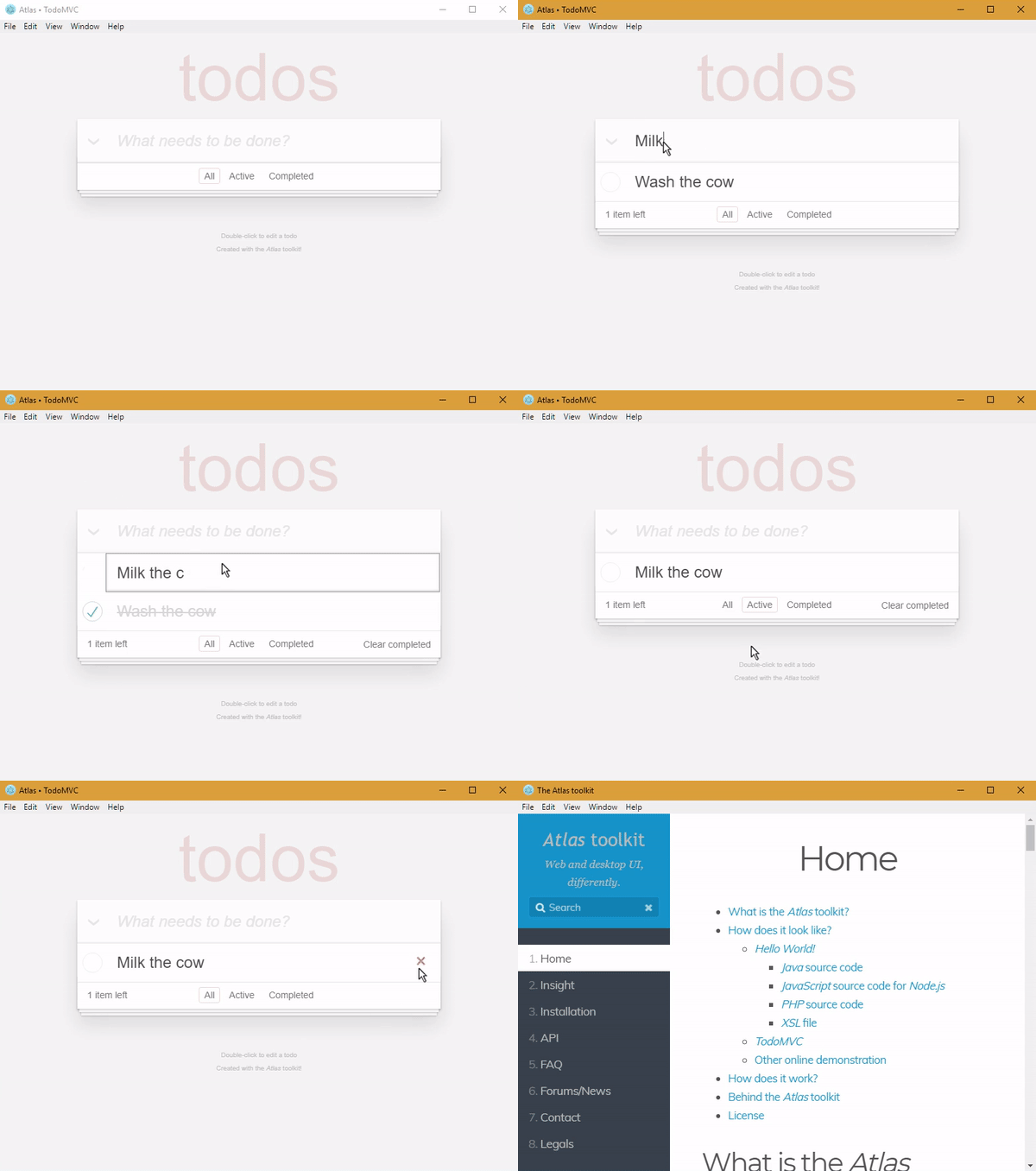
To see some examples, like the following TodoMVC application or the above "Hello, World!" program, simply:
- go here (also accessible with the
- click on the green
runbutton, - choose the demonstration to launch,
- open the then displayed URL in a browser (should be clickable),
- … and, as you wish, run your own tests directly in your browser, by modifying the code of the examples or by writing your own code.
With Python on your computer
git clone http://github.com/epeios-q37/atlas-python
cd atlas-python/examples
python Hello/
Your turn
If you want to take your code to the next level, from CLI to GUI, then you found the right toolkit.
With the Atlas toolkit, you transform your programs in modern web applications (SPA) without the usual hassles:
- no JavaScript to write; only HTML(/CSS) and Python,
- no front and back end architecture to bother with,
- no web server (Apache, Nginx…) to install,
- no need to deploy your application on a remote server,
- no incoming port to open on your internet box or routeur.
The Atlas toolkit is written in pure Python, with no native code and no dependencies, allowing the Atlas toolkit to be used on all environments where Python is available.
And simply by running them on a local computer connected to internet, applications using the Atlas toolkit will be accessible from the entire internet on laptops, smartphones, tablets…
The Atlas toolkit is particularly well suited for educational purposes, to write modern programming exercises, i.e. with a true graphical interface instead of the usual outdated textual one. More about this can be found here.
Python is much more powerful then Excel macros to automate (boring) tasks, and you can also work with PDF, Word, Google files…. And with the Atlas toolkit, you have much more possibilities then with VBA forms. There are some examples here.
There is also a stub to for this library at address https://q37.info/s/zzcn3wnx.
Content of the repository
The atlastk directory contains the Python source code of the Atlas toolkit, which is the directory you have to reference in PYTHONPATH in order to use the Atlas toolkit in your own program, unless you have installed the atlastk package with pip install atlastk.
In the examples directory, you will found following examples:
Blank: very basic example,Hello: "Hello, World!",Chatroom: multi-user chatroom,ReversiTXT: Reversi game withXandOfor token,Notes: note taking program,TodoMVC: TodoMVC,Hangman: Hangman game,15-puzzle: 15-puzzle game,Contacts: a basic address book,ReversiIMG: Reversi game with more evolved graphics,ReversiXSL: Reversi game using XSL,Widgets: some widgets handled with the Atlas toolkit.
Other examples are detailed in the next section.
Except for the ErgoJr, GPIO and RGB applications, which are detailed in the next section, to run an example, launch, from within the repository, python main.py, and select the example you want to run.
You can also directly launch, from within the examples directory, python <Name>/ (don't forget the final /), where <Name> is the name of the example (Blank, Chatroom…).
The Stars application is an example where the Atlas toolkit is used to control a Pygame based application. Of course, Pygame needs to be installed.
The tutorials directory is a work under progress and will contain some tutorials about the Atlas toolkit.
Raspberry Pi/ODROID-C2
If the applications does not work on your Raspberry Pi, please see this issue: https://github.com/epeios-q37/atlas-python/issues/1
The GPIO and RGB applications are designed to be used on a Raspberry Pi or a ODROID-C2.
Here is how the WebGPIO application looks like:
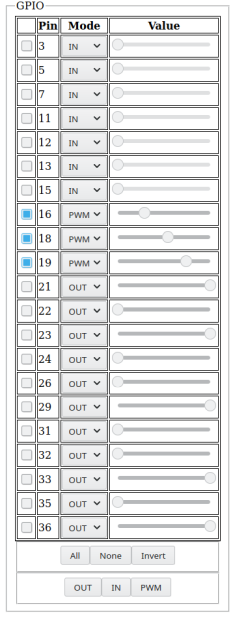
For the Raspberry Pi, the RPi.GPIO Python module have to be installed (this is probably already the case).
For the ODROID-C2, The Python version of WiringPi must be installed, and the application has to be launched, from within the examples directory, with sudo (sudo python GPIO/ or sudo python RGB/).
The ErgoJr application is experimental and to control a Poppy Ergo Jr robot.
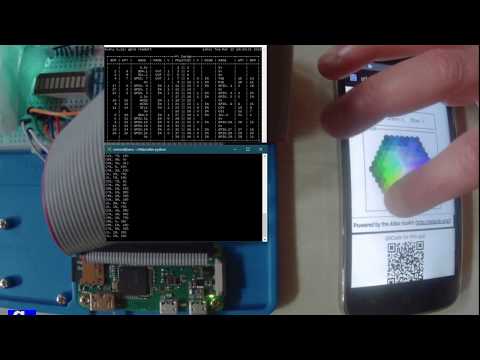
The RGB application is dedicated to the control of a RGB led, and the GPIO (aka WebGPIO) application allows to control the basic pins. Click below picture to see a YouTube video on how they work (same video on PeerTube: https://q37.info/s/49pbmwv9):
Release history Release notifications | RSS feed


Download files
Download the file for your platform. If you're not sure which to choose, learn more about installing packages.
Source Distribution
Built Distribution
Filter files by name, interpreter, ABI, and platform.
If you're not sure about the file name format, learn more about wheel file names.
Copy a direct link to the current filters
File details
Details for the file atlastk-0.12.2.tar.gz.
File metadata
- Download URL: atlastk-0.12.2.tar.gz
- Upload date:
- Size: 13.7 kB
- Tags: Source
- Uploaded using Trusted Publishing? No
- Uploaded via: twine/2.0.0 pkginfo/1.5.0.1 requests/2.22.0 setuptools/47.1.1 requests-toolbelt/0.9.1 tqdm/4.37.0 CPython/3.6.9
File hashes
| Algorithm | Hash digest | |
|---|---|---|
| SHA256 |
4659364ead39cf99b4095e6626ab3985a2706c9d4f2e2ef52b777cb5bbc9b4de
|
|
| MD5 |
16e09f44f389009408334a009cd18987
|
|
| BLAKE2b-256 |
a88d43ba1555cf97cd91bd06896448f46e7ab4a5284613fd64637f35bfc8707f
|
File details
Details for the file atlastk-0.12.2-py3-none-any.whl.
File metadata
- Download URL: atlastk-0.12.2-py3-none-any.whl
- Upload date:
- Size: 21.6 kB
- Tags: Python 3
- Uploaded using Trusted Publishing? No
- Uploaded via: twine/2.0.0 pkginfo/1.5.0.1 requests/2.22.0 setuptools/47.1.1 requests-toolbelt/0.9.1 tqdm/4.37.0 CPython/3.6.9
File hashes
| Algorithm | Hash digest | |
|---|---|---|
| SHA256 |
19dac54070ba811c57dc6157fad8de828f1d116a0df1b35bd5564cdf5b8de9a7
|
|
| MD5 |
166e546659207e61be84451666e3e6d1
|
|
| BLAKE2b-256 |
75a23e6abf0e91d42cec2feaedc880face5892d6c2b62dc4cf51f27f981c182c
|






