

BARRED: generate faithful and diverse training sets




Unofficial implementation of the BARRED paper:
Boundary Alignment Refinement through REflection and Debate, aka BARRED arXiv:2604.25203
[!NOTE] I developed this library for my own needs without endorsement. It is not affiliated with the authors of the paper.
What is BARRED?
In a nutshell: BARRED is a framework for generating faithful and diverse synthetic training data using only a task description and a small set of unlabeled examples.
TL;DR: describe a task, get an annotated dataset
Step by step
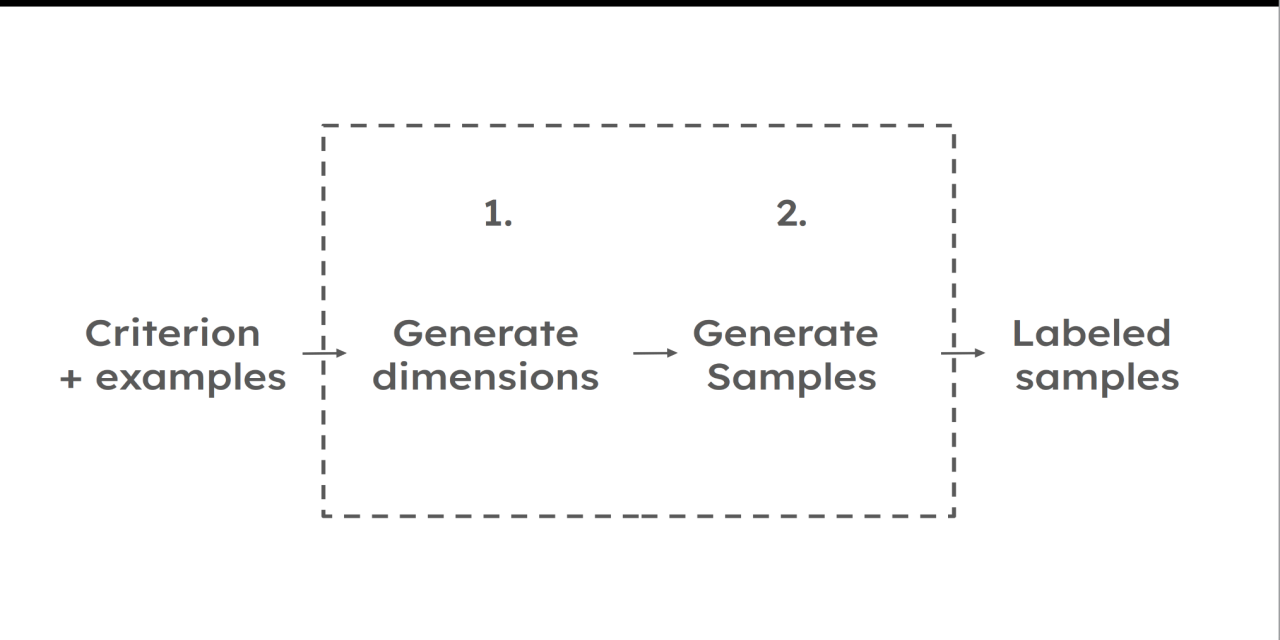
- Define the task: a Criterion, plus a few examples of input you work on
Criterion: True when the sentence expresses a positive sentiment, False otherwise Examples: - The delivery arrived two days late and the box was crushed. - Honestly, one of the best purchases I've made this year. - It works, I guess. - Let the library decompose the problem into dimensions
- Then the library generates the training set
Results: a set of labeled samples:
1. The screws stripped on the first turn, total waste.  -> False
2. Arrived a day early, and better than the photos.     -> True
3. Does the job. Nothing more to say.                   -> False   <- the gray zone
Why is it cool?
Over the past few years, here's what kept happening to me:
- I developed a classifier but got no dataset (business people were busy)
- I asked for relevancy judgments on products, but got quite nothing
- I begged for annotated samples of search queries but got none
So, BARRED is cool because it solves these problems by generating samples almost automatically.
And there is more. "Happy path" examples are easy to write. "Edge cases" are not, the gray zone, the "not true, not false".
Say you want to blacklist irrelevant products in search results (personal true story). Anyone can tell that a hammer drill is relevant for a query on drills. But what about drill bits? And a drill bit adapter? And a drill toy? And the dozen cases nobody thinks about?
That's where BARRED shines!
Limits
Both come from following the paper closely, not from anything being hard to do.
- Binary classification only: the label is
TrueorFalse, no multi-class (e.g.A/B/C).
The code and the prompts could be adapted, I'm pretty confident. But paper=binary, library=binary. - Plain text in, plain text out: examples and generated samples are strings, no JSON schema/Structured output.
In one of my tests, the seed examples werequery + product titlepairs flattened into a string, so I had to parse the generated samples back to get the pieces. Passing a schema tobarred()would have been possible. (that's for v2)
Installation
uv add barred

# with Pip
pip install barred
This library builds on any-llm from Mozilla AI, and ships no provider SDK by default.
You need the any-llm-sdk extra for the provider you want:
| Provider | Install |
|---|---|
| OpenAI | uv add barred "any-llm-sdk[openai]" |
| Anthropic | uv add barred "any-llm-sdk[anthropic]" |
| Gemini | uv add barred "any-llm-sdk[gemini]" |
| All providers | uv add barred "any-llm-sdk[all]" |
See the full list of providers.
Then set the matching key in your environment (OPENAI_API_KEY, ANTHROPIC_API_KEY, ...) or pass it to the llm() constructor.
Importing barred sets ANY_LLM_UNIFIED_EXCEPTIONS=1 in your environment: the retry policy is written against
any-llm's unified exceptions, which are not raised by default yet
(any-llm#1369).
Quick start
import asyncio

from barred import LLM, barred, decompose_dimensions

#
# Step 1. Task definition
#
criterion = "True when the sentence expresses a positive sentiment, False otherwise"
examples = [
    "The delivery arrived two days late and the box was crushed.",
    "Honestly, one of the best purchases I've made this year.",
    "It works, I guess.",
]


async def main():
    # Your provider, your model.
    # The key is read from the environment (OPENAI_API_KEY here), or with the ` api_key ` param.
    llm = LLM(provider="openai", model="gpt-5.6-terra")

    #
    # Step 2. Decompose the Criterion into Dimensions
    #
    dimensions = await decompose_dimensions(llm, criterion=criterion, examples=examples)

    #
    # Step 3. Generate Samples, streamed as they land
    #
    async for sample in barred(
        llm,
        criterion=criterion,
        examples=examples,
        dimensions=dimensions,
        num_samples=5,
    ):
        print(sample.label, "->", sample.input_block)


asyncio.run(main())
Parameters
The knobs you are likely to turn:
| Parameter | Default | What it does |
|---|---|---|
num_samples |
required | Accepted samples to reach before stopping |
max_attempts |
2 × num_samples |
Attempt budget. The run stops there, reached or not, so a run costs at worst twice a perfect one |
concurrency |
8 |
Attempts in flight. Set it to 1 to watch the run step by step |
max_debate_rounds |
2 |
Judge rounds per debate. 2 is the paper's T |
max_refine_rounds |
2 |
Refinement passes per attempt. The paper does not give its R_max |
observer |
none | Set on LLM(...). Gets every event, including the rejected samples and the token usage. LoggingObserver logs the whole run |
decompose_dimensions() has its own concurrency (default 5).
LLM(...) carries the model settings: reasoning_effort (default "medium", the paper's setting), and the retry policy.
Notebook/Demo
[!NOTE] The notebook is the best way to see BARRED in action.
It includes: dimensions decomposition and the generation of samples.
You will also be able to give a grasp on the generated data
How it works
The naive way is to let an LLM generate samples straight from the problem description. WRONG!
LLMs forget parts of the problem. They don't "explore" much, they stick to their few default answers.
Dimensions and instantiations
The first thing that BARRED does is to decompose the problem into "Dimensions" and "Instantiations" of those dimensions.
I didn't know what an "instantiation" was (except in computing), but an instantiation is "concrete evidence in support of a concept/claim".
Then, each instantiation will serve as a "seed" for the LLM to generate samples.
But can we generate samples directly from those instantiations right away? Of course not, that would be too simple!
Debate and refinement
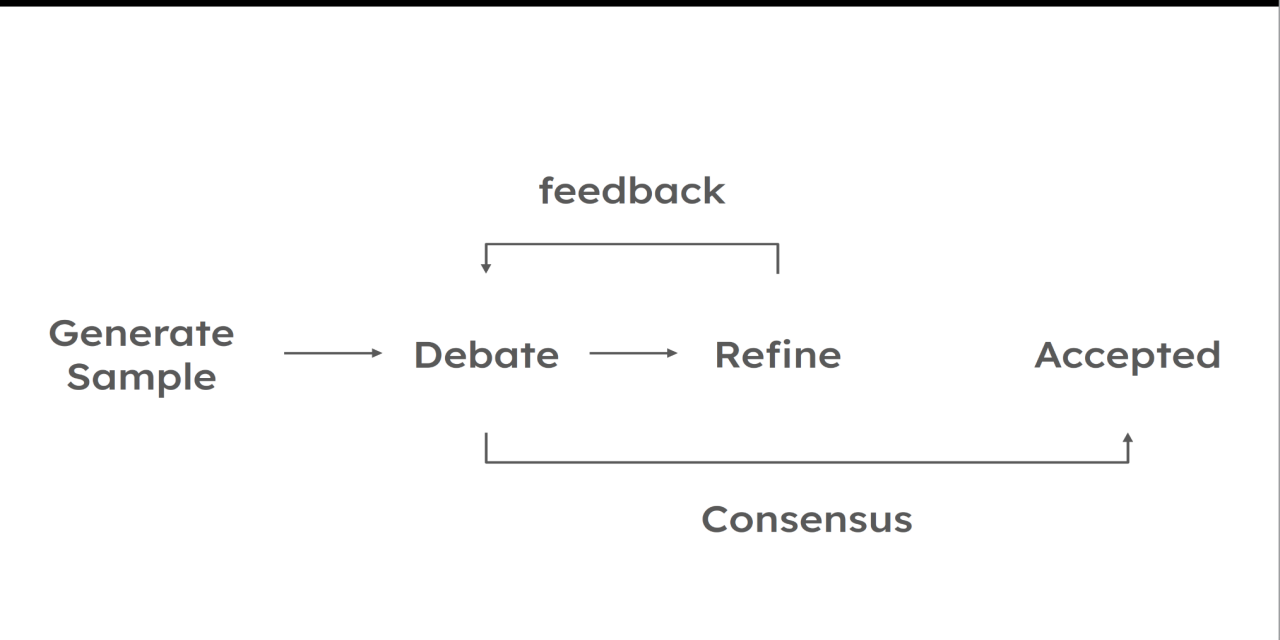
BARRED makes two judges debate each sample until they agree. When a judge disagrees, the sample is reworked using their feedback, then debated again, and so on.
In the end, the generated samples can be accepted or not. This library only streams accepted samples, but you can also access the rejected ones using an Observer.
The algorithm, in pseudocode
BARRED, as implemented:
1: Input: criterion C, examples E, target size N,
2:        concurrency K, max_debate_rounds B, max_refine_rounds R, max_attempts M = 2N
3:
4: # Step 1 — dimensions and their instantiations (paper lines 2-5, fused)
5: D ← decompose_dimensions(llm, criterion=C, examples=E, concurrency=5)
6:     # each d ∈ D is a DecomposedDimension(dimension, instantiations)
7:
8: # Step 2 — draw → generate → debate → refine, K attempts in flight
9: G ← ∅ ; attempts ← 0
10: while |G| < N and attempts < M do
11:     attempts ← attempts + 1
12:     d ~ Uniform(D)  ;  v ~ Uniform(d.instantiations)
13:     e ~ Uniform(E)  ;  y ~ Uniform({True, False})
14:
15:     s ← generate_sample(llm, criterion=C, example=e,
16:                         instantiation=v, target_verdict=y)
17:         # s is a Sample(reasoning, input_block, label)
18:
19:     for ℓ = 0, 1, ..., R do
20:         res ← debate(llm, criterion=C, sample=s, max_debate_rounds=B)
21:             # res is a DebateResult(valid, dissenting_feedback)
22:
23:         if res.valid then
24:             G ← G ∪ {s} ; yield s
25:             break
26:         end if
27:         if ℓ = R then break end if      # refining now would skip validation
28:
29:         s ← refine_sample(llm, criterion=C, example=e, instantiation=v,
30:                           sample=s, dissenting_feedback=res.dissenting_feedback)
31:     end for
32: end while
33: return G
The algorithm, in bullets
(Because I like bullets, plus some notes)
- Task definition
- Criterion = task description = the classification Criterion.
E.g., “Is the product relevant for the query?” - Unlabeled examples
10 to 30 are enough
No label is needed, represent the “shape” of the input data.
E.g., “query: drill, product: bosch hammer drill”
- Criterion = task description = the classification Criterion.
- Dimensions decomposition
- dimension extraction
- dimension deduplication // it may happen, at least the Authors added that step
- dimension instantiation
For each dimension:
  instantiations = verbalized_sampling(dimension)
  // list of name + polarity + score
- Sample Generation
- Take a dimension
Take an instantiation of this dimension
Take an example
Take a label (true/false)
(not random, take each in turn, aka uniform distribution)
Consequence:- binary label → 50/50 dataset → maybe not your reality
- The “polarity” of the instantiation is discarded
- Generate a sample calling the LLM with these inputs
- The prompt enforces four simultaneous constraints:
- The sample must align with instantiation → diversity
- The label must align with the expected label → control
- The sample must match the example's domain and style → realism
- The sample must be a BOUNDARY CASE, not a trivial one.
"stress-test a smart and successful classifier".- Trick: the generator also emits the reasoning = the justification of the label.
- Trick: no meta-leakage allowed ("do not mention test cases, models, dimensions, or labels in your output")
- Note: If the generated sample label is not the target one, the divergence is logged and ignored.
- Debate label
- Two judges take the sample (text and label). One judge is precision-oriented, the other is recall-oriented. A judge provides a verdict (reasoning, label, confidence).
- Round 1:
- each judge classifies the text → get a judge label
- Sample label = judge1 label = judge2 label → accept sample
- Round 2 if not consensus:
- Each judge receives its previous verdict + verdict of the other judge + reasoning of the sample (= why this sample should be like that)
- Consensus? → accept sample or return the dissenting feedbacks
- Refine sample
At this step, the sample was rejected and the judges provided feedback.
A new sample is generated, and this sample is debated.
= a sample is never accepted without a debate.
- Take a dimension
- Profit!
[!NOTE] What is Verbalized Sampling?
Do not ask for a list, ask for a “distribution”.
= instead of a list of strings (the instantiations), ask the LLM for a description of the instantiation, a polarity (true/false/both) and a score (probability). We don’t use the polarity, nor the score afterward.Unlock Diversity and pushes beyond typical modes.
(This technique is at the core of BARRED and is awesome!)
Link to the Paper "Verbalized Sampling: How to Mitigate Mode Collapse and Unlock LLM Diversity"
Paper fidelity, and its gray zone
As an independent reimplementation, I tried to keep the paper fidelity as much as possible.
I audited the code against the paper, line by line. The four steps are all there, and the prompts follow the Appendix almost word for word.
Where I diverge
- The generated label wins over the drawn one.
Algorithm 1 draws a target labely, then debates and refines against thaty. But the generation prompt (A.2) asks the LLM for "the label you believe it should get", so the LLM can flip it. Here, the flip is logged, and the generated label becomes the authority for the debate and the refinement. Consequence: the 50/50 balance of the dataset is not guaranteed.
(The tension lives in the paper itself) - Three guidelines dropped from the dimension extraction prompt (A.1): I think those guidelines were task-specific, introduced by the authors for the tasks they were working on. So "position in the input block", "computations / number of occurrences" and "jailbreak scenarios for transcripts" were removed.
- Temperatures and seeds are mine (the paper says nothing):
temperature=1.0andseed=Noneto generate and refine (diversity),temperature=0.0andseed=0to judge and deduplicate (stability).
The gray zones
Places where the paper is silent, and I had to pick an interpretation:
- The Advocate never calls the LLM. The paper describes an advocate defending the sample, "rigid, never changing position". So either the Advocate is a LLM call or just "fields" added to the prompt to the judges.
R_maxis not given (T = 2debate rounds is). Default here: two refinement rounds.{target_dimension}in the generation prompt: the dimension, the sampled instantiation, or both? I pass the instantiation description only.- "Filter out semantically similar dimensions", method not described: I use an LLM pass, replaying the conversation. Maybe the authors loop on the seed examples, generated multiple lists of dimensions, then deduplicating those lists into one. In the code, I pass all examples, no a chunk of them, nor some of them randomly.
The paper, its authors, and resources
Paper authors:
Company: Plurai.ai
The main article giving a high-level overview of BARRED (April 28, 2026): Introducing BARRED: turn any policy prompt into a high-accuracy efficient guardrail
[!NOTE] I highly recommend giving Plurai.ai a shot to create a classifier. Under the hood, the app uses (I think) a derived version of BARRED. The UI and the experience are great.
Try it out at plurai.ai.
Citation
The paper this library implements:
@misc{mazza2026barred,
  title         = {BARRED: Synthetic Training of Custom Policy Guardrails via Asymmetric Debate},
  author        = {Arnon Mazza and Elad Levi},
  year          = {2026},
  eprint        = {2604.25203},
  archivePrefix = {arXiv},
  primaryClass  = {cs.CL},
  url           = {https://arxiv.org/abs/2604.25203}
}
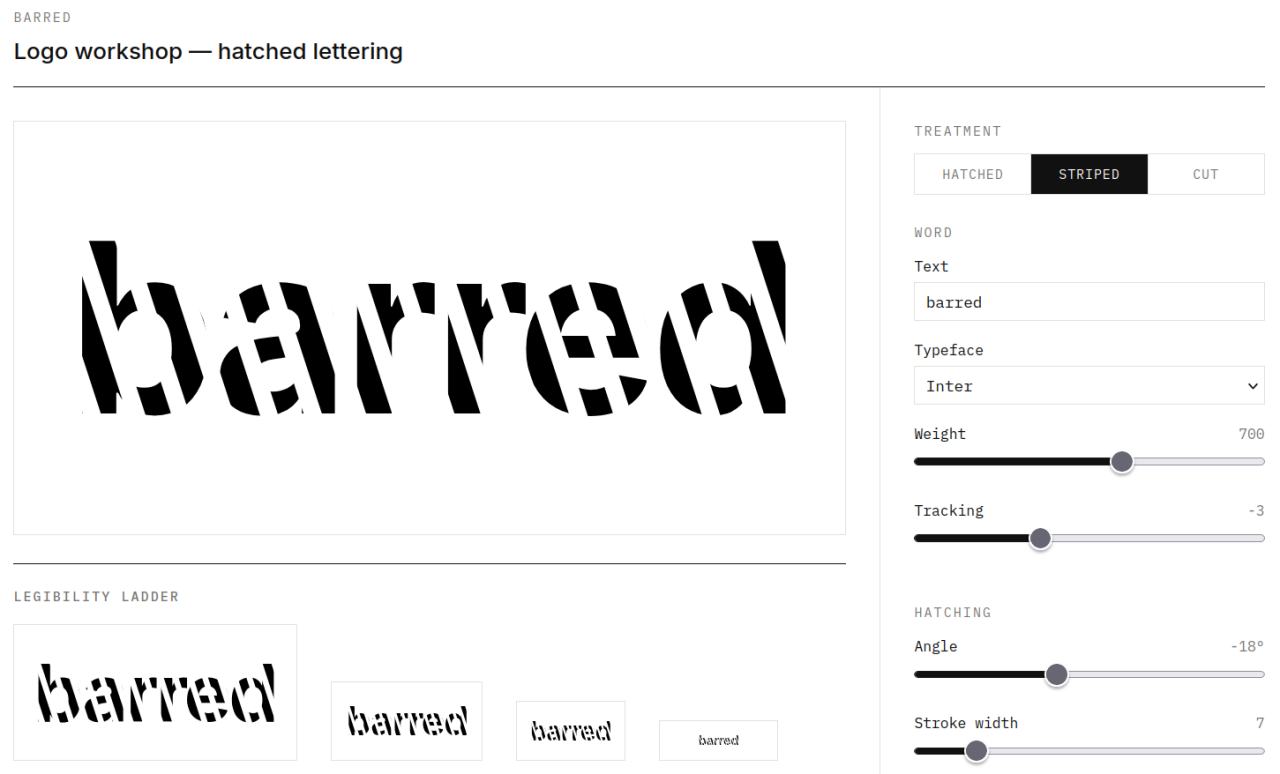
Bonus: Make your own BARRED logo
Changelog
Changelog and releases are on GitHub Releases.
Development
Setup
Install after cloning the repository:
just install
Check everything (lint, type, tests...):
just checks
Release
Releases are triggered by a version tag: pushing v* runs .github/workflows/release.yml,
which builds, smoke-tests the wheel and the sdist, then publishes to PyPI via Trusted
Publishing (no token involved).
just release recipe does the whole sequence — bump, check, commit, tag, push:
just release minor   # 0.2.0 => 0.3.0
just release patch   # 0.2.0 => 0.2.1
just release 1.0.0   # explicit version
It refuses to start from a dirty tree or outside main, and rolls the bump back if
anything fails, so a failed run leaves nothing behind.
1 maintainer

Metadata
1 maintainer
Release files for barred 1.1.0
For a detailed explanation of source distributions (sdists) and built distributions (wheels), please see the package formats documentation.
Source distribution (sdist)
| File | Size | Uploaded | |
|---|---|---|---|
| barred-1.1.0.tar.gz | 25.5 kB | Details |
Built distribution (wheel)
| File | Interpreter | ABI | Platform | Reset |
|---|---|---|---|---|
| barred-1.1.0-py3-none-any.whl | Python 3 | none | any | Details |
Total release size: 55.5 kB
Release files / barred-1.1.0.tar.gz
| Download URL | barred-1.1.0.tar.gz |
|---|---|
| Size | 25.5 kB |
| Tags | Source |
|
SHA-256 checksum How to use checksums |
d94584c1f383c29401a592ed0254a58e5c7382d5884c4854cda99a25f589d1b8
|
|
BLAKE2b-256 checksum How to use checksums |
e9fa69acec7d075e1a833cf0bd6dd6db370332f6c91506c3ba0017238f128d0d
|
| Upload date | |
|
Uploaded using Trusted Publishing? What is trusted publishing? |
Yes |
| Uploaded via |
uv/0.12.12 {"installer":{"name":"uv","version":"0.12.12","subcommand":["publish"]},"python":null,"implementation":{"name":null,"version":null},"distro":{"name":"Ubuntu","version":"24.04","id":"noble","libc":null},"system":{"name":null,"release":null},"cpu":null,"openssl_version":null,"setuptools_version":null,"rustc_version":null,"ci":true}
|
Provenance
Provenance describes where a file came from. On PyPI, provenance is shared via attestations, which provide a verifiable record of the build or publishing details. View details, limitations and caveats.


PyPI Publish Attestation
PyPI verified that this artifact, at this checksum, originated from the publisher listed below.
Signed by GitHub Actions, verified by PyPI on Sep 10, 2026.
Transparency logRelease files / barred-1.1.0-py3-none-any.whl
| Download URL | barred-1.1.0-py3-none-any.whl |
|---|---|
| Size | 30.0 kB |
| Tags | Python 3 |
|
SHA-256 checksum How to use checksums |
affe3942d3afdb3d06203f885bb6dddb39bdbcb30f0a00f5883cc4a348dd2969
|
|
BLAKE2b-256 checksum How to use checksums |
d25793cf0473321445cb1bb1f0b3801110524ece7544b65bdddbe17e51272a5f
|
| Upload date | |
|
Uploaded using Trusted Publishing? What is trusted publishing? |
Yes |
| Uploaded via |
uv/0.12.12 {"installer":{"name":"uv","version":"0.12.12","subcommand":["publish"]},"python":null,"implementation":{"name":null,"version":null},"distro":{"name":"Ubuntu","version":"24.04","id":"noble","libc":null},"system":{"name":null,"release":null},"cpu":null,"openssl_version":null,"setuptools_version":null,"rustc_version":null,"ci":true}
|
Provenance
Provenance describes where a file came from. On PyPI, provenance is shared via attestations, which provide a verifiable record of the build or publishing details. View details, limitations and caveats.
PyPI Publish Attestation
PyPI verified that this artifact, at this checksum, originated from the publisher listed below.
Signed by GitHub Actions, verified by PyPI on Sep 10, 2026.
Transparency log













