
Brain-AI Memory — Stop Re-explaining Your Project
Open a new Codex or Claude Code session and continue from the last one.
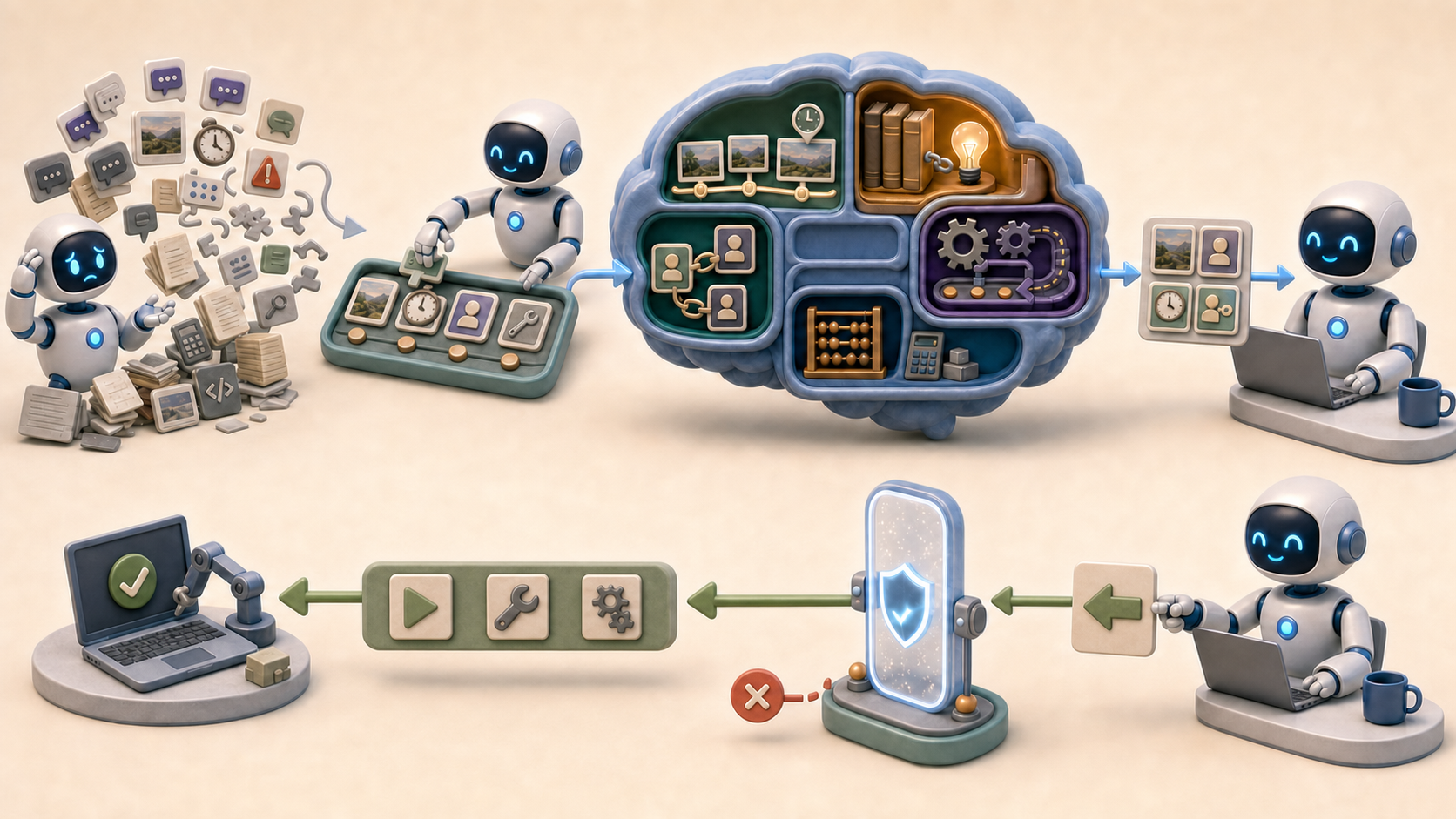
Brain-AI Memory keeps the facts, decisions, exact values, and next steps you choose on your computer. Records stay separated by project, changed facts keep their source history, and the next session can receive a bounded handoff from the previous one.
Runs locally · No API key · No account · No database server
Source and full documentation · 한국어 · 简体中文 · Report a real use case or problem
Try the local tour
python3 -m venv .venv
source .venv/bin/activate
python -m pip install brain-ai-memory

DEMO_HOME="$(mktemp -d)"
brain-ai --home "$DEMO_HOME" tour
The tour uses synthetic data in a disposable directory. It does not inspect or import your files.
Connect a real project
Install the agent-connection support once:
python -m pip install "brain-ai-memory[mcp]"
Then run setup from the project you want to continue across sessions:
cd /path/to/your/project
brain-ai setup codex --entity my-project
brain-ai setup codex --entity my-project --apply
Use claude-code instead of codex for Claude Code. The first command is a
pure preview. --apply creates one empty project entity when needed or reuses
an existing project entity, applies the shown project-scoped configuration,
and runs diagnostics. It does not import or approve a MEMORY.md file.
By default, setup enables automatic session recall and checkpoints. Choose
--mode tools when you want the host to decide when to call memory operations.
When it is useful
Brain-AI Memory is meant for work where all three conditions hold:
- The work continues across many sessions.
- Facts, rules, or exact state change over time.
- A stale or cross-project memory can cause a real mistake.
Examples include multi-project coding agents, months-long research workflows,
operations agents that track approvals and deployments, and teams that use both
Codex and Claude Code. A one-off chat, a short single-repository task, ordinary
document search, or a small MEMORY.md you can prune by hand usually does not
need this package.
What it manages
- typed episodic and semantic records, exact state, rules, and session handoffs;
- stable project/entity scope so two similar projects do not share records by accident;
- source and lifecycle history when a newer fact replaces an older one;
- automatic source-drift checks that withhold stale imported records and prepare a review audit instead of silently treating them as current, while a stale procedural source places supported actions in a fail-closed review hold;
- local multilingual BM25 recall without downloading an embedding model; and
- optional project hooks for bounded recall, action checks, and checkpoints.
The automatic loop does not save raw prompts, raw tool output, assistant
messages, or edited file contents. The local store is not encrypted, so keep
.brain-ai/ private and out of source control. See the
security policy
and
automatic-session privacy boundary
before using sensitive records.
Bring an existing MEMORY.md
Audit is preview-first and leaves the source file unchanged:
cd /path/to/your/project
brain-ai audit MEMORY.md --entity my-project
It identifies source-addressed entries, exact duplicates, and possible literal conflicts. State, executable rules, and replacements stay unresolved until you make an explicit review decision. The complete workflow is documented in the GitHub README.
Evidence and limits
The public suite contains 135 deterministic tests covering the runtime, adoption workflow, host connections, automatic loop, packaged restart/resume, component contracts, and storage concurrency. Wheel and source distributions are built and smoke-tested before publication.
Those checks establish packaging and integration behavior. They do not yet show that Brain-AI Memory improves end-to-end LLM answers over RAG or a simpler memory file. Reproducible results, including negative findings, are available in the evidence section.
1 maintainer

Metadata
1 maintainer
Release files for brain-ai-memory 0.7.0
For a detailed explanation of source distributions (sdists) and built distributions (wheels), please see the package formats documentation.
Source distribution (sdist)
| File | Size | Uploaded | |
|---|---|---|---|
| brain_ai_memory-0.7.0.tar.gz | 159.5 kB | Details |
Built distribution (wheel)
| File | Interpreter | ABI | Platform | Reset |
|---|---|---|---|---|
| brain_ai_memory-0.7.0-py3-none-any.whl | Python 3 | none | any | Details |
Total release size: 265.8 kB
Release files / brain_ai_memory-0.7.0.tar.gz
| Download URL | brain_ai_memory-0.7.0.tar.gz |
|---|---|
| Size | 159.5 kB |
| Tags | Source |
|
SHA-256 checksum How to use checksums |
14cc3139f80a5793ea0a53869d2c77058b725cd97902ef919ca2d0ed17cc132e
|
|
BLAKE2b-256 checksum How to use checksums |
475e1c0f88a971ea8caba4a9b61557efaefdea722266fbf9e2139c0137c975b2
|
| Upload date | |
|
Uploaded using Trusted Publishing? What is trusted publishing? |
Yes |
| Uploaded via |
twine/6.1.0 CPython/3.13.13
|
Provenance
Provenance describes where a file came from. On PyPI, provenance is shared via attestations, which provide a verifiable record of the build or publishing details. View details, limitations and caveats.


PyPI Publish Attestation
PyPI verified that this artifact, at this checksum, originated from the publisher listed below.
Signed by GitHub Actions, verified by PyPI on Jul 22, 2026.
Transparency logRelease files / brain_ai_memory-0.7.0-py3-none-any.whl
| Download URL | brain_ai_memory-0.7.0-py3-none-any.whl |
|---|---|
| Size | 106.3 kB |
| Tags | Python 3 |
|
SHA-256 checksum How to use checksums |
e4fdfc975c4480b5d9f7ee2ae935077484717eff5cbde11370772364f942ba5e
|
|
BLAKE2b-256 checksum How to use checksums |
d2ce8e3c7627870aaa174988c671fc7c72daf4105bdb62fc814dc335f80f5517
|
| Upload date | |
|
Uploaded using Trusted Publishing? What is trusted publishing? |
Yes |
| Uploaded via |
twine/6.1.0 CPython/3.13.13
|
Provenance
Provenance describes where a file came from. On PyPI, provenance is shared via attestations, which provide a verifiable record of the build or publishing details. View details, limitations and caveats.
PyPI Publish Attestation
PyPI verified that this artifact, at this checksum, originated from the publisher listed below.
Signed by GitHub Actions, verified by PyPI on Jul 22, 2026.
Transparency log












