
CANNs: Continuous Attractor Neural Networks Toolkit












中文说明请见 README_zh.md
Overview
CANNs (Continuous Attractor Neural Networks toolkit) is a research toolkit built on BrainPy and JAX, with optional Rust-accelerated canns-lib for selected performance-critical routines (e.g., TDA/Ripser and task generation). It bundles model collections, task generators, analyzers, and the ASA pipeline (GUI/TUI) so researchers can run simulations and analyze results in a consistent workflow. The API separates models, tasks, analyzers, and trainers to keep experiments modular and extensible.
Architecture

Layer hierarchy of the CANNs library showing five levels: Application (Pipeline orchestration), Functional (Task, Trainer, Analyzer, Utils modules), Core Models (CANN implementations), Foundation (BrainPy/JAX and Rust FFI backends), and Hardware (CPU/GPU/TPU support)
The CANNs library follows a modular architecture guided by two core principles: separation of concerns and extensibility through base classes. The design separates functional responsibilities into five independent modules:
- Models (
canns.models) define neural network dynamics; - Tasks (
canns.task) generate experimental paradigms and input data; - Analyzers (
canns.analyzer) provide visualization and analysis tools; - Trainers (
canns.trainer) implement learning rules for brain-inspired models; - Pipeline (
canns.pipeline) orchestrates complete workflows.
Each module focuses on a single responsibility—models don't generate input data, tasks don't analyze results, and analyzers don't modify
parameters. This separation ensures maintainability, testability, and extensibility. All major components inherit from abstract base classes
(BasicModel, BrainInspiredModel, Trainer) that define standard interfaces, enabling users to create custom implementations that
seamlessly integrate with the built-in ecosystem.
Core Features
- Model collections: basic CANNs (1D/2D, SFA), hierarchical path integration, theta-sweep models, brain-inspired models (e.g., Amari-Hopfield, linear/spiking layers)
- Task generators: smooth tracking, population coding, template matching, open/closed-loop navigation
- Analyzer suite: energy landscapes, tuning curves, raster/firing-rate plots, TDA and decoding utilities, cell classification
- ASA pipeline & GUI/TUI: end-to-end workflow for preprocessing, TDA, decoding, and result visualization (e.g., CohoMap/CohoSpace/PathCompare/FR/FRM/GridScore)
- Training & extensibility: HebbianTrainer plus base classes for consistent extension
- Optional acceleration:
canns-libfor selected performance-critical routines
Analyzer Visuals

Overview of Neural Dynamics Models. Comparison of three basic models: (A) 1D CANN, (B) 2D CANN, and (C) Grid Cell Network

Rich Analyzer Visualization Results

ASA GUI preview
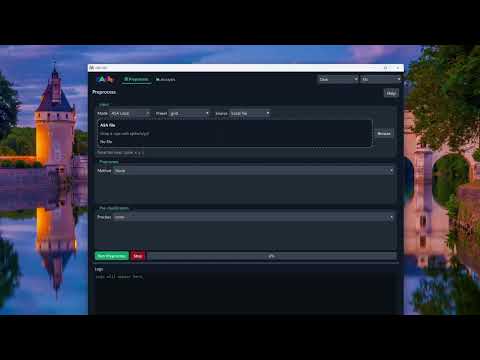
ASA GUI demo video
Smooth Tracking 1D
Activity bump following a moving stimulus |
CANN2D Encoding
2D population encoding patterns over time |
Theta Sweep Animation
Theta-modulated sweep dynamics |
|
Bump Analysis
Bump fitting and stability diagnostics |
Torus Bump
Bump dynamics projected onto a torus manifold |
Quick Start
1D CANN smooth tracking (imports → simulation → visualization)
import brainpy.math as bm
from canns.analyzer.visualization import PlotConfigs, energy_landscape_1d_animation
from canns.models.basic import CANN1D
from canns.task.tracking import SmoothTracking1D

# simulation time step
bm.set_dt(0.1)

# build model
cann = CANN1D(num=512)

# build tracking task (Iext length = duration length + 1)
task = SmoothTracking1D(
    cann_instance=cann,
    Iext=(0.0, 0.5, 1.0, 1.5),
    duration=(5.0, 5.0, 5.0),
    time_step=bm.get_dt(),
)
task.get_data()


# one-step simulation callback
def step(t, stimulus):
    cann(stimulus)
    return cann.u.value, cann.inp.value


# run simulation loop
us, inputs = bm.for_loop(
    step,
    operands=(task.run_steps, task.data),
)

# visualize with energy landscape animation
config = PlotConfigs.energy_landscape_1d_animation(
    time_steps_per_second=int(1 / bm.get_dt()),
    fps=20,
    title="Smooth Tracking 1D",
    xlabel="State",
    ylabel="Activity",
    show=True,
)

energy_landscape_1d_animation(
    data_sets={"u": (cann.x, us), "Iext": (cann.x, inputs)},
    config=config,
)
Installation
# CPU-only
pip install canns

# Optional accelerators (Linux)
pip install canns[cuda12]
pip install canns[cuda13]
pip install canns[tpu]

# GUI (ASA Pipeline)
pip install canns[gui]
Optional (uv):
uv pip install canns
Docs & Examples
- Documentation and tutorials: https://routhleck.com/canns/
- Local scripts:
examples/ - Sphinx docs and notebooks:
docs/ - ASA GUI entry:
canns-gui
Citation
If you use CANNs in your research, please cite the arXiv preprint:
@misc{he2026canns,
  author       = {He, Sichao and
                  Tuerhong, Aiersi and
                  She, Shangjun and
                  Chu, Tianhao and
                  Wu, Yuling and
                  Zuo, Junfeng and
                  Wu, Si},
  title        = {CANNs: A Toolkit for Research on Continuous Attractor Neural Networks},
  year         = {2026},
  eprint       = {2606.27783},
  archivePrefix = {arXiv},
  primaryClass = {q-bio.NC},
  doi          = {10.48550/arXiv.2606.27783},
  url          = {https://arxiv.org/abs/2606.27783}
}
If you need to cite a specific version of the software, you may also include the Zenodo archive:
@software{he_2026_canns,
  author       = {He, Sichao and
                  Tuerhong, Aiersi and
                  She, Shangjun and
                  Chu, Tianhao and
                  Wu, Yuling and
                  Zuo, Junfeng and
                  Wu, Si},
  title        = {CANNs: Continuous Attractor Neural Networks Toolkit},
  month        = feb,
  year         = {2026},
  publisher    = {Zenodo},
  version      = {v1.0.0},
  doi          = {10.5281/zenodo.18453893},
  url          = {https://doi.org/10.5281/zenodo.18453893}
}
Plain text (primary):
He, S., Tuerhong, A., She, S., Chu, T., Wu, Y., Zuo, J., & Wu, S. (2026). CANNs: A Toolkit for Research on Continuous Attractor Neural Networks. arXiv:2606.27783. https://arxiv.org/abs/2606.27783
Plain text (version-specific):
He, S., Tuerhong, A., She, S., Chu, T., Wu, Y., Zuo, J., & Wu, S. (2026). CANNs: Continuous Attractor Neural Networks Toolkit (v1.0.0). Zenodo. https://doi.org/10.5281/zenodo.18453893
Contributing & License
Contributions are welcome. Please read CONTRIBUTING.md before opening a PR.
Apache License 2.0. See LICENSE.
1 maintainer

Release files for canns 1.3.1
For a detailed explanation of source distributions (sdists) and built distributions (wheels), please see the package formats documentation.
Source distribution (sdist)
| File | Size | Uploaded | |
|---|---|---|---|
| canns-1.3.1.tar.gz | 453.0 kB | Details |
Built distribution (wheel)
| File | Interpreter | ABI | Platform | Reset |
|---|---|---|---|---|
| canns-1.3.1-py3-none-any.whl | Python 3 | none | any | Details |
Total release size: 974.5 kB
Release files / canns-1.3.1.tar.gz
| Download URL | canns-1.3.1.tar.gz |
|---|---|
| Size | 453.0 kB |
| Tags | Source |
|
SHA-256 checksum How to use checksums |
1661521f91926931fba9ffeb7d379e002c63360236ad0bc0b8e234e8697066cb
|
|
BLAKE2b-256 checksum How to use checksums |
c8c86b6ac7e8e34d959f4a23f023c72abc6e9f6074e77386b3863eef924fc226
|
| Upload date | |
|
Uploaded using Trusted Publishing? What is trusted publishing? |
Yes |
| Uploaded via |
twine/7.0.0 CPython/3.13.14
|
Provenance
Provenance describes where a file came from. On PyPI, provenance is shared via attestations, which provide a verifiable record of the build or publishing details. View details, limitations and caveats.


PyPI Publish Attestation
PyPI verified that this artifact, at this checksum, originated from the publisher listed below.
Signed by GitHub Actions, verified by PyPI on Aug 17, 2026.
Transparency logRelease files / canns-1.3.1-py3-none-any.whl
| Download URL | canns-1.3.1-py3-none-any.whl |
|---|---|
| Size | 521.5 kB |
| Tags | Python 3 |
|
SHA-256 checksum How to use checksums |
43fe46eb730ef0402302e3d8827172a245937a9f9296b64f168d7efcea24845a
|
|
BLAKE2b-256 checksum How to use checksums |
efb590a6e5447a25be22d69697b0a7ceccd7a087fd4d78e9be59074e36052d77
|
| Upload date | |
|
Uploaded using Trusted Publishing? What is trusted publishing? |
Yes |
| Uploaded via |
twine/7.0.0 CPython/3.13.14
|
Provenance
Provenance describes where a file came from. On PyPI, provenance is shared via attestations, which provide a verifiable record of the build or publishing details. View details, limitations and caveats.
PyPI Publish Attestation
PyPI verified that this artifact, at this checksum, originated from the publisher listed below.
Signed by GitHub Actions, verified by PyPI on Aug 17, 2026.
Transparency log













