
Cardiac coordinates
A python package with various tools about cardiac coordinates systems.
If you use this package, please cite this EP Europace article that mentions the "ventricular coordinates" and its use to register electro-anatomical maps and imaging data (Figure 4).
@article{cedilnik2018fast,
  title={Fast personalized electrophysiological models from computed tomography images for ventricular tachycardia ablation planning},
  author={Cedilnik, Nicolas and Duchateau, Josselin and Dubois, R{\'e}mi and Sacher, Fr{\'e}d{\'e}ric and Ja{\"\i}s, Pierre and Cochet, Hubert and Sermesant, Maxime},
  journal={EP Europace},
  volume={20},
  number={suppl\_3},
  pages={iii94--iii101},
  year={2018},
  publisher={Oxford University Press}
}
Features
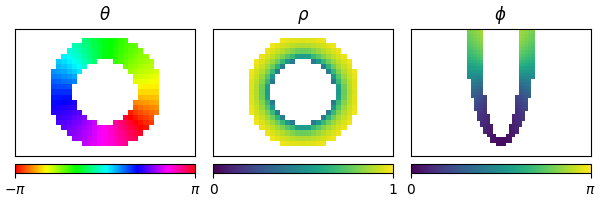
Ventricular coordinates
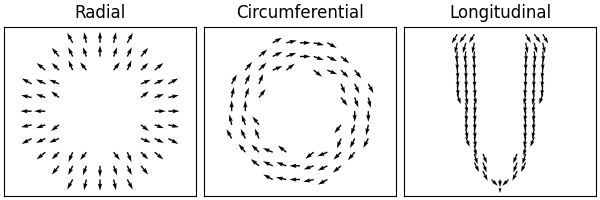
Local coordinates systems
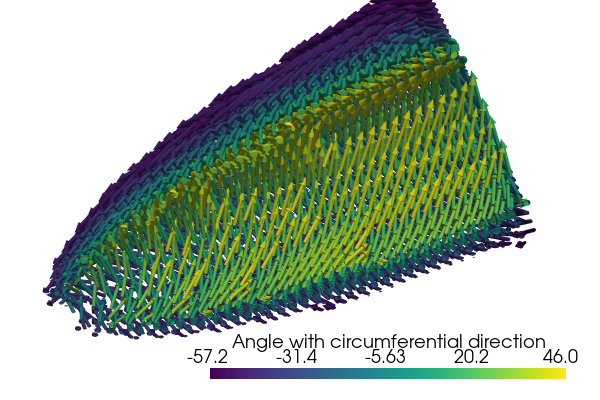
Rule-based fiber orientation
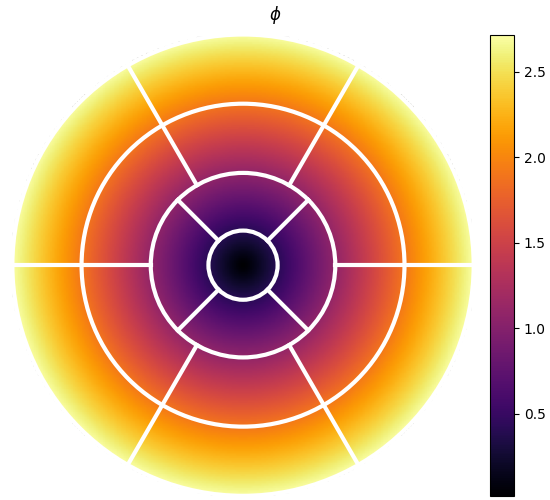
Bull's eye plots
Documentation
The documentation is hosted on https://ncedilni.gitlabpages.inria.fr/cardiac-coords.
Installation
Via pip or similar standard packaging tools
Stable versions are published to PyPI.org.
Just pip install cardiac-coords or similar with your favorite python project manager.
Development versions are published on gitlab packages.
From the git repository
Since this repo uses Git Large File Storage, make sure it is installed.
pip install git+ssh://git@gitlab.inria.fr/ncedilni/cardiac-coords
1 maintainer

Metadata
1 maintainer
Release files for cardiac-coords 0.1.1
For a detailed explanation of source distributions (sdists) and built distributions (wheels), please see the package formats documentation.
Source distribution (sdist)
| File | Size | Uploaded | Provenance | Actions |
|---|---|---|---|---|
| cardiac_coords-0.1.1.tar.gz | 613.5 kB | Without provenance | Details for cardiac_coords-0.1.1.tar.gz |
Built distribution (wheel)
| File | Interpreter | ABI | Platform | Actions Reset |
|---|---|---|---|---|
| cardiac_coords-0.1.1-py3-none-any.whl | Python 3 | none | any | Details for cardiac_coords-0.1.1-py3-none-any.whl |
Total release size: 635.6 kB
Release files / cardiac_coords-0.1.1.tar.gz
| Download URL | cardiac_coords-0.1.1.tar.gz |
|---|---|
| Size | 613.5 kB |
| Tags | Source |
|
SHA-256 checksum How to use checksums |
71d52ffce37294fda423ae5343b47dc388e3d20f57aef5afd9da001aac88a829
|
|
BLAKE2b-256 checksum How to use checksums |
a9d3d7178a090ec39e03e46246db396fa663ecc9709d5a3b356d87613fd6b6ca
|
| Upload date | |
|
Uploaded using Trusted Publishing? What is trusted publishing? |
No |
| Uploaded via |
uv/0.12.23 {"installer":{"name":"uv","version":"0.12.23","subcommand":["publish"]},"python":null,"implementation":{"name":null,"version":null},"distro":{"name":"Debian GNU/Linux","version":"12","id":"bookworm","libc":null},"system":{"name":null,"release":null},"cpu":null,"openssl_version":null,"setuptools_version":null,"rustc_version":null,"ci":true}
|
Release files / cardiac_coords-0.1.1-py3-none-any.whl
| Download URL | cardiac_coords-0.1.1-py3-none-any.whl |
|---|---|
| Size | 22.1 kB |
| Tags | Python 3 |
|
SHA-256 checksum How to use checksums |
341dcb2900f5b33926516551ad156178e318599e57dbb0608b3976b910b6e9c6
|
|
BLAKE2b-256 checksum How to use checksums |
bba72e566b8a3d770ef68e7b636bc2d5ccbd4a3434a47e99c10da136f86981d6
|
| Upload date | |
|
Uploaded using Trusted Publishing? What is trusted publishing? |
No |
| Uploaded via |
uv/0.12.23 {"installer":{"name":"uv","version":"0.12.23","subcommand":["publish"]},"python":null,"implementation":{"name":null,"version":null},"distro":{"name":"Debian GNU/Linux","version":"12","id":"bookworm","libc":null},"system":{"name":null,"release":null},"cpu":null,"openssl_version":null,"setuptools_version":null,"rustc_version":null,"ci":true}
|
Security for cardiac-coords 0.1.1
Provenance
Provenance describes where a file came from. On PyPI, provenance is shared via attestations, which provide a verifiable record of the build or publishing details. View details, limitations and caveats.
No provenance found
None of the files in this release were uploaded with provenance metadata.
A note on package security
PyPI is a repository for distributing packages, not a service for auditing them. While third-party security researchers and our staff do their best to detect and remove malicious packages, PyPI cannot guarantee the quality, security or suitability of any given package.
To learn more about protecting yourself from malicious actors, visit our package security documentation.














