
 Cellects: Cell Expansion Computer Tracking Software





Description
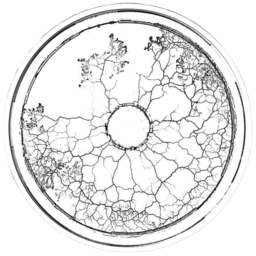
Cellects is a user-friendly software for automated computation of biological growth, motion and morphology from 2D images and time-lapse sequences (2D + t). Its graphical interface has a minimalist design which ensures users can perform essential image analysis tasks without prior expertise. Cellects’ main strengths are its broad scope of action, automated computation of a variety of geometrical descriptors, easy installation and user-friendly interface.

Installation (Short version)
Install on Windows .exe and macOS (silicon only) .dmg
Or, install via pip:
pip install cellects
Any difficulties? follow our complete installation tutorial
Quick Start
Run in terminal:
cellects
Documentation
Cellects' workflow is described in a complete documentation. It includes:
- What is Cellects: Purpose of the software, usable data and introduction of its user manual
- Setting up a first analysis: Step-by-step workflows for data localization, image analysis and video tracking
- Improving the analysis: Customization options, batch processing, parameter tuning.
- Use cases: Real-world cases using the GUI (interface) and the API (scripts).
- Contributing: Report bugs and feature requests; contribute; testing and documentation processes.
- API Reference: Auto-generated from source code docstrings (see [Build Documentation]).
Use Cases
See use cases for real-world examples:
- Automated Physarum polycephalum tracking using GUI
- Automated Physarum polycephalum tracking using API
- Colony growth tracking
Contributing
We welcome contributions!
- Fork the repository and create a new branch.
- Submit issues/PRs via GitHub.
For developer workflows, see Contributing.
License & Citation
GNU GPL3 License (see LICENSE).
To cite Cellects, use:
@article{boussard2026cellects,
  title={Cellects, a software to quantify cell expansion and motion},
  author = {Boussard, Aur{\`e}le and Petit, Manuel and Arrufat, Patrick and Dussutour, Audrey and P{\'e}rez-Escudero, Alfonso},
  journal={bioRxiv},
  pages={2026--02},
  year = {2026},
  doi = {10.1101/2024.03.26.586795},
  publisher={Cold Spring Harbor Laboratory}
}
Testing
Run unit tests with:
pip install -e ".[test]"
pytest
Data from the paper
https://doi.org/10.5281/zenodo.23121341
Resources
1 maintainer

Metadata
1 maintainer
Release files for cellects 1.1.21
For a detailed explanation of source distributions (sdists) and built distributions (wheels), please see the package formats documentation.
Source distribution (sdist)
| File | Size | Uploaded | |
|---|---|---|---|
| cellects-1.1.21.tar.gz | 851.6 kB | Details |
Built distribution (wheel)
| File | Interpreter | ABI | Platform | Reset |
|---|---|---|---|---|
| cellects-1.1.21-py3-none-any.whl | Python 3 | none | any | Details |
Total release size: 1.7 MB
Release files / cellects-1.1.21.tar.gz
| Download URL | cellects-1.1.21.tar.gz |
|---|---|
| Size | 851.6 kB |
| Tags | Source |
|
SHA-256 checksum How to use checksums |
fffa06cfe20b0c4965545184541ba4ba1b4dc6d39937813fa9e0a98fb24b5c81
|
|
BLAKE2b-256 checksum How to use checksums |
a1251bae2348db3fb78521b34015b44a1f0c145e2a2c38a20954e99c710a0257
|
| Upload date | |
|
Uploaded using Trusted Publishing? What is trusted publishing? |
Yes |
| Uploaded via |
twine/7.0.0 CPython/3.13.14
|
Provenance
Provenance describes where a file came from. On PyPI, provenance is shared via attestations, which provide a verifiable record of the build or publishing details. View details, limitations and caveats.


PyPI Publish Attestation
PyPI verified that this artifact, at this checksum, originated from the publisher listed below.
Signed by GitHub Actions, verified by PyPI on Oct 14, 2026.
Transparency logRelease files / cellects-1.1.21-py3-none-any.whl
| Download URL | cellects-1.1.21-py3-none-any.whl |
|---|---|
| Size | 802.3 kB |
| Tags | Python 3 |
|
SHA-256 checksum How to use checksums |
0e2e4876a91697ebd2c98c60df0c0c79d491cf5f09d90d70762bc2222bccadac
|
|
BLAKE2b-256 checksum How to use checksums |
4adafa2b5ac875888df2e14bce64b83e3fb4c341416b6b8a2e9f9f9a1be0b713
|
| Upload date | |
|
Uploaded using Trusted Publishing? What is trusted publishing? |
Yes |
| Uploaded via |
twine/7.0.0 CPython/3.13.14
|
Provenance
Provenance describes where a file came from. On PyPI, provenance is shared via attestations, which provide a verifiable record of the build or publishing details. View details, limitations and caveats.
PyPI Publish Attestation
PyPI verified that this artifact, at this checksum, originated from the publisher listed below.
Signed by GitHub Actions, verified by PyPI on Oct 14, 2026.
Transparency log













