

Where is the evidence?
Evidence cards for narrow public AI, ML and data claims: frozen protocol,
hashed sources, honest result status.








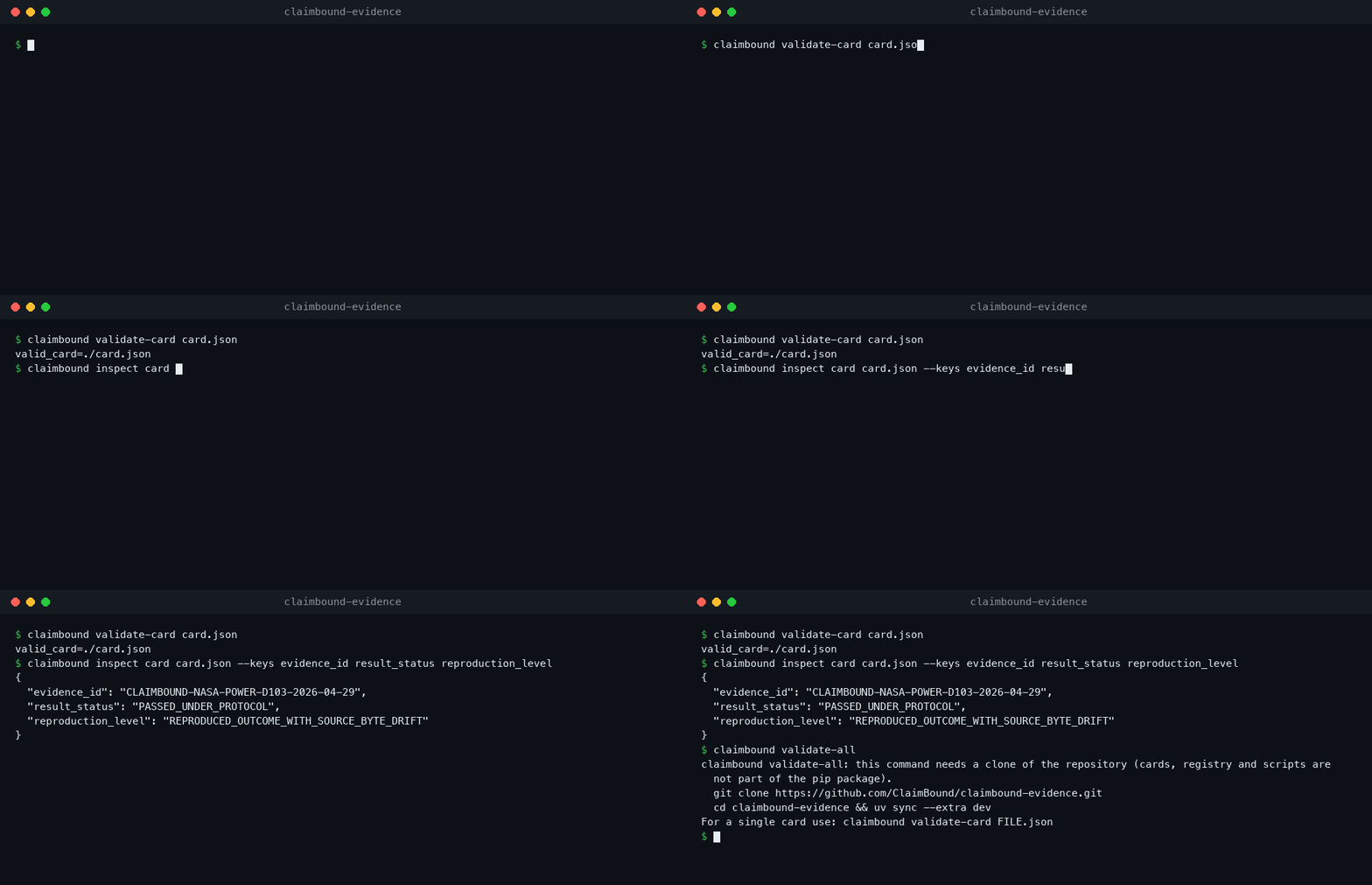
pipx install claimbound-evidence        # or: uv tool install claimbound-evidence
claimbound validate-card path/to/card.json
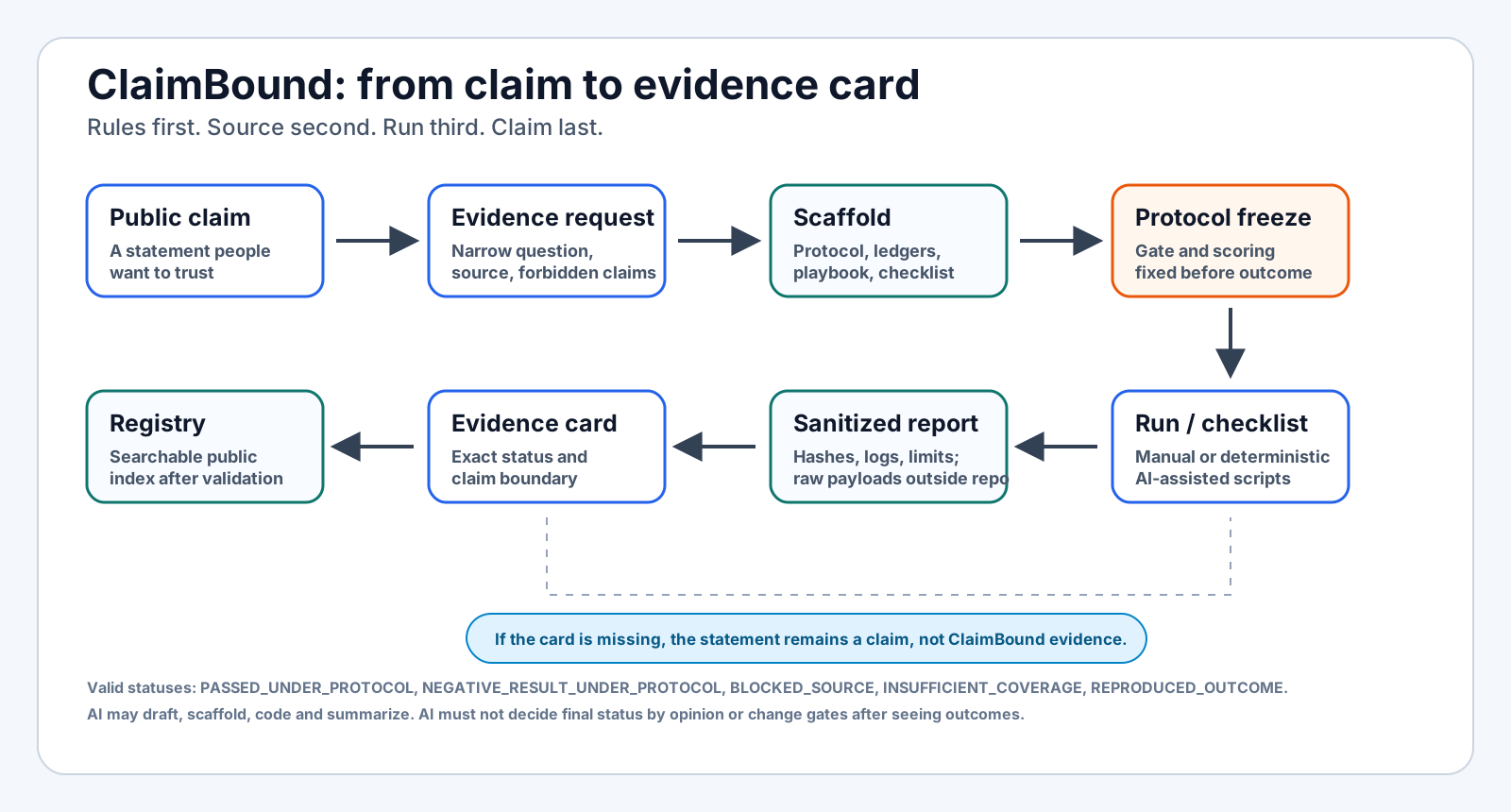
ClaimBound turns a narrow public AI, ML, data or software-development claim into a small evidence card: protocol, source boundary, hashes, exact result status, claim boundary and reproduction level.
It is not a model leaderboard, hosted scoring service or certification authority. It is an open-source toolkit for asking one plain question:
Where is the evidence?
If there is no evidence card, the statement is still only a claim. Green means
one narrow claim passed under a frozen protocol — not "trust everything".
PASSED_UNDER_PROTOCOL is not the same as independently reproduced: most public
cards are still SINGLE_OPERATOR / not independently reproduced until a
separate rerun records otherwise. Negative, blocked and drift outcomes are
first-class evidence too.
Read the one-screen walkthrough in ClaimBound in 30 seconds, the reviewer path, the non-developer start guide or the documentation index for reviewer, operator and advanced paths.
What It Is And Is Not
| ClaimBound is | ClaimBound is not |
|---|---|
| A card per one narrow claim: protocol, source boundary, hashes, result status, claim boundary, reproduction level | A model leaderboard, benchmark ranking or quality score |
A validator (validate-card, validate-all) that anyone can rerun locally |
A hosted scoring service or certification authority |
| Honest about negative, blocked and drifted results (they are first-class evidence) | A way to declare a system safe, compliant or correct |
| Open registry of sanitized metadata and hashes | An archive of raw payloads or private data |
Nearby tools answer different questions: model and data cards describe a system as written by its authors, leaderboards rank systems, supply-chain provenance (SLSA, in-toto) covers how software was built, and fact-check markup records a publisher's verdict. ClaimBound records what one frozen, reproducible check of a public claim found, and how far anyone has independently reproduced it.
Public Workflows
| Workflow | Question it helps answer | Start here |
|---|---|---|
| Public AI transparency | Did a public system-card or model-card source boundary pass a frozen audit? | Current evidence tracks |
| European and public open data | Did an official public-data source pass a source-boundary or narrow empirical gate? | Evidence card examples |
| Software development evidence | Did a narrow build, validator or regression claim pass under fixed commands? | Software development workflow |
Blocked cards, artifact-only records and optional advanced protocol layers are documented separately. They are not hidden failures. See future applications, artifacts catalog and advanced optional docs.
Example Cards
Each SVG uses separate chips. Green and red on the result-status chip
mean a narrow gate pass or honest non-pass. Yellow appears on the
reproduction chip when reproduction_level records source-byte drift — not
on the gate outcome itself. None of this implies general model quality.
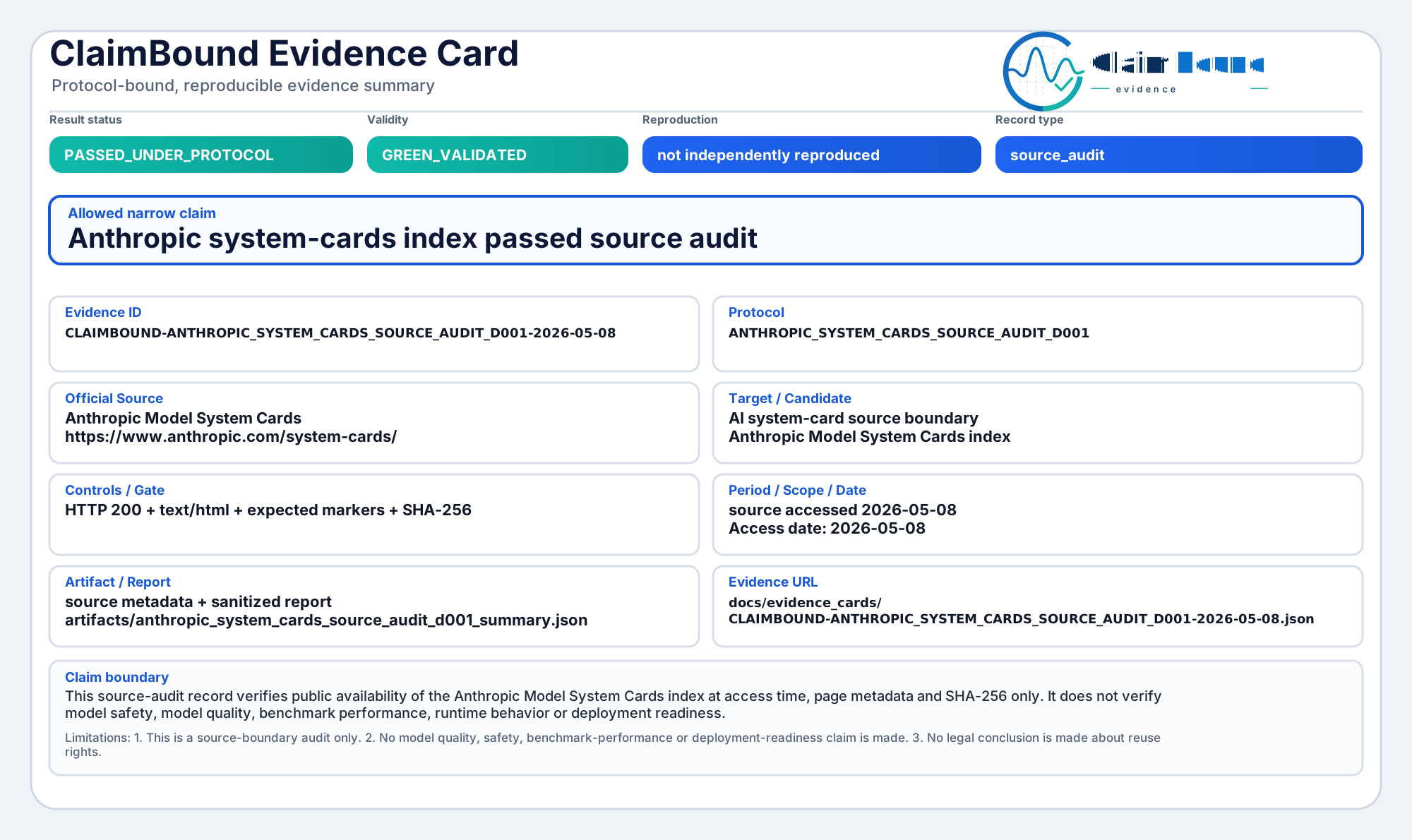
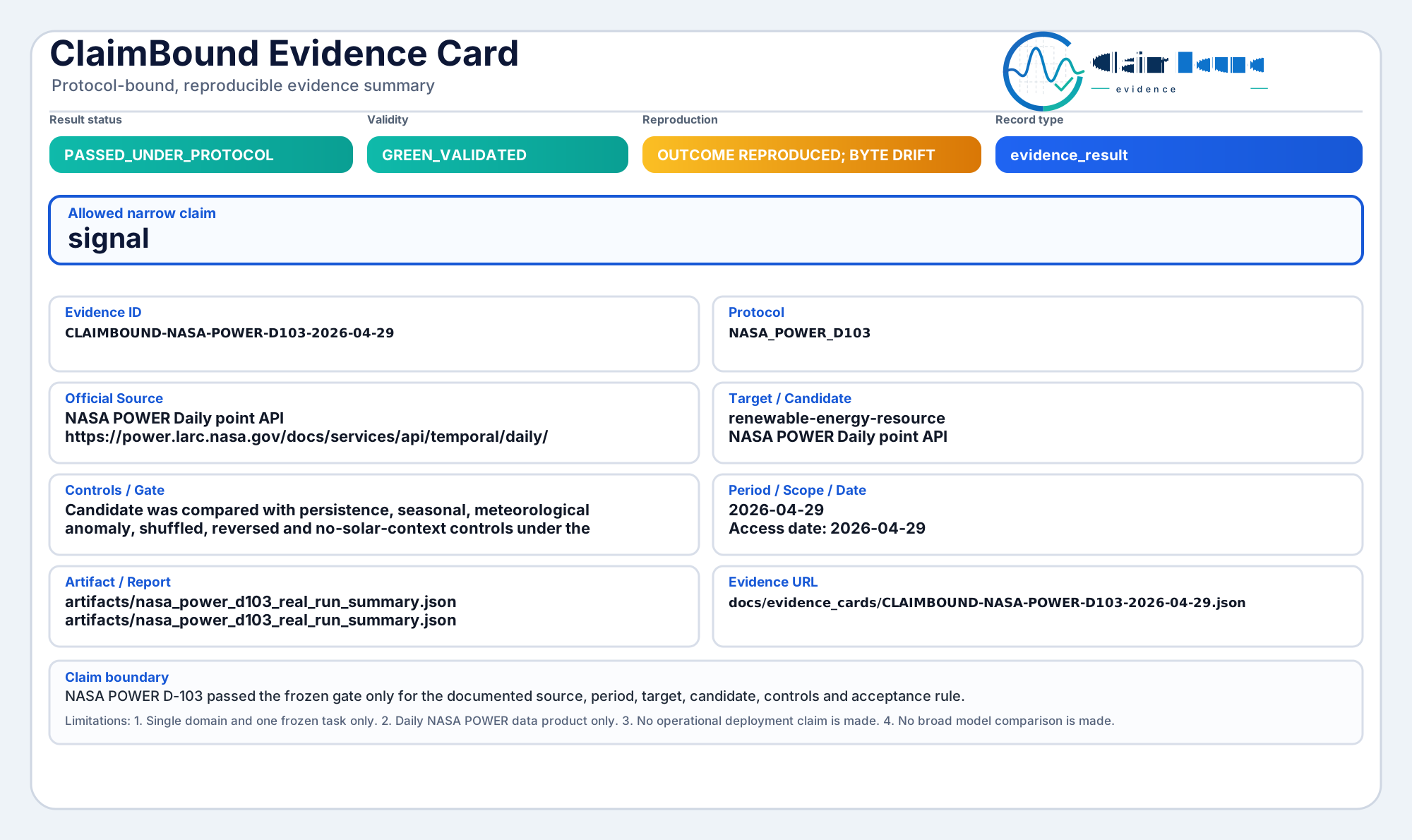
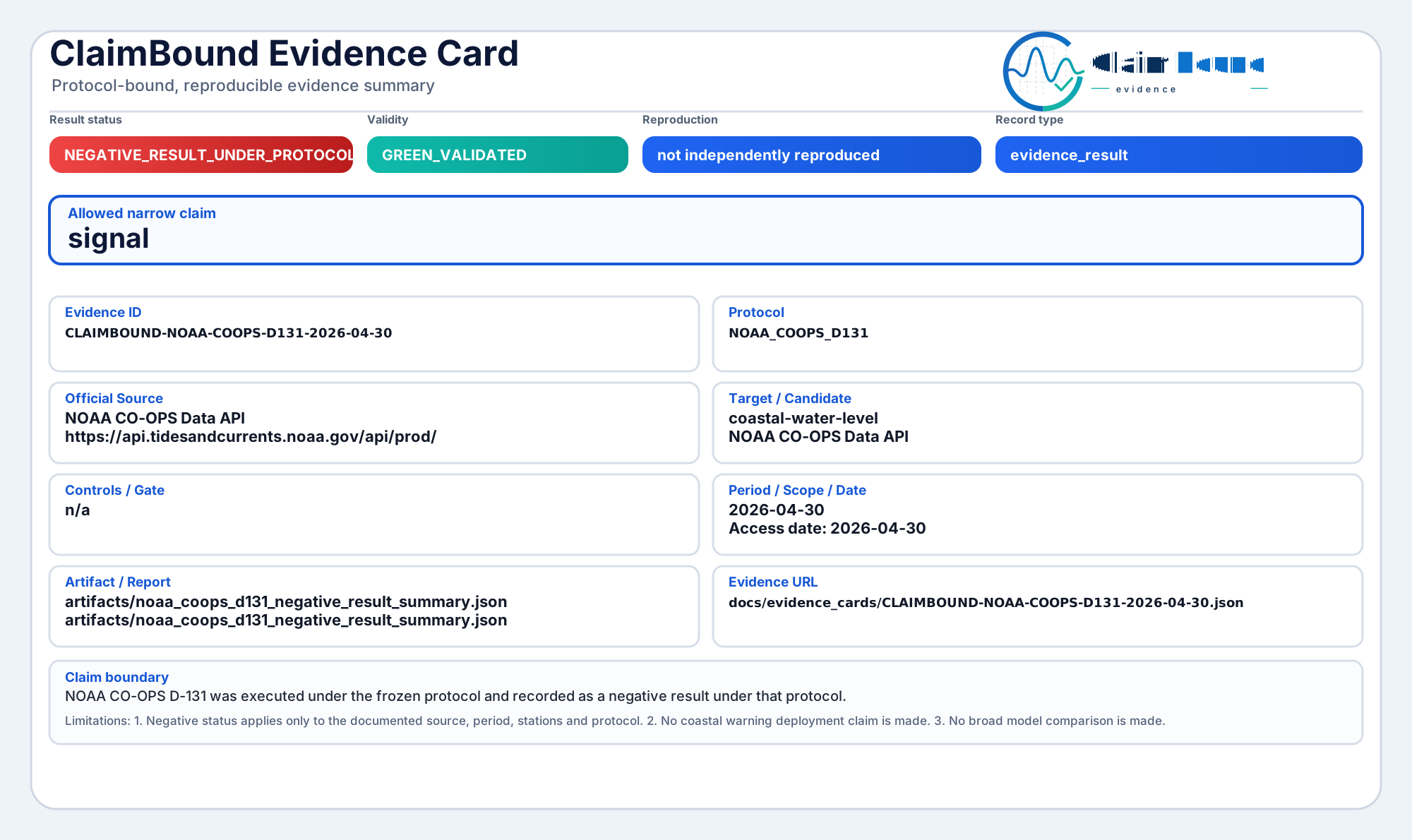
More examples, including EU source audits and blocked-source cards: evidence cards · registry index
For Reviewers And External Operators
- Reviewer path — one-page orientation and credibility gaps
- Reviewer summary — problem, strongest cards, baseline versus roadmap, differentiation from adjacent projects
- Common misreadings — green ≠ safe, yellow drift FAQ
- European Dimension — EU open-data angle and limits
- Volunteer one-pager — close VERIFY #85–#87 (~15 min first time)
- External verification packs — split VERIFY work across Tier A/B/C operators
- External operator starter pack — read, rerun, drift report or boundary question paths
- Planned work not shipped — roadmap vs current code
- Artifacts catalog — NYC TLC / CDC artifact-only records
- Public roadmap 2026 — planned open-source hardening work
Independent from EviBound; see scope split. Not affiliated with commercial or similarly named ClaimBound / Claimbound projects or domains (including on GitHub or GitLab); see similar names. Canonical home: GitHub ClaimBound/claimbound-evidence; the GitLab repo is a public mirror only.
Install
Works on Windows, macOS and Linux. See platform support.
From PyPI — card-level CLI (validate-card, inspect card, hash, run-root):
pipx install claimbound-evidence      # or: uv tool install claimbound-evidence / pip install claimbound-evidence
claimbound --version
claimbound validate-card path/to/card.json
validate-all, demo, rerun, drift and verify need the cards, registry and
scripts of a repository clone (see below); from a pip install they print how to get one.
The full guide, including a lighter sparse clone, is the
documentation site.
From source (dev extras + full checkout):
git clone https://github.com/ClaimBound/claimbound-evidence.git
cd claimbound-evidence
uv sync --extra dev
uv run claimbound doctor
Reproduce In Three Commands
uv run claimbound validate-all
uv run --extra dev python -m pytest -q
uv run claimbound demo eea-source-audit
If validate-all passes, the committed cards and registry match the current
validators. A scaffold or demo output is not evidence until a protocol is frozen,
the run completes, the card validates and the registry is updated.
Quick Start
uv run claimbound new
uv run claimbound demo grok-source-audit
uv run claimbound run-root \
  --protocol-id EXAMPLE_D001 \
  --source-url https://example.org/source \
  --operator your-name-or-handle
Non-interactive scaffold, EU runners, card protocols and operator runbooks: getting started.
Portable AI control rules for evidence-bound work: 12 AI Life Rules.
Boundary
This repository is an independently usable open evidence foreground. It does not include or require private background technology.
Evidence cards are reusable examples and validation records, not a hosted review service, legal advice, or on-demand third-party check queue. The registry stores sanitized metadata and hashes, not raw payloads.
See governance, maintainer boundary and release process.
Community
License
Apache-2.0. See LICENSE.
1 maintainer

Metadata
1 maintainer
Release files for claimbound-evidence 0.4.8
For a detailed explanation of source distributions (sdists) and built distributions (wheels), please see the package formats documentation.
Source distribution (sdist)
| File | Size | Uploaded | |
|---|---|---|---|
| claimbound_evidence-0.4.8.tar.gz | 66.7 kB | Details |
Built distribution (wheel)
| File | Interpreter | ABI | Platform | Reset |
|---|---|---|---|---|
| claimbound_evidence-0.4.8-py3-none-any.whl | Python 3 | none | any | Details |
Total release size: 140.8 kB
Release files / claimbound_evidence-0.4.8.tar.gz
| Download URL | claimbound_evidence-0.4.8.tar.gz |
|---|---|
| Size | 66.7 kB |
| Tags | Source |
|
SHA-256 checksum How to use checksums |
e4366a6cd0bbd111013198159467b9957728d835ffc73c9914df738668549e2e
|
|
BLAKE2b-256 checksum How to use checksums |
296a0a8729cf66995a6f32fec448dd3f1373ea7373519939cb9f3a9d4a176bae
|
| Upload date | |
|
Uploaded using Trusted Publishing? What is trusted publishing? |
Yes |
| Uploaded via |
twine/7.0.0 CPython/3.13.14
|
Provenance
Provenance describes where a file came from. On PyPI, provenance is shared via attestations, which provide a verifiable record of the build or publishing details. View details, limitations and caveats.


PyPI Publish Attestation
PyPI verified that this artifact, at this checksum, originated from the publisher listed below.
Signed by GitHub Actions, verified by PyPI on Sep 30, 2026.
Transparency logRelease files / claimbound_evidence-0.4.8-py3-none-any.whl
| Download URL | claimbound_evidence-0.4.8-py3-none-any.whl |
|---|---|
| Size | 74.0 kB |
| Tags | Python 3 |
|
SHA-256 checksum How to use checksums |
c7fd0036e12d073a0a1512498439d9e43e11b955f0aa3d773d35cdf57076f46a
|
|
BLAKE2b-256 checksum How to use checksums |
936c71ea4a002906b20ebdc0d666eb942b34ba35623450d0726a6eb1b7a37a48
|
| Upload date | |
|
Uploaded using Trusted Publishing? What is trusted publishing? |
Yes |
| Uploaded via |
twine/7.0.0 CPython/3.13.14
|
Provenance
Provenance describes where a file came from. On PyPI, provenance is shared via attestations, which provide a verifiable record of the build or publishing details. View details, limitations and caveats.
PyPI Publish Attestation
PyPI verified that this artifact, at this checksum, originated from the publisher listed below.
Signed by GitHub Actions, verified by PyPI on Sep 30, 2026.
Transparency log













