
🎯 Claude Code Usage Monitor


A beautiful real-time terminal monitoring tool for Claude AI token usage. Track your token consumption, burn rate, and get predictions about when you'll run out of tokens.

📑 Table of Contents
- ✨ Key Features
- 🚀 Installation
- 📖 Usage
- ✨ Features & How It Works
- 🚀 Usage Examples
- Troubleshooting
- 📞 Contact
- 📚 Additional Documentation
- 📝 License
- 🤝 Contributors
- 🙏 Acknowledgments
✨ Key Features
- 🔄 Real-time monitoring - Updates every 3 seconds with smooth refresh
- 📊 Visual progress bars - Beautiful color-coded token and time progress bars
- 🔮 Smart predictions - Calculates when tokens will run out based on current burn rate
- 🤖 Auto-detection - Automatically switches to custom max when Pro limit is exceeded
- 📋 Multiple plan support - Works with Pro, Max5, Max20, and auto-detect plans
- ⚠️ Warning system - Alerts when tokens exceed limits or will deplete before session reset
- 💼 Professional UI - Clean, colorful terminal interface with emojis
- ⏰ Customizable scheduling - Set your own reset times and timezones
🚀 Installation
⚡ Modern Installation with uv (Recommended)
The fastest and easiest way to install and use the monitor:
First-time uv users
If you don't have uv installed yet, get it with one command:
# Install uv (one-time setup)

# On Linux/macOS:
curl -LsSf https://astral.sh/uv/install.sh | sh

# On Windows:
powershell -ExecutionPolicy ByPass -c "irm https://astral.sh/uv/install.ps1 | iex"

# After installation, restart your terminal
Install and run the monitor
# Install dependencies
npm install -g ccusage

# Clone and install the tool with uv
git clone https://github.com/Maciek-roboblog/Claude-Code-Usage-Monitor.git
cd Claude-Code-Usage-Monitor
uv tool install .

# Run from anywhere
ccusage-monitor
# or
claude-monitor
🔧 Legacy Installation Methods
Quick Start (Development/Testing)
For immediate testing or development:
# Install dependencies
npm install -g ccusage
pip install pytz

# Clone and run
git clone https://github.com/Maciek-roboblog/Claude-Code-Usage-Monitor.git
cd Claude-Code-Usage-Monitor
python claude_monitor.py
Prerequisites
- Python 3.7+ installed on your system
- Node.js for ccusage CLI tool
Virtual Environment Setup
Why Use Virtual Environment?
Using a virtual environment is strongly recommended because:
- 🛡️ Isolation: Keeps your system Python clean and prevents dependency conflicts
- 📦 Portability: Easy to replicate the exact environment on different machines
- 🔄 Version Control: Lock specific versions of dependencies for stability
- 🧹 Clean Uninstall: Simply delete the virtual environment folder to remove everything
- 👥 Team Collaboration: Everyone uses the same Python and package versions
Installing virtualenv (if needed)
If you don't have venv module available:
# Ubuntu/Debian
sudo apt-get update
sudo apt-get install python3-venv

# Fedora/RHEL/CentOS
sudo dnf install python3-venv

# macOS (usually comes with Python)
# If not available, install Python via Homebrew:
brew install python3

# Windows (usually comes with Python)
# If not available, reinstall Python from python.org
# Make sure to check "Add Python to PATH" during installation
Alternatively, use the virtualenv package:
# Install virtualenv via pip
pip install virtualenv

# Then create virtual environment with:
virtualenv venv
# instead of: python3 -m venv venv
Step-by-Step Setup
# 1. Install ccusage globally
npm install -g ccusage

# 2. Clone the repository
git clone https://github.com/Maciek-roboblog/Claude-Code-Usage-Monitor.git
cd Claude-Code-Usage-Monitor

# 3. Create virtual environment
python3 -m venv venv
# Or if using virtualenv package:
# virtualenv venv

# 4. Activate virtual environment
# On Linux/Mac:
source venv/bin/activate
# On Windows:
# venv\Scripts\activate

# 5. Install Python dependencies
pip install pytz

# 6. Make script executable (Linux/Mac only)
chmod +x claude_monitor.py

# 7. Run the monitor
python claude_monitor.py
Daily Usage
After initial setup, you only need:
# Navigate to project directory
cd Claude-Code-Usage-Monitor

# Activate virtual environment
source venv/bin/activate  # Linux/Mac
# venv\Scripts\activate   # Windows

# Run monitor
./claude_monitor.py  # Linux/Mac
# python claude_monitor.py  # Windows

# When done, deactivate
deactivate
Pro Tip: Shell Alias
Create an alias for quick access:
# Add to ~/.bashrc or ~/.zshrc
alias claude-monitor='cd ~/Claude-Code-Usage-Monitor && source venv/bin/activate && ./claude_monitor.py'

# Then just run:
claude-monitor
📖 Usage
Basic Usage
With uv tool installation (Recommended)
# Default (Pro plan - 7,000 tokens)
claude-monitor

# Exit the monitor
# Press Ctrl+C to gracefully exit
Traditional/Development mode
# Default (Pro plan - 7,000 tokens)
./claude_monitor.py

# Exit the monitor
# Press Ctrl+C to gracefully exit
Configuration Options
Specify Your Plan
With uv tool installation:
# Pro plan (~7,000 tokens) - Default
claude-monitor --plan pro

# Max5 plan (~35,000 tokens)
claude-monitor --plan max5

# Max20 plan (~140,000 tokens)
claude-monitor --plan max20

# Auto-detect from highest previous session
claude-monitor --plan custom_max
Traditional/Development mode:
# Pro plan (~7,000 tokens) - Default
./claude_monitor.py --plan pro

# Max5 plan (~35,000 tokens)
./claude_monitor.py --plan max5

# Max20 plan (~140,000 tokens)
./claude_monitor.py --plan max20

# Auto-detect from highest previous session
./claude_monitor.py --plan custom_max
Custom Reset Times
With uv tool installation:
# Reset at 3 AM
claude-monitor --reset-hour 3

# Reset at 10 PM
claude-monitor --reset-hour 22
Traditional/Development mode:
# Reset at 3 AM
./claude_monitor.py --reset-hour 3

# Reset at 10 PM
./claude_monitor.py --reset-hour 22
Timezone Configuration
The default timezone is Europe/Warsaw. Change it to any valid timezone:
With uv tool installation:
# Use US Eastern Time
claude-monitor --timezone US/Eastern

# Use Tokyo time
claude-monitor --timezone Asia/Tokyo

# Use UTC
claude-monitor --timezone UTC

# Use London time
claude-monitor --timezone Europe/London
Traditional/Development mode:
# Use US Eastern Time
./claude_monitor.py --timezone US/Eastern

# Use Tokyo time
./claude_monitor.py --timezone Asia/Tokyo

# Use UTC
./claude_monitor.py --timezone UTC

# Use London time
./claude_monitor.py --timezone Europe/London
Available Plans
| Plan | Token Limit | Best For |
|---|---|---|
| pro | ~7,000 | Light usage, testing (default) |
| max5 | ~35,000 | Regular development |
| max20 | ~140,000 | Heavy usage, large projects |
| custom_max | Auto-detect | Uses highest from previous sessions |
✨ Features & How It Works
Current Features
🔄 Real-time Monitoring
- Updates every 3 seconds with smooth refresh
- No screen flicker - intelligent display updates
- Live token consumption tracking across multiple sessions
📊 Visual Progress Bars
- Token Progress: Color-coded bars showing current usage vs limits
- Time Progress: Visual countdown to next session reset
- Burn Rate Indicator: Real-time consumption velocity
🔮 Smart Predictions
- Calculates when tokens will run out based on current burn rate
- Warns if tokens will deplete before next session reset
- Analyzes usage patterns from the last hour
🤖 Auto-Detection System
- Smart Plan Switching: Automatically switches from Pro to custom_max when limits exceeded
- Limit Discovery: Scans previous sessions to find your actual token limits
- Intelligent Notifications: Shows when automatic switches occur
Understanding Claude Sessions
How Claude Code Sessions Work
Claude Code operates on a 5-hour rolling session window system:
- Session Start: Begins with your first message to Claude
- Session Duration: Lasts exactly 5 hours from that first message
- Token Limits: Apply within each 5-hour session window
- Multiple Sessions: Can have several active sessions simultaneously
- Rolling Windows: New sessions can start while others are still active
Session Reset Schedule
Default reference times (in your configured timezone):
04:00,09:00,14:00,18:00,23:00
⚠️ Important: These are reference times for planning. Your actual token refresh happens exactly 5 hours after YOUR first message in each session.
Example Session Timeline:
10:30 AM - First message (Session A starts)
03:30 PM - Session A expires (5 hours later)

12:15 PM - First message (Session B starts)
05:15 PM - Session B expires (5 hours later)
Burn Rate Calculation
The monitor calculates burn rate using sophisticated analysis:
- Data Collection: Gathers token usage from all sessions in the last hour
- Pattern Analysis: Identifies consumption trends across overlapping sessions
- Velocity Tracking: Calculates tokens consumed per minute
- Prediction Engine: Estimates when current session tokens will deplete
- Real-time Updates: Adjusts predictions as usage patterns change
Token Limits by Plan
Standard Plans
| Plan | Approximate Limit | Typical Usage |
|---|---|---|
| Claude Pro | ~7,000 tokens | Light coding, testing, learning |
| Claude Max5 | ~35,000 tokens | Regular development work |
| Claude Max20 | ~140,000 tokens | Heavy usage, large projects |
Auto-Detection Plans
| Plan | How It Works | Best For |
|---|---|---|
| custom_max | Scans all previous sessions, uses highest token count found | Users with variable/unknown limits |
Smart Detection Features
Automatic Plan Switching
When using the default Pro plan:
- Detection: Monitor notices token usage exceeding 7,000
- Analysis: Scans previous sessions for actual limits
- Switch: Automatically changes to custom_max mode
- Notification: Displays clear message about the change
- Continuation: Keeps monitoring with new, higher limit
Limit Discovery Process
The auto-detection system:
- Scans History: Examines all available session blocks
- Finds Peaks: Identifies highest token usage achieved
- Validates Data: Ensures data quality and recency
- Sets Limits: Uses discovered maximum as new limit
- Learns Patterns: Adapts to your actual usage capabilities
🚀 Usage Examples
Common Scenarios
🌅 Morning Developer
Scenario: You start work at 9 AM and want tokens to reset aligned with your schedule.
# Set custom reset time to 9 AM
./claude_monitor.py --reset-hour 9

# With your timezone
./claude_monitor.py --reset-hour 9 --timezone US/Eastern
Benefits:
- Reset times align with your work schedule
- Better planning for daily token allocation
- Predictable session windows
🌙 Night Owl Coder
Scenario: You often work past midnight and need flexible reset scheduling.
# Reset at midnight for clean daily boundaries
./claude_monitor.py --reset-hour 0

# Late evening reset (11 PM)
./claude_monitor.py --reset-hour 23
Strategy:
- Plan heavy coding sessions around reset times
- Use late resets to span midnight work sessions
- Monitor burn rate during peak hours
🔄 Heavy User with Variable Limits
Scenario: Your token limits seem to change, and you're not sure of your exact plan.
# Auto-detect your highest previous usage
claude-monitor --plan custom_max

# Monitor with custom scheduling
claude-monitor --plan custom_max --reset-hour 6
Approach:
- Let auto-detection find your real limits
- Monitor for a week to understand patterns
- Note when limits change or reset
🌍 International User
Scenario: You're working across different timezones or traveling.
# US East Coast
claude-monitor --timezone America/New_York

# Europe
claude-monitor --timezone Europe/London

# Asia Pacific
claude-monitor --timezone Asia/Singapore

# UTC for international team coordination
claude-monitor --timezone UTC --reset-hour 12
⚡ Quick Check
Scenario: You just want to see current status without configuration.
# Just run it with defaults
ccusage-monitor

# Press Ctrl+C after checking status
Plan Selection Strategies
How to Choose Your Plan
Start with Default (Recommended for New Users)
# Pro plan detection with auto-switching
ccusage-monitor
- Monitor will detect if you exceed Pro limits
- Automatically switches to custom_max if needed
- Shows notification when switching occurs
Known Subscription Users
# If you know you have Max5
claude-monitor --plan max5

# If you know you have Max20
claude-monitor --plan max20
Unknown Limits
# Auto-detect from previous usage
claude-monitor --plan custom_max
Best Practices
Setup Best Practices
-
Start Early in Sessions
# Begin monitoring when starting Claude work (uv installation)
ccusage-monitor

# Or development mode
./claude_monitor.py
- Gives accurate session tracking from the start
- Better burn rate calculations
- Early warning for limit approaches
-
Use Modern Installation (Recommended)
# Easy installation and updates with uv
uv tool install claude-usage-monitor
claude-monitor --plan max5
- Clean system installation
- Easy updates and maintenance
- Available from anywhere
-
Custom Shell Alias (Legacy Setup)
# Add to ~/.bashrc or ~/.zshrc (only for development setup)
alias claude-monitor='cd ~/Claude-Code-Usage-Monitor && source venv/bin/activate && ./claude_monitor.py'
Usage Best Practices
-
Monitor Burn Rate Velocity
- Watch for sudden spikes in token consumption
- Adjust coding intensity based on remaining time
- Plan big refactors around session resets
-
Strategic Session Planning
# Plan heavy usage around reset times
claude-monitor --reset-hour 9
- Schedule large tasks after resets
- Use lighter tasks when approaching limits
- Leverage multiple overlapping sessions
-
Timezone Awareness
# Always use your actual timezone
claude-monitor --timezone Europe/Warsaw
- Accurate reset time predictions
- Better planning for work schedules
- Correct session expiration estimates
Optimization Tips
-
Terminal Setup
- Use terminals with at least 80 character width
- Enable color support for better visual feedback
- Consider dedicated terminal window for monitoring
-
Workflow Integration
# Start monitoring with your development session (uv installation)
tmux new-session -d -s claude-monitor 'ccusage-monitor'

# Or development mode
tmux new-session -d -s claude-monitor './claude_monitor.py'

# Check status anytime
tmux attach -t claude-monitor
-
Multi-Session Strategy
- Remember sessions last exactly 5 hours
- You can have multiple overlapping sessions
- Plan work across session boundaries
Real-World Workflows
Large Project Development
# Setup for sustained development
claude-monitor --plan max20 --reset-hour 8 --timezone America/New_York
Daily Routine:
- 8:00 AM: Fresh tokens, start major features
- 10:00 AM: Check burn rate, adjust intensity
- 12:00 PM: Monitor for afternoon session planning
- 2:00 PM: New session window, tackle complex problems
- 4:00 PM: Light tasks, prepare for evening session
Learning & Experimentation
# Flexible setup for learning
claude-monitor --plan pro
Sprint Development
# High-intensity development setup
claude-monitor --plan max20 --reset-hour 6
Troubleshooting
No active session found
If you encounter the error No active session found, please follow these steps:
-
Initial Test: Launch Claude Code and send at least two messages. In some cases, the session may not initialize correctly on the first attempt, but it resolves after a few interactions.
-
Configuration Path: If the issue persists, consider specifying a custom configuration path. By default, Claude Code uses
~/.config/claude. You may need to adjust this path depending on your environment.
CLAUDE_CONFIG_DIR=~/.config/claude ./claude_monitor.py
📞 Contact
Have questions, suggestions, or want to collaborate? Feel free to reach out!
📧 Email: maciek@roboblog.eu
Whether you need help with setup, have feature requests, found a bug, or want to discuss potential improvements, don't hesitate to get in touch. I'm always happy to help and hear from users of the Claude Code Usage Monitor!
📚 Additional Documentation
- Development Roadmap - ML features, PyPI package, Docker plans
- Contributing Guide - How to contribute, development guidelines
- Troubleshooting - Common issues and solutions
📝 License
MIT License - feel free to use and modify as needed.
🤝 Contributors
Want to contribute? Check out our Contributing Guide!
🙏 Acknowledgments
This tool builds upon the excellent ccusage by @ryoppippi, adding a real-time monitoring interface with visual progress bars, burn rate calculations, and predictive analytics.
Star History
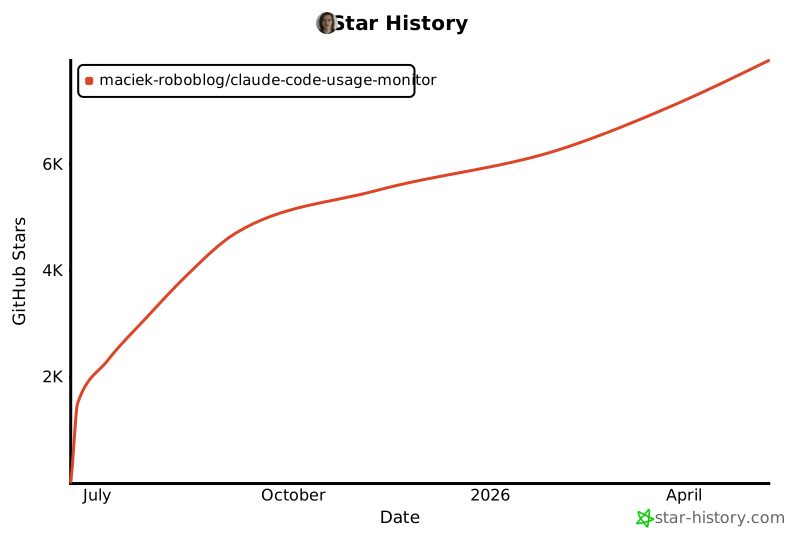
⭐ Star this repo if you find it useful! ⭐
1 maintainer

Release files for claude-usage-monitor 1.0.6
For a detailed explanation of source distributions (sdists) and built distributions (wheels), please see the package formats documentation.
Source distribution (sdist)
| File | Size | Uploaded | |
|---|---|---|---|
| claude_usage_monitor-1.0.6.tar.gz | 31.1 kB | Details |
Built distribution (wheel)
| File | Interpreter | ABI | Platform | Reset |
|---|---|---|---|---|
| claude_usage_monitor-1.0.6-py3-none-any.whl | Python 3 | none | any | Details |
Total release size: 83.5 kB
Release files / claude_usage_monitor-1.0.6.tar.gz
| Download URL | claude_usage_monitor-1.0.6.tar.gz |
|---|---|
| Size | 31.1 kB |
| Tags | Source |
|
SHA-256 checksum How to use checksums |
23e7c7056781a65c50ab5a3a9fdcc05faba62fe93025beff2db224d61c8905e7
|
|
BLAKE2b-256 checksum How to use checksums |
3a091009cf1b94f89800052940b85bcababc21f60e57da13be84a880c17c1baf
|
| Upload date | |
|
Uploaded using Trusted Publishing? What is trusted publishing? |
No |
| Uploaded via |
twine/6.1.0 CPython/3.12.3
|
Release files / claude_usage_monitor-1.0.6-py3-none-any.whl
| Download URL | claude_usage_monitor-1.0.6-py3-none-any.whl |
|---|---|
| Size | 52.4 kB |
| Tags | Python 3 |
|
SHA-256 checksum How to use checksums |
bfe659c75f0b2f84084a3710a3d2e054066a201697e24cc3c306b4e09beaf64a
|
|
BLAKE2b-256 checksum How to use checksums |
5e4709d10e953751a9c3250ffe61ecfdd962e7209b9850a1e6151a487182e96e
|
| Upload date | |
|
Uploaded using Trusted Publishing? What is trusted publishing? |
No |
| Uploaded via |
twine/6.1.0 CPython/3.12.3
|













