
(C)ompute (O)perations in (D)ependency (O)rder

Project description
CODO: (C)ompute (O)perations in (D)ependency (O)rder
CODO is an easy-to-use library which abstracts the programming pattern where a set of operations (functions) with the same parameter lists must be computed over the same data, but some of those operations might depend on others' outputs.
- 75 source lines of code
- Full type safety thanks to
typing.Generic
A simple example is computing precision, recall, accuracy, and f1 scores for classification tasks in machine learning.
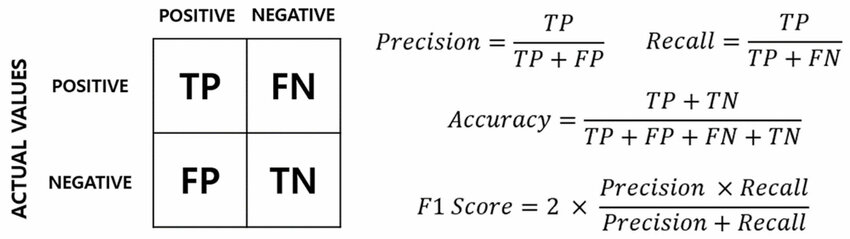
All of these could be computed independently, for example with four functions that each take two arrays of true and predicted class labels, but then we'd be computing TN, FN, FP, and FN multiple times over, and we'd even have to re-compute precision and recall to get the f1 score.
Typically, you'd solve this by just computing all these metrics in the scope of a single function, but for more complex tasks, it's often desirable to isolate this kind of logic into separate functions that each have one job.
CODO to the rescue: this library lets you to define operations to isolate logic with a simple API, automatically figures out the right order to compute them in, computes the "shared" operations only once, and (optionally) parallelizes where possible*.
* Parallelization not yet implemented, PRs welcome!
Quickstart
What we'll build
codo = CODO[MetricsParams](
    [
        Precision(),
        Recall(),
        Accuracy(),
        F1Score(),
        TruePositives(silent=True),
        TrueNegatives(silent=True),
        FalsePositives(silent=True),
        FalseNegatives(silent=True),
    ]
)

y_true = [1, 0, 1, 1, 0, 1]
y_pred = [1, 1, 1, 0, 0, 1]

print(codo(MetricsParams(y_true, y_pred)))
'''
{
    <class '__main__.Precision'>: 0.75,
    <class '__main__.Recall'>: 0.75,
    <class '__main__.Accuracy'>: 0.6666666666666666,
    <class '__main__.F1Score'>: 0.75
}
'''
Let's go!
-
Define the params that each
Operationwill take. Important: AllOperations you plan to compute in the sameCODOobject must accept the same argument list. We wrap those params with a dataclass to enable full type safety. In our example, we'll define the types for the "true" and "predicted" class labels.from dataclasses import dataclass @dataclass class MetricsParams: y_true: list[int] y_pred: list[int]
-
Define operations by subclassing
codo.Operation. The library defines this base class with two generic parameters that specify the input and output types for its__call__()method, respectively (see code comments for details).Subclasses must override the
__call__()method, and may set a list of itsdependenciesas a class variable.The
__call__()method takes two parameters:acc: Acodo.Accumulator[ParamsT]object, whereParamsTis a generic variable that, in our case, will be theMetricsParamsdataclass. Essentially this is a glorifieddictproviding full type safety that stores the results of operations computed earlier in the dependency tree. You can access those results by keying intoaccwith the operation's class.params: An instance of theMetricsParamsdataclass we defined above.
from codo import Operation
from typing import override


# When we subclass `Operation[MetricsParams, int]` below, the generics
# are providing a shorthand for the following signature for the `__call__()` method:
#
#     def __call__(
#         self,
#         acc: codo.Accumulator[MetricsParams],
#         params: MetricsParams
#     ) -> int:
#         ...
#
# The first generic param sets the type for `params`,
# and the second sets the method's return type.
class TruePositives(Operation[MetricsParams, int]):
    @override
    def __call__(self, acc, params):
        return sum(t == 1 and p == 1 for t, p in zip(true, pred))


class FalsePositives(Operation[MetricsParams, int]):
    @override
    def __call__(self, acc, params):
        return sum(t == 0 and p == 1 for t, p in zip(true, pred))


class Precision(Operation[MetricsParams, float]):
    dependencies = [TruePositives, FalsePositives]

    @override
    def __call__(self, acc, params):
        tp = acc[TruePositives]
        fp = acc[FalsePositives]
        # ^ Both resolve to `int` types here thanks to
        # generics on TruePositives/FalsePositives!

        return tp / (tp + fp)
-
Create a
CODOobject with yourOperations, then call it like a function to get the outputs.Notice that we specify the generic type in-line for the
CODOobject to get type safety on theresultit returns, which is acodo.Accumulator[MetricsParams]object that has the same interface as a Pythondict. This is where type safety gets cool, becauseresult[Precision]will have typefloatandresult[TruePositives]will have typeint.You may have
Operations for intermediate steps where you don't actually care about the output—in those cases, you can setsilent=Trueto discard their outputs, unless you setwith_silents=True.from codo import CODO codo = CODO[MetricsParams]( [ Precision(), TruePositives(silent=True), FalsePositives(silent=True), ] ) # ^ Order doesn't matter in this list, Operations # will be computed in a valid dependency order. result = codo( MetricsParams( y_true=[1, 0, 1, 1, 0, 1], y_pred=[1, 1, 1, 0, 0, 1] ), # with_silents=True ) print(result) # {<class '__main__.Precision'>: 0.75}
Full example code
The code below computes precision, recall, accuracy, and f1 score.
from typing import override

"""
Define parameter list for Operation types
"""

@dataclass
class MetricsParams:
    y_true: list[int]
    y_pred: list[int]

"""
Define all Operation types
"""

class TruePositives(Operation[MetricsParams, int]):
    @override
    def __call__(self, acc, params):
        return sum(t == p == 1 for t, p in zip(params.y_true, params.y_pred))


class TrueNegatives(Operation[MetricsParams, int]):
    @override
    def __call__(self, acc, params):
        return sum(t == p == 0 for t, p in zip(params.y_true, params.y_pred))


class FalsePositives(Operation[MetricsParams, int]):
    @override
    def __call__(self, acc, params):
        return sum(t == 0 and p == 1 for t, p in zip(params.y_true, params.y_pred))


class FalseNegatives(Operation[MetricsParams, int]):
    @override
    def __call__(self, acc, params):
        return sum(t == 1 and p == 0 for t, p in zip(params.y_true, params.y_pred))


class Precision(Operation[MetricsParams, float]):
    dependencies = [TruePositives, FalsePositives]

    @override
    def __call__(self, acc, params):
        tp = acc[TruePositives]  # Resolves to `int` type
        fp = acc[FalsePositives]
        return tp / (tp + fp)


class Recall(Operation[MetricsParams, float]):
    dependencies = [TruePositives, FalseNegatives]

    @override
    def __call__(self, acc, params):
        tp = acc[TruePositives]
        fn = acc[FalseNegatives]
        return tp / (tp + fn)


class Accuracy(Operation[MetricsParams, float]):
    dependencies = [TruePositives, TrueNegatives, FalsePositives, FalseNegatives]

    @override
    def __call__(self, acc, params):
        tp = acc[TruePositives]
        tn = acc[TrueNegatives]
        fp = acc[FalsePositives]
        fn = acc[FalseNegatives]
        return (tp + tn) / (tp + tn + fp + fn)


class F1Score(Operation[MetricsParams, float]):
    dependencies = [Precision, Recall]

    @override
    def __call__(self, acc, params):
        precision = acc[Precision]
        recall = acc[Recall]
        return 2 * (precision * recall) / (precision + recall)


# Wrap all Operations in a CODO object. Defining the generic param type
# in-line allows you to query into `result` with type safety.
# Dependency order doesn't matter in this list.
codo = CODO[MetricsParams](
    [
        Precision(),
        Recall(),
        Accuracy(),
        F1Score(),
        TruePositives(silent=True),
        TrueNegatives(silent=True),
        FalsePositives(silent=True),
        FalseNegatives(silent=True),
    ]
)

# Call your object like a function on arbitrary data
result = codo(
    MetricsParams(y_true=[1, 0, 1, 1, 0, 1], y_pred=[1, 1, 1, 0, 0, 1]),
    # with_silents=True,
)

# accuracy = result[Accuracy]  # Resolves to `float` type

print(result)

'''
{
    <class '__main__.Precision'>: 0.75,
    <class '__main__.Recall'>: 0.75,
    <class '__main__.Accuracy'>: 0.6666666666666666,
    <class '__main__.F1Score'>: 0.75
}
'''
Release history Release notifications | RSS feed

Download files
Download the file for your platform. If you're not sure which to choose, learn more about installing packages.
Source Distribution
Built Distribution
Filter files by name, interpreter, ABI, and platform.
If you're not sure about the file name format, learn more about wheel file names.
Copy a direct link to the current filters
File details
Details for the file codo_python-1.0.4.tar.gz.
File metadata
- Download URL: codo_python-1.0.4.tar.gz
- Upload date:
- Size: 6.0 kB
- Tags: Source
- Uploaded using Trusted Publishing? No
- Uploaded via: twine/6.1.0 CPython/3.12.8
File hashes
| Algorithm | Hash digest | |
|---|---|---|
| SHA256 |
28cef23ca167bb4cd887a5ea529c3be967279a737f81fcf5fa7d8979a5279706
|
|
| MD5 |
9e305d8d4d62d605cb61d8e2b65e4b5d
|
|
| BLAKE2b-256 |
8fa091905a646d97b1c8a9ec43a6bddff4406633b5c375789d25ba45e421cc41
|
File details
Details for the file codo_python-1.0.4-py3-none-any.whl.
File metadata
- Download URL: codo_python-1.0.4-py3-none-any.whl
- Upload date:
- Size: 6.2 kB
- Tags: Python 3
- Uploaded using Trusted Publishing? No
- Uploaded via: twine/6.1.0 CPython/3.12.8
File hashes
| Algorithm | Hash digest | |
|---|---|---|
| SHA256 |
abefcf04c9baf55feb6ae54b5b85bf86de5fe50232db6f148b4ef3f5a377bf10
|
|
| MD5 |
91898e7b50441aff7527c7e67fc92b81
|
|
| BLAKE2b-256 |
0dca16bb5ede4c0bccb20fbaeef1da26e282adea040d0db9353cff76fe2ea91c
|






