
✨ dataviz-mcp




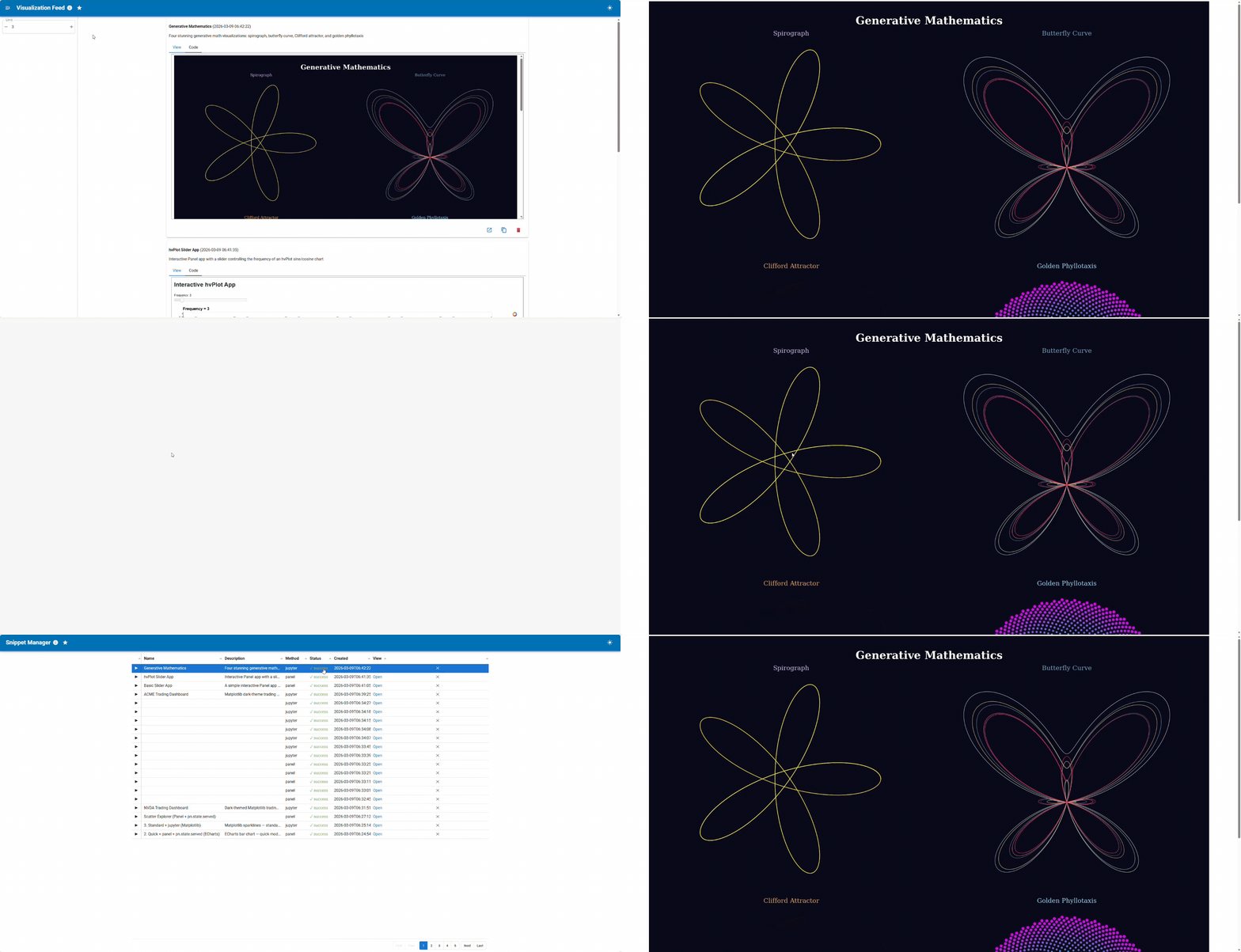
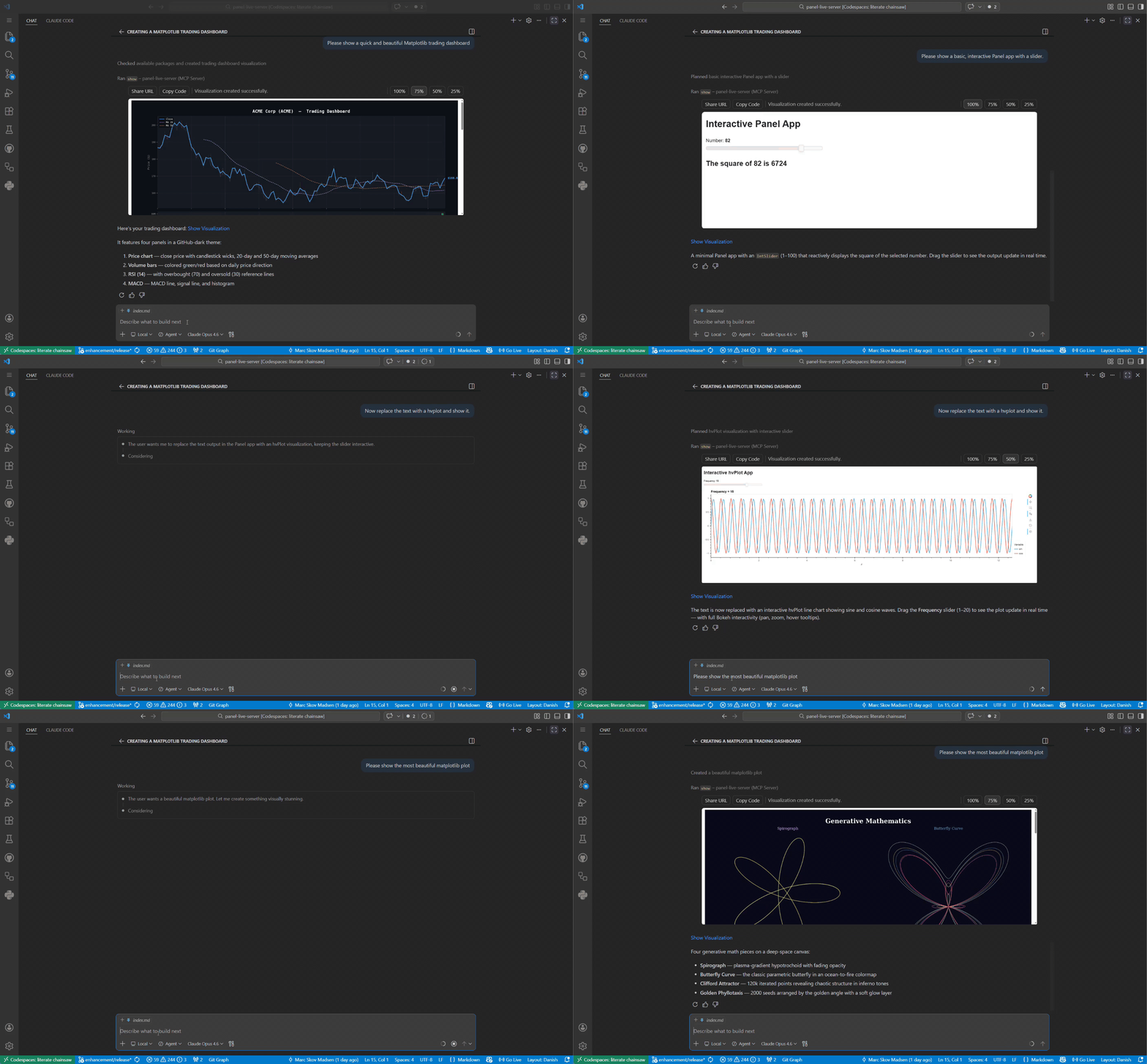
DataViz MCP is a local Panel web server and MCP server that executes Python code snippets and renders the resulting visualizations as live, interactive web pages — enabling humans and AI assistants to display and inspect Python outputs in real time.
Features
- Two interfaces —
pls serve(standalone browser UI) andpls mcp(MCP server for AI assistants) - Any visualization library — hvplot · plotly · altair · matplotlib · seaborn · holoviews · bokeh · and more
- Validate before render —
showruns syntax, security, package, and extension checks before any rendering happens - Visual validation —
screenshotMCP tool lets the AI inspect the rendered output visually before presenting it - Persistent storage — SQLite database with full-text search; every snippet gets its own permanent URL
- Auto-restart — Panel subprocess is health-monitored and automatically restarted on failure
- Works everywhere — local, JupyterHub, GitHub Codespaces; URLs externalized automatically
Installation
Install via uv, pip, or pixi — see the Installation guide for full instructions including how to find your pls path.
uv tool install "dataviz-mcp[pydata]"
Pin your version — this project is in its early stages. Pin to a specific version to avoid unexpected changes:
uv tool install "dataviz-mcp[pydata]==0.1.0a1"
Connect to your AI assistant
Use the absolute path printed by which pls above — not just pls.
Full setup instructions for each client: docs → Connect to your MCP client
For the supported desktop and editor clients, let DataViz MCP add just its own configuration entry while preserving any other configured servers:
pls install cursor
# also: vscode, claude-desktop, windsurf, cline, gemini, kiro, copilot
You can tailor the AI guidance without forking the project. Put optional
"instructions" and "screenshot" additions in a JSON file, then start the
MCP server with pls mcp --prompts rules.json.
| Client | Config location |
|---|---|
| VS Code | .vscode/mcp.json |
| Cursor | ~/.cursor/mcp.json |
| Claude Desktop | claude_desktop_config.json |
| Claude Code | claude mcp add dataviz-mcp -- /path/to/pls mcp |
| claude.ai | HTTP transport + tunnel — see docs |
Usage
For a safe visual iteration loop, use screenshot(code=...) to review a private
draft, use edit(...) for small source changes, then call show(draft_id=...)
to publish exactly the reviewed result. Use evaluate(code=...) for text-only
Python checks that do not need a rendered visualization.
$ pls

 Usage: pls [OPTIONS] COMMAND [ARGS]...

 DataViz MCP - Execute and visualize Python code snippets.

╭─ Options ────────────────────────────────────────────────────────────────────────────────────────────╮
│ --version  -V        Show version and exit.                                                          │
│ --help               Show this message and exit.                                                     │
╰──────────────────────────────────────────────────────────────────────────────────────────────────────╯
╭─ Commands ───────────────────────────────────────────────────────────────────────────────────────────╮
│ serve   Start the DataViz MCP directly.                                                        │
│ mcp     Start as an MCP server for AI assistants.                                                    │
│ status  Check whether the Panel server is running.                                                   │
│ list    List resources (packages, etc.).                                                             │
╰──────────────────────────────────────────────────────────────────────────────────────────────────────╯
You can also use dataviz-mcp but pls is shorter and easier to remember.
Development
See the Contributing guide for the full setup (fork, install, connect to MCP client, run tests).
❤️ Contributing
Contributions are welcome! Please follow these steps:
- Fork the repository.
- Create a new branch:
git checkout -b feature/YourFeature. - Make your changes and commit them:
git commit -m 'Add some feature'. - Push to the branch:
git push origin feature/YourFeature. - Open a pull request.
Please ensure your code passes all tests and linting before submitting.
1 maintainer

Metadata
1 maintainer
Release files for dataviz-mcp 0.2.1
For a detailed explanation of source distributions (sdists) and built distributions (wheels), please see the package formats documentation.
Source distribution (sdist)
| File | Size | Uploaded | |
|---|---|---|---|
| dataviz_mcp-0.2.1.tar.gz | 19.8 MB | Details |
Built distribution (wheel)
| File | Interpreter | ABI | Platform | Reset |
|---|---|---|---|---|
| dataviz_mcp-0.2.1-py3-none-any.whl | Python 3 | none | any | Details |
Total release size: 19.9 MB
Release files / dataviz_mcp-0.2.1.tar.gz
| Download URL | dataviz_mcp-0.2.1.tar.gz |
|---|---|
| Size | 19.8 MB |
| Tags | Source |
|
SHA-256 checksum How to use checksums |
4fc70ff66057beebc25a3ebe94d624852cd1569477f3bbd74acff45855b3f13b
|
|
BLAKE2b-256 checksum How to use checksums |
dc82375a5a2a36a9b3f4a22161fe19cc7c4a3a4ee668088e27eff73cf238bdd4
|
| Upload date | |
|
Uploaded using Trusted Publishing? What is trusted publishing? |
Yes |
| Uploaded via |
twine/6.1.0 CPython/3.13.7
|
Provenance
Provenance describes where a file came from. On PyPI, provenance is shared via attestations, which provide a verifiable record of the build or publishing details. View details, limitations and caveats.


PyPI Publish Attestation
PyPI verified that this artifact, at this checksum, originated from the publisher listed below.
Signed by GitHub Actions, verified by PyPI on Oct 9, 2026.
Transparency logRelease files / dataviz_mcp-0.2.1-py3-none-any.whl
| Download URL | dataviz_mcp-0.2.1-py3-none-any.whl |
|---|---|
| Size | 79.2 kB |
| Tags | Python 3 |
|
SHA-256 checksum How to use checksums |
c670479c885deebd07d2dbafbb0cd32872262c00f3287a253fed3751d4c66243
|
|
BLAKE2b-256 checksum How to use checksums |
b4b61e7bf661454690b304a430fc4e2a125d910a24b0b8a94c1084ffef24f004
|
| Upload date | |
|
Uploaded using Trusted Publishing? What is trusted publishing? |
Yes |
| Uploaded via |
twine/6.1.0 CPython/3.13.7
|
Provenance
Provenance describes where a file came from. On PyPI, provenance is shared via attestations, which provide a verifiable record of the build or publishing details. View details, limitations and caveats.
PyPI Publish Attestation
PyPI verified that this artifact, at this checksum, originated from the publisher listed below.
Signed by GitHub Actions, verified by PyPI on Oct 9, 2026.
Transparency log













