





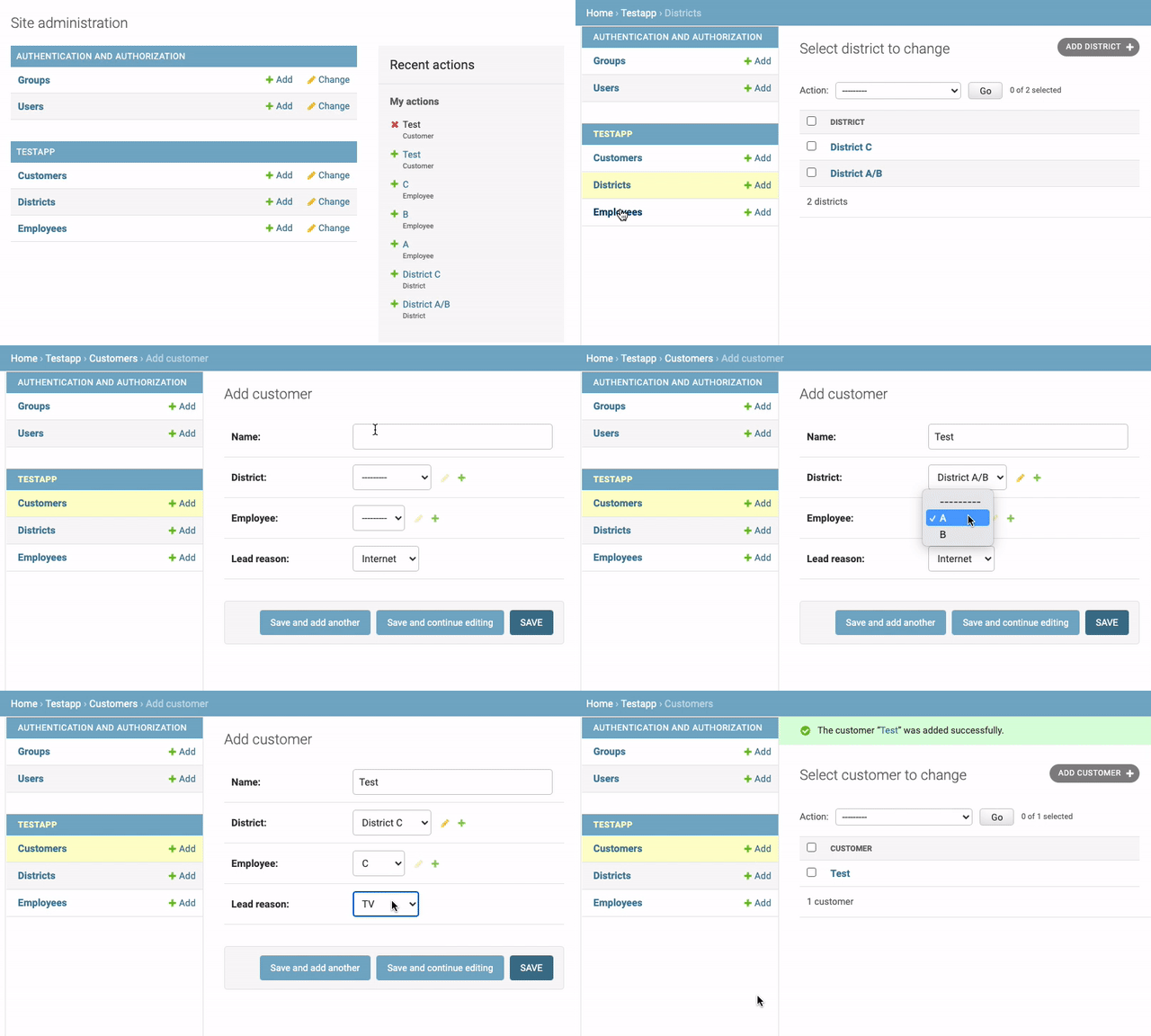
Add simple interactions to the otherwise static django admin.
PyPI • GitHub • Full documentation
Creator & Maintainer: Beyonder Deutschland
django-dynamic-admin-forms
Add simple interactions to the otherwise static django admin.
Installation
-
Install the package via pip:
pip install django-dynamic-admin-formsor via pipenv:
pipenv install django-dynamic-admin-forms -
Add the module to
INSTALLED_APPS:INSTALLED_APPS = ( "django_dynamic_admin_forms", "django.contrib.admin", )
Ensure that the
dynamic_admin_formscomes before the defaultdjango.contrib.adminin the list of installed apps, because otherwise the templates, which are overwritten bydynamic_admin_formswon't be found. -
Ensure that the
dynamic_admin_formstemplates are found via usingAPP_DIRSsetting:TEMPLATES = [ { "BACKEND": "django.template.backends.django.DjangoTemplates", "APP_DIRS": True, }, ]
-
Run
python manage.py collectstaticto include this apps Javascript code in yoursettings.STATIC_ROOTdirectory
Usage
-
Add the
django_dynamic_admin_forms.DynamicModelAdminMixinto your admin classes -
Add the
django_dynamic_admin_forms.urlsto your urlsfrom django.contrib import admin from django.urls import path, include urlpatterns = [ path("admin/", admin.site.urls), path("dynamic-admin-form/", include("django_dynamic_admin_forms.urls")), ]
-
In addition to the standard
fieldsdeclaration, specify a list ofdynamic_fields -
For each dynamic field, add a method
get_dynamic_{field_name}_fieldto the admin- Input:
data: Dict[str, Any]- the cleaned form data - Output:
queryset: Optional[Queryset]- The values to select fromvalue: Any- The value, the field should have (must be compatible to the field type)hidden: Bool- True, if field should be hidden
- Input:
-
A rather non-sensical example:
from django.contrib import admin

from .models import MyModel
from django_dynamic_admin_forms.admin import DynamicModelAdminMixin


@admin.register(MyModel)
class MyModelAdmin(DynamicModelAdminMixin, admin.ModelAdmin):
    fields = ("name", "city")
    dynamic_fields = ("city",)

    def get_dynamic_city_field(self, data):
        # automatically choose first city that matches first letter of name
        name = data.get("name")
        if not name:
            queryset = City.objects.all()
            value = data.get("city")
        else:
            queryset = City.objects.filter(name__startswith=name[0])
            value = queryset.first()
        hidden = not queryset.exists()
        return queryset, value, hidden
How it works
Whenever a dynamic form changes, an event handler makes a request to a special endpoint, which returns new HTML to swap
into the existing form. This new HTML is directly generated by django.contrib.admin, so we only have to set the
outerHTML of the correct HTML elements to update the form.
Limitations
- does not work in conjunction with inlines
- does not validate that the selected value is really part of the original queryset
- if anybody can modify your DOM, they could potentially inject invalid values
- you have to write
Model.clean()methods to guard against that
- only tested with Django 3.2
Development
For local development, create a virtual environment
in the testproj folder:
$ cd testproj
$ python3 -m venv .venv
$ source .venv/bin/activate
$ cd ..
$ flit install --symlink
Now the package should be available in your virtual environment and any changes should be directly visible.
Alternatively, copy the directory dynamic_admin_forms
into any normal django project, so that the python interpreter
finds the local version instead of the installed (old) version.
Running E2E tests
To run end-to-end tests locally:
$ cd testproj
$ python manage.py runserver 0.0.0.0:8000 &  # start server
$ python manage.py loaddata fixtures/fixtures-dev.json
$ cd ../e2e
$ yarn install  # or npm install (only needed first time)
$ yarn cypress  # or npm run cypress
Installation
-
Install the package via pip:
pip install django-dynamic-admin-formsor via pipenv:
pipenv install django-dynamic-admin-forms -
Add the module to
INSTALLED_APPS:INSTALLED_APPS = ( "django_dynamic_admin_forms", "django.contrib.admin", )
Ensure that the
dynamic_admin_formscomes before the defaultdjango.contrib.adminin the list of installed apps, because otherwise the templates, which are overwritten bydynamic_admin_formswon't be found. -
Ensure that the
dynamic_admin_formstemplates are found via usingAPP_DIRSsetting:TEMPLATES = [ { "BACKEND": "django.template.backends.django.DjangoTemplates", "APP_DIRS": True, }, ]
-
Run
python manage.py collectstaticto include this apps Javascript code in yoursettings.STATIC_ROOTdirectory
Releasing a new version
Releases are fully automated. Push a version tag and the pipeline will build, sign with Sigstore, publish to PyPI via Trusted Publishing, and create a GitHub Release — no API tokens needed.
git tag v<version>          # e.g. git tag v1.2.3
git push origin v<version>
Tags must start with v. Tags without the prefix won't trigger the pipeline.
First-time setup
Before the pipeline can run for the first time, an admin must:
-
Create GitHub Environment
pypi- Go to Settings → Environments → New environment, name it exactly
pypi - Under Deployment branches and tags, add a tag rule with pattern
v* - Optionally add required reviewers for a manual approval gate
- Go to Settings → Environments → New environment, name it exactly
-
Configure PyPI Trusted Publisher
- Go to PyPI → Project settings → Publishing → Add a new publisher
- Fill in: Owner
ambient-innovation, Repositorydjango_dynamic_admin, Workflowrelease.yml, Environmentpypi
Publish to ReadTheDocs.io
- Fetch the latest changes in GitHub mirror and push them
- Trigger new build at ReadTheDocs.io (follow instructions in admin panel at RTD) if the GitHub webhook is not yet set up.
Maintenance
Please note that this package supports the ambient-package-update.
So you don't have to worry about the maintenance of this package. This updater is rendering all important
configuration and setup files. It works similar to well-known updaters like pyupgrade or django-upgrade.
To run an update, refer to the documentation page of the "ambient-package-update".
2 maintainers


Metadata
2 maintainers
Release files for django-dynamic-admin-forms 3.4.0
For a detailed explanation of source distributions (sdists) and built distributions (wheels), please see the package formats documentation.
Source distribution (sdist)
| File | Size | Uploaded | |
|---|---|---|---|
| django_dynamic_admin_forms-3.4.0.tar.gz | 969.6 kB | Details |
Built distribution (wheel)
| File | Interpreter | ABI | Platform | Reset |
|---|---|---|---|---|
| django_dynamic_admin_forms-3.4.0-py3-none-any.whl | Python 3 | none | any | Details |
Total release size: 979.6 kB
Release files / django_dynamic_admin_forms-3.4.0.tar.gz
| Download URL | django_dynamic_admin_forms-3.4.0.tar.gz |
|---|---|
| Size | 969.6 kB |
| Tags | Source |
|
SHA-256 checksum How to use checksums |
facebc255ef862abf409c4abf8ac883cb315c9e55d73507bd1a43e87df480319
|
|
BLAKE2b-256 checksum How to use checksums |
59f6e6a5e4abd5e5b60704053527862a48d50c12a6d1e181bdf215f0f06e2b5f
|
| Upload date | |
|
Uploaded using Trusted Publishing? What is trusted publishing? |
Yes |
| Uploaded via |
twine/7.0.0 CPython/3.13.14
|
Provenance
Provenance describes where a file came from. On PyPI, provenance is shared via attestations, which provide a verifiable record of the build or publishing details. View details, limitations and caveats.


PyPI Publish Attestation
PyPI verified that this artifact, at this checksum, originated from the publisher listed below.
Signed by GitHub Actions, verified by PyPI on Aug 27, 2026.
Transparency logRelease files / django_dynamic_admin_forms-3.4.0-py3-none-any.whl
| Download URL | django_dynamic_admin_forms-3.4.0-py3-none-any.whl |
|---|---|
| Size | 10.0 kB |
| Tags | Python 3 |
|
SHA-256 checksum How to use checksums |
a2f873a407c012f904f90120b894152dae1f549b153e48ca1c75d666340f85b6
|
|
BLAKE2b-256 checksum How to use checksums |
245761e587a0ddc1ba9d4e327a19d2add9bc36a7b6a5bfe7006e26a00848348a
|
| Upload date | |
|
Uploaded using Trusted Publishing? What is trusted publishing? |
Yes |
| Uploaded via |
twine/7.0.0 CPython/3.13.14
|
Provenance
Provenance describes where a file came from. On PyPI, provenance is shared via attestations, which provide a verifiable record of the build or publishing details. View details, limitations and caveats.
PyPI Publish Attestation
PyPI verified that this artifact, at this checksum, originated from the publisher listed below.
Signed by GitHub Actions, verified by PyPI on Aug 27, 2026.
Transparency log













