
Django Staskstore model

django-staskstore-model is a library that can support model versioning in a minimal amount of steps.
- Support Django 2 and 3
- Support Python3.7, 3.8 (Maybe 2.7. Not tested)
- Admin extensions are supported.
Usage
Model
# models.py
from stackstore.models import AbstractStackModel


class MySampleModel(AbstractStackModel):
    title = models.CharField(
        max_length=100,
        null=False,
        blank=False,
    )

    body = models.TextField(
        max_length=1000,
        null=False,
        blank=False,
    )
Python shell
# Create First version instance
>>> instance = MySampleModel.objects.create(title="Test", body="This is test text")
>>> instance.pk
1

# If you save this instance, create new version instance
>>> instance.title = "Test (version2)"
>>> instance.save()
>>> instance.pk
2

# If you can fetch previous version
>>> previous_instance = instance.previous_instance()
>>> previous_instance.pk
1

# You can get next version
>>> previous_instance.next_instance().pk
2
Admin Extension
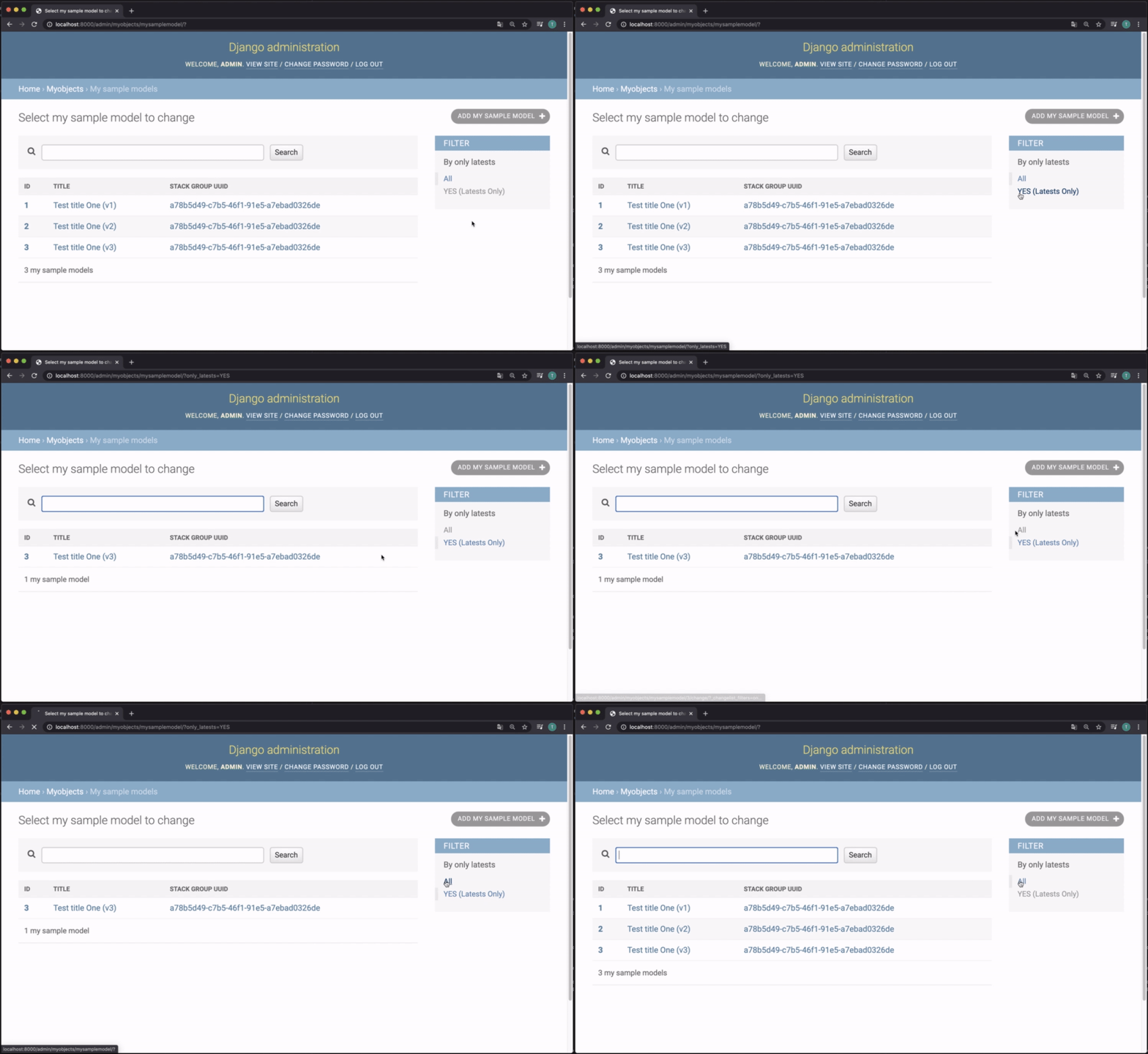
Filter to show only the latest version of the object
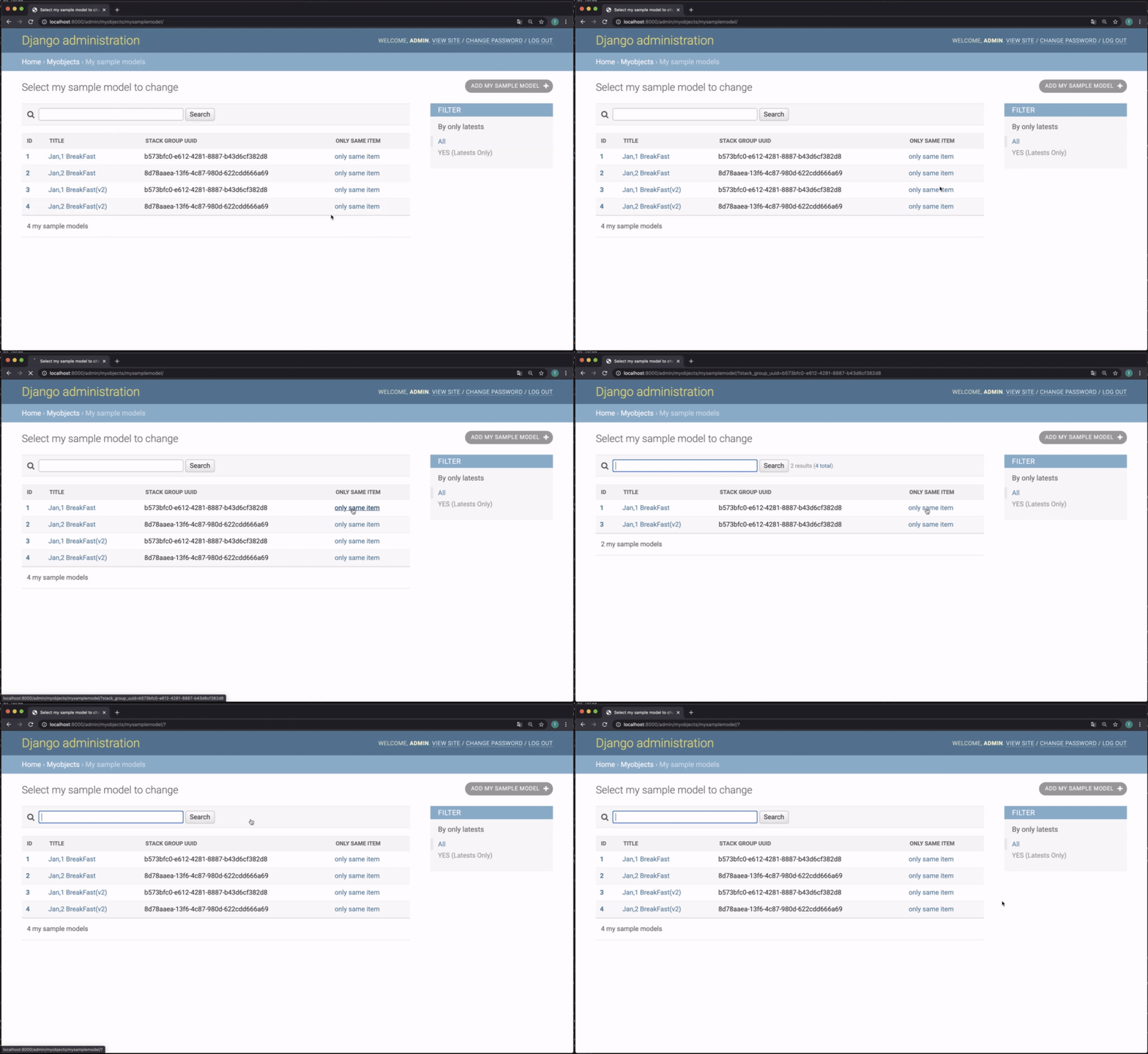
Show only items with the same stackgroup_uuid
API
QuerySet & Manager
latest_from_stack_group
Returns a QuerySet of the most recent objects in each Stackgroup.
# Create instance
>>> instance_breakfast = MySampleModel.objects.create(title="Today's breakfast", body="Spam with Egg") # Create <MySampleModel: MySampleModel object (1)>
>>> instance_lunch = MySampleModel.objects.create(title="Today's lunch", body="Spam with Beacon") # Create <MySampleModel: MySampleModel object (2)>

# Save each instance
>>> instance_breakfast.body = "Fried Egg with bread"
>>> instance_breakfast.save() # Save method create new <MySampleModel: MySampleModel object (3)>

>>> instance_lunch.body = "Meat Pasta"
>>> instance_lunch.save() # Save method create new <MySampleModel: MySampleModel object (4)>

>>> MySampleModel.objects.latest_from_stack_group() # You can fetch 3 & 4 My Sample Model
<StackStoreQuerySet [<MySampleModel: MySampleModel object (3)>, <MySampleModel: MySampleModel object (4)>]>
get_latest_from_stack_group
Returns an object that matches the collation parameter from the latest set of objects in each Stackgroup.
# Create instance
>>> instance_breakfast = MySampleModel.objects.create(title="Today's breakfast", body="Spam with Egg") # Create <MySampleModel: MySampleModel object (1)>
>>> instance_lunch = MySampleModel.objects.create(title="Today's lunch", body="Spam with Beacon") # Create <MySampleModel: MySampleModel object (2)>

# Save each instance
>>> instance_breakfast.body = "Fried Egg with bread"
>>> instance_breakfast.save() # Save method create new <MySampleModel: MySampleModel object (3)>

>>> MySampleModel.objects.get_latest_from_stack_group(body="Fried Egg with bread")
<MySampleModel: MySampleModel object (3)>
model object
save
When an object is saved, a new object is created and assigned the same stack_group_uuid as the object from which it was saved. This means that a new version will be generated.
>>> instance_breakfast = MySampleModel.objects.create(title="Today's breakfast", body="Spam with Egg") # Create <MySampleModel: MySampleModel object (1)>
>>> instance_breakfast.body = "Fried Egg with bread"
>>> instance_breakfast.save() # Save method create version object <MySampleModel: MySampleModel object (2)>
>>> MySampleModel.objects.all()
<StackStoreQuerySet [<MySampleModel: MySampleModel object (1)>, <MySampleModel: MySampleModel object (2)>]>
If you want to save the overwrite without creating a new version, you should pass False to __create_new_version in the save method.
>>> instance_breakfast = MySampleModel.objects.create(title="Today's breakfast", body="Spam with Egg")
>>> instance_breakfast.save(__create_new_version=False)
>>> instance_breakfast.pk
1
force_delete
Remove the object.
>>> instance_breakfast = MySampleModel.objects.create(title="Today's breakfast", body="Spam with Egg") # Create <MySampleModel: MySampleModel object (1)>
>>> MySampleModel.objects.all()
<StackStoreQuerySet [<MySampleModel: MySampleModel object (1)>]>
>>> instance_breakfast.force_delete()
>>> MySampleModel.objects.all()
<StackStoreQuerySet []>
Calling the existing delete method will raise a NotImplementedError exception.
same_group_items
Returns a QuerySet that returns all objects belonging to the same Stackgroup.
>>> instance_breakfast = MySampleModel.objects.create(title="Today's breakfast", body="Spam with Egg") # Create <MySampleModel: MySampleModel object (1)>
>>> [instance_breakfast.save() for i in range(2)]
>>> instance_breakfast.same_group_items()
<StackStoreQuerySet [<MySampleModel: MySampleModel object (3)>, <MySampleModel: MySampleModel object (2)>, <MySampleModel: MySampleModel object (1)>]>
previous_instance
Returns the previous version of the object.
>>> instance_breakfast = MySampleModel.objects.create(title="Today's breakfast", body="Spam with Egg") # Create <MySampleModel: MySampleModel object (1)>
>>> [instance_breakfast.save() for i in range(2)]
>>> second_gen_instance = instance_breakfast.same_group_items().order_by("pk")[1]
>>> second_gen_instance.previous_instance()
<MySampleModel: MySampleModel object (1)>
Throws a DoesNotExist exception if the object does not exist.
next_instance
Returns the next version of the object.
>>> instance_breakfast = MySampleModel.objects.create(title="Today's breakfast", body="Spam with Egg") # Create <MySampleModel: MySampleModel object (1)>
>>> [instance_breakfast.save() for i in range(2)]
>>> second_gen_instance = instance_breakfast.same_group_items()[1]
>>> second_gen_instance.next_instance()
<MySampleModel: MySampleModel object (3)>
Throws a DoesNotExist exception if the object does not exist.
latest_instance
Returns the most recent object of the Stackgroup to which its own object belongs.
>>> instance_breakfast = MySampleModel.objects.create(title="Today's breakfast", body="Spam with Egg") # Create <MySampleModel: MySampleModel object (1)>
>>> [instance_breakfast.save() for i in range(2)]
>>> first_gen_instance = instance_breakfast.same_group_items().order_by("pk")[0]
>>> first_gen_instance.latest_instance()
<MySampleModel: MySampleModel object (3)>
Throws a DoesNotExist exception if the object does not exist.
earliest_instance
Returns the oldest object in the Stackgroup to which its own object belongs.
>>> instance_breakfast = MySampleModel.objects.create(title="Today's breakfast", body="Spam with Egg") # Create <MySampleModel: MySampleModel object (1)>
>>> [instance_breakfast.save() for i in range(2)]
>>> third_gen_instance = instance_breakfast.same_group_items().order_by("pk")[2]
>>> third_gen_instance.earliest_instance()
<MySampleModel: MySampleModel object (1)>
Throws a DoesNotExist exception if the object does not exist.
Demo
The Docker configuration is provided. Please use the following command to start it. Go to http://localhost:8000 when the launch is complete.
$ docker-compose up
Login account is ID: admin Password: admin
License
MIT License
1 maintainer

Release files for django-stackstore-model 0.1
For a detailed explanation of source distributions (sdists) and built distributions (wheels), please see the package formats documentation.
Source distribution (sdist)
| File | Size | Uploaded | |
|---|---|---|---|
| django-stackstore-model-0.1.tar.gz | 4.7 kB | Details |
Built distribution (wheel)
| File | Interpreter | ABI | Platform | Reset |
|---|---|---|---|---|
| django_stackstore_model-0.1-py3-none-any.whl | Python 3 | none | any | Details |
Total release size: 11.2 kB
Release files / django-stackstore-model-0.1.tar.gz
| Download URL | django-stackstore-model-0.1.tar.gz |
|---|---|
| Size | 4.7 kB |
| Tags | Source |
|
SHA-256 checksum How to use checksums |
4bf279e87ed38e7845f8de7ea06625d4cdb4944f3bf06d4adf06d78e95c4659a
|
|
BLAKE2b-256 checksum How to use checksums |
c6d5261be6b91a1498d6ec20312b883ec566b4ada9889db5b2f38b915ff108ab
|
| Upload date | |
|
Uploaded using Trusted Publishing? What is trusted publishing? |
No |
| Uploaded via |
twine/3.1.1 pkginfo/1.5.0.1 requests/2.23.0 setuptools/41.2.0 requests-toolbelt/0.9.1 tqdm/4.46.0 CPython/3.8.2
|
Release files / django_stackstore_model-0.1-py3-none-any.whl
| Download URL | django_stackstore_model-0.1-py3-none-any.whl |
|---|---|
| Size | 6.5 kB |
| Tags | Python 3 |
|
SHA-256 checksum How to use checksums |
a864c8e5cb56357599883dea96dc0be33656b96e95dae9817fb877c631e136f8
|
|
BLAKE2b-256 checksum How to use checksums |
1577acf54ebef8b14080d67b73bc52bbe7d5ef895fc4de2bca27e3922c47845d
|
| Upload date | |
|
Uploaded using Trusted Publishing? What is trusted publishing? |
No |
| Uploaded via |
twine/3.1.1 pkginfo/1.5.0.1 requests/2.23.0 setuptools/41.2.0 requests-toolbelt/0.9.1 tqdm/4.46.0 CPython/3.8.2
|













