
fasttrain
fasttrain is a lightweight framework for building training loops for neural nets as fast as possible. It's designed to remove all boring details about making up training loops in PyTorch, so you don't have to concentrate on how to pretty print a loss or metrics or bother about how to calculate them right.
Installation
$ pip install fasttrain
How do we start?
Let's use a neural network to classify images in the FashionMNIST dataset:
import torch
from torch import nn
from torch.utils.data import DataLoader
from torchvision import datasets
from torchvision.transforms import ToTensor

learning_rate = 1e-3
batch_size = 64
epochs = 5

training_data = datasets.FashionMNIST(
    root="data",
    train=True,
    download=True,
    transform=ToTensor()
)

test_data = datasets.FashionMNIST(
    root="data",
    train=False,
    download=True,
    transform=ToTensor()
)

train_dataloader = DataLoader(training_data, batch_size=64)
test_dataloader = DataLoader(test_data, batch_size=64)

class NeuralNetwork(nn.Module):
    def __init__(self):
        super().__init__()
        self.flatten = nn.Flatten()
        self.linear_relu_stack = nn.Sequential(
            nn.Linear(28*28, 512),
            nn.ReLU(),
            nn.Linear(512, 512),
            nn.ReLU(),
            nn.Linear(512, 10),
        )

    def forward(self, x):
        x = self.flatten(x)
        logits = self.linear_relu_stack(x)
        return logits

model = NeuralNetwork()
Then we make up a trainer:
from fasttrain import Trainer
from fasttrain.metrics import accuracy

class MyTrainer(Trainer):

    # Define how we compute the loss
    def compute_loss(self, input_batch, output_batch):
        (_, y_batch) = input_batch
        return nn.CrossEntropyLoss()(output_batch, y_batch)

    # Define how we compute metrics
    def eval_metrics(self, input_batch, output_batch):
        (_, y_batch) = input_batch
        return {
            "accuracy": accuracy(output_batch, y_batch, task="multiclass")
        }
Finally, let's train our model:
optimizer = torch.optim.SGD(model.parameters(), lr=learning_rate)
trainer = MyTrainer(model, optimizer)
history = trainer.train(train_dataloader, val_data=test_dataloader, num_epochs=epochs)
fasttrain offers some useful callbacks - one of them is Tqdm which shows a pretty-looking progress bar:
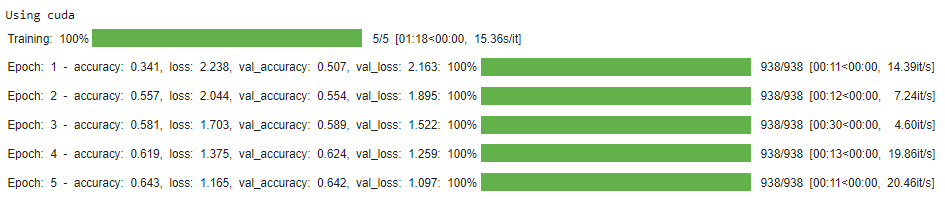
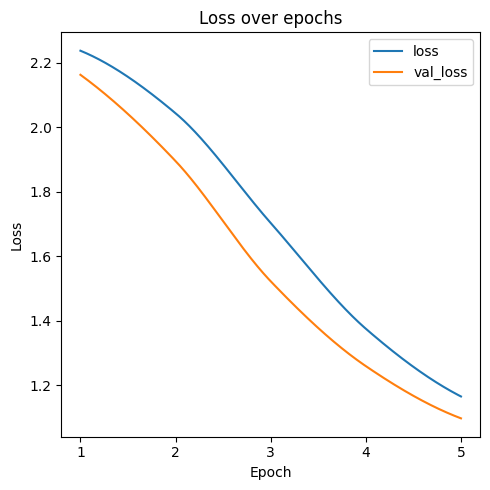
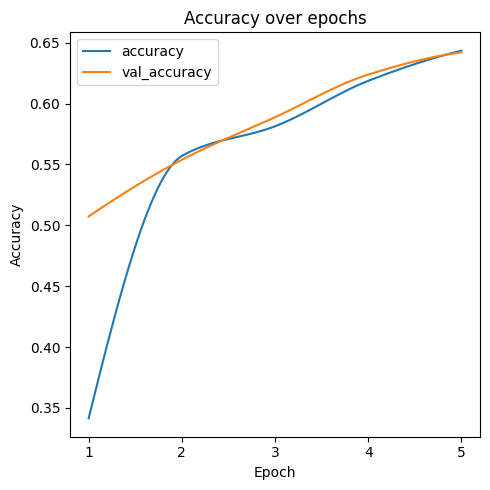
Trainer.train() returns the history of training - it contains a dict which stores metrics over epochs and can plot them:
history.plot("loss", with_val=True)
history.plot("accuracy", with_val=True)
1 maintainer

Metadata
1 maintainer
Release files for fasttrain 0.0.7
For a detailed explanation of source distributions (sdists) and built distributions (wheels), please see the package formats documentation.
Source distribution (sdist)
| File | Size | Uploaded | Provenance | Actions |
|---|---|---|---|---|
| fasttrain-0.0.7.tar.gz | 18.9 kB | Without provenance | Details for fasttrain-0.0.7.tar.gz |
Built distribution (wheel)
| File | Interpreter | ABI | Platform | Actions Reset |
|---|---|---|---|---|
| fasttrain-0.0.7-py3-none-any.whl | Python 3 | none | any | Details for fasttrain-0.0.7-py3-none-any.whl |
Total release size: 39.7 kB
Release files / fasttrain-0.0.7.tar.gz
| Download URL | fasttrain-0.0.7.tar.gz |
|---|---|
| Size | 18.9 kB |
| Tags | Source |
|
SHA-256 checksum How to use checksums |
6a7248f803c50941e41a1e60b455efa729d73739a44ac51fc9f2f822c545dc70
|
|
BLAKE2b-256 checksum How to use checksums |
4a4626cd6a54a32fe7078e979fe741e24d05fec245ddd9c11416b1fc36385d8b
|
| Upload date | |
|
Uploaded using Trusted Publishing? What is trusted publishing? |
No |
| Uploaded via |
twine/5.0.0 CPython/3.12.1
|
Release files / fasttrain-0.0.7-py3-none-any.whl
| Download URL | fasttrain-0.0.7-py3-none-any.whl |
|---|---|
| Size | 20.8 kB |
| Tags | Python 3 |
|
SHA-256 checksum How to use checksums |
d20b636ebb11a6ec6e40bc714904d27bd94c7491c19e9b5bdd92c9f5f9b8a5e2
|
|
BLAKE2b-256 checksum How to use checksums |
861c904a6a41cea00ce0b2369be4a1bcf7bf12d51581a5b134f0ec65bc9c32fb
|
| Upload date | |
|
Uploaded using Trusted Publishing? What is trusted publishing? |
No |
| Uploaded via |
twine/5.0.0 CPython/3.12.1
|
Security for fasttrain 0.0.7
Provenance
Provenance describes where a file came from. On PyPI, provenance is shared via attestations, which provide a verifiable record of the build or publishing details. View details, limitations and caveats.
No provenance found
None of the files in this release were uploaded with provenance metadata.
A note on package security
PyPI is a repository for distributing packages, not a service for auditing them. While third-party security researchers and our staff do their best to detect and remove malicious packages, PyPI cannot guarantee the quality, security or suitability of any given package.
To learn more about protecting yourself from malicious actors, visit our package security documentation.














