
FigureKit
Publication-ready matplotlib figures in one consistent style, for READMEs, websites and slides.


Quickstart · Recipes · Websites · Your own style · CLI · API
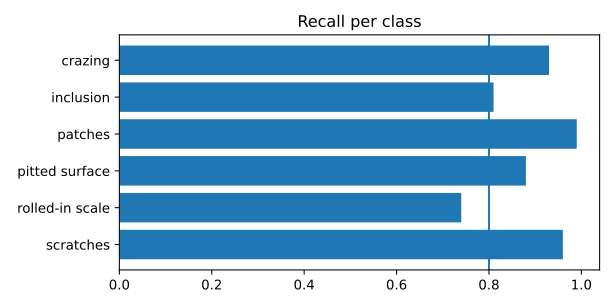
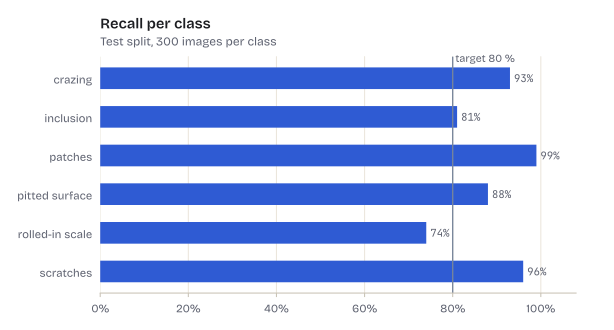
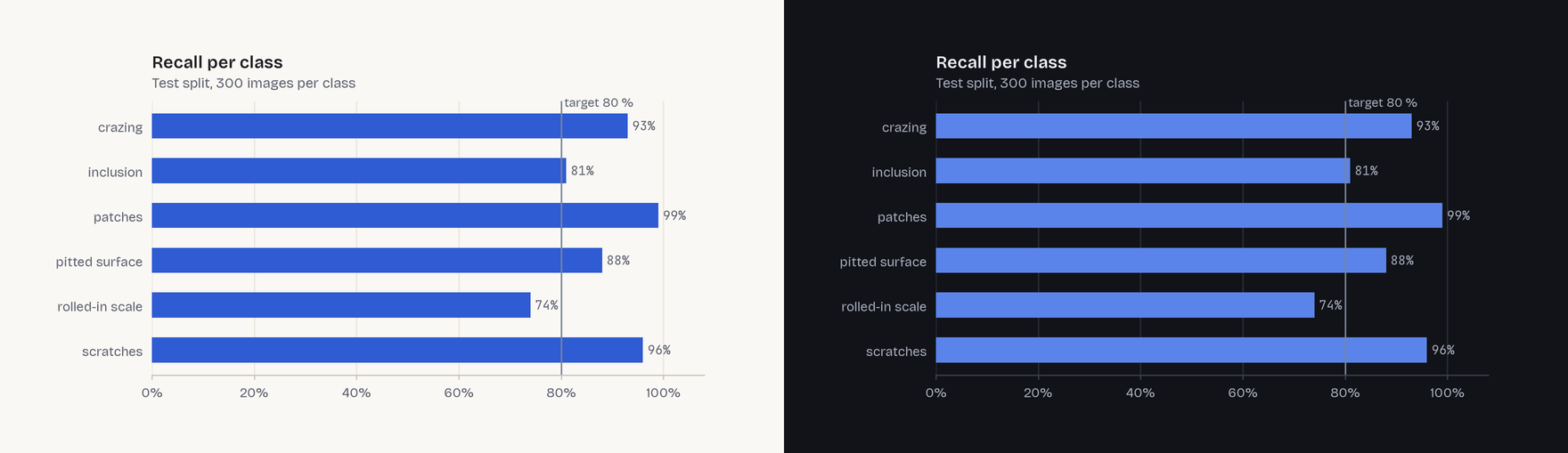
A figure is a function of the theme. FigureKit draws it once per theme, such as light and dark, and once per language, writes transparent SVG and PNG files that are byte-identical on every run, and checks them in CI.
| Plain matplotlib | With FigureKit |
|---|---|
 |
|
Features
-
One style, many projects. The bundled style matches the portfolio, with Bricolage Grotesque and JetBrains Mono for numbers, both bundled. A project brings its own style with any number of themes in one JSON file.
-
Light and dark, transparent. One file per theme fits every page colour of that theme:
-
Accessible. Series colours are validated for colour-vision deficiencies against the page colours; text colours reach WCAG contrast, checked in the tests. Text below 8 pt is an error.
-
Reproducible. The same figure gives byte-identical SVGs on Linux and Windows, without date or version, so diffs show only real changes.
-
Two languages. Website figures come without title in every language, German numbers included, with a
figures.jsonof titles and alt texts. -
Checked in CI.
figkit checkfails on missing theme or language pairs, opaque backgrounds, figures off the canvas, small text, oversized files, missing alt texts and page colours that differ from the website's stylesheet.
Why not a matplotlib style sheet?
A style sheet sets colours and fonts for one look. It does not draw a figure once per theme and
language, keep files transparent and reproducible, name them for <picture> and the website,
or check in CI that every pair exists and the colours match the stylesheet of the website.
Quickstart
1. Install from PyPI. The package is called figurekit, the module and the command figkit.
uv.lock pins the version, so a style change reaches a project only when it upgrades:
uv add figurekit
2. Draw a figure as a function of the theme and let render write it:
from pathlib import Path

import matplotlib.pyplot as plt
import figkit


def recall(theme: figkit.Theme) -> plt.Figure:
    figure, ax = plt.subplots(figsize=(figkit.WEB_WIDTH, 3.2))
    bars = ax.barh(["crazing", "inclusion", "patches"], [0.93, 0.81, 0.99], color=theme.series[0])
    figkit.bar_labels(ax, bars, theme, fmt="{:.0%}")
    figkit.reference_line(ax, 0.8, "target 80 %", theme)
    figkit.category_axis(ax, "y")
    figkit.percent(ax, "x")
    figkit.title(ax, "Recall per class", theme, subtitle="Test split")
    return figure


figkit.render(Path("docs/figures"), "recall", recall)
docs/figures/
├── recall.svg        light, transparent, 6.4 in canvas
├── recall-dark.svg
├── recall.png        1600 px wide
└── recall-dark.png
3. Embed both files; the browser picks the one of its mode:
<picture>
  <source media="(prefers-color-scheme: dark)" srcset="docs/figures/recall-dark.svg">
  <img src="https://raw.githubusercontent.com/BenBotsch/FigureKit/main/docs/figures/recall.svg" alt="Recall per class: all classes above the 80 % target.">
</picture>
4. Check in CI:
uv run figkit check docs/figures
figkit.styled(theme) applies the style without writing files, for example in a notebook.
Recipes
Each recipe is an excerpt of scripts/examples.py, which draws the whole
gallery from invented data.
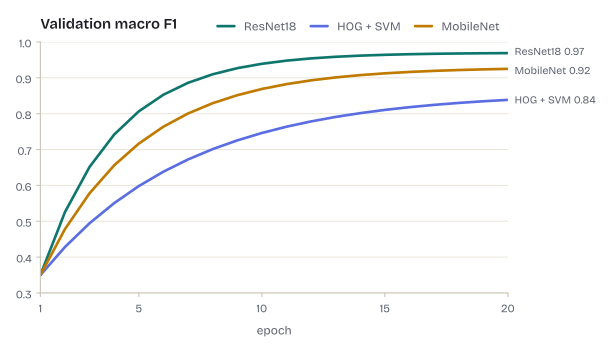
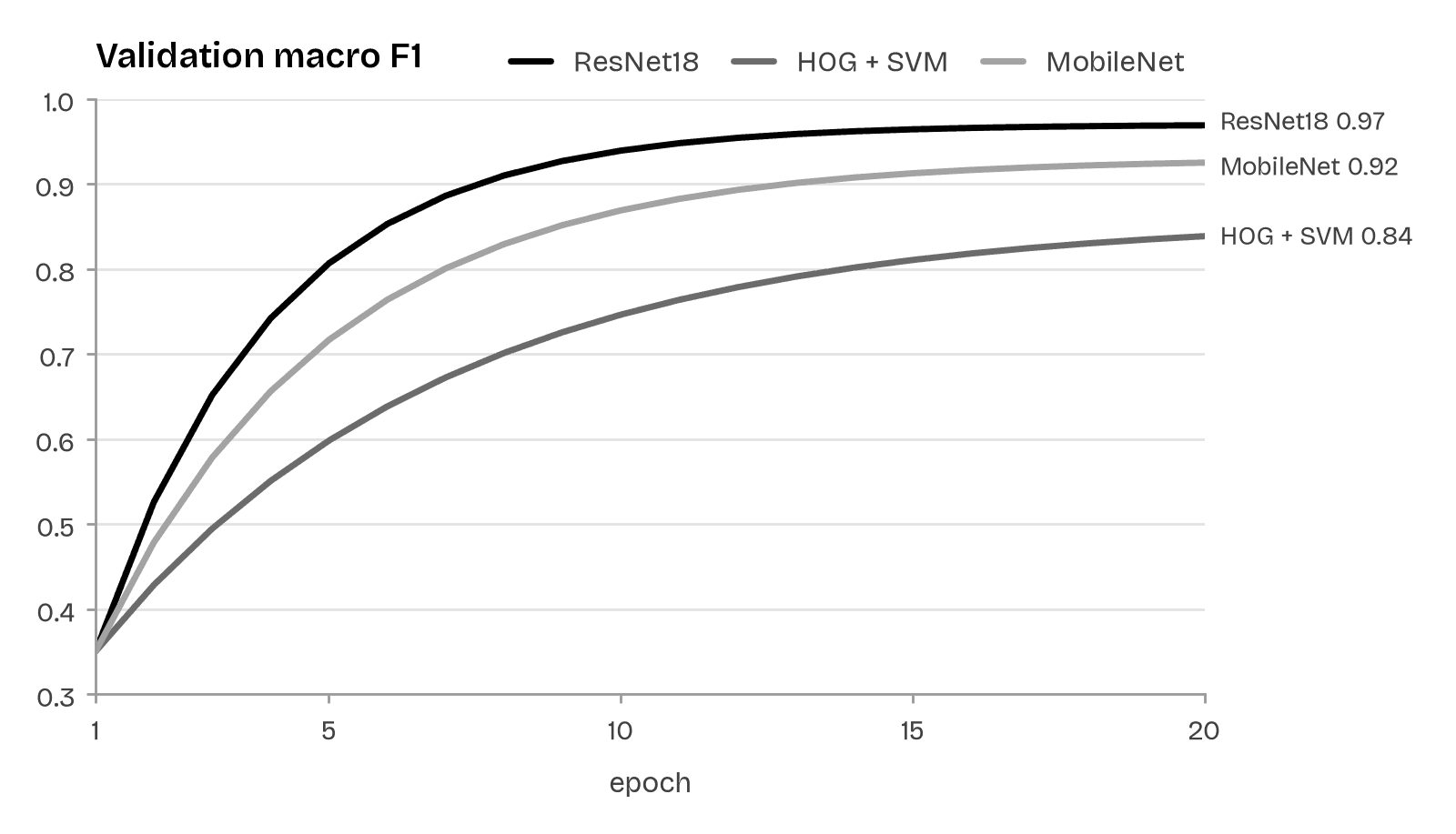
Lines with labels at their ends instead of a legend lookup
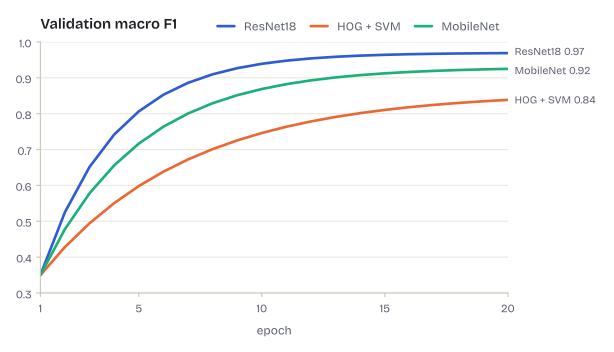
for slot, (name, score) in enumerate(models.items()):
    ax.plot(epochs, score, color=theme.series[slot], label=name)
    ends.append((epochs[-1], score[-1], f"{name} {score[-1]:.2f}"))
figkit.title(ax, "Validation macro F1", theme)
figkit.legend_top(ax)
figkit.grid(ax, "y")
figkit.line_labels(ax, ends, theme)  # moves labels apart where lines end close together
Heatmap on the sequential ramp with readable cell values
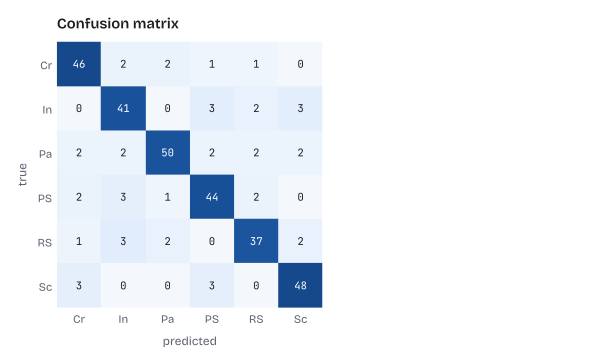
cmap = figkit.ramp_cmap(theme)
ax.imshow(rates, cmap=cmap, vmin=0, vmax=1)
for (i, j), count in np.ndenumerate(counts):
    cell = figkit.hex_colour(cmap(rates[i, j]))
    figkit.value(ax, j, i, str(count), theme, ha="center", va="center", color=figkit.ink_on(cell))
Small multiples with shared axes, confidence bands and a callout
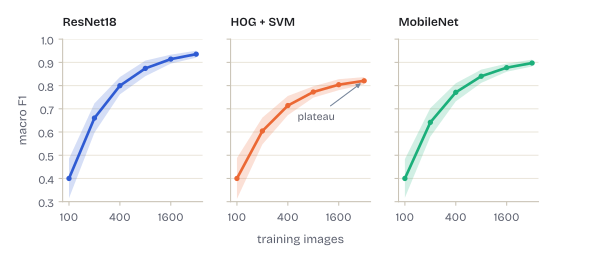
figure, panels = figkit.small_multiples(3, height=2.2)  # inner panels drop shared tick labels
for slot, (ax, (name, mean, spread)) in enumerate(zip(panels, curves)):
    ax.plot(sizes, mean, color=theme.series[slot], marker="o", markersize=3)
    figkit.band(ax, sizes, mean - spread, mean + spread, theme, slot=slot)
figkit.callout(panels[1], "plateau", (3200, plateau), (-22, -22), theme)
figkit.error_bars(ax, x, y, error, theme) draws thin bars without caps in the secondary ink
for points instead of lines.
Social card for Open Graph, 1200 x 630
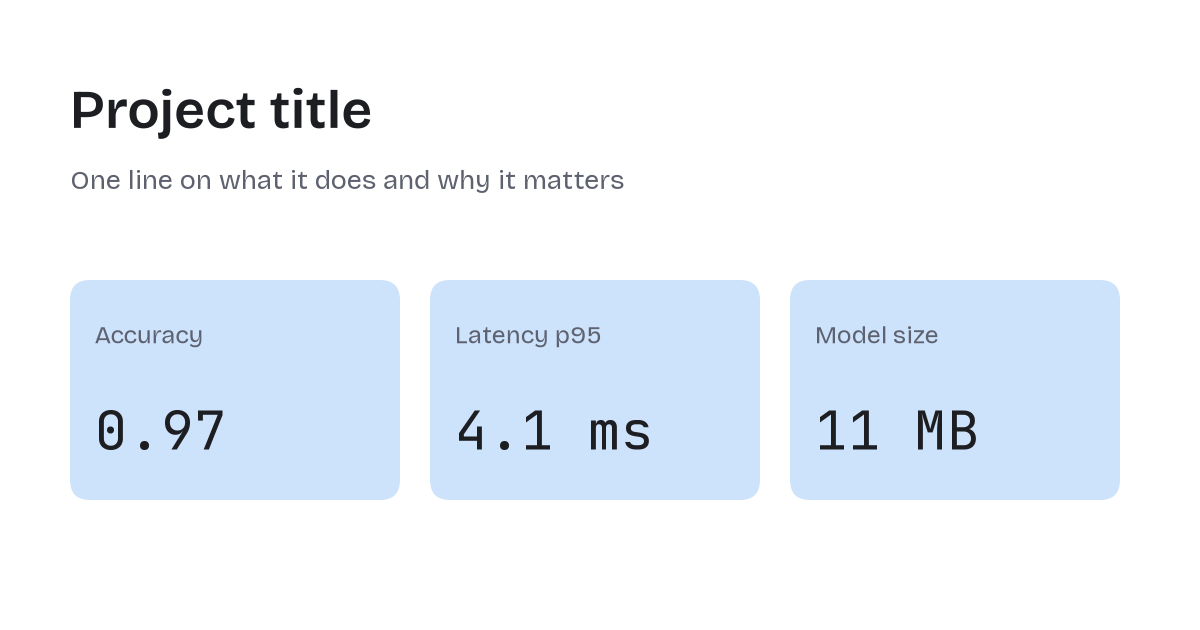
def card(theme: figkit.Theme) -> plt.Figure:
    figure = plt.figure(figsize=figkit.CARD_INCHES)
    ...
    ax.text(x, y, "0.97", fontsize=26, fontfamily=figkit.mono(theme))
    return figure


figkit.render(out, "card", card, outputs=figkit.CARD)  # opaque PNG
Notebook without files
with figkit.styled(figkit.DARK):
    figure = recall(figkit.DARK)
Outputs
| Output | Files |
|---|---|
WEB (default) |
transparent SVG and PNG on a 6.4 in canvas, the PNG 1600 px wide |
PHOTO |
transparent WebP and PNG, for images and overlays |
CARD |
opaque 1200 x 630 PNG for Open Graph; draw on CARD_INCHES |
Figures for a website
The website shows the title as text, so its files leave it out. page draws the figure once per
language, the draw function receives the language as its first argument, and write_manifest
lists the files with their texts:
TEXT = {
    "en": figkit.Caption("Recall per class", "All classes above 80 % but scale."),
    "de": figkit.Caption("Recall je Klasse", "Alle Klassen über 80 % außer Zunder."),
}


def recall_page(language: str, theme: figkit.Theme) -> plt.Figure:
    # Labels from a table per language, numbers with figkit.number(0.74, ".0%").
    return draw_recall(LABELS[language], theme)


out = Path("docs/figures/page")
figkit.write_manifest(out, [figkit.page(out, "recall", recall_page, TEXT)])
docs/figures/page/
├── recall.de.svg   recall.de-dark.svg
├── recall.en.svg   recall.en-dark.svg
└── figures.json    titles, alt texts and files per language and theme
A figure that a separate step draws, because it needs a trained model for example, is written
there with page. figkit.page_entry(out, name, TEXT, figkit.PHOTO[0]) then reads its entry from
the files, so one step can still write the manifest of all figures.
In German, tick labels, the values of bar_labels and figkit.number write 0,74, 1.500 and
74 %; category names and other text come from the project.
A style of your own
The bundled style is the portfolio's. Another project describes its own in a tokens file.
docs/examples/style/tokens.json is a complete example with
other series colours and a print theme; the same line chart in it:
| light, paired with dark | print, without a pair |
|---|---|
|
 |
Its outline:
{
  "$schema": "../../../src/figkit/tokens.schema.json",
  "version": 2,
  "default": "light",
  "font": {"sans": "Bricolage Grotesque", "mono": "JetBrains Mono", "size": 9, "…": "…"},
  "themes": {
    "light": {"pair": "dark", "pages": ["#faf8f4", "#ffffff"], "series": ["#0f766e", "…"], "…": "…"},
    "dark":  {"pair": "light", "…": "…"},
    "print": {"pages": ["#ffffff"], "…": "…"}
  }
}
Copy it as a start and point $schema to
tokens.schema.json for completion and validation in the editor.
Each theme needs pages, surface, ink, secondary, muted, grid, axis, series, ramp
and status.
| Key | Meaning |
|---|---|
default |
Theme whose files carry no suffix; every other theme writes -<name>. |
pair |
Theme a page swaps with, such as light and dark. figkit check requires the file of the pair; a theme without one stands alone. |
font.files |
Glob patterns of font files, relative to the tokens file; without them the bundled fonts apply. matplotlib keeps one file per family in a process, so own font files need family names of their own. |
css |
Maps custom properties of the website, --color-text: light-dark(#111111, #eeeeee), to tokens such as ["ink"] or ["pages", 0]. figkit check --css compares the first colour with the default theme and the second with its pair. |
figkit.load_style(path) rejects unknown keys and lists every problem with its place, such as
themes.dark.series[2]: 'blue' is not a #rrggbb colour. The style goes to render, page,
page_entry and check:
style = figkit.load_style(Path("docs/examples/style/tokens.json"))
figkit.render(Path("docs/figures"), "lines", lines, style=style)
# lines.svg, lines-dark.svg, lines-print.svg and the PNGs
A project names its style once in its pyproject.toml. Scripts read it with
figkit.project_style(), and figkit check uses it unless --style or --css say otherwise:
[tool.figkit]
tokens = "figures/tokens.json"              # relative to pyproject.toml
css = "../Website/src/styles/tokens.css"
figkit init starts such a project: it copies the bundled tokens and their schema to
figures/tokens.json and appends the table. figkit style preview then draws every series,
the ramp and the status colours in each theme, so a change to the tokens shows before a real
figure uses it.
Command line
figkit check [DIRECTORY ...] [--a11y] [--css CSS] [--style TOKENS] [--opaque NAME] [--any-width]
figkit init [--tokens TOKENS] [--css CSS]
figkit style preview [DIRECTORY] [--style TOKENS]
init writes the tokens file, default figures/tokens.json, and its schema unless the file
exists, and appends [tool.figkit] to the pyproject.toml of the working directory. It stops
if the table is there already. style preview renders style.svg and style.png in every
theme to DIRECTORY, default figkit-preview, from --style or [tool.figkit]. Text below
the minimum size of the style fails the preview.
check takes these options:
| Option | Effect |
|---|---|
DIRECTORY |
Folders of figures to check: theme and language pairs, transparency, canvas width, text size, file size and figures.json. |
--css CSS |
Compares the page, text and line colours with a stylesheet (alias --tokens). |
--style TOKENS |
Style that wrote the figures; overrides [tool.figkit]. |
--opaque NAME |
Figure that is opaque on purpose; repeatable, default card. |
--any-width |
Does not require the fixed canvas width of web figures. |
--a11y |
Checks the colours of the style: text contrast (WCAG), the separation of neighbouring series under protanopia, deuteranopia and normal vision, and an evenly stepped ramp. Works without a directory. |
The exit code is 1 on any problem:
$ uv run figkit check docs/figures docs/figures/page
docs/figures/recall.svg: missing its pair recall-dark.svg
$ uv run figkit check --css ../Portfolio/src/styles/tokens.css
../Portfolio/src/styles/tokens.css: ok
API
All public names, by area
| Area | Names |
|---|---|
| Render | render, page, page_entry, write_manifest, save, path_for, canvas, styled, headless |
| Outputs | WEB, PHOTO, CARD, SVG, PNG, WEB_WIDTH, CARD_INCHES, RASTER_DPI |
| Helpers | title, legend_top, grid, percent, category_axis, mono, mono_ticks, value, bar_labels, reference_line, line_labels, band, error_bars, callout, small_multiples, ramp_cmap, ink_on, hex_colour |
| Languages | Caption, language, localize, number |
| Style | Theme, Typography, Style, StyleError, load_style, parse_style, DEFAULT, LIGHT, DARK, THEMES, TYPE, tokens, rc, register_fonts |
| Project | Project, project, project_style |
| Checks | check_text and the figkit check command |
Importing figkit leaves the matplotlib backend alone; a batch job that only writes files can set
MPLBACKEND=Agg.
docs/style-guide.md covers which form fits which data, how colours are assigned, layout, file names, embedding and alt text. CHANGELOG.md lists what changed, breaking changes first; each release attaches the wheel.
Development
Checks, gallery, fonts and releases
uv sync
uv run ruff check . && uv run ruff format --check . && uv run mypy && uv run pytest
uv run python scripts/examples.py      # regenerate the gallery and the README images
uv run --no-project --with fonttools python scripts/build_fonts.py   # rebuild the static fonts
uv build && bash scripts/check_package.sh   # render and check figures with the built wheel
A release: move the entries under Unreleased in CHANGELOG.md to a new version
section, set that version in pyproject.toml and uv.lock (uv version 0.4.0), and push the tag
v0.4.0. The release workflow checks that tag and version match, tests the wheel on Ubuntu and
Windows, uploads the package to PyPI and publishes the GitHub release with the notes of that section.
The colours and type sizes of the bundled style live only in src/figkit/tokens.json.
License
Code: MIT. Fonts in src/figkit/fonts: SIL Open Font License 1.1, see the OFL-*.txt files.
They are static cuts of the variable fonts, made with fontTools from pinned Google Fonts sources.
Neither font declares a Reserved Font Name.
1 maintainer

Metadata
1 maintainer
Release files for figurekit 0.5.1
For a detailed explanation of source distributions (sdists) and built distributions (wheels), please see the package formats documentation.
Source distribution (sdist)
| File | Size | Uploaded | Provenance | Actions |
|---|---|---|---|---|
| figurekit-0.5.1.tar.gz | 833.9 kB | With provenance | Details for figurekit-0.5.1.tar.gz |
Built distribution (wheel)
| File | Interpreter | ABI | Platform | Actions Reset |
|---|---|---|---|---|
| figurekit-0.5.1-py3-none-any.whl | Python 3 | none | any | Details for figurekit-0.5.1-py3-none-any.whl |
Total release size: 1.1 MB
Release files / figurekit-0.5.1.tar.gz
| Download URL | figurekit-0.5.1.tar.gz |
|---|---|
| Size | 833.9 kB |
| Tags | Source |
|
SHA-256 checksum How to use checksums |
22093fb94a929765ea295f44d18bd7adcf5d081b9090bbe02eaf5a781a9b97a6
|
|
BLAKE2b-256 checksum How to use checksums |
5ca1ba5b1120bc98b6280d131958f9ca5145d010f2c6351207a7f690c5e3b1c8
|
| Upload date | |
|
Uploaded using Trusted Publishing? What is trusted publishing? |
Yes |
| Uploaded via |
twine/7.0.0 CPython/3.13.16
|
Provenance
Provenance describes where a file came from. On PyPI, provenance is shared via attestations, which provide a verifiable record of the build or publishing details. View details, limitations and caveats.


PyPI Publish Attestation
PyPI verified that this artifact, at this checksum, originated from the publisher listed below.
Signed by GitHub Actions, verified by PyPI on Nov 27, 2026.
Transparency logRelease files / figurekit-0.5.1-py3-none-any.whl
| Download URL | figurekit-0.5.1-py3-none-any.whl |
|---|---|
| Size | 263.3 kB |
| Tags | Python 3 |
|
SHA-256 checksum How to use checksums |
f992b2cb5017d6eef601e6468117250855800798c87e5a90f0e3e21476eee987
|
|
BLAKE2b-256 checksum How to use checksums |
2949144b643aa5e5384ded8dc0013b4111428e7f32814ef3934fb207b056c9cf
|
| Upload date | |
|
Uploaded using Trusted Publishing? What is trusted publishing? |
Yes |
| Uploaded via |
twine/7.0.0 CPython/3.13.16
|
Provenance
Provenance describes where a file came from. On PyPI, provenance is shared via attestations, which provide a verifiable record of the build or publishing details. View details, limitations and caveats.
PyPI Publish Attestation
PyPI verified that this artifact, at this checksum, originated from the publisher listed below.
Signed by GitHub Actions, verified by PyPI on Nov 27, 2026.
Transparency logSecurity for figurekit 0.5.1
Provenance
Provenance describes where a file came from. On PyPI, provenance is shared via attestations, which provide a verifiable record of the build or publishing details. View details, limitations and caveats.
Full provenance
Both files in this release have been uploaded with provenance metadata.
Attestation for figurekit-0.5.1.tar.gz
PyPI Publish Attestation
PyPI verified that this artifact, at this checksum, originated from the publisher listed below.
Signed by GitHub Actions, verified by PyPI on Nov 27, 2026.
Transparency logA note on package security
PyPI is a repository for distributing packages, not a service for auditing them. While third-party security researchers and our staff do their best to detect and remove malicious packages, PyPI cannot guarantee the quality, security or suitability of any given package.
To learn more about protecting yourself from malicious actors, visit our package security documentation.













