
GETTER One: Geometric Event-driven Tensor-based Time-series Extraction & Recognition - Structural event detection and causal network extraction for N-dimensional time series
Verified details
These details have been verified by PyPIProject links
GitHub Statistics
Maintainers

Project description
GETTER One
Geometric Event-driven Tensor-based Time-series Extraction & Recognition
Omnidimensional Network Engine



GETTER One is a discrete geometric framework for structural event detection and causal network extraction in N-dimensional time series.
It is not a forecasting model. It detects what is changing, when, and which dimensions are driving the change — using closed-form geometric computations with no MCMC, no gradient descent, and no threshold tuning.
Key Features
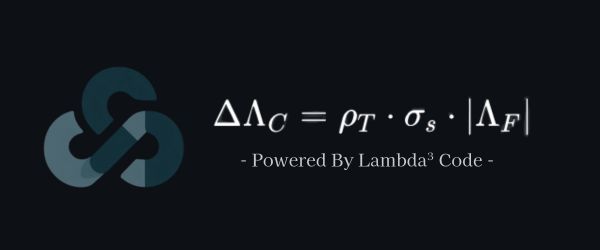
- Lambda³ (Λ³) structural analysis — Computes displacement vectors (ΛF), structural tension (ρT), cross-dimension synchrony (σₛ), and cooperative events (ΔΛC) in closed form
- Causal network extraction — Identifies directed, time-lagged causal relationships between dimensions
- Statistical confidence — Permutation tests, bootstrap confidence intervals, and effect sizes (no Bayesian inference required)
- Domain-agnostic — Works on any N-dimensional time series: weather, finance, sensors, biology
- Minimal dependencies — Core requires only
numpy,scipy,pandas - GPU-ready — Optional CUDA acceleration for large-scale datasets via CuPy
Installation
pip install getter-one
Optional extras:
pip install getter-one[gpu]       # CUDA/CuPy acceleration
pip install getter-one[viz]       # matplotlib + plotly
pip install getter-one[full]      # everything
Quick Start
from getter_one.pipeline import run

# One line — full pipeline
result = run("weather.csv", target="precipitation")
print(result.report)
Step by Step
from getter_one.data import load
from getter_one.structures import LambdaStructuresCore
from getter_one.analysis import NetworkAnalyzerCore, assess_confidence

# 1. Load data
dataset = load("weather.csv", target="precipitation", normalize="range")

# 2. Compute Λ³ structures
core = LambdaStructuresCore()
structures = core.compute_lambda_structures(
    dataset.state_vectors, window_steps=24,
    dimension_names=dataset.dimension_names,
)

# 3. Extract causal network
analyzer = NetworkAnalyzerCore(sync_threshold=0.3, causal_threshold=0.25, max_lag=12)
network = analyzer.analyze(dataset.state_vectors, dimension_names=dataset.dimension_names)

# 4. Assess confidence
confidence = assess_confidence(
    state_vectors=dataset.state_vectors,
    lambda_structures=structures,
    network_result=network,
    dimension_names=dataset.dimension_names,
)
CLI
# Run full pipeline
getter-one run weather.csv --target precipitation --report report.md

# Data preparation
getter-one-loader load weather.csv --target precipitation -o prepared.csv
getter-one-loader merge weather.csv air_quality.json --time date -o merged.csv
getter-one-loader info data.csv

# System info
getter-one info
getter-one check-gpu
Pipeline Architecture
Input Data (csv/json/parquet/xlsx/npy)
  │
  ▼
┌─────────────────────────────────┐
│  Lambda³ Structures (Λ³)        │  Closed-form geometric computation
│  ΛF, ΛFF, ρT, σₛ, Q_Λ, ΔΛC   │  No parameters to tune
└──────────────┬──────────────────┘
               │
  ┌────────────┼────────────┐
  ▼            ▼            ▼
┌──────┐  ┌──────┐  ┌──────────┐
│Bound │  │Topo  │  │Anomaly   │  Detection modules
│ary   │  │Break │  │Detection │  (GPU-accelerated)
└──┬───┘  └──┬───┘  └────┬─────┘
   └─────────┼───────────┘
             ▼
┌─────────────────────────────────┐
│  Causal Network Analysis        │  Sync + directed causal links
│  Sync matrix, lag estimation    │  Hub/driver/follower detection
└──────────────┬──────────────────┘
               ▼
┌─────────────────────────────────┐
│  Confidence Assessment          │  Permutation test → p-values
│  No MCMC, no Bayesian inference │  Bootstrap → confidence intervals
└──────────────┬──────────────────┘
               ▼
┌─────────────────────────────────┐
│  Report Generation              │  Markdown report with all results
└─────────────────────────────────┘
What GETTER One Is (and Isn't)
| GETTER One | Traditional Models | |
|---|---|---|
| Purpose | Structural event detection | Forecasting / prediction |
| Method | Discrete geometry (closed-form) | Regression / deep learning |
| Parameters | Window size only | Thresholds, hyperparameters |
| Output | Events, boundaries, causal network | Predicted values |
| Relationship | Complements prediction models | Competes with each other |
GETTER One detects what changed and why, not what will happen next. It can be used as a feature extractor for prediction models — experiments show that combining raw data with GETTER One features improves Transformer event detection F1 by +5.7% over raw data alone, and outperforms adding 7 additional weather variables (+4.3% vs +6.1%).
Benchmark Results
Standard Benchmark
Causal inference benchmark against 5 established methods on synthetic data with ground truth (6 scenarios, 20 repeats each):
| Method | Composite | F1 (dir) | Lag MAE | Sign Acc | Spurious |
|---|---|---|---|---|---|
| PCMCI+ | 0.877 | 0.740 ± 0.364 | 0.000 ± 0.000 | 1.000 ± 0.000 | 0.000 ± 0.000 |
| VAR Granger | 0.853 | 0.697 ± 0.353 | 0.010 ± 0.100 | 0.990 ± 0.100 | 0.050 ± 0.154 |
| GETTER One | 0.821 | 0.792 ± 0.366 | 0.000 ± 0.000 | 1.000 ± 0.000 | 0.500 ± 0.000 |
| Event XCorr | 0.537 | 0.534 ± 0.403 | 0.244 ± 0.825 | — | 0.300 ± 0.340 |
| Transfer Entropy | 0.446 | 0.432 ± 0.368 | 0.413 ± 1.396 | — | 0.525 ± 0.112 |
| Graphical Lasso | 0.120 | — | — | — | 1.000 ± 0.000 |
Per-scenario F1 (directed):
| Scenario | GETTER One | PCMCI+ | VAR Granger | TE | EventXCorr |
|---|---|---|---|---|---|
| S0 null | 0.000 | 0.000 | 0.000 | 0.000 | 0.000 |
| S1 delayed | 1.000 ± 0.000 | 0.825 ± 0.183 | 0.662 ± 0.141 | 0.645 ± 0.233 | 0.450 ± 0.446 |
| S2 asymmetric | 0.950 ± 0.122 | 0.883 ± 0.163 | 0.658 ± 0.037 | 0.662 ± 0.177 | 0.520 ± 0.434 |
| S5 confounder | 0.800 ± 0.000 | 0.990 ± 0.045 | 0.960 ± 0.082 | 0.734 ± 0.092 | 0.623 ± 0.213 |
| S7 event delayed | 1.000 ± 0.000 | 0.825 ± 0.183 | 0.917 ± 0.148 | 0.342 ± 0.417 | 0.842 ± 0.206 |
| S8 event asym | 1.000 ± 0.000 | 0.917 ± 0.148 | 0.983 ± 0.075 | 0.212 ± 0.356 | 0.767 ± 0.262 |
GETTER One achieves F1 = 1.000 with σ = 0.000 (perfectly deterministic) on all event-driven scenarios, with zero lag error and perfect sign accuracy across all 20 trials. Its closed-form computation produces identical results regardless of noise realization — a direct consequence of the displacement-based (diff) approach inherited from molecular dynamics trajectory analysis.
Hell Mode Robustness Benchmark
Causal detection under non-stationary, non-linear, non-Gaussian conditions (8 scenarios × 5 repeats, ground truth: X0→X1 lag=2, X0→X2 lag=3):
| Method | F1 | Precision | Recall | Lag MAE | Detected | Spurious |
|---|---|---|---|---|---|---|
| GETTER One | 0.394 ± 0.406 | 0.471 | 0.362 | 0.000 | 1.4 | 0.118 |
| PCMCI+ | 0.376 ± 0.271 | 0.279 | 0.738 | 0.306 | 8.6 | 0.142 |
| VAR Granger | 0.283 ± 0.308 | 0.217 | 0.475 | 0.630 | 7.5 | 0.260 |
| Transfer Entropy | 0.164 ± 0.240 | 0.119 | 0.887 | 0.770 | 84.3 | 0.188 |
Per-scenario F1 (Hell Mode):
| Scenario | GETTER One | PCMCI+ | VAR Granger | TE |
|---|---|---|---|---|
| H1 pulse | 0.513 | 0.494 | 0.431 | 0.385 |
| H2 phase jump | 0.547 | 0.183 | 0.093 | 0.025 |
| H3 bifurcation | 0.000 | 0.142 | 0.040 | 0.025 |
| H4 cascade | 0.133 | 0.649 | 0.581 | 0.668 |
| H5 resonance | 0.960 | 0.774 | 0.000 | 0.043 |
| H6 decay | 0.533 | 0.428 | 0.813 | 0.044 |
| H7 multi-hell | 0.467 | 0.238 | 0.304 | 0.029 |
| H8 progressive | 0.000 | 0.100 | 0.000 | 0.092 |
GETTER One achieves the highest F1 and precision under non-ideal conditions, with the fewest detected links (1.4 avg vs ground truth of 2) — demonstrating conservative, high-confidence detection rather than over-reporting. Each method has characteristic strengths: GETTER One excels at phase jumps and resonance, PCMCI+ at cascades, and VAR Granger at structural decay.
Real-World Application: Weather Network
Analysis of 7 cities around Tokyo (hourly data, October 2024) reveals physically correct causal structures:
Precipitation causal network:
- Nagano → Gunma (lag=1h) → Saitama (lag=1h) — inland-to-plains propagation
- Yamanashi → Gunma (lag=2h) — basin-to-plains flow
- Drivers: Nagano, Yamanashi (mountain sources)
- Followers: Saitama, Tochigi (downstream receivers)
Cross-variable causality (42D full analysis):
- Temperature changes → Surface pressure changes (lag=2-3h) — thermodynamic law rediscovered from data alone
Supported Data Formats
| Format | Extension | Read | Write |
|---|---|---|---|
| CSV / TSV | .csv, .tsv |
✅ | ✅ |
| JSON | .json |
✅ | — |
| Parquet | .parquet |
✅ | — |
| Excel | .xlsx, .xls |
✅ | — |
| NumPy | .npy, .npz |
✅ | ✅ |
Project Structure
getter_one/
├── data/           Data loading & merging (multi-format)
├── structures/     Lambda³ structural computation (CPU)
├── core/           GPU infrastructure (CuPy/CUDA)
├── detection/      Boundary, topology, anomaly, phase-space detection
├── analysis/       Network analysis, confidence assessment, report generation
├── pipeline.py     Full pipeline orchestration
└── cli.py          Command-line interface
Related Projects
- BANKAI-MD — GPU-accelerated molecular dynamics analysis built on the same Lambda³ theory. GETTER One is the domain-agnostic generalization; BANKAI-MD is the MD-specialized implementation.
Citation
Paper in preparation. If you use GETTER One in your research, please cite this repository.
License
MIT License — see LICENSE for details.
Built with 💕 by Masamichi & Tamaki
CHANGE EAGLE // Aerial Type // Structure Detection
Project details
Verified details
These details have been verified by PyPIProject links
GitHub Statistics
Maintainers
Release history Release notifications | RSS feed


Download files
Download the file for your platform. If you're not sure which to choose, learn more about installing packages.
Source Distribution
Built Distribution
Filter files by name, interpreter, ABI, and platform.
If you're not sure about the file name format, learn more about wheel file names.
Copy a direct link to the current filters
File details
Details for the file getter_one-0.1.3.tar.gz.
File metadata
- Download URL: getter_one-0.1.3.tar.gz
- Upload date:
- Size: 103.1 kB
- Tags: Source
- Uploaded using Trusted Publishing? Yes
- Uploaded via: twine/6.1.0 CPython/3.13.7
File hashes
| Algorithm | Hash digest | |
|---|---|---|
| SHA256 |
bafcfc99b5dacb13df6fd817d4526f0164011b140c4c23a11645683938171ef8
|
|
| MD5 |
8e19e7874bd18fd7e165409fd4930fb3
|
|
| BLAKE2b-256 |
b36832f69a62a55cd7008b2140ee0f80a15bb8412a985009902dc0980b0c3d32
|
Provenance
The following attestation bundles were made for getter_one-0.1.3.tar.gz:
Publisher:
python-publish.yml on miosync-masa/getter-one
-
Statement:
-
Statement type:
https://in-toto.io/Statement/v1 -
Predicate type:
https://docs.pypi.org/attestations/publish/v1 -
Subject name:
getter_one-0.1.3.tar.gz -
Subject digest:
bafcfc99b5dacb13df6fd817d4526f0164011b140c4c23a11645683938171ef8 - Sigstore transparency entry: 1223271677
- Sigstore integration time:
-
Permalink:
miosync-masa/getter-one@926bf7b8527f09aa0dd6ae3ce5e7a8762e59e012 -
Branch / Tag:
refs/tags/v0.1.3 - Owner: https://github.com/miosync-masa
-
Access:
public
-
Token Issuer:
https://token.actions.githubusercontent.com -
Runner Environment:
github-hosted -
Publication workflow:
python-publish.yml@926bf7b8527f09aa0dd6ae3ce5e7a8762e59e012 -
Trigger Event:
release
-
Statement type:
File details
Details for the file getter_one-0.1.3-py3-none-any.whl.
File metadata
- Download URL: getter_one-0.1.3-py3-none-any.whl
- Upload date:
- Size: 109.1 kB
- Tags: Python 3
- Uploaded using Trusted Publishing? Yes
- Uploaded via: twine/6.1.0 CPython/3.13.7
File hashes
| Algorithm | Hash digest | |
|---|---|---|
| SHA256 |
0262802274d5461e553540394b7e6372ebec7079f02d068af6cdb6b80e6dbd53
|
|
| MD5 |
e51a46cc03dc619011f884bfbe2ee69e
|
|
| BLAKE2b-256 |
608a562ec6e5fdaad87d3d9ea6a0839ee5b85e5fabaffde576c4392cc624eaa2
|
Provenance
The following attestation bundles were made for getter_one-0.1.3-py3-none-any.whl:
Publisher:
python-publish.yml on miosync-masa/getter-one
-
Statement:
-
Statement type:
https://in-toto.io/Statement/v1 -
Predicate type:
https://docs.pypi.org/attestations/publish/v1 -
Subject name:
getter_one-0.1.3-py3-none-any.whl -
Subject digest:
0262802274d5461e553540394b7e6372ebec7079f02d068af6cdb6b80e6dbd53 - Sigstore transparency entry: 1223271723
- Sigstore integration time:
-
Permalink:
miosync-masa/getter-one@926bf7b8527f09aa0dd6ae3ce5e7a8762e59e012 -
Branch / Tag:
refs/tags/v0.1.3 - Owner: https://github.com/miosync-masa
-
Access:
public
-
Token Issuer:
https://token.actions.githubusercontent.com -
Runner Environment:
github-hosted -
Publication workflow:
python-publish.yml@926bf7b8527f09aa0dd6ae3ce5e7a8762e59e012 -
Trigger Event:
release
-
Statement type:






