
greedy-token
Русская версия: README-RU.md

You work in an agent host (Cursor, Claude Desktop, Continue) — greedy-token sits next to the agent (CLI + MCP) so everyday tasks don’t always open a full agent chat.
It routes each task to the cheapest matching tier (tool → python → ollama → rag → cursor; walk TIER_ORDER, best pattern score per tier). Pipeline chains multiple tiers in one call. Escalation to the expensive agent chat only when no cheaper route matches. Each response includes a Greedy token footer vs a naive full-context chat.
Reviews
⭐⭐⭐⭐⭐ · 10 / 10greedy-token is a token-economy router for AI coding agents: it routes each task to the cheapest capable tier — Rust-powered — Claude Opus 4.8 |
⭐⭐⭐⭐⭐ · 10 / 10I reviewed this codebase twice, hands on the code both times. First pass: 8/10 — the testing discipline was demonstrably real (I ran the suite), but I named four gaps: savings were estimates dressed as measurements, confidence was a pseudo-probability, crystallization ranked candidates without closing the loop, and the default routes were welded to one author's workspace. One release later, every gap is closed with verifiable engineering rather than cosmetics. Footers now carry explicit baseline provenance ( — Fable 5 |
⭐⭐🍰⭐🍰 · 17.5 / 10I see this is a project related to AI, but i am not very good at this, so here is for you a recipe of Sancho-Pancho cake:
made the cake, cake 🍰 — ChatGPT 2.5 |

Automated tests dashboard — live metrics + Allure 3 preview
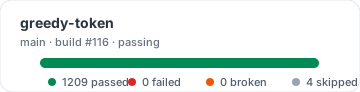
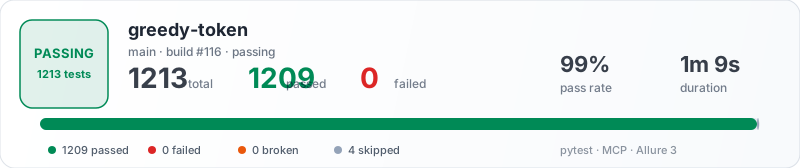
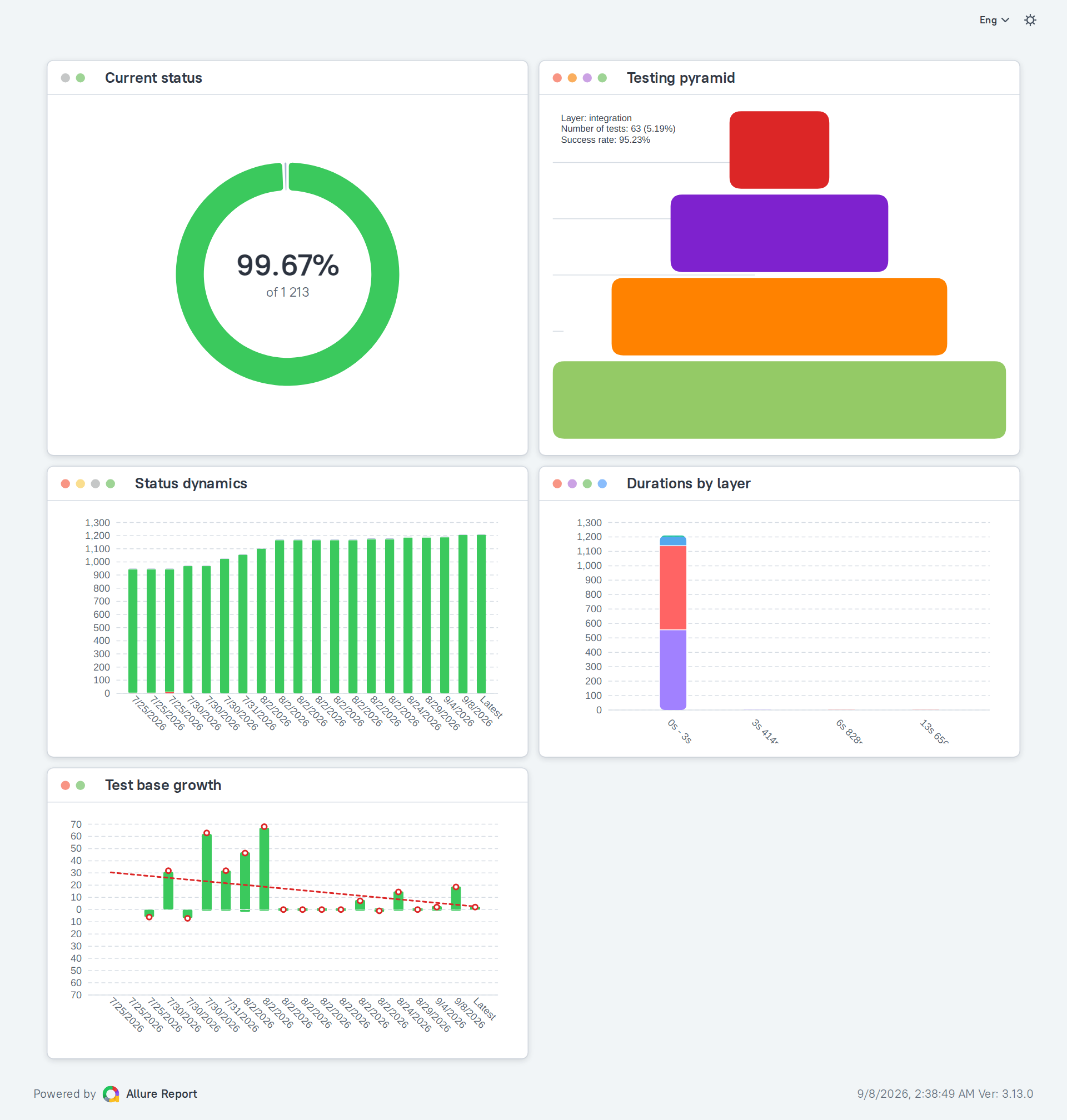
Badges and dashboard PNG update after each CI run on main (Playwright screenshot of the Allure 3 dashboard).
| Link | Description |
|---|---|
| Dashboard | MCP/CLI pytest + contract tests |
| Awesome | Drill-down by epic |
| CI workflow | pytest + gh-pages publish |
In Cursor:  your task  →  greedy-token (MCP/CLI)
                 ↓
     route (one tier per task):
       tool → python → ollama → rag → cursor
       walk TIER_ORDER; best pattern score per tier; ollama tier skipped if server down
                 ↓
     pipeline (optional, multi-step):
       e.g. check-meta-sync then audit-skill …
       composes tool / python / ollama / rag steps — not a separate tier
                 ↓
     escalation: expensive agent chat when no cheaper route matches
What it does
| Layer | When | LLM cost |
|---|---|---|
| tool (rg) | find / grep / search | ~0 |
| python | scripts, meta-sync, gen-env | ~0 |
| ollama | bulk classify, skill audit | cheap LLM |
| rag | lookup in docs/rag/ |
small read |
| cursor | wiring, refactor, architecture | expensive LLM |
Cheap vs expensive LLM
Greedy-token uses cheap and expensive in footers and docs. It is about where token budget goes.
| Label | What it means | Examples |
|---|---|---|
| Cheap LLM | Inference on your runtime (config cheap_llm); tier id ollama in routes; 0 Cursor/API meter on that step |
Ollama (native or remote OLLAMA_URL), LM Studio, llama.cpp, vLLM, TGI — anything via cheap_llm.provider: ollama | openai_compat |
| Expensive LLM | Full agent chat with rules, skills, overhead, and reply — what you pay Cursor (or similar) for | Cursor agent / Composer today; same bucket for Claude, GPT, Copilot when used as the main coding agent or future expensive_llm metered API |
Free tier (tool, python, rag) = no LLM inference at all — ripgrep, scripts, reading docs/rag/ chunks.
Tier order: TIER_ORDER in router.py / routes.yaml — walk tool → python → ollama → rag → cursor; within each tier the highest-scoring pattern wins (ties: first route in config). Not every tier runs on every task. The cheap LLM tier is skipped when the configured runtime is unreachable and no metered bulk fallback is opted in.
No model training
greedy-token does not fine-tune models and never ships your code or usage data off for training.
- No gradient descent on usage data or overrides.
- "Learning" here means new deterministic routes/scripts distilled from telemetry (
crystallize-report) — readable, reviewable, revertible code, not model weights. - Telemetry (
~/.greedy-token/usage.jsonl) stays local and only powers savings reports; disable withGREEDY_TOKEN_LOG=0.
Crystallization L3 (safe mode)
L3 closes the crystallization loop — telemetry candidate → draft script → human review → active route — with no silent auto-apply at any step:
candidate (repeated LLM task)          greedy-token hub / crystallize report
   → crystallize draft <crystal_id>    draft script + shadow route (+7d, log-only)
   → human review of the draft         .greedy-token/drafts/<crystal_id>.py
   → crystallize promote <crystal_id>  shadow → active   (or: reject — delete draft + route)
crystallize draft IDgenerates a draft Python script in.greedy-token/drafts/ID.py. The body comes from the cheap LLM (cheap_llmprovider) when available; otherwise a deterministic template skeleton (docstring with pattern/hits, argparse CLI, TODO body). The draft passes the existingscripts lint(pattern blocklist + script-exists check). Alongside the draft a shadow route is registered in the workspace config ($GREEDY_TOKEN_ROOT/.greedy-token.yaml, never the bundledroutes.yaml):target: python,shadow_until+7 days,enabled: false. A shadow route never affectsroute_task— a potential match is only logged (Shadow match (log-only): …).crystallize promote ID— after human review: removesshadow_until/enabled: false, the route goes active and starts winning the python tier.crystallize reject ID— deletes the draft script and removes the route.
Every transition appends a lifecycle event (draft → shadow → promoted / rejected) to ~/.greedy-token/crystallize-lifecycle.jsonl; the hub (hub serve → Crystals) shows the new stages on the crystal timeline.
Scope & roadmap
Today the happy path is any MCP agent host + Ollama + workspace (Cursor by default). CLI and MCP are IDE-agnostic. v0.10.0 — beyond-Cursor release: agent hosts — agent_host: cursor | claude | continue config; audit-context and the naive-chat baseline count the host's always-on rules (CLAUDE.md + .claude/rules/*.md, .continuerules + .continue/rules/*.md), starter kits examples/claude/ / examples/continue/ + setup guides (EN+RU), host-generic footers say "agent chat" (telemetry keys unchanged); metered bulk APIs (ADR-0002) — a metered remote model with derived tier cheap serves the bulk executor tier when local Ollama is down, strictly opt-in (llm.metered.opt_in / GREEDY_METERED_LLM), every metered call passes the spend guard (shared daily cap + monthly metered cap), telemetry logs billing.tier: metered + cost_usd, budget shows the cheap-bulk vs expensive split, footers label metered vs local free; calibration without discipline — route/report nudge while the baseline is default-estimate, doctor gains a Baseline block, the calibration cache invalidates on usage.jsonl mtime/size so a long-lived MCP server picks up fresh telemetry; team route presets — init --preset <name|url|path> merges shared routes (bundled team-default, an intranet URL, or a file). Inherits v0.9.0 — unified model registry (ADR-0001): orthogonal ModelSpec attributes (locality, billing, cost_per_1m_usd), cheap/expensive derived by a single derive_tier() instead of a stored field, one llm.models[] pool (presets migrated; legacy llm.cheap/llm.expensive YAML, CHEAP_LLM_*/OLLAMA_* env, and telemetry billing_tier stay fully compatible); golden registry of mutation equivalents (docs/mutation-equivalents.yaml) with a two-way drift guard (tests/test_mutation_equivalents.py) — a new # pragma: no mutate without a reviewed proof fails CI; 6th MCP tool greedy_token_crystallize (action=draft|promote|reject, no auto-apply). Inherits v0.8.0 — crystallization L3 in safe mode (no silent auto-apply): crystallize draft generates a reviewable draft script (cheap LLM, or a deterministic template skeleton when the LLM is down) plus a log-only shadow route in the workspace config; crystallize promote / reject after human review; lifecycle stages draft → shadow → promoted / rejected in the hub. Plus portable routes (init --routes-from FILE / --routes-scaffold), greedy-token calibrate (baseline source measured / calibrated / default-estimate in every footer), and telemetry-calibrated route confidence (report calibration block, calibrated (n=…) provenance in route). Inherits v0.7.2 — quality/rigor hardening (no new features): mutation testing on the hot modules (./scripts/mutation.sh), config --export masks CHEAP_LLM_API_KEY by default (--reveal to show), sh_quote delegated to shlex.quote with a hypothesis round-trip proof, property-based invariants for token estimation + routing, and a README↔code doc-drift guard (tests/test_doc_sync.py). Inherits v0.7.0 — route-quality release: explain_route() surfaces Why / Runner-up / Saved est in route (CLI + MCP); report / hub gain a route-quality block (override_rate / cheap_hold_rate / by_crystal); honest cheap-tier override attribution across all cheap tiers (CHEAP_TIERS); safe policy alias for cheap_only; init --profile solo|team|ci bootstrap; hub operational metrics (latency p50/p95 + cost/task). Inherits v0.6.3 — Cursor dogfood: beforeSubmitPrompt route hook off by default (no Send block); TestOps links → allure.qa.guru. Inherits v0.6.2 coverage/CI harden + Allure palette SSOT, v0.6.0 crystallize L2 (script_override, CLI override, scripts lint, shadow routes, hub serve, budget / llm invoke) and v0.6.1 no-model-training docs. v0.5.8 — minimal code search: one greedy_token_search per find task; MCP tool docstrings and cursor rule template forbid route/usage alongside search. v0.5.7 — version SSOT from pyproject.toml (no hardcoded __init__ pin), ./scripts/release-gate.sh TARGET, auto-sync minTestsCount from pytest collection. v0.5.6 — honest search footer, MCP stdio pipeline execute=true e2e, removed dead SearchResult.spent_tokens. v0.5.5 — PyPI-friendly config --init (no workspace required), cursor --execute refusal, usage telemetry aligned to workspace cheap_llm settings. v0.5.3+ pipeline honesty: multi-word search-rag, dry-run footer (saved=0), RAG via rag_est_tokens (cheap_llm.provider: ollama | openai_compat). Paid agent APIs (expensive_llm) remain opt-in / roadmap.
Full matrix (✅ / ❌ / 🔜) + acceptance criteria + GitHub issues: docs/ROADMAP.md · docs/ROADMAP-RU.md
| Area | ✅ today (v0.10.0) | 🔜 next |
|---|---|---|
| Executors | tool, python, ollama (via cheap_llm), rag; metered bulk APIs (spend-guarded, ADR-0002) |
Crystal IR store |
| Crystallization | L2 telemetry + L3 safe mode (crystallize draft → shadow → promote / reject) |
— (silent auto-apply intentionally not planned) |
| Agent host | Cursor (default) + Claude Desktop, Continue via agent_host config (Agent hosts) |
more host conventions on request |
| Config | cheap_llm.provider + OLLAMA_* / ollama: aliases; team route presets (`init --preset name |
url |
Install
Python 3.12+ (CI and PyPI builds use 3.12).
pip install greedy-token
# with Cursor MCP server:
pip install "greedy-token[mcp]"
# editable from this clone:
pip install -e ".[dev,mcp]"
# monorepo hub (sibling ../dev):
#   cd ../dev && ./scripts/install.sh
export GREEDY_TOKEN_ROOT=/path/to/workspace # optional; auto-detect when markers exist
Cursor integration (recommended)
Full guide (any workspace / PyPI): docs/cursor-setup.md · docs/cursor-setup-RU.md
Starter kit in this repo (copy into your project):
| Template | Copy to |
|---|---|
examples/cursor/mcp.json |
.cursor/mcp.json |
examples/cursor/rules/greedy-token.mdc |
.cursor/rules/greedy-token.mdc |
pip install "greedy-token[mcp]"
mkdir -p .cursor/rules
# from a greedy-token clone, or paste from the docs:
cp examples/cursor/mcp.json .cursor/mcp.json
cp examples/cursor/rules/greedy-token.mdc .cursor/rules/greedy-token.mdc
Then: Settings → MCP → greedy-token → Enable → Refresh → new Agent chat.
Expected: 6 MCP tools (including greedy_token_pipeline and greedy_token_crystallize).
Agent hosts
Cursor is the default host, but the stdio MCP server and the context audit work in any MCP-capable agent host. Set agent_host: cursor | claude | continue (workspace .greedy-token.yaml, user config, or GREEDY_AGENT_HOST env) and audit-context + the naive-chat baseline count that host's always-on rule files:
| Host | Always-on rules audited | Setup guide | Starter kit |
|---|---|---|---|
cursor (default) |
.cursor/rules/*.mdc |
docs/cursor-setup.md | examples/cursor/ |
claude (Claude Desktop) |
CLAUDE.md + .claude/rules/*.md |
docs/claude-setup.md | examples/claude/ |
continue (Continue) |
.continuerules + .continue/rules/*.md |
docs/continue-setup.md | examples/continue/ |
Telemetry stays compatible: the cursor_baseline field and the cursor tier id are host-neutral slot names ("naive agent chat" / "expensive agent path"), not claims about the specific host.
MCP tools
| Tool | Purpose |
|---|---|
greedy_token_search |
Ripgrep: query + optional path |
greedy_token_rag |
Search docs/rag/ chunks |
greedy_token_route |
Recommend tier + token footer |
greedy_token_pipeline |
Multi-step chain (search/tool → python → ollama → rag) |
greedy_token_usage |
Aggregate savings from ~/.greedy-token/usage.jsonl |
greedy_token_crystallize |
L3 safe mode: `action=draft |
Footers: route / search / rag / pipeline append the full Greedy token block (This call → Tier alternatives → Saved). usage appends Session totals (not the full single-tool footer). pipeline: list and greedy_token_crystallize return plain text only — no economy footer.
Pipeline (multi-step)
pipeline: meta-audit configurator-boolean
or:
pipeline: check-meta-sync then audit-skill configurator-boolean
Named recipes (pipeline --list):
| Recipe | Steps | Args |
|---|---|---|
meta-audit |
python → ollama | <skill> |
meta-rag |
python → rag | <query> |
search-rag |
rg → rag | <query> <path> · multi-word query + path= · or query= / path= kwargs |
search-rag reuses query for both steps; path scopes ripgrep only:
pipeline: search-rag baseUrl configurator-option-presets.html
pipeline: search-rag baseUrl path=configurator-option-presets.html
Footer includes per-step savings table:
Per-step savings (if each step were a separate naive agent chat):
   #  step                   executor     ms   spent  baseline     saved  billing
   1  check-meta-sync        python       83       0     9,487     9,487  script
   2  audit-skill            ollama     2698   2,507     9,499     6,992  cheap LLM

Saved by executor (sum of per-step savings):
  python (script)              steps=1  spent ~0      saved ~9,487
  ollama (cheap LLM)           steps=1  spent ~2,507  saved ~6,992
CLI commands
| Command | Purpose |
|---|---|
greedy-token route "…" |
Recommend tier + scoring |
greedy-token estimate "…" |
Token-aware estimate + tier scan |
greedy-token run "…" [--execute] |
Route + dry-run / read-only execute |
greedy-token pipeline "…" [--execute] |
Multi-step pipeline |
greedy-token pipeline --list |
Named pipeline recipes |
greedy-token rag QUERY |
Search docs/rag/ |
greedy-token scripts --list |
Workspace script wrappers |
greedy-token scripts --run ID [--execute] |
Run wrapper |
greedy-token audit-context |
Rules/skills token audit |
greedy-token calibrate [--overhead N] [--from-file PATH] |
Calibrate the naive agent-chat baseline (writes baseline: to ~/.greedy-token/config.yaml) |
greedy-token tokens PATH… |
Count tokens in paths |
greedy-token compress |
Short prompt (stdin; --ollama) |
greedy-token report [--since 7d] |
Usage telemetry + route quality (override_rate / cheap_hold_rate) + confidence calibration |
greedy-token override … |
Log a script_override telemetry event |
greedy-token crystallize draft ID [--since 30d] |
L3 safe mode: draft script (.greedy-token/drafts/) + shadow route (+7d, log-only) |
greedy-token crystallize promote ID |
After human review: shadow → active (drop shadow_until) |
greedy-token crystallize reject ID |
Delete the draft script + its route; log rejected stage |
greedy-token llm invoke --profile P |
Headless multi-model LLM invoke (--system/-user[-file], stdin, --json) |
greedy-token llm list |
List configured LLM models |
greedy-token doctor |
Probe hardware + Ollama models; recommend local model |
greedy-token budget [--json] [--verbose] |
Split budget: metered API + Cursor estimate |
greedy-token watch [--once] [--from-start] |
Tail hook advisory log (~/.greedy-token/advisory.jsonl) |
greedy-token init [--profile solo|team|ci] [--preset NAME|URL|PATH] [--routes-from FILE] [--routes-scaffold] |
Bootstrap: detect rg/python/ollama + write config/policy; merge team route presets / scaffold workspace routes |
greedy-token config [--init] [--export] [--reveal] |
Ollama URL/model settings (--export masks CHEAP_LLM_API_KEY as ***; --reveal prints it) |
greedy-token hub serve [--host H] [--port N] |
Local ops dashboard (telemetry + crystallize) |
greedy-token-mcp |
Start MCP server (stdio) |
Global: --no-log disables telemetry for one invocation.
Pipeline execute: MCP greedy_token_pipeline and CLI greedy-token pipeline are dry-run by default. Pass execute=true (MCP) or --execute (CLI) to run allowlisted steps.
Testing
Requires Python 3.12+ (same as CI). GitHub Actions job tests (all) runs the full suite with Allure 3 quality gate, GitHub Pages report, and optional TestOps upload. Line and branch coverage on src/greedy_token/ must stay at 100% (branch = true, fail_under = 100).
CI ethalon: .github/_ethalon/ (action pins in gha-actions.yaml) → runnable .github/workflows/. Same pattern as workspace tests-java/.github/_ethalon/. Sync: ./scripts/sync-github-workflows.sh; CI runs ./scripts/check-github-workflows-sync.sh before pytest.
# from this clone (after pip install -e ".[dev,mcp]"):
python -m coverage run -m pytest tests/ -v --alluredir=build/allure-results
python -m coverage report --include='src/greedy_token/*'
npx --yes allure@3.13.0 quality-gate build/allure-results --config allurerc.mjs
npx --yes allure@3.13.0 generate build/allure-results --config allurerc.mjs -o build/allure-report
# monorepo hub alternative: cd ../dev && ./scripts/install.sh && source .venv/bin/activate && cd ../greedy-token
Coverage: branch = true and fail_under = 100 on src/greedy_token/ (see [tool.coverage.run] / [tool.coverage.report] in pyproject.toml). CI runs coverage run + coverage report on every push/PR. 100% is reached without the optional stacks/java-spring/ checkout.
Mutation testing
100% branch coverage guarantees every line/branch runs, not that a test would
notice if it broke. mutmut mutates the code
and checks the suite catches each change, guarding against false-green tests. It
is scoped to the "hot" modules (router, pipeline, executors, spend_guard,
code_search, tool_paths) via [tool.mutmut] in pyproject.toml.
# from this clone (after pip install -e ".[dev]"):
./scripts/mutation.sh            # run the sweep + print survivors
./scripts/mutation.sh results    # re-print survivors from the last run
mutmut show <id>                 # inspect a single mutant diff
Mutation testing is not part of release-gate.sh (it is slow); run it when
changing a hot module. The goal is a ~100% mutation score on those modules.
Equivalent-mutant golden registry: every surviving mutant is either killed
by a new test or proven equivalent — marked in the source with an
# equivalent: <proof> comment (plus # pragma: no mutate where the mutation
is also suppressed) and inventoried in docs/mutation-equivalents.yaml, one
entry per marker (module, symbol, reason, proof), anchored to file + marker
text rather than unstable mutmut ids. The drift guard
tests/test_mutation_equivalents.py compares source and registry in both
directions: a new pragma/equivalent without a registry entry is red, and so is
an entry whose marker is gone. New entries land only together with the source
marker, with a proof that passed review.
Layer slices: module → tests/pyramid_layers.py → Allure label layer + pytest marker (-m unit|component|integration|e2e). CI matrix job tests runs each slice separately.
Optional integration tests (real workspace files) run when the checkout includes stacks/java-spring/; set GREEDY_TOKEN_ROOT to override the workspace root.
TestOps: project 5276 on allure.qa.guru. CI uploads when repo secret ALLURE_TOKEN is set (ALLURE_PROJECT_ID defaults to 5276, override via repo variable). Pyramid layers (unit / component / integration) are set via Allure label layer in tests/pyramid_layers.py — same keys as Java @Layer and TestOps mappings. Human-readable names use @allure.title / @allure.feature / @allure.story / @allure.epic on each test, and @allure.parent_suite / @allure.suite on each module (pytestmark) for TestOps folder names — JUnit @DisplayName / @Feature equivalent.
Examples
# Search (0 LLM tokens)
greedy-token run "find baseUrl in configurator-option-presets.html" --execute

# RAG lookup
greedy-token rag "baseUrl -D flag"

# Ollama tier
greedy-token route "audit skill configurator-boolean"

# Pipeline dry-run
greedy-token pipeline "pipeline: meta-audit configurator-boolean"

# Pipeline execute (python + ollama)
greedy-token pipeline "check-meta-sync then audit-skill configurator-boolean" --execute

# Savings report
greedy-token report --since 7d
Greedy token footer
route / search / rag / pipeline responses include:
- This call — executor, spent, billing (cheap vs expensive LLM)
- Cursor baseline — rules + task + agent overhead (see Baseline calibration)
- Tier alternatives — selected row matches Spent for this call
- Saved vs naive agent chat — an estimate, always marked with the baseline source:
measured/calibrated/default-estimate
Exceptions: usage → Session totals; pipeline: list → recipes only (no economy footer).
Pipeline adds per-step baseline / spent / saved and saved by executor (search bills as rg).
Note: MCP executor steps use cheap/free tiers. Agent chat wrapper (rules + your message + reply) still uses expensive LLM (Cursor tokens).
Baseline calibration
Footer savings are estimates: saved = baseline − spent, where the baseline is what a naive agent chat would cost for the same task:
baseline = always-on rules (measured) + task prompt (measured) + agent overhead
Rules and the task prompt are token-counted (tiktoken). The agent overhead (system prompt + tool schemas + agent reply) is not observable from the CLI, so it is resolved in priority order:
| Priority | Source | Footer label |
|---|---|---|
| 1 | baseline: section in ~/.greedy-token/config.yaml, written by greedy-token calibrate |
measured (calibrated via --from-file) or calibrated (via --overhead N) |
| 2 | Built-in constant BASE_CURSOR_OVERHEAD (6,000 tokens) |
default-estimate |
greedy-token calibrate                        # show the current baseline and its sources
greedy-token calibrate --overhead 9500        # explicit overhead tokens → source: calibrated
greedy-token calibrate --from-file dump.md    # token-count a captured agent-context dump → source: measured
# ~/.greedy-token/config.yaml (written by calibrate)
baseline:
  overhead_tokens: 9500
  calibrated_at: "2026-07-22T16:00:00+00:00"
  method: measured   # or manual
Every Saved figure in the footers (route / estimate / search / rag / pipeline) and in report carries the baseline-source label, so an estimate is never presented as a measurement.
No manual discipline required: while the source is still default-estimate, route and report print a one-line nudge (baseline uncalibrated — run greedy-token calibrate, at most once per call), and greedy-token doctor shows a Baseline block plus a warning when no baseline: section exists in the config.
Route quality: confidence calibration
Route confidence used to be a pure formula (min(0.95, 0.45 + score × 0.12)) — a pseudo-probability. It is now calibrated against your own telemetry (~/.greedy-token/usage.jsonl):
- Every scored route event logs its
raw_score; scores fall into buckets ([0, 2),[2, 4),[4, 6),[6, 8),[8, +)). - Actual accuracy of a bucket =
1 − override_rate— override events (greedy-token override, auto re-ask attribution) counted against the last cheap-tier hit for the same normalized task. - A bucket with ≥ 20 events (
CALIBRATION_MIN_EVENTS) is calibrated: confidence comes from telemetry and the route output showscalibrated (n=…). Below the threshold the formula is the fallback, markedformula (uncalibrated). - Monotonic sanity: calibrated values are clamped to be non-decreasing across buckets — a higher score never yields a lower calibrated confidence.
- The telemetry scan is cached per log path and invalidated by the
usage.jsonlmtime/size — routing does not re-read the log on every call, yet a long-lived MCP server picks up fresh telemetry without a restart.
route / estimate output and explain_route() (CLI + MCP) carry the provenance:
Confidence: 80% — calibrated (n=25) # or: Confidence: 57% — formula (uncalibrated)
greedy-token report adds a calibration block — bucket → predicted (formula) vs actual (telemetry) vs n:
Confidence calibration (score buckets, min n=20):
  bucket           n  predicted   actual  status
  [2, 4)          25        75%      80%  calibrated
  [4, 6)           3        95%     100%  uncalibrated (n<20)
Usage telemetry
Log file: ~/.greedy-token/usage.jsonl (disable: GREEDY_TOKEN_LOG=0).
Each event: tier, est_tokens, cursor_baseline, cursor_saved, duration_ms.
Pipeline logs one event per step. When the log exceeds GREEDY_TOKEN_LOG_MAX_BYTES (default 5 MiB), it rotates to usage.jsonl.1, .2, …; report reads the active log and archives.
Environment
| Var | Default |
|---|---|
GREEDY_TOKEN_ROOT |
auto-detect or required |
CHEAP_LLM_PROVIDER |
from config or ollama (ollama | openai_compat) |
CHEAP_LLM_URL / OLLAMA_URL |
from config or http://localhost:11434 |
CHEAP_LLM_MODEL / OLLAMA_MODEL |
from config or qwen2.5-coder:7b-instruct-q4_K_M |
GREEDY_TOKEN_LOG |
~/.greedy-token/usage.jsonl |
GREEDY_TOKEN_LOG_MAX_BYTES |
5242880 (5 MiB) |
GREEDY_TOKEN_LOG_MAX_FILES |
5 rotated archives |
Cheap LLM config
Priority (low → high): defaults → ~/.greedy-token/config.yaml → $GREEDY_TOKEN_ROOT/.greedy-token.yaml → CHEAP_LLM_* / OLLAMA_* env (OLLAMA_* = url/model aliases). Route tier id remains ollama.
greedy-token config --init
greedy-token config --init --provider openai_compat --url http://localhost:1234 --model local-model
greedy-token config
eval "$(greedy-token config --export)"
# ~/.greedy-token/config.yaml
cheap_llm:
  provider: ollama          # or openai_compat
  url: http://localhost:11434
  model: qwen2.5-coder:7b-instruct-q4_K_M
Multi-model registry (ADR-0001): declare one unified llm.models[] list; the cheap/expensive tier is derived from each model's attributes — billing: free|metered, cost_per_1m_usd, threshold llm.cheap_cost_threshold_per_1m_usd (default 0.2 USD per 1M tokens). locality: local|remote never affects the tier. Legacy llm.cheap.models[] / llm.expensive.models[] sections are still read. Templates: examples/presets/.
Metered bulk APIs (ADR-0002)
A metered remote model with derived tier cheap (e.g. a $0.05/1M classify API) can serve the bulk executor tier when local Ollama is down — opt-in only (ADR-0002):
llm:
  metered:
    opt_in: true          # or env GREEDY_METERED_LLM=1 / --allow-expensive
  models:
    - id: bulk-api
      provider: openai_compat
      url: https://api.example.com/v1
      model: small-classifier
      billing: metered
      cost_per_1m_usd: 0.05
      api_key_env: BULK_API_KEY
Every metered call — cheap or expensive derived tier — passes the spend guard (llm.expensive.daily_cap_usd daily cap + monthly metered cap) and logs cost_usd with a billing.tier: metered telemetry block (billing_tier keeps the derived tier for compatibility). greedy-token budget --verbose / --json show the metered split (cheap bulk vs expensive), and footers label the tier honestly: cheap LLM (…, metered) vs cheap LLM (…, local free).
Routing config
| File | Purpose |
|---|---|
src/greedy_token/config/routes.yaml |
Generic default routing patterns |
$GREEDY_TOKEN_ROOT/.greedy-token.yaml |
Workspace routes overlay (routes: / routes_file: / cursor_fallback:) |
src/greedy_token/config/pipelines.yaml |
Named pipeline recipes |
Adapting routes to your workspace
The bundled routes.yaml is intentionally generic: tool-rg-search (ripgrep over .), rag-lookup, cursor-wiring, and the cursor fallback. Workspace-specific routes (crystallized scripts, jq lookups, RAG domains) live in $GREEDY_TOKEN_ROOT/.greedy-token.yaml and are merged over the defaults:
# $GREEDY_TOKEN_ROOT/.greedy-token.yaml
routes_file: team-routes.yaml   # optional; path relative to the workspace root (or absolute)
routes:                         # optional inline routes; win over routes_file on the same id
  - id: python-my-check
    target: python
    read_only: true
    patterns: [my check]
    command: python scripts/my-check.py
cursor_fallback:
  message: Custom fallback hint for full agent chats.
Merge priority: a workspace route with the same id replaces the bundled one; new ids are placed first, so they also win tier tie-breaks against the defaults. Outside a workspace (no GREEDY_TOKEN_ROOT, no markers) the bundled defaults are used as-is.
Bootstrap options:
# merge a team route preset: bundled name, shared URL, or file path
greedy-token init --preset team-default
greedy-token init --preset https://intranet.example.com/greedy/routes.yaml
greedy-token init --preset ./shared/routes.yaml

# copy/merge routes from a shared YAML into <root>/.greedy-token.yaml
greedy-token init --routes-from examples/routes/workspace-routes.yaml

# generate a tool-rg-search route with search_paths from detected top-level folders
greedy-token init --routes-scaffold
Bundled route presets live in examples/routes/presets/ (packaged as greedy_token/route_presets/); team-default ships a command-free rg + RAG starting point. A full working overlay (script tier, jq manifest, RAG domains, shadow routes) ships as examples/routes/workspace-routes.yaml.
--execute safety
Auto-execute (read-only or stdout-only): tool-tier rg / jq, plus pipeline steps in PIPELINE_AUTO_RUN (src/greedy_token/pipeline.py) — check-meta-sync, configurator-boolean-audit, audit-skill, classify-file, search, read-hits, rag.
Everything else (rsync / migrate / batch-inventory, non-allowlisted wrappers) — dry-run only unless run manually.
License
MIT
1 maintainer

Download files
Download the file for your platform. If you're not sure which to choose, learn more about installing packages.
Source Distribution
Built Distribution
Filter files by name, interpreter, ABI, and platform.
If you're not sure about the file name format, learn more about wheel file names.
Copy a direct link to the current filters
File details
Details for the file greedy_token-0.10.0.tar.gz.
File metadata
- Download URL: greedy_token-0.10.0.tar.gz
- Upload date:
- Size: 1.1 MB
- Tags: Source
- Uploaded using Trusted Publishing? Yes
- Uploaded via:
twine/6.1.0 CPython/3.13.14
File hashes
| Algorithm | Hash digest | |
|---|---|---|
| SHA256 |
a63732253a331ed602667aa6dc3fd49e20899032aa174657942ab701ee94787c
|
|
| MD5 |
f16c5cf963b486e11532413567874a4a
|
|
| BLAKE2b-256 |
d66adfd95190892b6fdcf23dc7ec0d27ae476c19af4a8e4d53e55652b9f9b42f
|
Provenance
The following attestation bundles were made for greedy_token-0.10.0.tar.gz:
Publisher:
publish.yml on svasenkov/greedy-token
-
Statement:
-
Statement type:
https://in-toto.io/Statement/v1 -
Predicate type:
https://docs.pypi.org/attestations/publish/v1 -
Subject name:
greedy_token-0.10.0.tar.gz -
Subject digest:
a63732253a331ed602667aa6dc3fd49e20899032aa174657942ab701ee94787c - Sigstore transparency entry: 2221524561
- Sigstore integration time:
-
Permalink:
svasenkov/greedy-token@52f558272e927952bac14c852a8e9cf0f92b943e -
Branch / Tag:
refs/tags/v0.10.0 - Owner: https://github.com/svasenkov
-
Access:
public
-
Token Issuer:
https://token.actions.githubusercontent.com -
Runner Environment:
github-hosted -
Publication workflow:
publish.yml@52f558272e927952bac14c852a8e9cf0f92b943e -
Trigger Event:
release
-
Statement type:
File details
Details for the file greedy_token-0.10.0-py3-none-any.whl.
File metadata
- Download URL: greedy_token-0.10.0-py3-none-any.whl
- Upload date:
- Size: 432.0 kB
- Tags: Python 3
- Uploaded using Trusted Publishing? Yes
- Uploaded via:
twine/6.1.0 CPython/3.13.14
File hashes
| Algorithm | Hash digest | |
|---|---|---|
| SHA256 |
cde3865ac0c180acf962de4f70a3431c57a6a620a65b86744f4742a81863acfd
|
|
| MD5 |
a55093764c82fd6278988bd257e47fd6
|
|
| BLAKE2b-256 |
50a649baf5043d3bffcf872d710e8a2497f7fd34cf3ae12e29d80f9139340937
|
Provenance
The following attestation bundles were made for greedy_token-0.10.0-py3-none-any.whl:
Publisher:
publish.yml on svasenkov/greedy-token
-
Statement:
-
Statement type:
https://in-toto.io/Statement/v1 -
Predicate type:
https://docs.pypi.org/attestations/publish/v1 -
Subject name:
greedy_token-0.10.0-py3-none-any.whl -
Subject digest:
cde3865ac0c180acf962de4f70a3431c57a6a620a65b86744f4742a81863acfd - Sigstore transparency entry: 2221524936
- Sigstore integration time:
-
Permalink:
svasenkov/greedy-token@52f558272e927952bac14c852a8e9cf0f92b943e -
Branch / Tag:
refs/tags/v0.10.0 - Owner: https://github.com/svasenkov
-
Access:
public
-
Token Issuer:
https://token.actions.githubusercontent.com -
Runner Environment:
github-hosted -
Publication workflow:
publish.yml@52f558272e927952bac14c852a8e9cf0f92b943e -
Trigger Event:
release
-
Statement type:














