




interflow
interflow is an open-source Python package for collecting, calculating, organizing, and visualizing cross-sectoral
resource interdependencies and flows.
Purpose
interflow provides a flexible, adaptable, and updatable method to evaluate the interdependencies
between sectors and across regions for multiple resource types. The interdependencies and relationships between
sectors offer multi-faceted and multi-scale opportunities as well as vulnerabilities. Whether it is water, energy,
or otherwise, resources pass from source to discharge by flowing through sectors and are oftentimes a critical
component of a sector's functionality.
The interflow package was created to:
- Provide a framework to aggregate and organize known resource flows through various sectors within a region
- Calculate and build additional flows between sectors in alternative units based on interdependency intensity values
- Provide data output and visualizations in a format that can be used to answer questions about cross-sectoral dependencies, how resources flow through sectors in an individual region, and how these dependencies compare across regions.
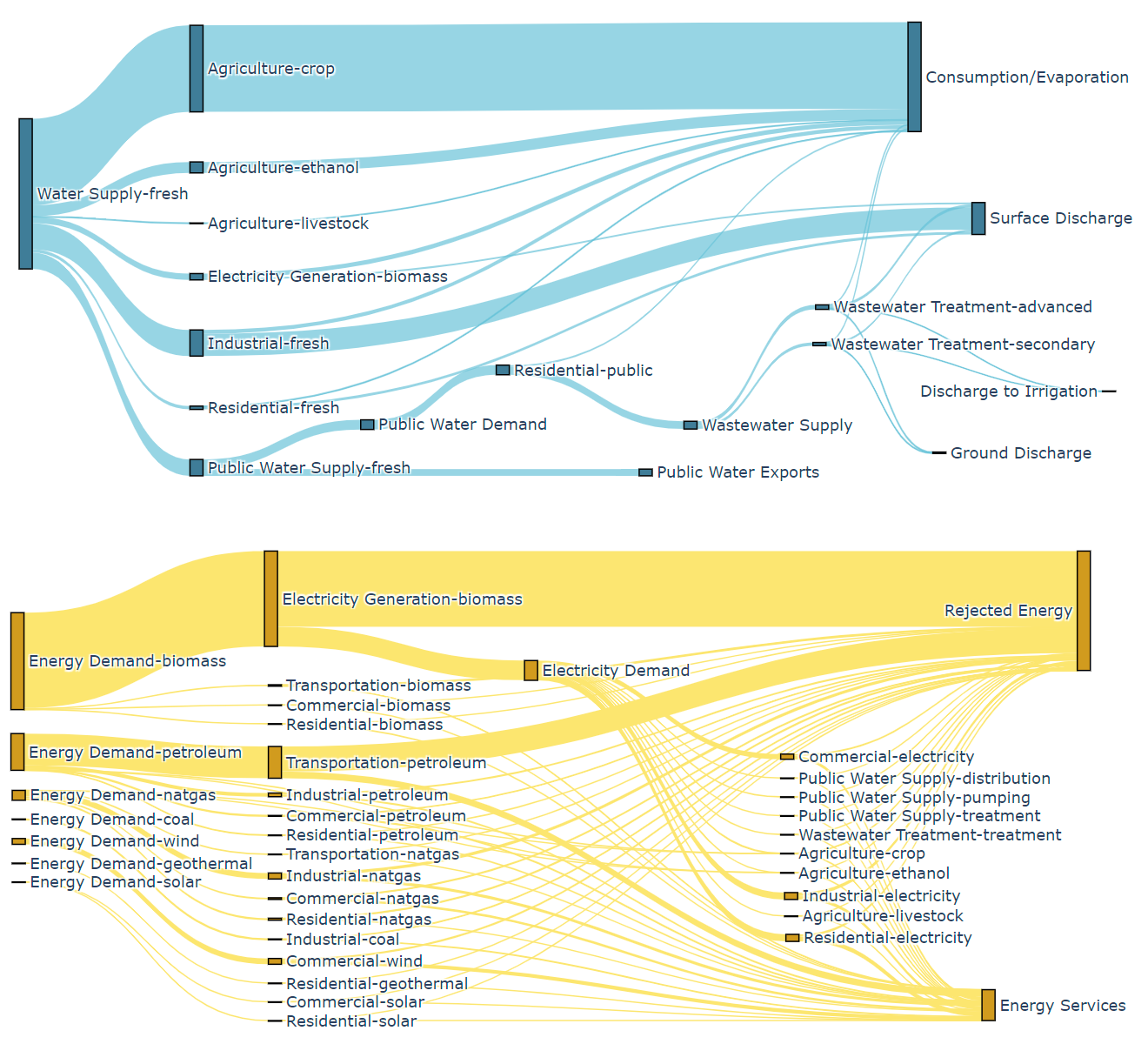
Though the package comes equipped with sample data for water and energy values across multiple sectors at the US county level, the interflow package can be used for any region, set of regions, set of sectors, and resource type so long as the appropriate data is provided by the user.
For more information on how the interflow package works, how to generalize it with your own data, see the documentation.
Installation
interflow can be installed via pip by running the following from a terminal window:
pip install interflow
Quickstarter
See interflow in action with our Quickstarter Jupyter Notebook hosted on binder!
User Guide
If you're interested in background information and explanations on how the model works visit out User Guide
Contributing to interflow
Spotted a bug or have a suggestion to improve the model? We'd love your input! See our guidelines for contributing.
1 maintainer

Metadata
1 maintainer
Release files for interflow 1.0.4
For a detailed explanation of source distributions (sdists) and built distributions (wheels), please see the package formats documentation.
Source distribution (sdist)
| File | Size | Uploaded | Provenance | Actions |
|---|---|---|---|---|
| interflow-1.0.4.tar.gz | 16.8 MB | Without provenance | Details for interflow-1.0.4.tar.gz |
Release files / interflow-1.0.4.tar.gz
| Download URL | interflow-1.0.4.tar.gz |
|---|---|
| Size | 16.8 MB |
| Tags | Source |
|
SHA-256 checksum How to use checksums |
9d1a7429eccd67392c725a590e8691b90201f6c5c4837a08d9419ba857ca66f0
|
|
BLAKE2b-256 checksum How to use checksums |
c213930b977bd98ddebbe39ae8417f845cb76e33a7539802d1da857b86b588f7
|
| Upload date | |
|
Uploaded using Trusted Publishing? What is trusted publishing? |
No |
| Uploaded via |
twine/4.0.2 CPython/3.9.6
|
Security for interflow 1.0.4
Provenance
Provenance describes where a file came from. On PyPI, provenance is shared via attestations, which provide a verifiable record of the build or publishing details. View details, limitations and caveats.
No provenance found
None of the files in this release were uploaded with provenance metadata.
A note on package security
PyPI is a repository for distributing packages, not a service for auditing them. While third-party security researchers and our staff do their best to detect and remove malicious packages, PyPI cannot guarantee the quality, security or suitability of any given package.
To learn more about protecting yourself from malicious actors, visit our package security documentation.














