
PyLAR
Python utilities for the LAR model








PyLAR is a python package and datasets intended to test and use the LAR (Land-Atmospheric and Reservoir) model. The LAR model is intended to describe the changes in the water storage in large river basin around the world, including
atmospheric processes as a critical component of the basin
water budget.
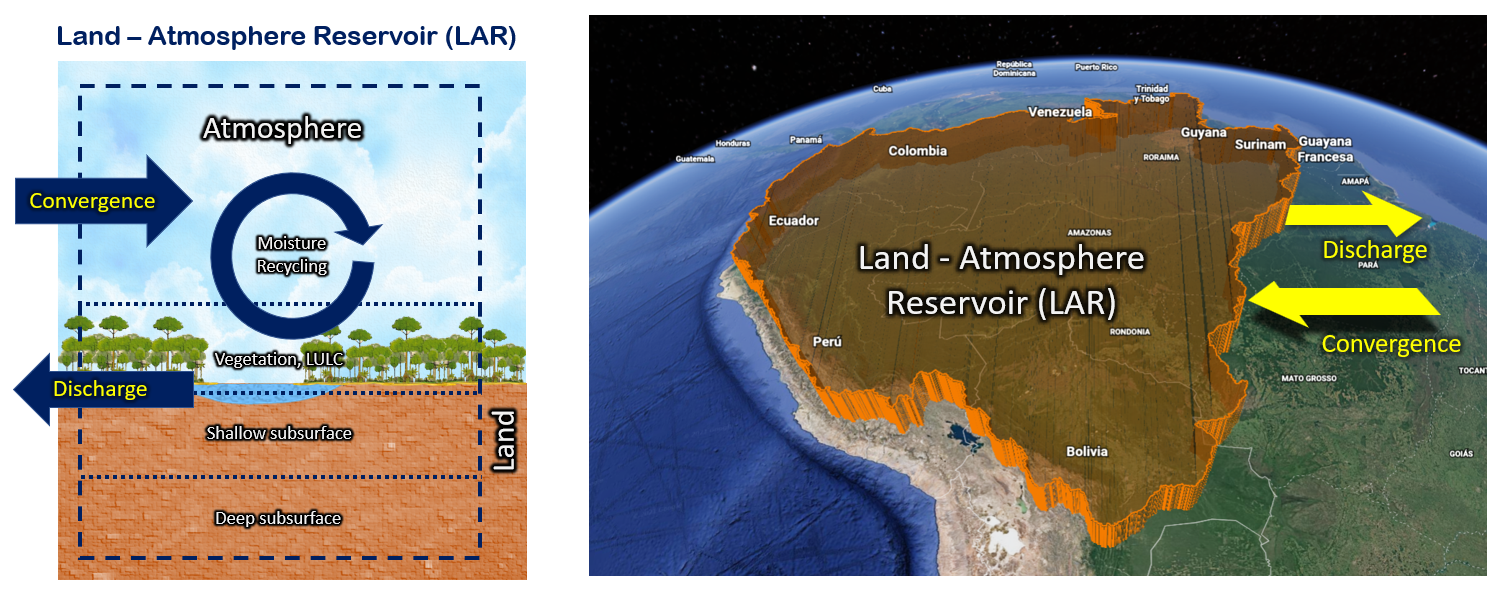
For the science behind the LAR model please refer to the following paper:
Juan F. Salazar, Rubén D. Molina, Jorge I. Zuluaga, and Jesus D. Gomez-Velez (2024), Wetting and drying trends in the land–atmosphere reservoir of large basins around the world, Hydrology and Earth System Sciences, HESS, 28, 2919–2947, 2024, doi.org/10.5194/hess-28-2919-2024.
All the notebooks and data required to reproduce the results of this paper, and other papers produced by our group, are available in the dev directory in this repository.
Downloading and Installing PyLAR
PyLAR is available at the Python package index and can be installed using:
$ sudo pip install ipylar
as usual this command will install all dependencies and download some useful data, scripts and constants.
NOTE: If you don't have access to
sudo, you can installPyLARin your local environmen (usually at~/.local/). In that case you need to add to yourPATHenvironmental variable the location of the local python installation. Add to~/.bashrcthe lineexport PATH=$HOME/.local/bin:$PATH
Quickstart
To start using PyLAR, you should first obtain data for a large river basin. We have provided with the package a dataset especially prepared for the Amazonas Basin we will use in this quickstart.
You must start by importing the package:
import ipylar as lar
Create a basin:
amazonas = lar.Basin(key='amazonas',name='Amazonas')
Once created, you should read the timeseries for the basin and load it into the pandas dataframe amazonas.data. The present version of PyLAR includes sample data. You may read the sample data using:
amazonas.read_basin_data()
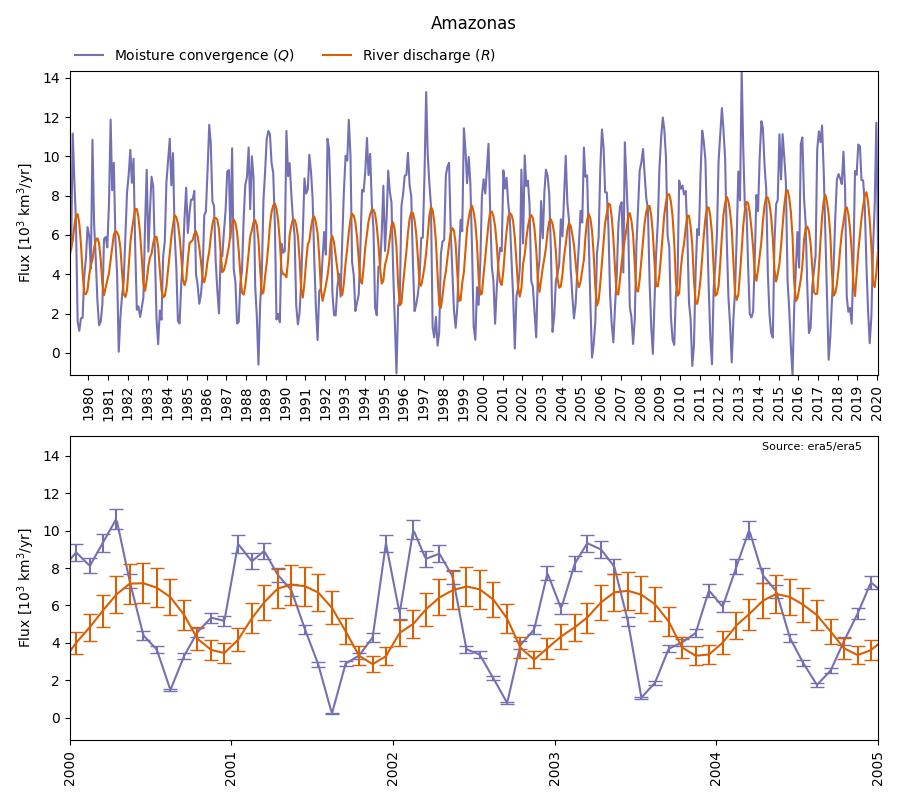
Once the data is loaded you can perform operations on the data, for instance, you can plot it:
fig = amazonas.plot_basin_series()
Tutorials
We have prepared a set of basic tutorials for illustrating the usage of some of the tools including in PyLAR. The tutorials can be ran in Google Colab.
What's new
For a detailed list of the newest characteristics of the code see the file What's new.
This package has been designed and written by Jorge I. Zuluaga, Ruben D. Molina, Juan F. Salazar and Jesus D. Gomez-Velez (C) 2024
1 maintainer

Release files for ipylar 1.0.7
For a detailed explanation of source distributions (sdists) and built distributions (wheels), please see the package formats documentation.
Source distribution (sdist)
| File | Size | Uploaded | |
|---|---|---|---|
| ipylar-1.0.7.tar.gz | 447.9 kB | Details |
Built distribution (wheel)
| File | Interpreter | ABI | Platform | Reset |
|---|---|---|---|---|
| ipylar-1.0.7-py3-none-any.whl | Python 3 | none | any | Details |
Total release size: 898.0 kB
Release files / ipylar-1.0.7.tar.gz
| Download URL | ipylar-1.0.7.tar.gz |
|---|---|
| Size | 447.9 kB |
| Tags | Source |
|
SHA-256 checksum How to use checksums |
364163f9fd9e14a617d1214d3e4edbc94da42bcc08863a2099655232fa9ff4f4
|
|
BLAKE2b-256 checksum How to use checksums |
18ee63eade18c26905f56161b8e0842556f80cc2b59f328cbec74b232f53fcf4
|
| Upload date | |
|
Uploaded using Trusted Publishing? What is trusted publishing? |
No |
| Uploaded via |
twine/4.0.2 CPython/3.10.12
|
Release files / ipylar-1.0.7-py3-none-any.whl
| Download URL | ipylar-1.0.7-py3-none-any.whl |
|---|---|
| Size | 450.1 kB |
| Tags | Python 3 |
|
SHA-256 checksum How to use checksums |
e0f8a6b8b642868539d10e868c0cd872cbdf8fbc6d985c1155253a3635c7dc92
|
|
BLAKE2b-256 checksum How to use checksums |
b6d701363c5618dc209880046a8e8d7f1b11fa43c259cbaefa7a2cfe5c56f7a0
|
| Upload date | |
|
Uploaded using Trusted Publishing? What is trusted publishing? |
No |
| Uploaded via |
twine/4.0.2 CPython/3.10.12
|














