
JANG — Adaptive Mixed-Precision Quantization for Apple Silicon. v2.5.28: DSV4 JANGTQ conversion defaults to the V3 runtime-candidate lane with MTP dropped and explicit bit-plan metadata; std remains baseline-only. v2.5.27: ZAYA JANGTQ/MXFP converters and tools-only CCA capability contract.

Project description

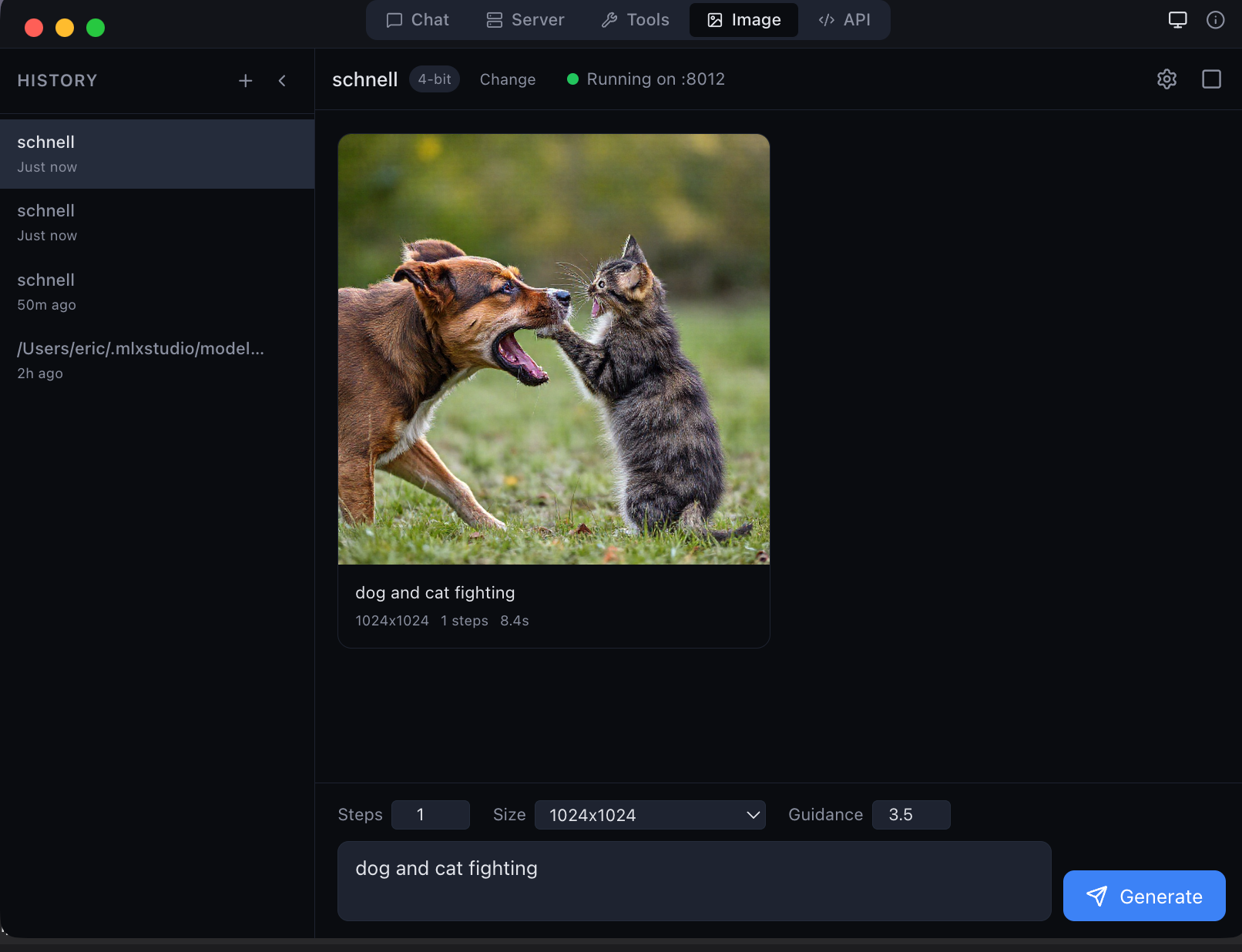
MLX Studio — the only app that natively supports JANG models with reasoning
Early Adoption: LM Studio, Ollama, oMLX, Inferencer do not support JANG yet. Use MLX Studio or
pip install "jang[mlx]". Ask your favorite app's creators to add JANG support!

Jang Adaptive N-bit Grading
Mixed-Precision Quantization for Apple Silicon
The GGUF equivalent for MLX — models stay quantized in GPU memory at full Metal speed.




Website • Models • PyPI • Format Spec
Highlights
- 397B on 128 GB Mac — JANG_1L: 112 GB, 36 tok/s, 86.5% MMLU with reasoning
- DeepSeek-V4-Flash runtime — first MLX runtime for DSV4's hybrid SWA + CSA + HSA attention (sliding-window + compressor-pool + hash-sparse) with mHC residuals and 1M-context pool quant cache
- JangPress for routed-MoE — load 167 GB Kimi-K2.6 on a 128 GB Mac via
mmap+madvisecold-tier eviction (seedocs/JANGPRESS.md) - Nemotron-Cascade-2 in 10 GB — IMO Gold Medal reasoning model at 130 tok/s on 16 GB MacBooks
- MiniMax: only JANG works — MLX scores 25% (random), JANG scores 74%
- Nemotron-3-Super-120B in 43 GB — first working Nemotron-H quantization for Apple Silicon
- bfloat16 auto-detection — fixes float16 overflow on 512-expert models
- Reasoning mode —
<think>...</think>with configurable thinking on/off
Results (200-question MMLU)
Qwen3.5-397B-A17B — JANG runs where MLX can't
| Model | No-Think | Reasoning | Size | Speed |
|---|---|---|---|---|
| JANG_1L | 81.0% | 86.5% | 112 GB | 36 tok/s |
| JANG_2L | 79.5% | 92.0% | 187 GB | 36 tok/s |
| MLX 4-bit | 81.5% | 94.0% | 209 GB | ~36 tok/s |
| MLX 2/3-bit | NaN | NaN | — | — |
MLX cannot quantize 397B below 4-bit (float16 overflow). JANG solves this with bfloat16.
Nemotron-Cascade-2-30B — IMO Gold Medal in 10 GB
| Model | No-Think | Reasoning | Size | Speed |
|---|---|---|---|---|
| JANG_2L | 59.0% | 88.0% | 10.3 GB | 130 tok/s |
| JANG_4M | 69.0% | 93.0% | 17 GB | 55 tok/s |
| MLX 4-bit | 69.0% | 92.5% | 16.6 GB | — |
| MLX 6-bit | 71.0% | 94.5% | 23.9 GB | — |
JANG_4M beats MLX 4-bit (93.0% vs 92.5%) at the same size.
Nemotron-3-Super-120B — Only JANG can go below 4-bit
| Model | No-Think | Reasoning | Size | Speed |
|---|---|---|---|---|
| JANG_2L | 75.0% | 86.0% | 43 GB | 52 tok/s |
| JANG_4M | 72.5% | 93.0% | 63 GB | 55 tok/s |
| MLX 4-bit | 71.0% | 93.5% | 63 GB | 60 tok/s |
| MLX 3-bit | Crashes | — | — | — |
MLX mlx_lm.convert crashes on Nemotron's mtp.* weights. Only JANG can produce sub-4-bit.
MiniMax-M2.5 — JANG is the ONLY working option
| Model | MMLU | Size |
|---|---|---|
| JANG_2L | 74% | 63 GB |
| JANG_3M | 74.5% | 82 GB |
| MLX 4-bit | 26.5% | 120 GB |
| MLX 3-bit | 24.5% | 93 GB |
| MLX 2-bit | 25% | — |
MLX is broken on MiniMax at ALL bit levels (~25% = random). MiniMax has 256 experts — MLX compresses attention to the same bits as expert MLP, destroying coherence.
Qwen3.5 MoE (122B, 35B)
| Model | JANG | MLX 4-bit | JANG Size | MLX Size |
|---|---|---|---|---|
| 122B JANG_4K | 86% | 85% | 69 GB | 64 GB |
| 122B JANG_2S | 79% | 56.5% (2-bit) | 38 GB | 36 GB |
| 35B JANG_4K | 77.5% | 77.0% | 16.7 GB | 18 GB |
| 35B JANG_2S | 65.5% | ~20% (2-bit) | 12 GB | 10 GB |
The Full Picture: JANG vs MLX Across All Models
| Model | JANG Best | MLX Best | JANG Size | MLX Size | MLX Broken? |
|---|---|---|---|---|---|
| Qwen3.5-397B | 92.0% | 94.0% | 187 GB | 209 GB | NaN below 4-bit |
| Qwen3.5-397B (128 GB Mac) | 86.5% | — | 112 GB | Can't fit | — |
| Nemotron-Cascade-2 | 93.0% | 92.5% | 17 GB | 16.6 GB | — |
| Nemotron-Cascade-2 (16 GB Mac) | 88.0% | — | 10.3 GB | Can't fit | — |
| Nemotron-Super-120B | 93.0% | 93.5% | 63 GB | 63 GB | Crashes below 4-bit |
| Nemotron-Super-120B (64 GB Mac) | 86.0% | — | 43 GB | Can't fit | — |
| MiniMax-M2.5 | 74.5% | 26.5% | 82 GB | 120 GB | Broken at ALL bits |
| Qwen3.5-122B | 86% | 85% | 69 GB | 64 GB | 56.5% at 2-bit |
| Qwen3.5-35B | 77.5% | 77.0% | 16.7 GB | 18 GB | ~20% at 2-bit |
JANG wins at every size point. At equivalent sizes, JANG matches or beats MLX. At smaller sizes, JANG runs where MLX literally cannot (NaN, crashes, or random output).
Why MLX Fails on MoE Models
On MoE models, attention is only 1-5% of total parameters but controls 100% of coherence. MLX compresses everything equally:
MLX 4-bit: attention at 4-bit, experts at 4-bit → works but wastes bits on experts
MLX 2-bit: attention at 2-bit, experts at 2-bit → attention breaks → model breaks

JANG 2-bit: attention at 8-bit, experts at 2-bit → attention preserved → model works
The more experts a model has, the worse MLX performs at low bits:
- 128 experts (Cascade-2): MLX 4-bit still works, JANG slightly better
- 256 experts (122B, MiniMax): MLX 2-bit breaks badly, JANG dominates
- 512 experts (397B, Super-120B): MLX NaN/crash below 4-bit, only JANG works
DeepSeek-V4-Flash runtime — Hybrid SWA + CSA + HSA attention
DSV4-Flash is the first DeepSeek-class model whose attention is not plain MLA. JANG ships the only Apple-Silicon runtime that handles all three layer types correctly:
| Layer type | Description | JANG path |
|---|---|---|
| SWA (Sliding-Window Attention) | local windowed attention; cheap fast layers | jang_tools.dsv4.mlx_model.DSV4SlidingWindow |
| CSA (Compressor / Compressed-State Attention) | per-layer compressor pool + windowed buffer; carries pooled-K/V across the whole context | DeepseekV4Cache + accumulate_windows + update_pool |
| HSA (Hash-Sparse Attention via Indexer) | indexer chooses top-K hash buckets per-token; sparse attention over the global compressed pool | Indexer module + DSV4LayerCache indexer state |
| mHC residuals | multi-Head-Compressed residual stream stabilises 43-layer 284B model | residual-axis fix in mlx_model.py |
| Pool quant cache | quantized streaming KV pool with RotatingKVCache.trim()-style proportional row trim (mirrors llama.cpp dsv4_clear_rows) |
DeepseekV4Cache.trim(n) |
End-to-end verified: 1M-context pool accumulation, multi-turn /v1/chat/completions
with prefix-cache reuse, dual-mode reasoning (enable_thinking=true|false),
20.5 tok/s decode on M3 Ultra @ JANGTQ2 (79.5 GB), 24.5 tok/s on Swift.
# Convert from FP8 source bundle (~50 min on M3 Ultra)
jang-convert-dsv4-jangtq /path/to/DeepSeek-V4-Flash --out ~/models/DSV4-Flash-JANGTQ

# Inference (Python)
python -m jang_tools.load_jangtq ~/models/DSV4-Flash-JANGTQ
For runtime traps (chat-template injection, repetition collapse with
enable_thinking=ON, rope_parameters vs rope_scaling, mandatory
tq_bits strip on Swift), see the in-package
jang_tools/dsv4/README.md.
JangPress — fit routed-MoE bundles bigger than RAM
Routed-MoE bundles like Kimi-K2.6 (167 GB), MiniMax-M2.7, and DSV4-Flash
JANGTQ would normally OOM on a 128 GB Mac. JangPress is the load-time
memory policy in osaurus-ai/vmlx-swift-lm
that combines mmap-backed safetensors, per-token router-aware
MADV_DONTNEED over canonical routed-expert pages, and an optional
prestack overlay to keep post-load RSS around 1 GB on 128 GB hosts.
This package ships the JANG-side glue:
# Serve a 167 GB Kimi bundle on a 128 GB Mac
cd scripts/jangpress
./kimi_serve.sh ~/.mlxstudio/models/JANGQ-AI/Kimi-K2.6-Med-JANGTQ 100 8082
./kimi_mmlu.sh Kimi-K2.6-Med-JANGTQ chat 8082
Full guide: docs/JANGPRESS.md.
Install
pip install "jang[mlx]>=2.5.18"
For Vision-Language models:
pip install "jang[vlm]>=2.5.18"
Quick Start
Convert any model
# K-quant 4-bit (same size as MLX, smarter allocation)
jang convert Qwen/Qwen3.5-35B-A3B -p 4

# 2-bit for extreme compression
jang convert Qwen/Qwen3.5-122B-A10B -p 2

# Specific profile
jang convert model -p JANG_2L
Run inference
from jang_tools.loader import load_jang_model
from mlx_lm import generate

model, tokenizer = load_jang_model("JANGQ-AI/Qwen3.5-397B-A17B-JANG_1L")

# With reasoning (recommended for hard questions)
messages = [{"role": "user", "content": "Prove that sqrt(2) is irrational."}]
prompt = tokenizer.apply_chat_template(messages, tokenize=False,
    add_generation_prompt=True, enable_thinking=True)
result = generate(model, tokenizer, prompt=prompt, max_tokens=2048)

# Without reasoning (faster)
prompt = tokenizer.apply_chat_template(messages, tokenize=False,
    add_generation_prompt=True, enable_thinking=False)
result = generate(model, tokenizer, prompt=prompt, max_tokens=100)
VLM (Vision-Language) inference
from jang_tools.loader import load_jang_vlm_model
from mlx_vlm import generate as vlm_generate

model, processor = load_jang_vlm_model("JANGQ-AI/Qwen3.5-397B-A17B-JANG_2L")
messages = [{"role": "user", "content": [
    {"type": "image"},
    {"type": "text", "text": "Describe this image."},
]}]
prompt = processor.apply_chat_template(messages, tokenize=False, add_generation_prompt=True)
result = vlm_generate(model, processor, prompt=prompt, image=["photo.jpg"], max_tokens=200)
MMLU Benchmark
python -m jang_tools.benchmark /path/to/model --max-thinking 1024
Smart two-pass: no-thinking first, then reasoning retry on wrong answers. Checkpointing, forced answers, full output logging.
Pre-quantized Models
| Model | Profile | MMLU | Size | Fits |
|---|---|---|---|---|
| Qwen3.5-397B JANG_1L | 2.1-bit | 86.5%* | 112 GB | 128 GB Mac |
| Qwen3.5-397B JANG_2L | 3.7-bit | 92.0%* | 187 GB | 256 GB Mac |
| Nemotron-Cascade-2 JANG_2L | 2.3-bit | 88.0%* | 10 GB | 16 GB Mac |
| Nemotron-Cascade-2 JANG_4M | 4.1-bit | 93.0%* | 17 GB | 24 GB Mac |
| Nemotron-Super-120B JANG_2L | 2.8-bit | 86.0%* | 43 GB | 64 GB Mac |
| Nemotron-Super-120B JANG_4M | 4.1-bit | 93.0%* | 63 GB | 64 GB Mac |
| Qwen3.5-122B JANG_4K | 4.0-bit | 86% | 69 GB | 192 GB Mac |
| Qwen3.5-122B JANG_2S | 2.1-bit | 79% | 38 GB | 64 GB Mac |
| Qwen3.5-35B JANG_4K | 4.0-bit | 77.5% | 17 GB | 36 GB Mac |
| MiniMax-M2.5 JANG_2L | 2.3-bit | 74% | 63 GB | 128 GB Mac |
| Qwen3.5-27B JANG_4S | 4.1-bit | 84.5% | 16 GB | 24 GB Mac |
* with reasoning mode
Profiles
| Profile | Type | Bits | Best for |
|---|---|---|---|
JANG_4K |
K-quant | 4.0 | Same size as MLX 4-bit, smarter |
JANG_4M |
Profile | 4.0 | 8-bit attention, 4-bit experts |
JANG_4S |
Profile | 4.0 | Dense models (27B) |
JANG_3K |
K-quant | 3.0 | Same size as MLX 3-bit, smarter |
JANG_2L |
Profile | ~2.3 | Quality 2-bit, best for MoE |
JANG_1L |
Profile | ~2.1 | Maximum quality 2-bit |
App Developers: Add JANG Support
JANG models are standard MLX safetensors. If your app loads MLX quantized models, adding JANG is minimal work.
Quickest Integration (5 lines)
# Detect JANG model
from pathlib import Path
is_jang = (Path(model_path) / "jang_config.json").exists()

# Load with jang-tools
if is_jang:
    from jang_tools.loader import load_jang_model
    model, tokenizer = load_jang_model(model_path)
    # model is a standard mlx_lm model — use like any MLX model
What's Different from Standard MLX
- Mixed bit widths — different tensors have different bits (attention at 8-bit, experts at 2-bit). Each
QuantizedLinearneeds itsbitsandgroup_sizeset from tensor shapes. - bfloat16 for large models — 512+ expert models need
model.set_dtype(mx.bfloat16)to prevent float16 overflow. - Nemotron-H weight renaming —
switch_mlp.up_proj→fc1,down_proj→fc2, gate dequantization.
Full Integration Guide
See INTEGRATION.md for complete step-by-step with code for:
- Loading without jang-tools dependency
- Per-tensor bit inference from shapes
- bfloat16 auto-detection
- Nemotron-H special handling
- Chat template with thinking on/off
- VLM support
- Edge cases and gotchas
Supported Architectures
- Qwen3.5 (hybrid SSM + MoE + VLM) — 4B, 9B, 27B, 35B, 122B, 397B
- Nemotron-H (Mamba-2 + Latent MoE + Attention) — Cascade-2 30B, Super-120B
- MiniMax-M2.5 (256-expert MoE, FP8 source)
- DeepSeek-V2/V3 (MLA + MoE)
- Mixtral / Qwen2-MoE (standard MoE)
- Dense Transformers (Llama, Mistral, Gemma, Phi)
- Vision-Language (Qwen3.5-VL, Pixtral)
- Mamba / Hybrid SSM (Jamba, Nemotron-H)
- FP8 source models (auto-dequantization)
- Mistral Small 4 (119B MoE + MLA + Pixtral VL) — coming soon
Changelog
v2.1.5 (2026-03-21)
- Nemotron-H loader: fc1/fc2 rename, gate weight dequantization, mtp.* key filtering
- bfloat16 auto-detection for 512+ expert models (prevents float16 overflow)
- MLP asymmetry floors: gate_proj=4-bit, down_proj=3-bit for 512+ expert models
- Benchmark script: smart two-pass MMLU with reasoning, checkpointing, forced answers
- eos_token_id auto-fix for Qwen3.5 (248044→248046)
- Auto-copy all .py files for trust_remote_code models
- Nemotron-3-Super-120B: 86% MMLU at 43 GB
- Qwen3.5-397B: 92% MMLU at 187 GB, 86.5% at 112 GB
v2.1.4 (2026-03-19)
- MLP asymmetry fix for 512-expert models
- eos_token_id auto-fix for Qwen3.5
- Auto-copy custom .py files
v2.1.3 (2026-03-18)
- Per-tensor group_size (router=64, experts=128 for 150+ expert models)
- Precision floor rules for shared expert
- VLM support for all Qwen3.5 models
How It Works
JANG redistributes bits based on tensor sensitivity — same total size, smarter allocation:
CRITICAL  (attention, MoE routers, MLA latent)  →  6-8 bit  →  Controls coherence
IMPORTANT (embeddings, linear attention)         →  4-6 bit  →  Moderate sensitivity
COMPRESS  (MLP, MoE experts)                     →  2-4 bit  →  95%+ of parameters
On MoE models, attention is only 1-5% of parameters. Boosting it to 8-bit costs ~2% overhead but dramatically improves quality. MLX compresses everything equally — that's why it breaks on MoE models at low bits.
Technical Features
- bfloat16 compute: Auto-detected for 512+ expert models. Prevents float16 overflow at shared expert down_proj.
- MLP asymmetry: gate_proj gets 4-bit floor (SiLU amplifier), down_proj gets 3-bit floor for 512+ expert models.
- FP8 dequantization: Handles FP8 source models (MiniMax, Nemotron) automatically.
- Latent MoE: Supports Nemotron-H's fc1/fc2_latent_proj compression.
- v2 format: MLX-native safetensors, instant mmap loading, no repack needed.
Requirements
- Python: 3.11+
- Conversion: any platform (numpy + safetensors)
- Inference: Apple Silicon Mac (M1/M2/M3/M4) with MLX
- Dependencies:
safetensors>=0.4,numpy>=1.24,tqdm>=4.60,huggingface_hub>=0.20 - Optional:
mlx>=0.22,mlx-lm>=0.20(inference),mlx-vlm>=0.1(VLM)
Links
- GitHub | HuggingFace | MLX Studio | PyPI | Format Spec
한국어
JANG은 Apple Silicon을 위한 혼합정밀도 양자화 포맷입니다. MLX를 위한 GGUF.
| 모델 | MMLU | 크기 | 최소 Mac |
|---|---|---|---|
| Qwen3.5-397B JANG_1L | 86.5%* | 112 GB | 128 GB |
| Nemotron-Cascade-2 JANG_2L | 88.0%* | 10 GB | 16 GB |
| Nemotron-Super-120B JANG_2L | 86.0%* | 43 GB | 64 GB |
| MiniMax-M2.5 JANG_2L | 74% | 63 GB | 128 GB |
* 추론 모드 사용
pip install "jang[mlx]>=2.5.18"
GitHub · HuggingFace · MLX Studio · PyPI
장진호 제작 · Created by Jinho Jang — jangq.ai
Release history Release notifications | RSS feed


Download files
Download the file for your platform. If you're not sure which to choose, learn more about installing packages.
Source Distribution
Built Distribution
Filter files by name, interpreter, ABI, and platform.
If you're not sure about the file name format, learn more about wheel file names.
Copy a direct link to the current filters
File details
Details for the file jang-2.5.28.tar.gz.
File metadata
- Download URL: jang-2.5.28.tar.gz
- Upload date:
- Size: 665.4 kB
- Tags: Source
- Uploaded using Trusted Publishing? No
- Uploaded via: twine/6.2.0 CPython/3.9.6
File hashes
| Algorithm | Hash digest | |
|---|---|---|
| SHA256 |
b2634687d7083ebbfefdd958cf4d7b41a1a7621ae6121a20763566eb1deadd94
|
|
| MD5 |
b269069fda3a3772d738a6dbce911235
|
|
| BLAKE2b-256 |
1b7e710ccedbac1b04cf627739e2156c535d13b253c56af32c0299a86b4172d4
|
File details
Details for the file jang-2.5.28-py3-none-any.whl.
File metadata
- Download URL: jang-2.5.28-py3-none-any.whl
- Upload date:
- Size: 733.2 kB
- Tags: Python 3
- Uploaded using Trusted Publishing? No
- Uploaded via: twine/6.2.0 CPython/3.9.6
File hashes
| Algorithm | Hash digest | |
|---|---|---|
| SHA256 |
4b966f80f8156baadd2b08024aca3b403d7edeeae77daab04289b18792ce6dd2
|
|
| MD5 |
8a15911e218a8ce49a85e26c124cb61d
|
|
| BLAKE2b-256 |
503207af7d61828d831b7e516800d60ff28beca72391c9f7e175a063c2a56657
|






