
latex2sympy2
About
latex2sympy2 parses LaTeX math expressions and converts it into the equivalent SymPy form. The latex2sympy2 is adapted from augustt198/latex2sympy and purdue-tlt / latex2sympy.
This project is a part of a VS Code extension called Latex Sympy Calculator. It is designed for providing people writing in latex or markdown a ability to calculate something when writing math expression.
ANTLR is used to generate the parser.
Features
- Arithmetic: Add (+), Sub (-), Dot Mul (·), Cross Mul (×), Frac (/), Power (^), Abs (|x|), Sqrt (√), etc...
- Alphabet: a - z, A - Z, α - ω, Subscript (x_1), Accent Bar(ā), etc...
- Common Functions: gcd, lcm, floor, ceil, max, min, log, ln, exp, sin, cos, tan, csc, sec, cot, arcsin, sinh, arsinh, etc...
- Funcion Symbol: f(x), f(x-1,), g(x,y), etc...
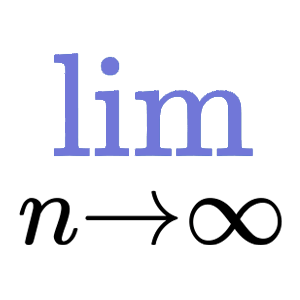
- Calculous: Limit ($lim_{n\to\infty}$), Derivation ($\frac{d}{dx}(x^2+x)$), Integration ($\int xdx$), etc...
- Linear Algebra: Matrix, Determinant, Transpose, Inverse, Elementary Transformation, etc...
- Other: Binomial...
NOTICE: It will do some irreversible calculations when converting determinants, transposed matrixes and elementary transformations...
Installation
pip install latex2sympy2
Requirements: sympy and antlr4-python3-runtime packages.
Usage
Basic
In Python:
from latex2sympy2 import latex2sympy, latex2latex

tex = r"\frac{d}{dx}(x^{2}+x)"
# Or you can use '\mathrm{d}' to replace 'd'
latex2sympy(tex)
# => "Derivative(x**2 + x, x)"
latex2latex(tex)
# => "2 x + 1"
Examples
| LaTeX | Converted SymPy | Calculated Latex |
|---|---|---|
x^{3} $x^{3}$ |
x**3 |
x^{3} $x^{3}$ |
\frac{d}{dx} tx $\frac{d}{dx}tx$ |
Derivative(x*t, x) |
t $t$ |
\sum_{i = 1}^{n} i $\sum_{i = 1}^{n} i$ |
Sum(i, (i, 1, n)) |
\frac{n \left(n + 1\right)}{2} $\frac{n \left(n + 1\right)}{2}$ |
\int_{a}^{b} \frac{dt}{t} |
Integral(1/t, (t, a, b)) |
-\log{(a)} + \log{(b)} $-\log{(a)} + \log{(b)}$ |
| `(2x^3 - x + z) | {x=3}` $(2x^3 - x + z)|{x=3}$ | z + 51 |
If you want to read the math formula, you can click GitNotes.
Solve Equation
# Before
x + y = 1

# After
[ y = 1 - x, \  x = 1 - y]
Eval At
# Before
(x+2)|_{x=y+1}

# After
y + 3
Matrix
Identity matrix
tex = r"\bm{I}_3"
latex2sympy(tex)
# => "Matrix([[1, 0, 0], [0, 1, 0], [0, 0, 1]])"
Determinant
from latex2sympy2 import latex2sympy

tex = r"\begin{vmatrix} x & 0 & 0 \\ 0 & x & 0 \\ 0 & 0 & x \end{vmatrix}"
latex2sympy(tex)
# => "x^{3}"
Transpose
from latex2sympy2 import latex2sympy

tex = r"\begin{pmatrix} 1 & 2 & 3 \\ 4 & 5 & 6 \\ 7 & 8 & 9 \end{pmatrix}^T"
# Or you can use "\begin{pmatrix}1&2&3\\4&5&6\\7&8&9\end{pmatrix}'"
latex2sympy(tex)
# => "Matrix([[1, 4, 7], [2, 5, 8], [3, 6, 9]])"
Elementary Transformation
from latex2sympy2 import latex2sympy

matrix = r'''
    \begin{pmatrix}
        1 & 2 & 3 \\
        4 & 5 & 6 \\
        7 & 8 & 9 \\
    \end{pmatrix}
'''

# Scale the row with grammar "\xrightarrow{kr_n}"
tex = matrix + r'\xrightarrow{3r_1}'
latex2sympy(tex)
# => "Matrix([[3, 6, 9], [4, 5, 6], [7, 8, 9]])"

# Swap the cols with grammar "\xrightarrow{c_1<=>c_2}"
# Of course, you can use "\leftrightarrow" to replace "<=>"
tex = matrix + r'\xrightarrow{c_1<=>c_2}'
latex2sympy(tex)
# => "Matrix([[2, 1, 3], [5, 4, 6], [8, 7, 9]])"

# Scale the second row and add it to the first row
# with grammar "\xrightarrow{r_1+kr_2}"
tex = matrix + r'\xrightarrow{r_1+kr_2}'
latex2sympy(tex)
# => "Matrix([[4*k + 1, 5*k + 2, 6*k + 3], [4, 5, 6], [7, 8, 9]])"

# You can compose the transform with comma ","
# and grammar "\xrightarrow[4r_3]{2r_1, 3r_2}"
# Remember the priority of "{}" is higher than "[]"
tex = matrix + r'\xrightarrow[4r_3]{2r_1, 3r_2}'
latex2sympy(tex)
# => "Matrix([[2, 4, 6], [12, 15, 18], [28, 32, 36]])"
Variances
from latex2sympy2 import latex2sympy, variances, var, set_variances

# Assign x a value of 1
latex2sympy(r"x = 1")

# Assign x a matrix symbol with dimension of n x m
latex2sympy(r"x \in \mathbb{R}^{n \times m}")

# Calculate x + y
latex2sympy(r"x + y")
# => "y + 1"

# Get all variances
print(variances)
# => "{x: 1}"

# Get variance of "x"
print(var["x"])
# => "1"

# Reset all variances
set_variances({})
latex2sympy(r"x + y")
# => "x + y"
Complex Number Support
from latex2sympy2 import set_real

set_real(False)
Contributing
If you want to add a new grammar, you can fork the code from OrangeX4/latex2sympy.
- To modify parser grammar, view the existing structure in
PS.g4. - To modify the action associated with each grammar, look into
latex2sympy.py.
Contributors are welcome! Feel free to open a pull request or an issue.
1 maintainer

Metadata
1 maintainer
Release files for latex2sympy2-llmmath 1.9.1
For a detailed explanation of source distributions (sdists) and built distributions (wheels), please see the package formats documentation.
Source distribution (sdist)
| File | Size | Uploaded | Provenance | |
|---|---|---|---|---|
| latex2sympy2_llmmath-1.9.1.tar.gz | 81.7 kB | Without provenance | Details |
Built distribution (wheel)
| File | Interpreter | ABI | Platform | Reset |
|---|---|---|---|---|
| latex2sympy2_llmmath-1.9.1-py3-none-any.whl | Python 3 | none | any | Details |
Total release size: 168.8 kB
Release files / latex2sympy2_llmmath-1.9.1.tar.gz
| Download URL | latex2sympy2_llmmath-1.9.1.tar.gz |
|---|---|
| Size | 81.7 kB |
| Tags | Source |
|
SHA-256 checksum How to use checksums |
fa101fa5c924c759a24a2f0534ba8e9cae0e02acf441f75d3ca1edc19e27431c
|
|
BLAKE2b-256 checksum How to use checksums |
daacffb3307fec17f28fa69b37259ecbbf649485ff710682f4d891ebe7724134
|
| Upload date | |
|
Uploaded using Trusted Publishing? What is trusted publishing? |
No |
| Uploaded via |
twine/5.1.1 CPython/3.9.19
|
Release files / latex2sympy2_llmmath-1.9.1-py3-none-any.whl
| Download URL | latex2sympy2_llmmath-1.9.1-py3-none-any.whl |
|---|---|
| Size | 87.2 kB |
| Tags | Python 3 |
|
SHA-256 checksum How to use checksums |
20625d9929e19363284adb33194e15048536be2ad065dc91cd3e92ae76921ec1
|
|
BLAKE2b-256 checksum How to use checksums |
def48539e127beec64b358fd5fbce0de61df584ea6ca5868f0fb8cac19b379b9
|
| Upload date | |
|
Uploaded using Trusted Publishing? What is trusted publishing? |
No |
| Uploaded via |
twine/5.1.1 CPython/3.9.19
|
Security for latex2sympy2-llmmath 1.9.1
Provenance
Provenance describes where a file came from. On PyPI, provenance is shared via attestations, which provide a verifiable record of the build or publishing details. View details, limitations and caveats.
No provenance found
None of the files in this release were uploaded with provenance metadata.
A note on package security
PyPI is a repository for distributing packages, not a service for auditing them. While third-party security researchers and our staff do their best to detect and remove malicious packages, PyPI cannot guarantee the quality, security or suitability of any given package.
To learn more about protecting yourself from malicious actors, visit our package security documentation.













