
Quickly switch between paired devices when using a mouse and keyboard that supports Logitech Flow.

Project description





Logitech's "Flow" lets your mouse and keyboard roam across multiple paired hosts with a single keypress -- but Logitech only supports it between Windows and macOS. logitech-flow-kvm brings that same one-keypress host switching to Linux, and keeps your clipboard in sync across hosts while it's at it.
It works by watching one of your attached Logitech devices (typically your keyboard) to see what host it's currently connected to, and, when that changes, instructing your other connected devices to switch to the same host -- and it does this over an encrypted, paired connection, so it works just as well across separate machines on your network as it does on a single desk.
Its HID++ implementation builds on the protocol knowledge documented by the Solaar project, but where Solaar is a general device manager, this tool focuses specifically on Flow-style host switching.
Contents
Features
- Automatically switches all devices from one host to another when just one of your devices switches hosts. This is particularly useful if you are using a device like the MX Keys Mini which includes buttons that can be used for switching hosts with a single keypress.
- Securely keeps clipboards in sync when switching between hosts. Now you can copy/paste from one host to another without thinking anything about it.
- Encrypted, paired connections between server and clients -- a one-time pairing-code handshake secures the link, so switching hosts across machines on your network is as safe as doing it on one desk.
- A live TUI status display when run in a terminal (device/leader status, connection state, scrolling log), with a clean, plain-log fallback when run non-interactively -- e.g. under systemd.
- A rotating log file kept on disk regardless of how it's run, so you can always see what happened after the fact.
Installation
Requires Python 3.10 or later.
pip install logitech-flow-kvm
You can also install the in-development version with:
pip install https://github.com/coddingtonbear/logitech-flow-kvm/archive/main.zip
Basic Use
One of your computers will serve as the "server" for managing this, and all others will be "clients".
Server
On the computer you've decided to use as your server, get the ID of the device you'd like to serve as your "leader", and the IDs of other devices you'd like to use as "followers". The leader device -- I recommend using your keyboard -- will be the one we watch. The followers will just be told which host to connect to if your leader device's host changes.
> logitech-flow-kvm list-devices

┏━━━━━━━━━━┳━━━━━━━━━┳━━━━━━━━━━━━━━━━┳━━━━━━━━━━━━━━━━┓
┃ ID       ┃ Product ┃ Name           ┃ Path           ┃
┡━━━━━━━━━━╇━━━━━━━━━╇━━━━━━━━━━━━━━━━╇━━━━━━━━━━━━━━━━┩
│ 08F5F681 │ B369    │ MX Keys Mini   │ /dev/hidraw4:1 │
│ F262458A │ 406A    │ MX Anywhere 2S │ /dev/hidraw5:1 │
└──────────┴─────────┴────────────────┴────────────────┘
In this example, I'll be using my keyboard (08F5F681) as my "leader", and my mouse (F262458A) as a follower. Note that we're using the device's ID (its serial number) here, not its path -- paths depend on enumeration order and USB topology, which can differ from machine to machine or even across reboots of the same machine, while the serial number is a stable, permanent identifier for the physical device.
You can run a command like this:
> logitech-flow-kvm flow-server 1 08F5F681 F262458A
Note that the 1 in the above command immediately after flow-server indicates that the host number of your server is 1. This should match the host number you've paired your mouse and keyboard with your device as (i.e. when your mouse or keyboard is connected to this computer, the light for 1 is lit on the keyboard or mouse's device selector).
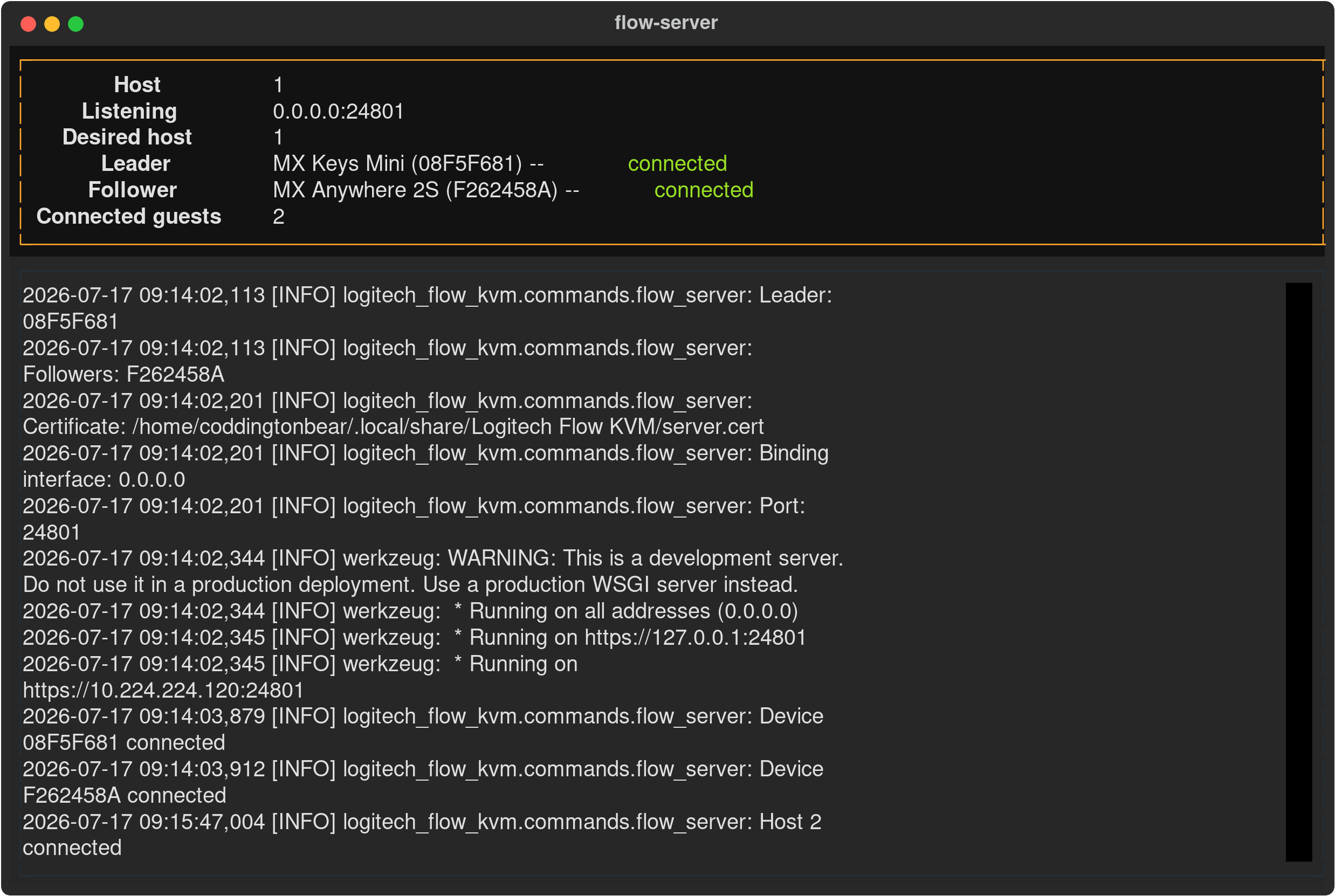
When run in a terminal, flow-server shows an interactive display: a status panel at the top (bind address/port, leader and follower connection state, and which clients are currently connected) and a scrolling log underneath. The bind address is also logged as a plain line when the server starts, and looks something like this:
[!TIP] If you'd rather connect using a hostname (e.g. an mDNS
.local/.lanname) instead of an IP address, pass it with--hostname/-H(repeatable) so it gets included in the server's certificate -- otherwise clients connecting by that hostname will fail TLS verification, since the certificate only lists the server's IP addresses by default:logitech-flow-kvm flow-server --hostname coddingtonbear-t14.lan 1 08F5F681 F262458A
Client
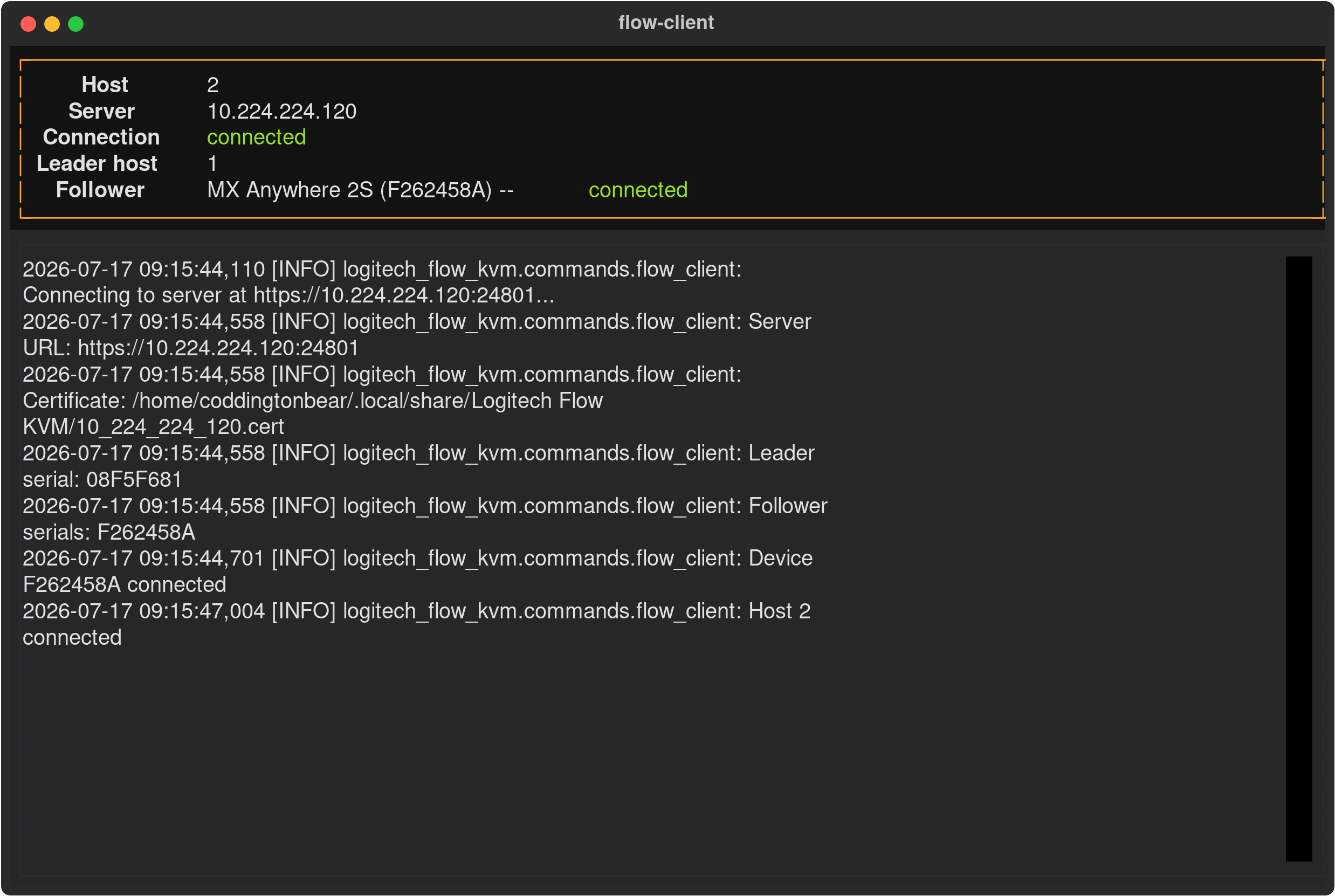
On the other computers you'd like to use this feature with, you can run the following command:
> logitech-flow-kvm flow-client 2 10.224.224.120
...where 10.224.224.120 is the IP of the server you ran above. Note that the 2 above after flow-client indicates the host number your devices have paired with your computer under. See "Server" above for details.
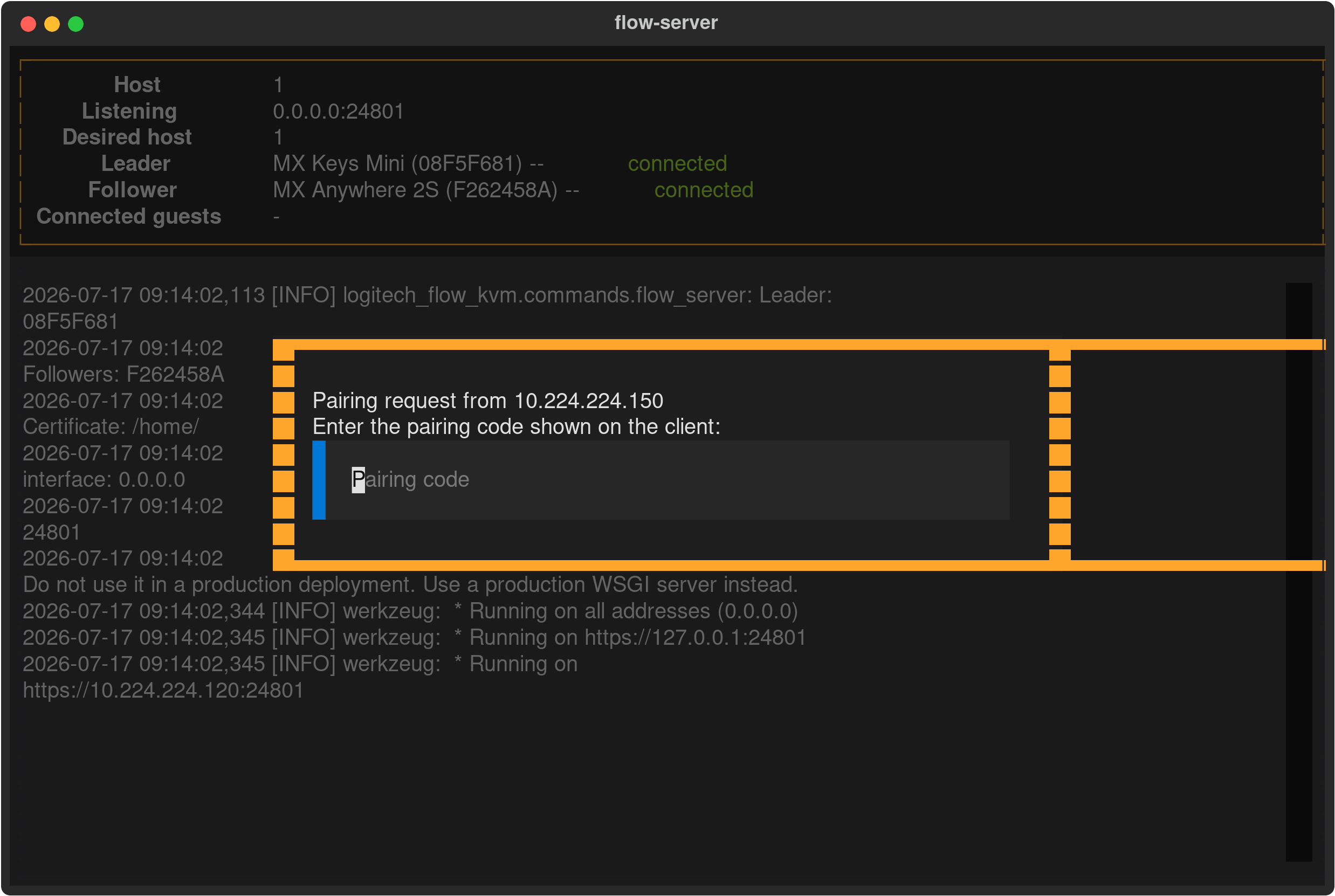
If this is your first time connecting to this server, you will be walked through a brief pairing process for establishing a secure connection between your server and client instances: the client displays a pairing code, and you enter it on the server -- as a popup in flow-server's display if it's running in a terminal, or as an ordinary prompt if it's running non-interactively. Afterward, the client will connect, gather some configuration options from the server, and will instruct your "follower" devices to change their hosts as necessary in the future.
Like flow-server, flow-client shows the same kind of interactive display (device/leader status on top, a scrolling log below) when run in a terminal, and falls back to plain logging otherwise.
How to
Finding available devices
You can get a list of available devices using the list-devices subcommand:
> logitech-flow-kvm list-devices

Finding devices... ━━━━━━━━━━━━━━━━━━━━━━━━━━━━━━━━━━━━━━━━ 100% 0:00:00
┏━━━━━━━━━━┳━━━━━━━━━┳━━━━━━━━━━━━━━━━┳━━━━━━━━━━━━━━━━┓
┃ ID       ┃ Product ┃ Name           ┃ Path           ┃
┡━━━━━━━━━━╇━━━━━━━━━╇━━━━━━━━━━━━━━━━╇━━━━━━━━━━━━━━━━┩
│ 08F5F681 │ B369    │ MX Keys Mini   │ /dev/hidraw4:1 │
│ F262458A │ 406A    │ MX Anywhere 2S │ /dev/hidraw5:1 │
└──────────┴─────────┴────────────────┴────────────────┘
Running a command when a device connects or disconnects
You can see when a device connects or disconnects from the receiver using the following example:
> logitech-flow-kvm watch /dev/hidraw4:1
If you'd like to run a command when a device connects or disconnects, use the --on-disconnect-execute or --on-connect-execute arguments. See the "Automatically switch your mouse to a different host when your keyboard disconnects" section below for a concrete example of how you might use this.
Logs
flow-server and flow-client both write everything they log to a rotating log file, in addition to wherever it's also shown (the interactive display's scrolling log, or plain stdout when running non-interactively) -- so you can always go back and check what happened even if it's scrolled off-screen or you weren't watching the terminal. The log file lives in your platform's standard per-app log directory (via platformdirs); on Linux, that's:
~/.local/state/Logitech Flow KVM/log/logitech-flow-kvm.log
It's capped at 5MB, rotating through up to 5 backups (logitech-flow-kvm.log.1, .2, ...) before the oldest is discarded, so it won't grow without bound.
Credits
This tool's HID++ implementation was developed with reference to the protocol knowledge documented by the folks working on Solaar.


Download files
Download the file for your platform. If you're not sure which to choose, learn more about installing packages.
Source Distribution
Built Distribution
Filter files by name, interpreter, ABI, and platform.
If you're not sure about the file name format, learn more about wheel file names.
Copy a direct link to the current filters
File details
Details for the file logitech_flow_kvm-2.1.0.tar.gz.
File metadata
- Download URL: logitech_flow_kvm-2.1.0.tar.gz
- Upload date:
- Size: 119.2 kB
- Tags: Source
- Uploaded using Trusted Publishing? No
- Uploaded via: uv/0.7.9
File hashes
| Algorithm | Hash digest | |
|---|---|---|
| SHA256 |
603325f29ab907ec4d5c95c3669774140672ca4705e10891d698e82f22d8bfc3
|
|
| MD5 |
0d14d5452f9079bc0b509e9a79dd76ae
|
|
| BLAKE2b-256 |
56778707654278910059b89ab0c4d0019f7d2f53e7c3d5722b034e07cea3d7e3
|
File details
Details for the file logitech_flow_kvm-2.1.0-py3-none-any.whl.
File metadata
- Download URL: logitech_flow_kvm-2.1.0-py3-none-any.whl
- Upload date:
- Size: 40.2 kB
- Tags: Python 3
- Uploaded using Trusted Publishing? No
- Uploaded via: uv/0.7.9
File hashes
| Algorithm | Hash digest | |
|---|---|---|
| SHA256 |
dad8fa2defee2a1cd69413fdbcb04e55955284f3adeed3e4aca84c16918293eb
|
|
| MD5 |
2875b68fa2543764fcdd38da95c71d49
|
|
| BLAKE2b-256 |
d05b4b31d0050476ff213afafcf71380bfa6c526ff330f24a1400bedadcf2561
|






