
maestro
VLM fine-tuning for everyone





Hello
maestro is a streamlined tool to accelerate the fine-tuning of multimodal models. By encapsulating best practices from our core modules, maestro handles configuration, data loading, reproducibility, and training loop setup. It currently offers ready-to-use recipes for popular vision-language models such as Florence-2, PaliGemma 2, and Qwen2.5-VL.
Quickstart
Install
To begin, install the model-specific dependencies. Since some models may have clashing requirements, we recommend creating a dedicated Python environment for each model.
pip install maestro[paligemma_2]
CLI
Kick off fine-tuning with our command-line interface, which leverages the configuration and training routines defined in each model’s core module. Simply specify key parameters such as the dataset location, number of epochs, batch size, optimization strategy, and metrics.
maestro paligemma_2 train \
  --dataset "dataset/location" \
  --epochs 10 \
  --batch-size 4 \
  --optimization_strategy "qlora" \
  --metrics "edit_distance"
Python
For greater control, use the Python API to fine-tune your models. Import the train function from the corresponding module and define your configuration in a dictionary. The core modules take care of reproducibility, data preparation, and training setup.
from maestro.trainer.models.paligemma_2.core import train

config = {
    "dataset": "dataset/location",
    "epochs": 10,
    "batch_size": 4,
    "optimization_strategy": "qlora",
    "metrics": ["edit_distance"]
}

train(config)
Cookbooks
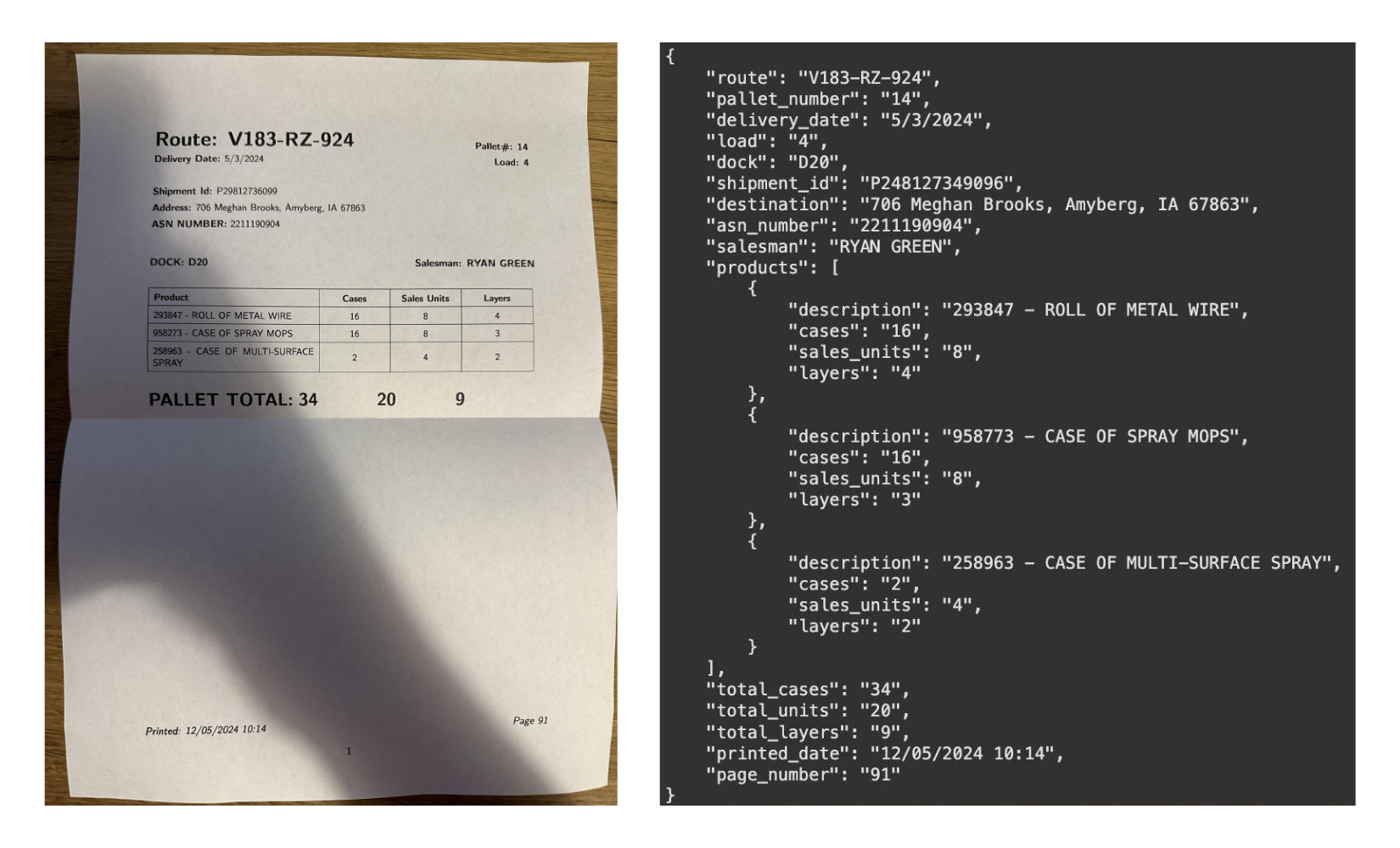
Looking for a place to start? Try our cookbooks to learn how to fine-tune different VLMs on various vision tasks with maestro.
| description | open in colab |
|---|---|
| Finetune PaliGemma 2 for JSON data extraction with LoRA |  |
| Finetune Qwen2.5-VL for JSON data extraction with QLoRA | |
Contribution
We would love your help in making this repository even better! We are especially looking for contributors with experience in fine-tuning vision-language models (VLMs). If you notice any bugs or have suggestions for improvement, feel free to open an issue or submit a pull request.


Release files for maestro 1.0.0
For a detailed explanation of source distributions (sdists) and built distributions (wheels), please see the package formats documentation.
Source distribution (sdist)
| File | Size | Uploaded | |
|---|---|---|---|
| maestro-1.0.0.tar.gz | 39.0 kB | Details |
Built distribution (wheel)
| File | Interpreter | ABI | Platform | Reset |
|---|---|---|---|---|
| maestro-1.0.0-py3-none-any.whl | Python 3 | none | any | Details |
Total release size: 85.7 kB
Release files / maestro-1.0.0.tar.gz
| Download URL | maestro-1.0.0.tar.gz |
|---|---|
| Size | 39.0 kB |
| Tags | Source |
|
SHA-256 checksum How to use checksums |
a12935205e69ad384a3c0e25863cd3b786dc22c9c060223040f04554724fb470
|
|
BLAKE2b-256 checksum How to use checksums |
6ddee30424c71744dfcbf822fb8f64a2aaf022afe0a3417721564c2c46f59bb4
|
| Upload date | |
|
Uploaded using Trusted Publishing? What is trusted publishing? |
Yes |
| Uploaded via |
twine/6.1.0 CPython/3.12.8
|
Provenance
Provenance describes where a file came from. On PyPI, provenance is shared via attestations, which provide a verifiable record of the build or publishing details. View details, limitations and caveats.


PyPI Publish Attestation
PyPI verified that this artifact, at this checksum, originated from the publisher listed below.
Signed by GitHub Actions, verified by PyPI on Feb 5, 2025.
Transparency logRelease files / maestro-1.0.0-py3-none-any.whl
| Download URL | maestro-1.0.0-py3-none-any.whl |
|---|---|
| Size | 46.7 kB |
| Tags | Python 3 |
|
SHA-256 checksum How to use checksums |
1a24e640c8b64f677134fbf519ddfb287051fd06dad8e837536d034fc942b1bf
|
|
BLAKE2b-256 checksum How to use checksums |
a813c5e14050052842f3f7edae17548b0456b8bb84500e1909450392a9b1042f
|
| Upload date | |
|
Uploaded using Trusted Publishing? What is trusted publishing? |
Yes |
| Uploaded via |
twine/6.1.0 CPython/3.12.8
|
Provenance
Provenance describes where a file came from. On PyPI, provenance is shared via attestations, which provide a verifiable record of the build or publishing details. View details, limitations and caveats.
PyPI Publish Attestation
PyPI verified that this artifact, at this checksum, originated from the publisher listed below.
Signed by GitHub Actions, verified by PyPI on Feb 5, 2025.
Transparency log













