
A library for making reactive notebooks and apps
Verified details
These details have been verified by PyPIProject links
GitHub Statistics
Maintainers


Project description

A reactive Python notebook that's reproducible, git-friendly, and deployable as scripts or apps.
Docs · Discord · Examples · Gallery · YouTube
English | 繁體中文 | 简体中文 | 日本語 | Español






marimo is a reactive Python notebook: run a cell or interact with a UI element, and marimo automatically runs dependent cells (or marks them as stale), keeping code and outputs consistent. marimo notebooks are stored as pure Python (with first-class SQL support), executable as scripts, and deployable as apps.
Highlights.
- 🚀 batteries-included: replaces
jupyter,streamlit,jupytext,ipywidgets,papermill, and more - ⚡️ reactive: run a cell, and marimo reactively runs all dependent cells or marks them as stale
- 🖐️ interactive: bind sliders, tables, plots, and more to Python — no callbacks required
- 🐍 git-friendly: stored as
.pyfiles - 🛢️ designed for data: query dataframes, databases, warehouses, or lakehouses with SQL, filter and search dataframes
- 🤖 AI-native: generate cells with AI tailored for data work
- 🔬 reproducible: no hidden state, deterministic execution, built-in package management
- 🏃 executable: execute as a Python script, parameterized by CLI args
- 🛜 shareable: deploy as an interactive web app or slides, run in the browser via WASM
- 🧩 reusable: import functions and classes from one notebook to another
- 🧪 testable: run pytest on notebooks
- ⌨️ a modern editor: GitHub Copilot, AI assistants, vim keybindings, variable explorer, and more
- 🧑💻 use your favorite editor: run in VS Code or Cursor, or edit in neovim, Zed, or any other text editor
pip install marimo && marimo tutorial intro
Get started instantly with molab, our free online notebook. Or jump to the quickstart for a primer on our CLI.
A reactive programming environment
marimo guarantees your notebook code, outputs, and program state are consistent. This solves many problems associated with traditional notebooks like Jupyter.
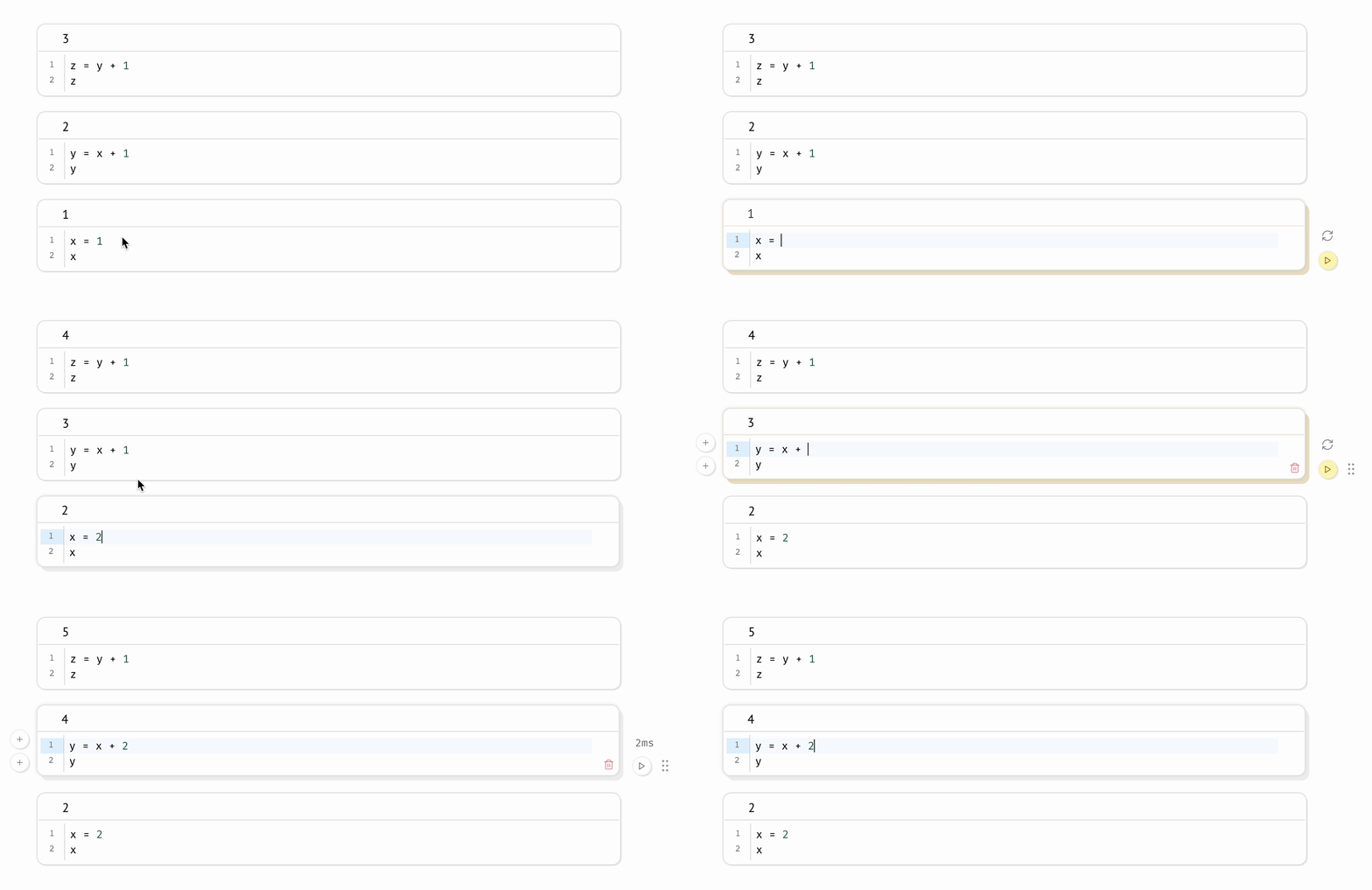
A reactive programming environment. Run a cell and marimo reacts by automatically running the cells that reference its variables, eliminating the error-prone task of manually re-running cells. Delete a cell and marimo scrubs its variables from program memory, eliminating hidden state.
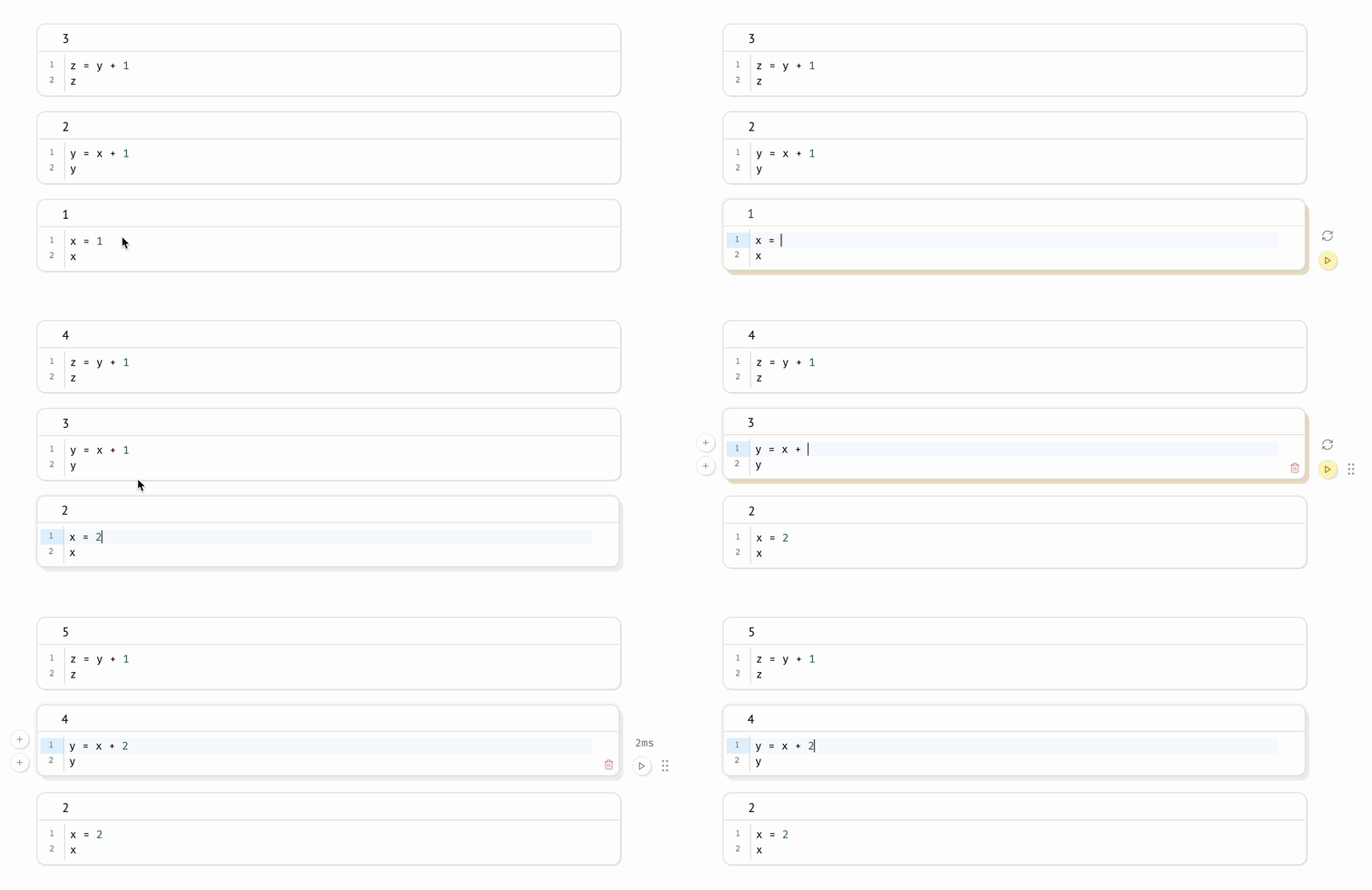
Compatible with expensive notebooks. marimo lets you configure the runtime to be lazy, marking affected cells as stale instead of automatically running them. This gives you guarantees on program state while preventing accidental execution of expensive cells.
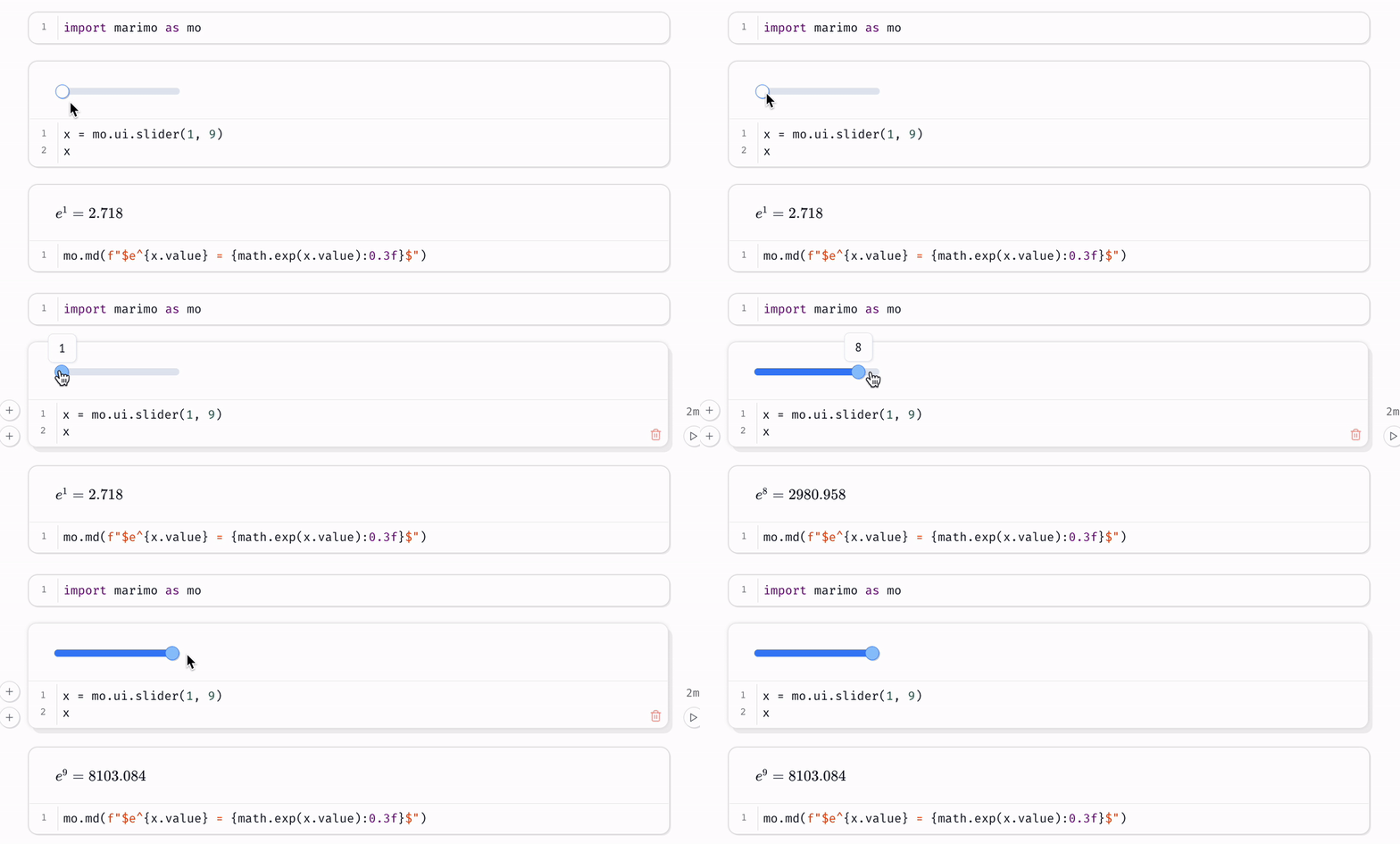
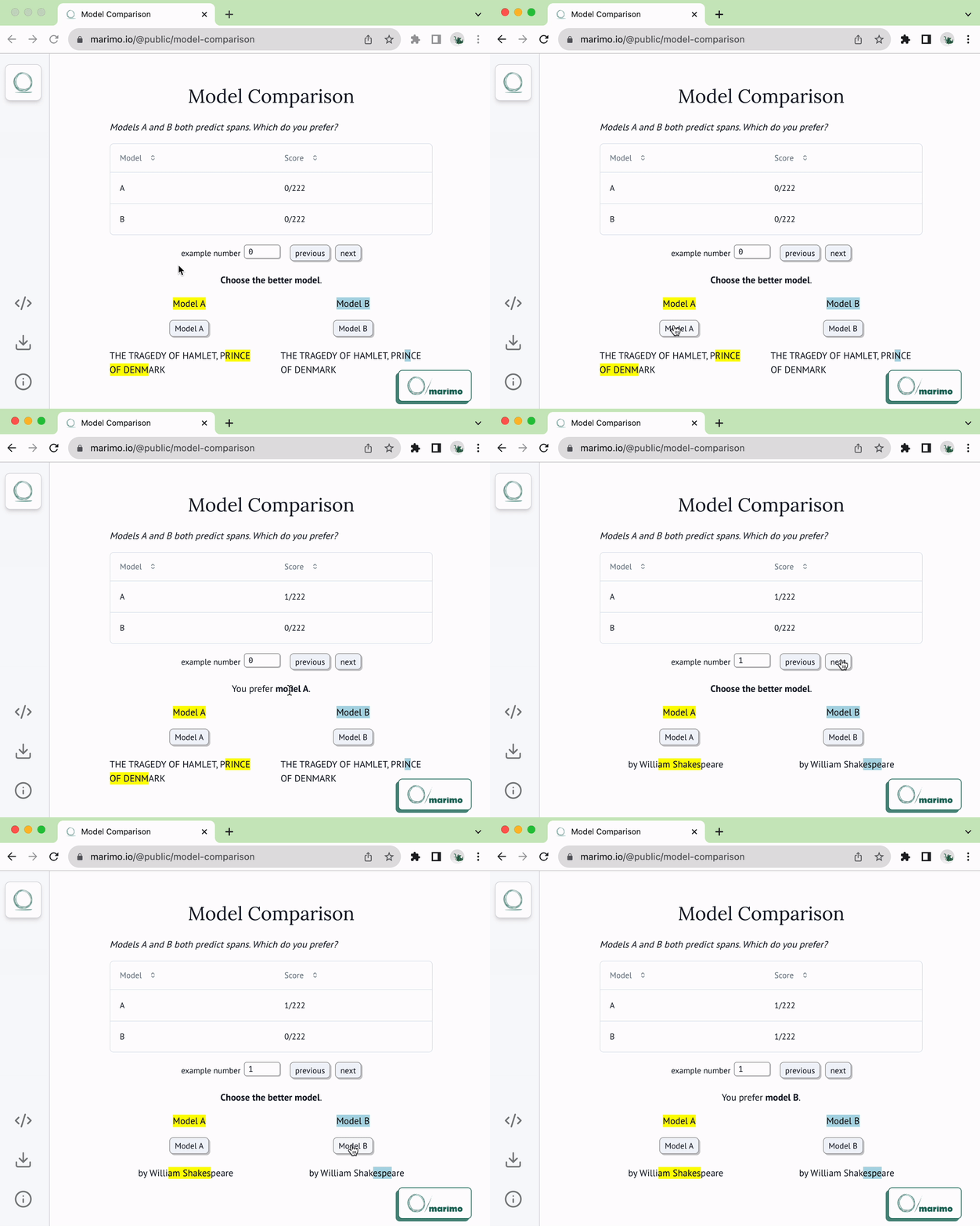
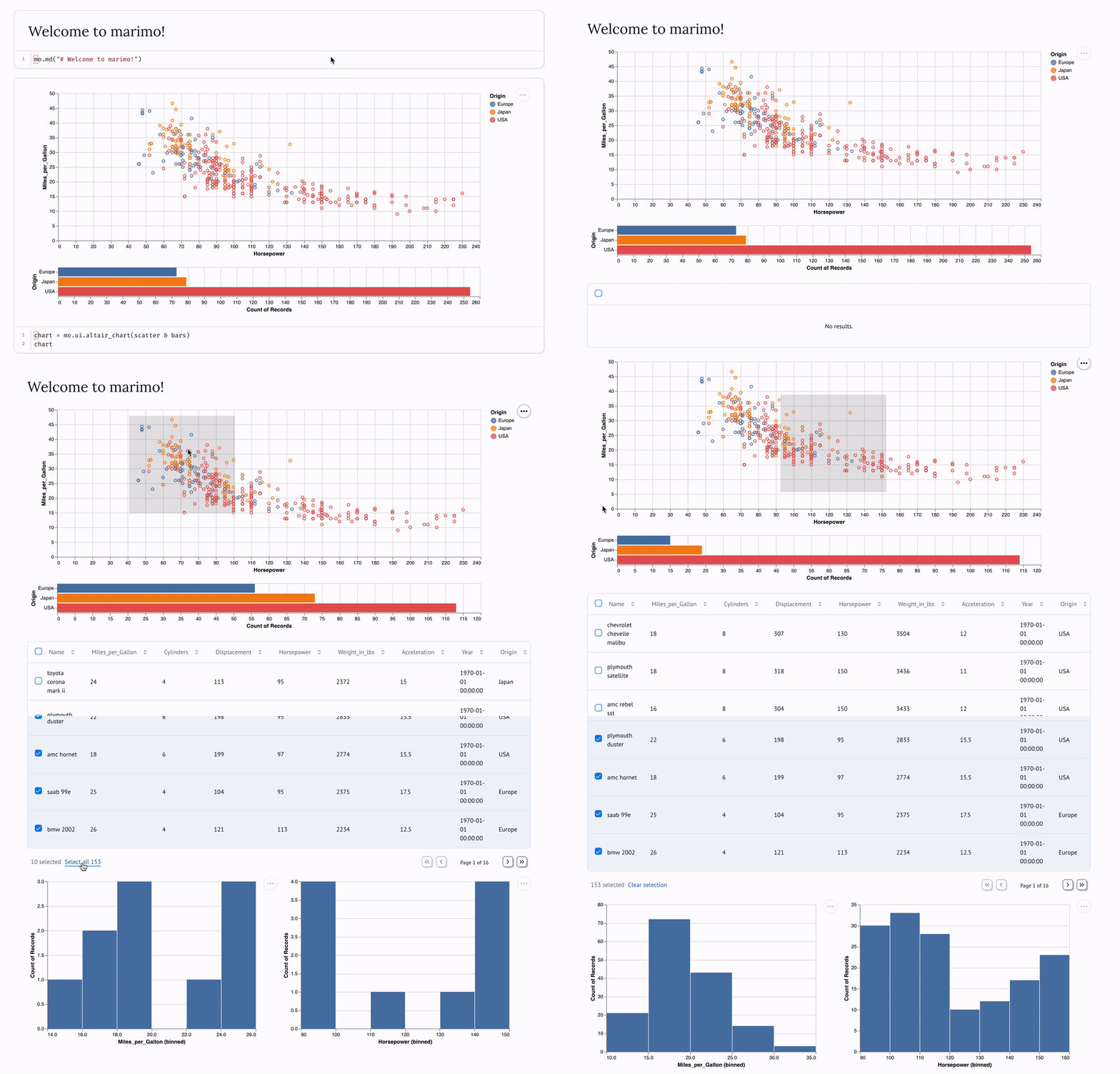
Synchronized UI elements. Interact with UI elements like sliders, dropdowns, dataframe transformers, and chat interfaces, and the cells that use them are automatically re-run with their latest values.
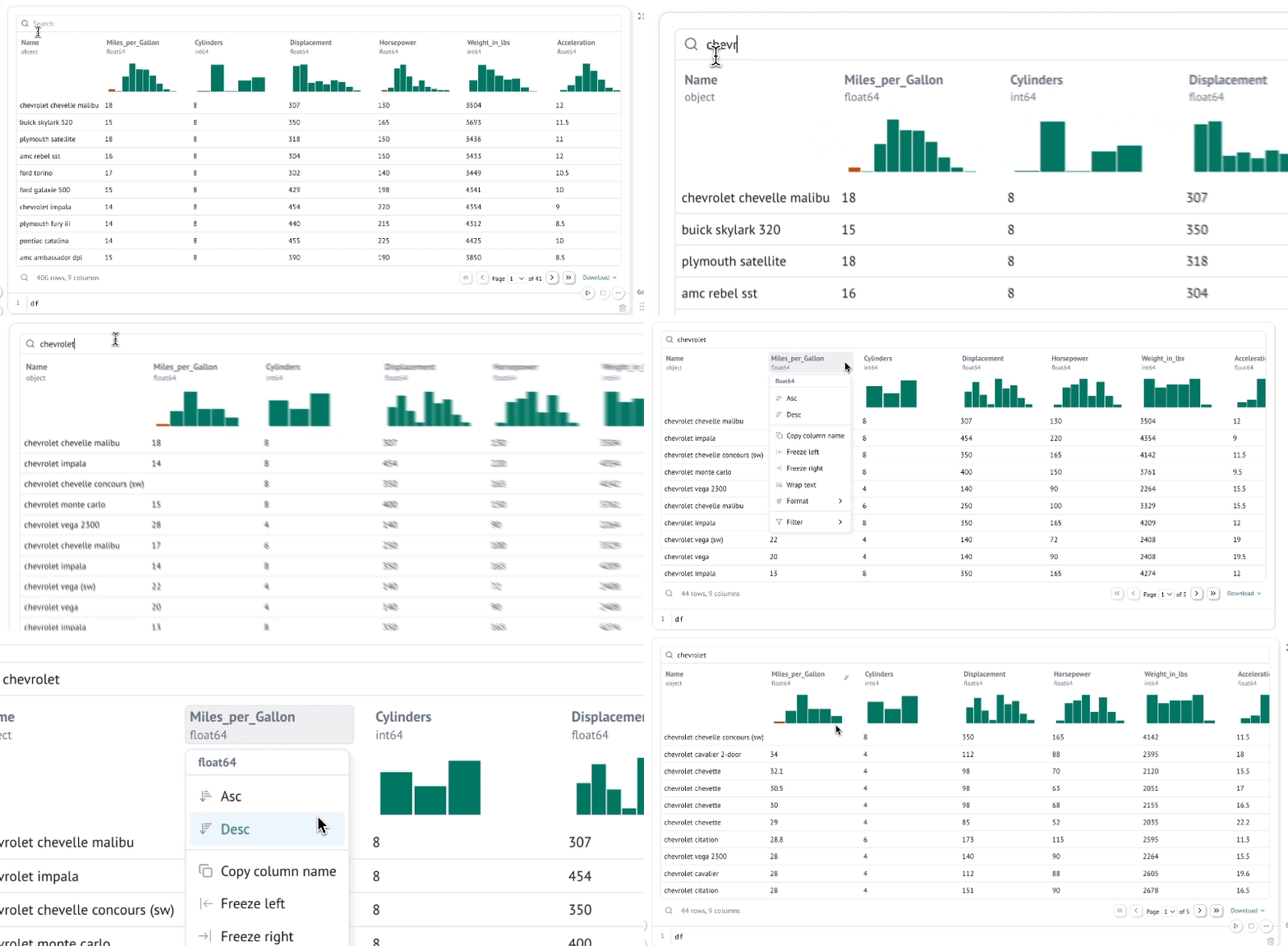
Interactive dataframes. Page through, search, filter, and sort millions of rows blazingly fast, no code required.
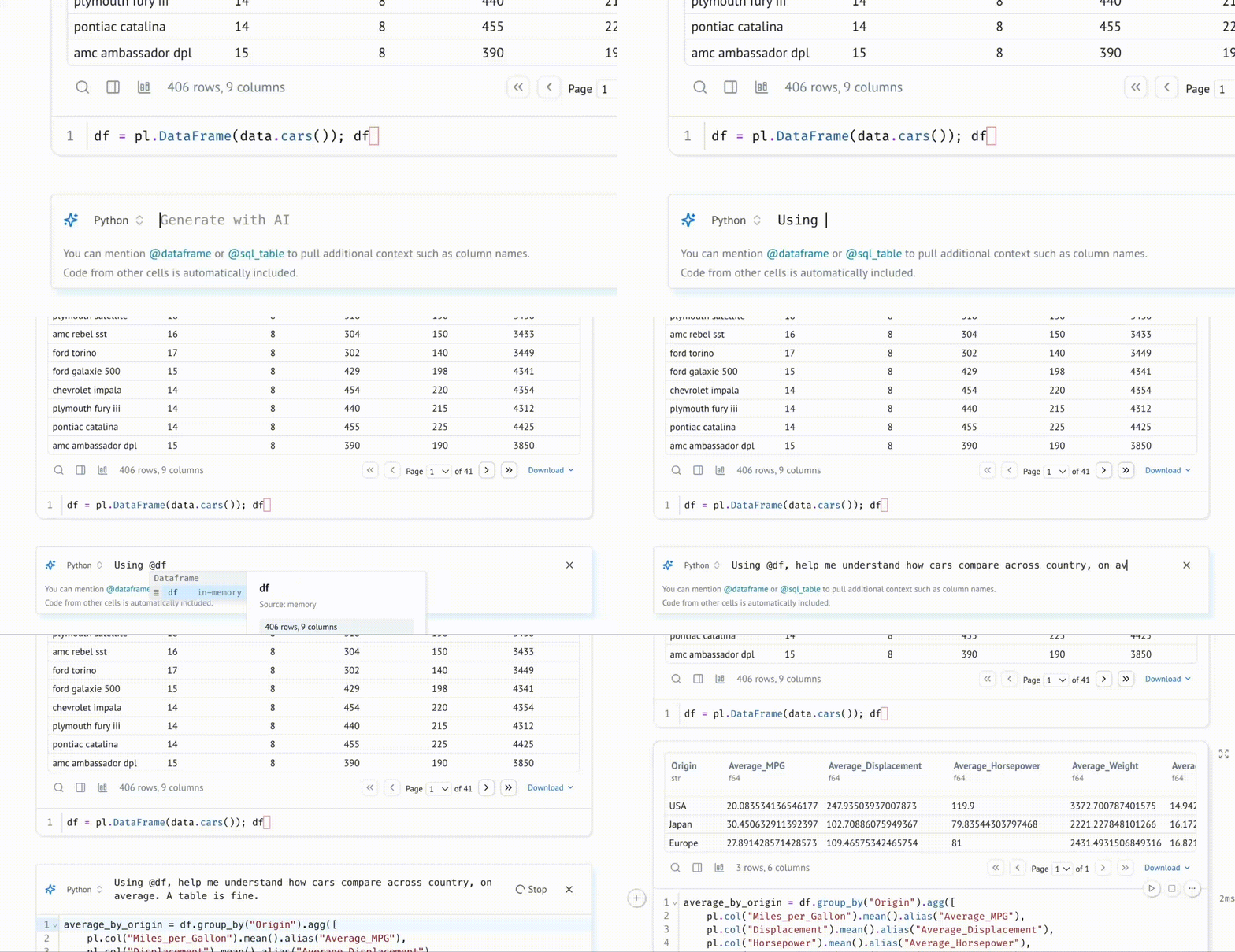
Generate cells with data-aware AI. Generate code with an AI assistant that is highly specialized for working with data, with context about your variables in memory; zero-shot entire notebooks. Customize the system prompt, bring your own API keys, or use local models.
Query data with SQL. Build SQL queries that depend on Python values and execute them against dataframes, databases, lakehouses, CSVs, Google Sheets, or anything else using our built-in SQL engine, which returns the result as a Python dataframe.
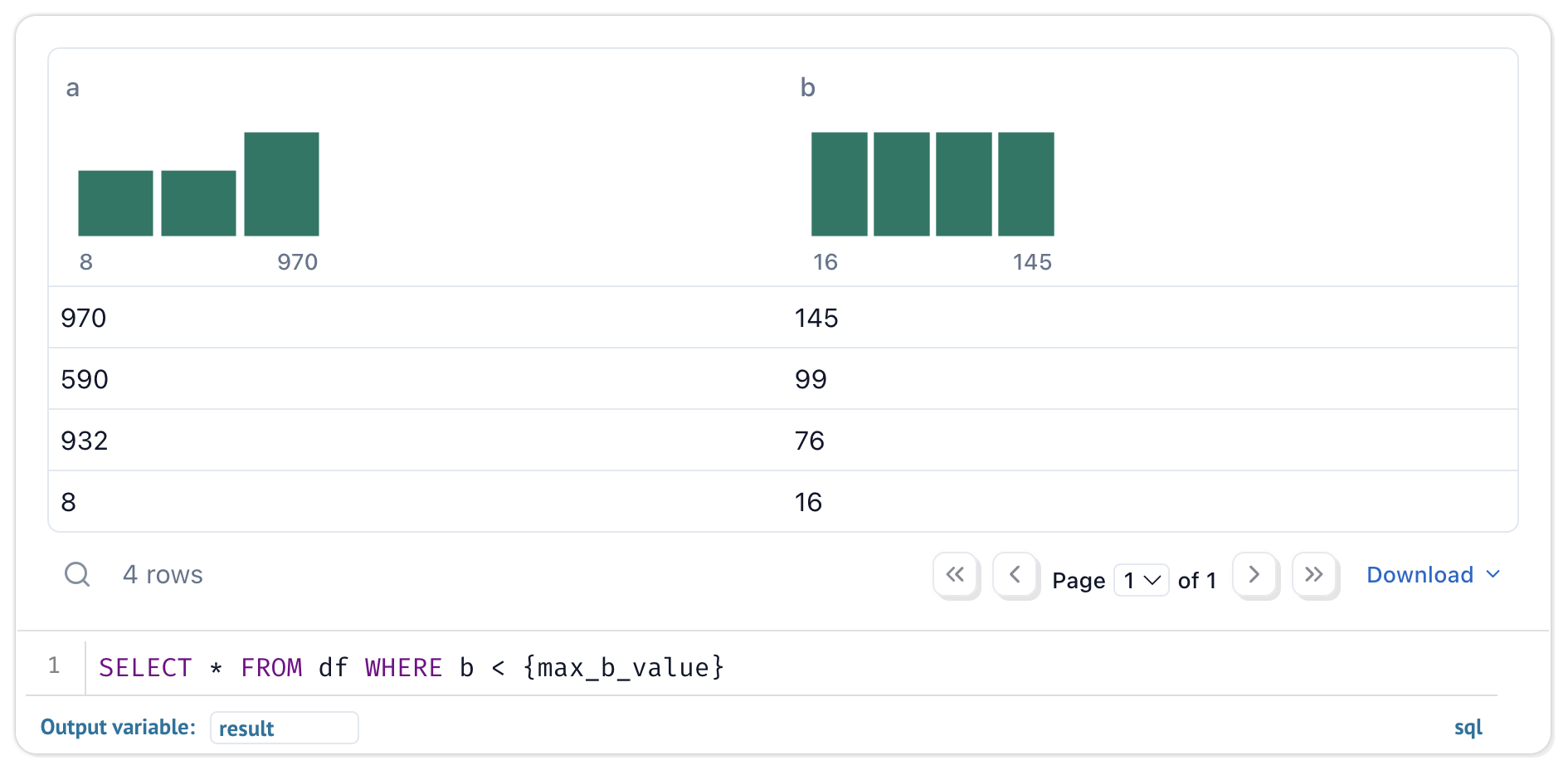
Your notebooks are still pure Python, even if they use SQL.
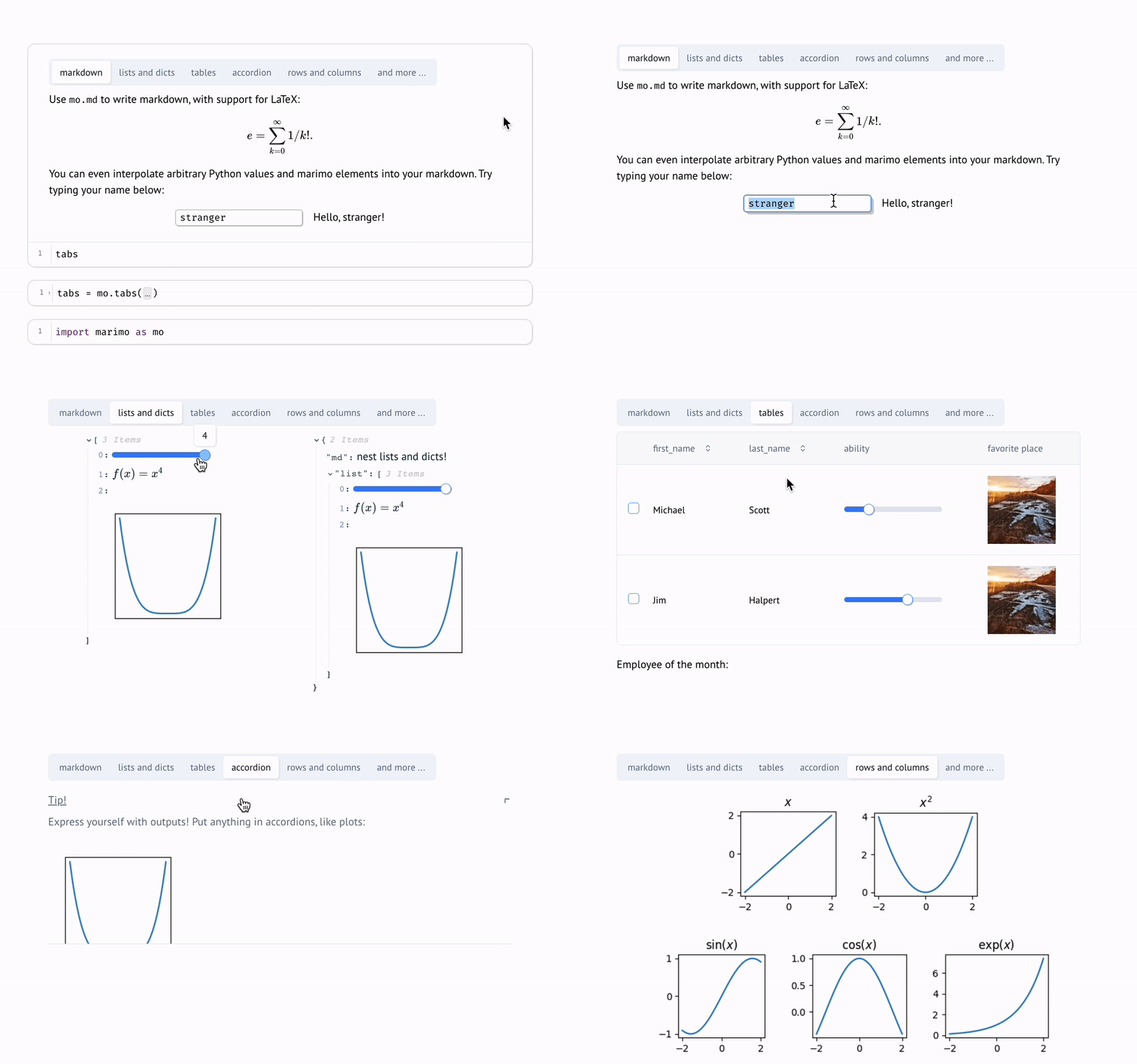
Dynamic markdown. Use markdown parametrized by Python variables to tell dynamic stories that depend on Python data.
Built-in package management. marimo has built-in support for all major package managers, letting you install packages on import. marimo can even serialize package requirements in notebook files, and auto install them in isolated venv sandboxes.
Deterministic execution order. Notebooks are executed in a deterministic order, based on variable references instead of cells' positions on the page. Organize your notebooks to best fit the stories you'd like to tell.
Performant runtime. marimo runs only those cells that need to be run by statically analyzing your code.
Batteries-included. marimo comes with GitHub Copilot, AI assistants, Ruff code formatting, HTML export, fast code completion, a VS Code extension, an interactive dataframe viewer, and many more quality-of-life features.
Quickstart
The marimo concepts playlist on our YouTube channel gives an overview of many features.
Installation. In a terminal, run
pip install marimo  # or conda install -c conda-forge marimo
marimo tutorial intro
To install with additional dependencies that unlock SQL cells, AI completion, and more, run
pip install "marimo[recommended]"
Create notebooks.
Create or edit notebooks with
marimo edit
Run apps. Run your notebook as a web app, with Python code hidden and uneditable:
marimo run your_notebook.py
Execute as scripts. Execute a notebook as a script at the command line:
python your_notebook.py
Automatically convert Jupyter notebooks. Automatically convert Jupyter notebooks to marimo notebooks with the CLI
marimo convert your_notebook.ipynb > your_notebook.py
or use our web interface.
Tutorials. List all tutorials:
marimo tutorial --help
Share cloud-based notebooks. Use molab, a cloud-based marimo notebook service similar to Google Colab, to create and share notebook links.
Questions?
See the FAQ at our docs.
Learn more
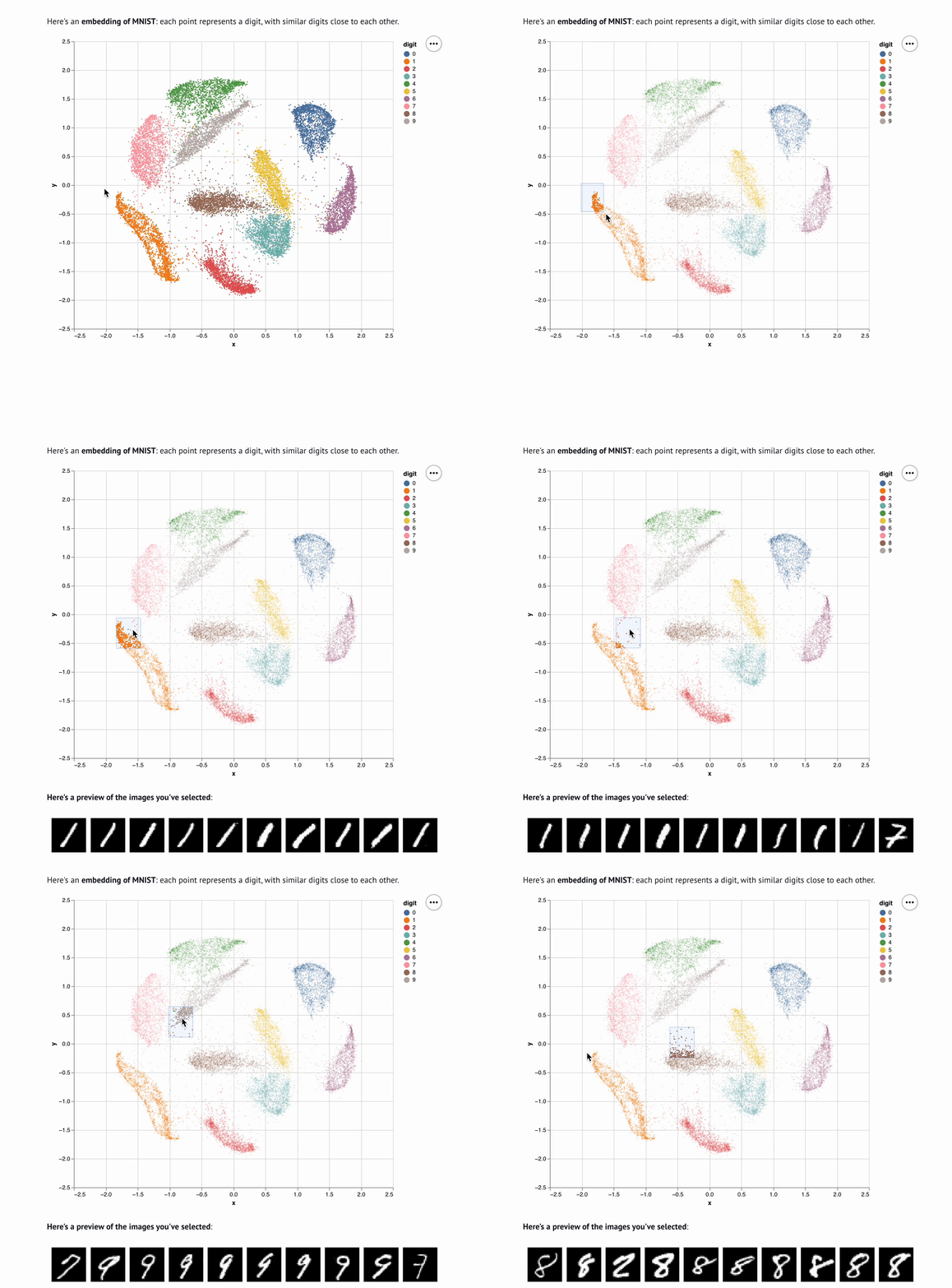
marimo is easy to get started with, with lots of room for power users. For example, here's an embedding visualizer made in marimo (try the notebook live on molab!):
Check out our docs, usage examples, and our gallery to learn more.
|
|
|
|
| Tutorial | Inputs | Plots | Layout |

|
|
|
|
Contributing
We appreciate all contributions! You don't need to be an expert to help out. Please see CONTRIBUTING.md for more details on how to get started.
Questions? Reach out to us on Discord.
Community
We're building a community. Come hang out with us!
- 🌟 Star us on GitHub
- 💬 Chat with us on Discord
- 📧 Subscribe to our Newsletter
- ☁️ Join our Cloud Waitlist
- ✏️ Start a GitHub Discussion
- 🦋 Follow us on Bluesky
- 🐦 Follow us on Twitter
- 🎥 Subscribe on YouTube
- 🤖 Follow us on Reddit
- 🕴️ Follow us on LinkedIn
A NumFOCUS affiliated project. marimo is a core part of the broader Python ecosystem and is a member of the NumFOCUS community, which includes projects such as NumPy, SciPy, and Matplotlib.

Inspiration ✨
marimo is a reinvention of the Python notebook as a reproducible, interactive, and shareable Python program, instead of an error-prone JSON scratchpad.
We believe that the tools we use shape the way we think — better tools, for better minds. With marimo, we hope to provide the Python community with a better programming environment to do research and communicate it; to experiment with code and share it; to learn computational science and teach it.
Our inspiration comes from many places and projects, especially Pluto.jl, ObservableHQ, and Bret Victor's essays. marimo is part of a greater movement toward reactive dataflow programming. From IPyflow, streamlit, TensorFlow, PyTorch, JAX, and React, the ideas of functional, declarative, and reactive programming are transforming a broad range of tools for the better.

Project details
Verified details
These details have been verified by PyPIProject links
GitHub Statistics
Maintainers
Release history Release notifications | RSS feed


Download files
Download the file for your platform. If you're not sure which to choose, learn more about installing packages.
Source Distribution
Built Distribution
Filter files by name, interpreter, ABI, and platform.
If you're not sure about the file name format, learn more about wheel file names.
Copy a direct link to the current filters
File details
Details for the file marimo-0.21.1.tar.gz.
File metadata
- Download URL: marimo-0.21.1.tar.gz
- Upload date:
- Size: 38.4 MB
- Tags: Source
- Uploaded using Trusted Publishing? Yes
- Uploaded via: twine/6.1.0 CPython/3.13.7
File hashes
| Algorithm | Hash digest | |
|---|---|---|
| SHA256 |
d18ceec8aca9b4e1def60247e1abe2fec476abeef51e2d0d5d1079ea37f86f55
|
|
| MD5 |
00596c71745e6a2a0cc9313de6e01e9c
|
|
| BLAKE2b-256 |
e6325e85046f1c79050cd1c29db95ed1626285c2dcd2f41b7cd60a46656770be
|
Provenance
The following attestation bundles were made for marimo-0.21.1.tar.gz:
Publisher:
release.yml on marimo-team/marimo
-
Statement:
-
Statement type:
https://in-toto.io/Statement/v1 -
Predicate type:
https://docs.pypi.org/attestations/publish/v1 -
Subject name:
marimo-0.21.1.tar.gz -
Subject digest:
d18ceec8aca9b4e1def60247e1abe2fec476abeef51e2d0d5d1079ea37f86f55 - Sigstore transparency entry: 1123260931
- Sigstore integration time:
-
Permalink:
marimo-team/marimo@5c29db34417499306344065bdaff33b751f110f9 -
Branch / Tag:
refs/tags/0.21.1 - Owner: https://github.com/marimo-team
-
Access:
public
-
Token Issuer:
https://token.actions.githubusercontent.com -
Runner Environment:
github-hosted -
Publication workflow:
release.yml@5c29db34417499306344065bdaff33b751f110f9 -
Trigger Event:
push
-
Statement type:
File details
Details for the file marimo-0.21.1-py3-none-any.whl.
File metadata
- Download URL: marimo-0.21.1-py3-none-any.whl
- Upload date:
- Size: 38.8 MB
- Tags: Python 3
- Uploaded using Trusted Publishing? Yes
- Uploaded via: twine/6.1.0 CPython/3.13.7
File hashes
| Algorithm | Hash digest | |
|---|---|---|
| SHA256 |
ad184f2ef297a5206bc3219ebbae3ea33e0ba9902ddb68c171bd2c44724db35a
|
|
| MD5 |
72b742df1c3285af3fae0e66bf359415
|
|
| BLAKE2b-256 |
c88269a545901f1c33fa8c1541a0ef1e4238adeb262ce77993ae892692fe967b
|
Provenance
The following attestation bundles were made for marimo-0.21.1-py3-none-any.whl:
Publisher:
release.yml on marimo-team/marimo
-
Statement:
-
Statement type:
https://in-toto.io/Statement/v1 -
Predicate type:
https://docs.pypi.org/attestations/publish/v1 -
Subject name:
marimo-0.21.1-py3-none-any.whl -
Subject digest:
ad184f2ef297a5206bc3219ebbae3ea33e0ba9902ddb68c171bd2c44724db35a - Sigstore transparency entry: 1123260936
- Sigstore integration time:
-
Permalink:
marimo-team/marimo@5c29db34417499306344065bdaff33b751f110f9 -
Branch / Tag:
refs/tags/0.21.1 - Owner: https://github.com/marimo-team
-
Access:
public
-
Token Issuer:
https://token.actions.githubusercontent.com -
Runner Environment:
github-hosted -
Publication workflow:
release.yml@5c29db34417499306344065bdaff33b751f110f9 -
Trigger Event:
push
-
Statement type:






