
nvibrant
Nvidia Digital Vibrance and Dithering on Wayland





🔥 Description
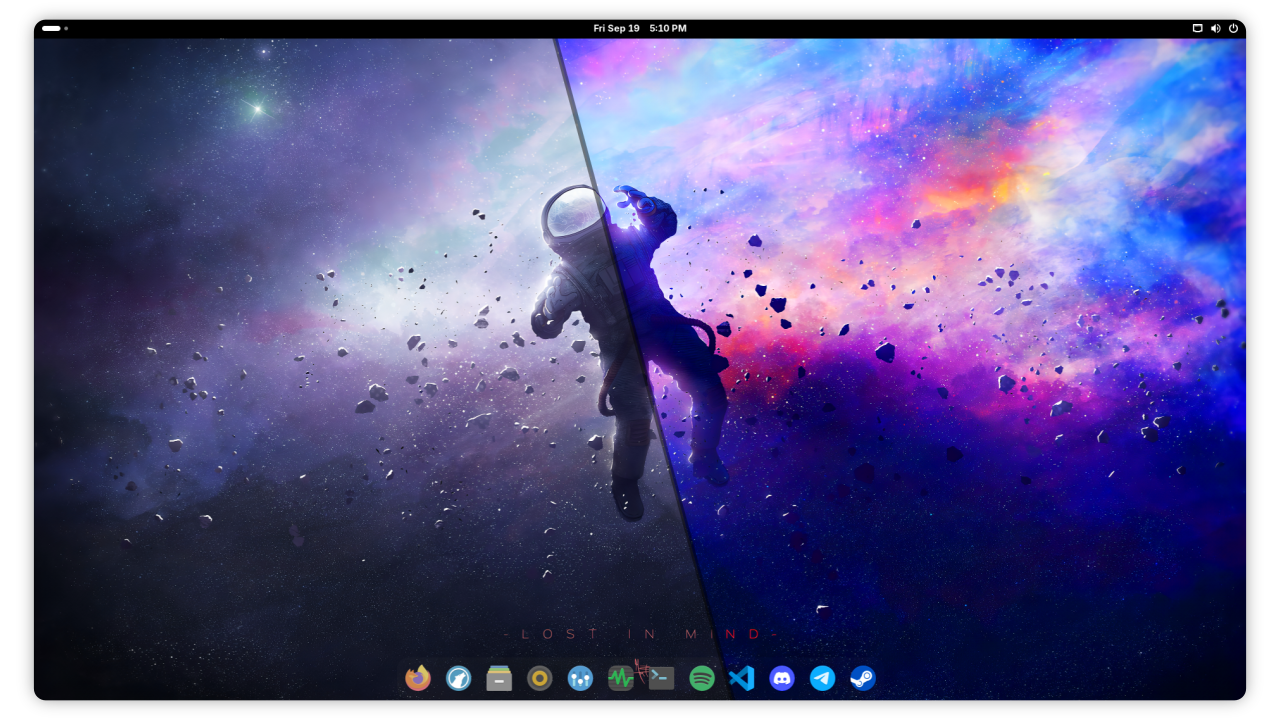
NVIDIA GPUs have a nice feature called Digital Vibrance that increases the colors saturation of the display. The option is readily available on nvidia-settings, but is too coupled with libxnvctrl, making it softly "exclusive" to the X11 display server over wayland; but I paid for my pixels to glow :^)
An interesting observation is that the setting persists after modifying it on X11 and then switching to Wayland. I theorized (1) (2) it was possible to call some shared library or interface to configure it directly in their driver, independently of the display server, and indeed, it is possible!
This project uses nvidia-modeset and nvkms headers found at nvidia/open-gpu-kernel-modules to make ioctl calls in the /dev/nvidia-modeset device for configuring display attributes.
Note: A future intended way will be through NVML, as evident by some nvidia-settings comments
❤️ Consider supporting my work, this took 30 hours to figure out, implement, write a website, make it convenient 🫠
📦 Getting Started
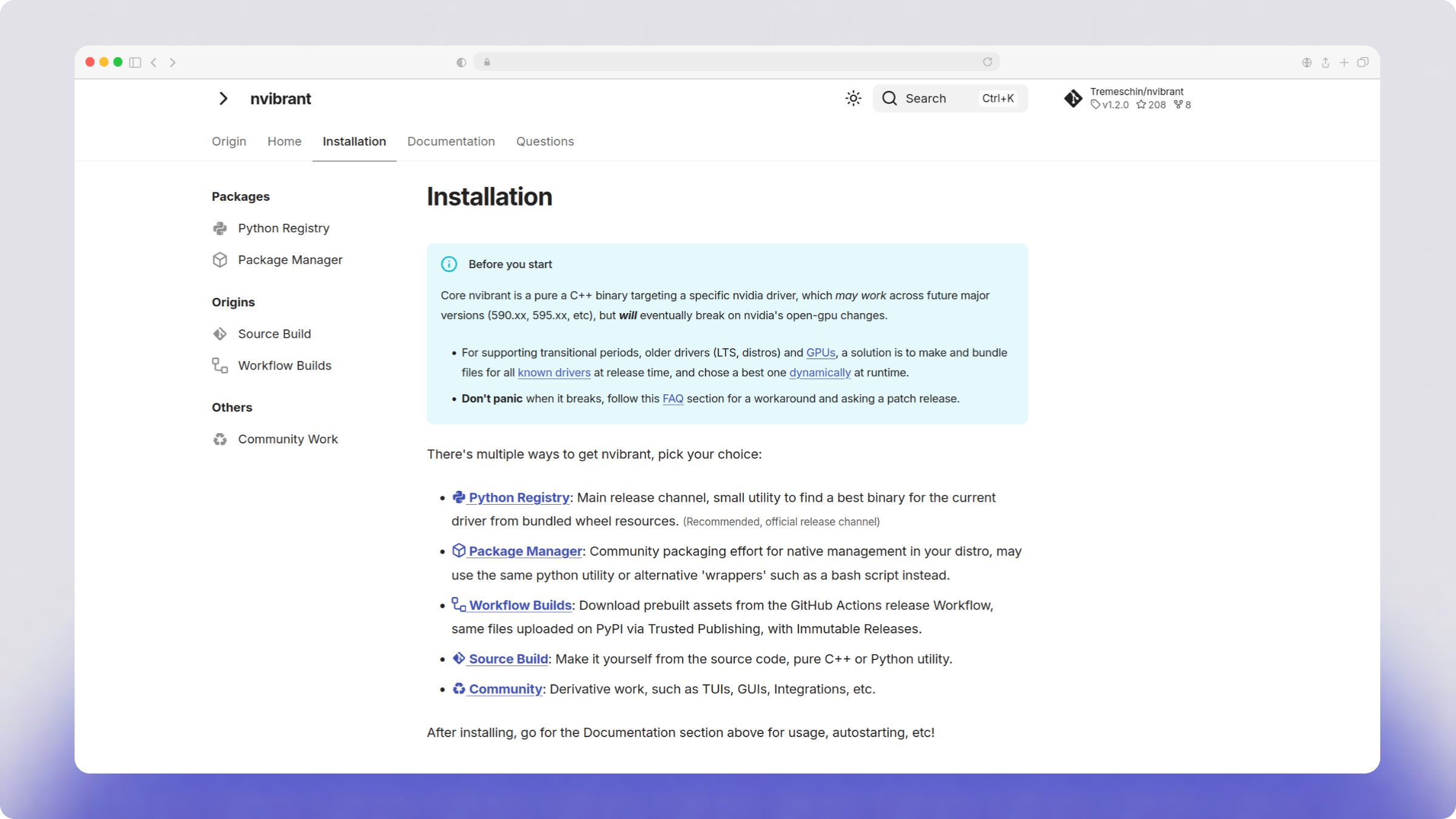 Visit the documentation at
https://nvibrant.tremeschin.com/
1 maintainer

Metadata
1 maintainer
Release files for nvibrant 1.3.1
For a detailed explanation of source distributions (sdists) and built distributions (wheels), please see the package formats documentation.
Built distribution (wheel)
| File | Interpreter | ABI | Platform | Actions Reset |
|---|---|---|---|---|
| nvibrant-1.3.1-py3-none-manylinux_2_17_x86_64.whl | Python 3 | none | Linux glibc 2.17+ x86-64 | Details for nvibrant-1.3.1-py3-none-manylinux_2_17_x86_64.whl |
Release files / nvibrant-1.3.1-py3-none-manylinux_2_17_x86_64.whl
| Download URL | nvibrant-1.3.1-py3-none-manylinux_2_17_x86_64.whl |
|---|---|
| Size | 1.4 MB |
| Tags | Linux glibc 2.17+ x86-64 Python 3 |
|
SHA-256 checksum How to use checksums |
d23fdfb75d78f8e94459bb6d741c6e3f1780b20deb0d0fac55b5aef3a915d6bf
|
|
BLAKE2b-256 checksum How to use checksums |
8c7368a6fbb8a4db169d30b6a840b2360894f09dddedbd463ae3623eaa920223
|
| Upload date | |
|
Uploaded using Trusted Publishing? What is trusted publishing? |
Yes |
| Uploaded via |
twine/7.0.0 CPython/3.13.16
|
Provenance
Provenance describes where a file came from. On PyPI, provenance is shared via attestations, which provide a verifiable record of the build or publishing details. View details, limitations and caveats.


PyPI Publish Attestation
PyPI verified that this artifact, at this checksum, originated from the publisher listed below.
Signed by GitHub Actions, verified by PyPI on Nov 8, 2026.
Transparency logSecurity for nvibrant 1.3.1
Provenance
Provenance describes where a file came from. On PyPI, provenance is shared via attestations, which provide a verifiable record of the build or publishing details. View details, limitations and caveats.
Full provenance
1 file in this release has been uploaded with provenance metadata.
Attestation for nvibrant-1.3.1-py3-none-manylinux_2_17_x86_64.whl
PyPI Publish Attestation
PyPI verified that this artifact, at this checksum, originated from the publisher listed below.
Signed by GitHub Actions, verified by PyPI on Nov 8, 2026.
Transparency logA note on package security
PyPI is a repository for distributing packages, not a service for auditing them. While third-party security researchers and our staff do their best to detect and remove malicious packages, PyPI cannot guarantee the quality, security or suitability of any given package.
To learn more about protecting yourself from malicious actors, visit our package security documentation.














