

Pacup








What is this?
Pacup (Pacscript Updater) is a maintainer helper tool to help maintainers update their pacscripts. It semi-automates the tedious task of updating pacscripts, and aims to make it a fun process for the maintainer!
Installation
To install the latest release run:
$ pacstall -I pacup-bin # or pip install pacup
To install the latest development build run:
$ pip install git+https://github.com/pacstall/pacup
Usage
Usage: pacup [OPTIONS] PACSCRIPTS...

Updates specified pacscripts.
If ship flag is passed, the pacscript will be prepared for shipping to upstream.
After the pacscript is prepared, it will be committed and pushed to the origin remote.
This requires you to be present in your cloned fork.

╭─ Arguments ──────────────────────────────────────────────────────────────────────────────────────────╮
│ *    pacscripts      PACSCRIPTS...  The pacscripts to update. [default: None] [required]             │
╰──────────────────────────────────────────────────────────────────────────────────────────────────────╯
╭─ Options ────────────────────────────────────────────────────────────────────────────────────────────╮
│ --show-repology       -r                                       Show the parsed repology data and     │
│                                                                exit.                                 │
│ --debug               -d                                       Turn on debugging mode.               │
│ --version             -v                                       Show the version and exit.            │
│ --ship                -s                                       Prepare the pacscript for shipping to │
│                                                                upstream.                             │
│ --install-completion          [bash|zsh|fish|powershell|pwsh]  Install completion for the specified  │
│                                                                shell.                                │
│                                                                [default: None]                       │
│ --show-completion             [bash|zsh|fish|powershell|pwsh]  Show completion for the specified     │
│                                                                shell, to copy it or customize the    │
│                                                                installation.                         │
│                                                                [default: None]                       │
│ --help                                                         Show this message and exit.           │
╰──────────────────────────────────────────────────────────────────────────────────────────────────────╯
You can get this help text by running pacup --help.
You should visit our wiki, for
more information on how to use the repology key.
How does it work?
Suppose foo.pacscript is outdated.
On running pacup foo.pacscript Pacup will parse the pacscript's variables,
then it compiles a list of filters specified in the repology variable in the
pacscript. Then it queries the Repology API to get
all the repositories which have packaged that package. After which it applies
the filter to the response, and from the filtrate it considers the most common
version to be the latest.
Then it replaces all occurrences of the previous version's value in the url
with the latest one placeholder's value with the latest version, and downloads
the new package, and generates it's hash.
Then writes the edited pacscript and installs it with Pacstall, after installation it asks the user to confirm that the installed package works. On approval the pacscript is considered successfully upgraded and the program ends.
Caveats
- Does not work with
-gitpacscripts as those pacscripts are auto updating. - Doesn't work if a pacscript doesn't have an equivalent Repology package.
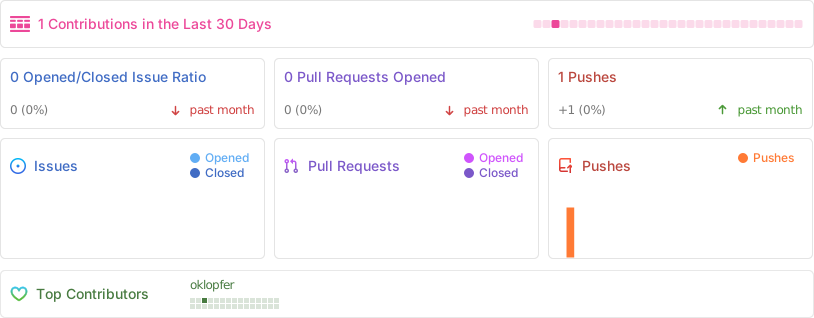
Stats
License
    ____             __  __
   / __ \____ ______/ / / /___
  / /_/ / __ `/ ___/ / / / __ \
 / ____/ /_/ / /__/ /_/ / /_/ /
/_/    \__,_/\___/\____/ .___/
                      /_/

Copyright (C) 2022-present

This file is part of PacUp

PacUp is free software: you can redistribute it and/or modify
it under the terms of the GNU General Public License as published by
the Free Software Foundation, either version 3 of the License, or
(at your option) any later version.

PacUp is distributed in the hope that it will be useful,
but WITHOUT ANY WARRANTY; without even the implied warranty of
MERCHANTABILITY or FITNESS FOR A PARTICULAR PURPOSE.  See the
GNU General Public License for more details.

You should have received a copy of the GNU General Public License
along with PacUp.  If not, see <https://www.gnu.org/licenses/>.
1 maintainer

Metadata
1 maintainer
Release files for pacup 2.1.1
For a detailed explanation of source distributions (sdists) and built distributions (wheels), please see the package formats documentation.
Source distribution (sdist)
| File | Size | Uploaded | Provenance | Actions |
|---|---|---|---|---|
| pacup-2.1.1.tar.gz | 29.9 kB | Without provenance | Details for pacup-2.1.1.tar.gz |
Built distribution (wheel)
| File | Interpreter | ABI | Platform | Actions Reset |
|---|---|---|---|---|
| pacup-2.1.1-py3-none-any.whl | Python 3 | none | any | Details for pacup-2.1.1-py3-none-any.whl |
Total release size: 62.2 kB
Release files / pacup-2.1.1.tar.gz
| Download URL | pacup-2.1.1.tar.gz |
|---|---|
| Size | 29.9 kB |
| Tags | Source |
|
SHA-256 checksum How to use checksums |
203083d1a2d8f146cef760ed0c90bf19d4068e67908edd7fd4092b0ece51d33c
|
|
BLAKE2b-256 checksum How to use checksums |
89dfad0ec75c639af9de73d7f616b7be19da8b9c7d8866ee1fc44802d4c17cf1
|
| Upload date | |
|
Uploaded using Trusted Publishing? What is trusted publishing? |
No |
| Uploaded via |
poetry/1.7.1 CPython/3.11.0 Linux/6.2.0-1019-azure
|
Release files / pacup-2.1.1-py3-none-any.whl
| Download URL | pacup-2.1.1-py3-none-any.whl |
|---|---|
| Size | 32.3 kB |
| Tags | Python 3 |
|
SHA-256 checksum How to use checksums |
fb8366a7490efcbc8f209f11bba1e729a0a66aabe0fdda66ef03581288905d79
|
|
BLAKE2b-256 checksum How to use checksums |
55e1858047ef253ff296284b78eba0b7a204ba6cb7801845854a3e01ae5bc3fd
|
| Upload date | |
|
Uploaded using Trusted Publishing? What is trusted publishing? |
No |
| Uploaded via |
poetry/1.7.1 CPython/3.11.0 Linux/6.2.0-1019-azure
|
Security for pacup 2.1.1
Provenance
Provenance describes where a file came from. On PyPI, provenance is shared via attestations, which provide a verifiable record of the build or publishing details. View details, limitations and caveats.
No provenance found
None of the files in this release were uploaded with provenance metadata.
A note on package security
PyPI is a repository for distributing packages, not a service for auditing them. While third-party security researchers and our staff do their best to detect and remove malicious packages, PyPI cannot guarantee the quality, security or suitability of any given package.
To learn more about protecting yourself from malicious actors, visit our package security documentation.














