
Patton - The vulnerability knowledge store
Current version |
0.0.4 |
Project site |
|
Issues |
|
Documentation |
|
Python versions |
3.6 or above |
How it works
patton-server is a small service that preprocess CVEs and CPEs from NIST and perform intelligent queries to a postgres database. You can consume the service via api, cli or with the postman in this repository.

You can see the Demo video for a quick start:
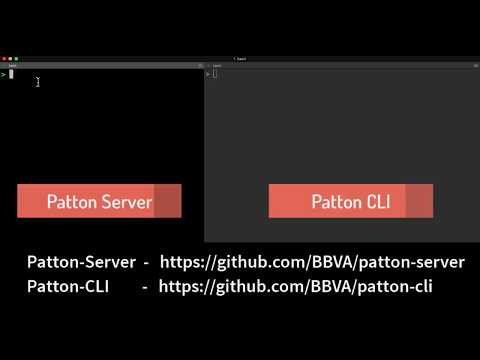
What’s Patton Server
Patton server is project that store the vulnerability information (CVEs) and link it with product details (CPE) and allow to ask in a very clever way.
For example:
Finding library vulnerabilities
Given a software library in raw format, i.e: django
And a version in a possible version, i.e: 1.2
Patton can find all the Product Identification for Django and their public vulnerabilities.
Finding software from raw text
Given a HTTP server banner, i.e: “Apache 2.2-ubuntu2 +PHP Mod”
Patton can find, with a very exact way, vulnerabilities for Apache and the specific version
What’s the different with other projects?
There’re other project, like CVE Search that also stores CVE information. What’s is the difference then with Patton?
Clever matching
Differing with the approach of CVE-Search (and other projects) Patton don’t need a CPE as input. Patton deduces the CPE.
The actually Patton purpose is build clever queries and deduce information. Por example: from a library name and their version, can deduce the related CPEs and associated CVEs.
Be updated
Patton can alert you when new vulnerabilities are released:
You can configure the Patton web-hook and it will alert you with ONLY with new vulnerabilities published.
How to use Patton server?
Patton serve has a REST API. You can check if in different ways:
Using raw curl / wget / [YOUR FAVORITE HTTP CLIENT]
Using the Postman collection you can find in this repo (named patton_server.postman.json)
Using Patton-cli (https://github.com/bbva/patton-cli/: We recommend to use this way. Patton-cli is a powerful client for Patton server that allow to extract and check vulnerabilities for your systems in a many different ways.
Documentation
Go to documentation site: https://patton-server.readthedocs.org/
Contributing
Any collaboration is welcome!
There’re many tasks to do.You can check the Issues and send us a Pull Request.
Also you can read the TODO file.
License
This project is distributed under Apache 2 license
1 maintainer

Metadata
1 maintainer
Release files for patton-server 0.0.4.post12
For a detailed explanation of source distributions (sdists) and built distributions (wheels), please see the package formats documentation.
Source distribution (sdist)
| File | Size | Uploaded | Provenance | Actions |
|---|---|---|---|---|
| patton-server-0.0.4.post12.tar.gz | 19.5 kB | Without provenance | Details for patton-server-0.0.4.post12.tar.gz |
Release files / patton-server-0.0.4.post12.tar.gz
| Download URL | patton-server-0.0.4.post12.tar.gz |
|---|---|
| Size | 19.5 kB |
| Tags | Source |
|
SHA-256 checksum How to use checksums |
3e3daa417c0603b6524eeb92caa05444d8bb9f38827190de4d143f37112cedcd
|
|
BLAKE2b-256 checksum How to use checksums |
01a8eddd392c7ad7b45104926b649e4c18ebf0a887a360bc1e1e6b11ab0a6537
|
| Upload date | |
|
Uploaded using Trusted Publishing? What is trusted publishing? |
No |
Security for patton-server 0.0.4.post12
Provenance
Provenance describes where a file came from. On PyPI, provenance is shared via attestations, which provide a verifiable record of the build or publishing details. View details, limitations and caveats.
No provenance found
None of the files in this release were uploaded with provenance metadata.
A note on package security
PyPI is a repository for distributing packages, not a service for auditing them. While third-party security researchers and our staff do their best to detect and remove malicious packages, PyPI cannot guarantee the quality, security or suitability of any given package.
To learn more about protecting yourself from malicious actors, visit our package security documentation.














