
Reproduce, observe, and govern a personal AI setup as three planes.
Verified details
These details have been verified by PyPIProject links
GitHub Statistics
Maintainers

Project description




Install · Quickstart · How it works · Secrets · MCP · Spec
planeops keeps the AI tooling on your machine declared, observed, and drift-free. No daemon, no agent, no background anything: short-lived commands that read your machine, tell you what changed, and never write without showing the diff and asking first.
$ plane status --short
drift:6

$ plane drift
6 alert(s), 0 report, 2 uncovered -> ~/planeops/observed/mymac/DRIFT.md

$ cat ~/planeops/observed/mymac/DRIFT.md
# DRIFT
...
## Alerts (6)
- `launchd/ai.gateway` (unregistered): ungoverned always-on service;
  declare it or add an unmanaged glob
- `ollama/qwen3:8b` (active): expected present, not observed
...
A machine with six things running that nobody wrote down, caught by one read-only scan.
Why
Your machine accretes AI tooling: coding harnesses, MCP servers wired into three different clients, local models, background services, API keys in dotfiles. Nobody writes down what is installed, how it is wired, or why it is there. Six months later, something is listening on a port and you cannot say what put it there.
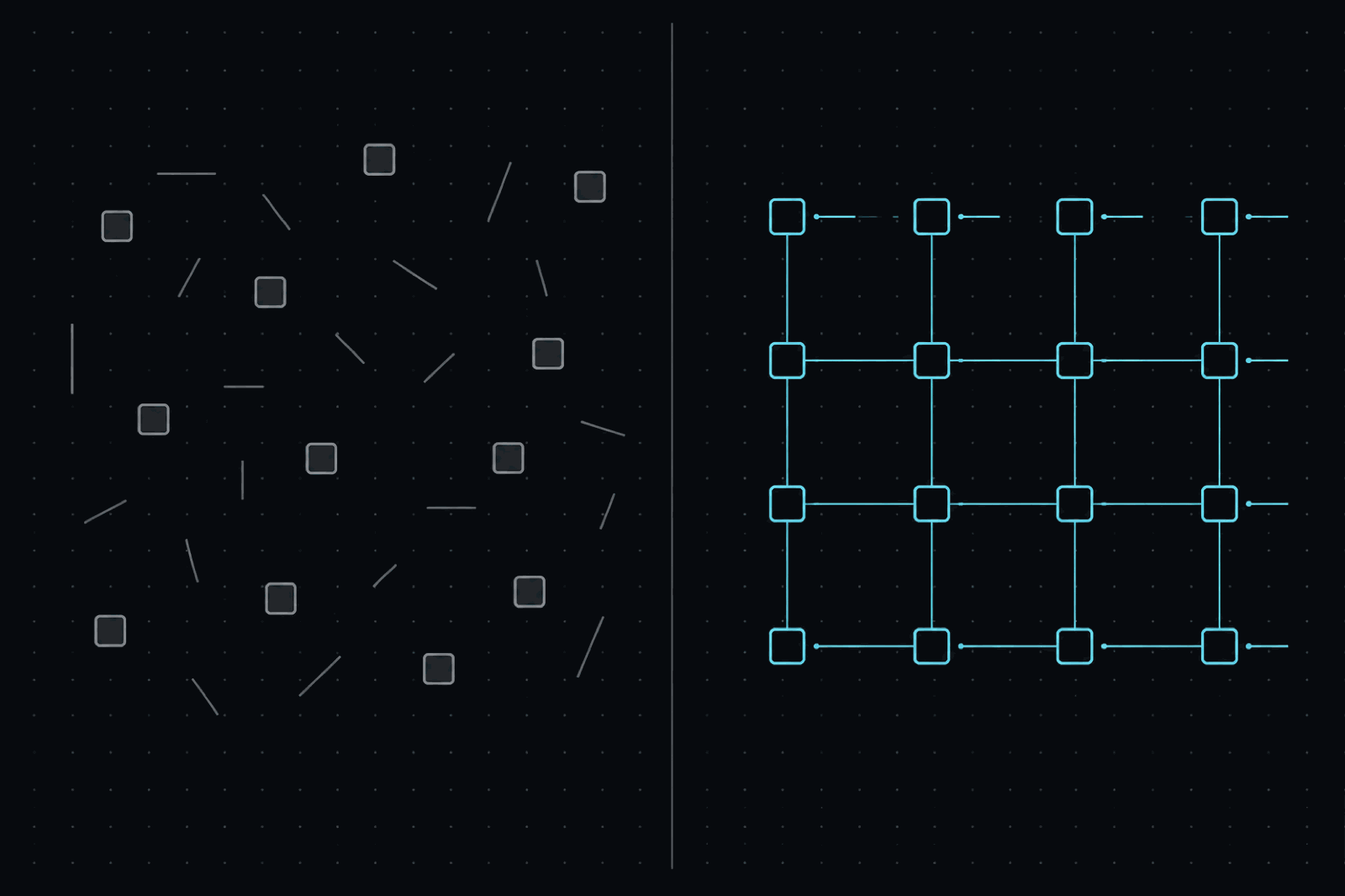
planeops turns the pile into a registry: every asset declared in plain YAML with its reason for existing, every scan diffed against that intent, every fix a rendered change you confirm one at a time.
Highlights
- Catches what a package manager can't. Ungoverned always-on services, an MCP server wired into one client but not the others, the same tool under different names across clients, a dead reconcile heartbeat, a model your tooling depends on being pruned out from under it (
needs:). - One loop, three verbs.
observescans (read-only),driftdiffs desired against observed,applyconverges with a per-change confirmation. Exit codes are a contract:0clean,1operator error,2drift alerts, so your shell prompt and your cron both know the state. - No daemon, no open ports. Every command exits. The ambient loop is your OS scheduler (
launchdorsystemd) runningplane reconcile, set up byplane scheduleand then governed like any other entry. - Writes are gated, always. Only
applymutates, only after a rendered diff and a yes:yper change, orato approve the rest of one domain for that run. No stored auto-approval exists. Everything else, including the MCP server your assistant talks to, is read-only by construction. - Onboarding is pruning, not authoring.
plane init --seedscans the machine and proposes the registry; you delete what you refuse to govern instead of writing YAML from scratch. - Typos are load errors, never silent no-ops.
tolerence: alertfails with "did you mean 'tolerance'?" instead of quietly not escalating. Every key in every file, same rule. - Secrets stay references. Names and presence are tracked; values are decrypted only inside a confirmed materialization and land only in the declared target file. Snapshots, reports, and diffs never carry a value.
- Provider-neutral by architecture. Adapters, importers, platforms, schedulers, and secrets stores are five discovery seams; the core names no vendor (a test enforces it). Swap your secrets store and zero registry entries change.
Install
$ uv tool install planeops # or: pipx install planeops / pip install planeops
Installs the plane command. Python 3.12+, macOS and Linux.
Want your AI assistant to query the plane over MCP? Install the extra: uv tool install "planeops[mcp]" (adds plane-mcp).
From source (development)
$ git clone https://github.com/albertorsesc/planeops
$ cd planeops
$ uv sync            # engine + plane CLI
$ make check         # the full gate: lint, format, types, tests
Quickstart
# scaffold an instance and seed the registry from what's already installed;
# init asks where (Enter accepts, or type any path: hidden dirs, ~/Projects, anywhere)
$ plane init --seed
create the instance at /Users/you/planeops? (path or Enter to accept)
instance ready at /Users/you/planeops
seeding the registry from this machine (observe -> import)...
  wrote 73 entries to /Users/you/planeops/registry/imported.yaml; prune, then `plane drift`

# scan the machine, diff it against the registry
$ plane observe
observed 73 fact(s), 0 uncovered adapter(s) -> /Users/you/planeops/observed/mymac/snapshot.json
$ plane drift
0 alert(s), 3 report, 0 uncovered -> /Users/you/planeops/observed/mymac/DRIFT.md

# keep it fresh without thinking about it: an OS timer, previewed and confirmed
$ plane schedule --every 6h
$ plane apply --id launchd/ai.planeops.reconcile   # Linux: systemd/planeops-reconcile.timer

# one glance forever after (empty means clean; wire it into your prompt)
$ plane status --short
drift:3
From there: plane apply walks the drift as one confirmed change at a time, plane mcp shows every MCP server across all your clients and who has it wired, and plane import observed --write proposes anything on the machine the registry does not govern yet (a clean no-op right after --seed).
Your instance
plane init creates an instance: a directory that is yours, not the tool's.
Treat it like a dotfiles repo: git init it, commit it, keep it with your projects
if you like (init asks where; any valid path works, hidden directories included):
~/planeops/
├── .planeops           marker: this directory is an instance
├── registry/           desired state: the YAML entries you declare, edit, and prune
├── instance.yaml       this machine's adapter settings (paths your tools use)
├── secrets.sops.yaml   encrypted values, if you use the secrets store
└── observed/<host>/    generated per machine: snapshot.json, DRIFT.md, DRIFT.json
You own registry/ and instance.yaml: they ARE your setup's documentation.
observed/ is regenerated by every scan; gitignore it, or commit it if you want
drift history in your log. One instance can serve several machines (entries say
which hosts: they apply to; each machine writes its own observed/<host>/).
planeops's whole footprint is three things: the program (your package manager's
territory), this instance, and, only when the instance lives somewhere custom, a
one-line pointer in ~/.config/planeops/config.toml recording where. Every one
of those writes is announced when it happens; declining any confirmation writes
nothing.
How it works
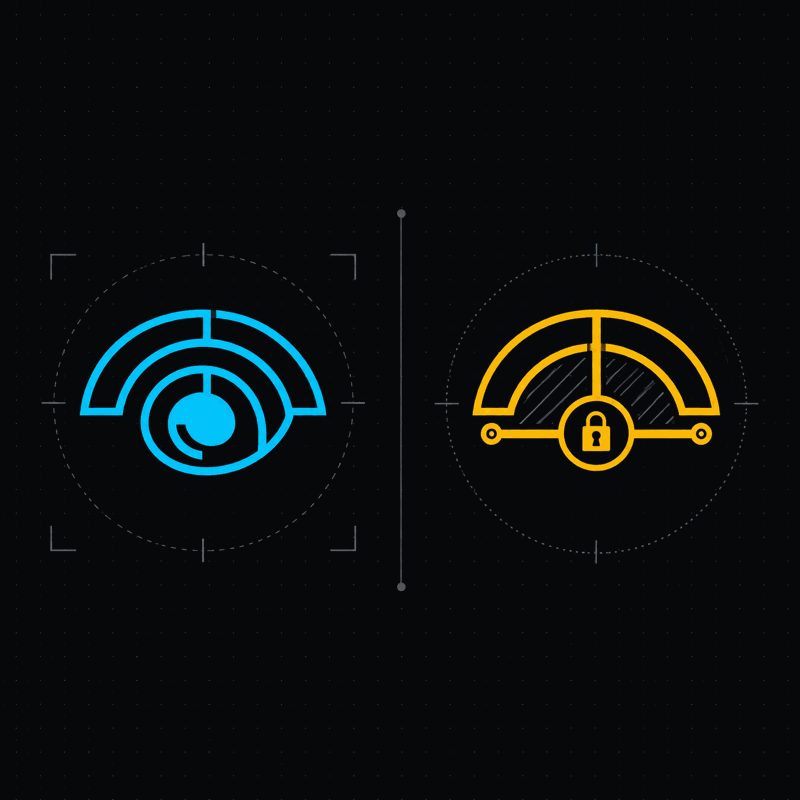
The registry is desired state: one YAML entry per governed asset, carrying its adapter, lifecycle, and the intent sentence that says why it exists. plane observe asks each adapter to report what actually exists. plane drift triages the difference into alerts (a lifecycle violation, an ungoverned service), reports (worth a look), and auto-folded noise (an in-major version bump), written as DRIFT.md for you and DRIFT.json for machines.
Adapters teach the engine one kind of asset each: services (launchd, systemd), packages (brew, npm, uv, nvm), local models (ollama), config files (delegated to chezmoi), MCP wiring, secrets. They are discovered by package scan, never registered in a central list, and the whole set is described in the spec.
Two discovery styles, deliberately: most adapters interrogate the machine's own
managers directly (brew list, ollama list, the service manager), so they need
zero configuration. MCP wiring is the exception: servers exist only inside each AI
app's own config file, and the engine hardcodes no vendor's paths. plane mcp init
detects installed known clients (claude-code, claude-desktop, codex, cursor) and
wires their config files as sources for you; anything custom is one block in
instance.yaml, and every scan reads them all.
Secrets, without values

The shipped store is sops+age: key names stay readable, values stay encrypted, so plane observe can answer "is the OpenRouter key configured?" without decrypting anything. Bootstrapping the store is one command, runnable from anywhere:
$ plane secrets init
secrets init will write:
  /Users/you/Library/Application Support/sops/age/keys.txt (new age identity via age-keygen)
  /Users/you/planeops/.sops.yaml (sops creation rule for this store)
  /Users/you/planeops/secrets.sops.yaml (empty encrypted store)
proceed? (y/N) y
It reuses an existing age identity when one exists (or pass --age-key <path>),
and creates a new one where sops itself looks on your OS, so decryption needs no
environment setup. A governed secret is one registry entry:
- id: secrets/openrouter-api-key
  adapter: secrets
  domain: secret
  lifecycle: active
  intent: LLM gateway key for local tooling
  secrets:
    - ref: secret://openrouter-api-key
      injected_as: file:~/.config/llm/env#OPENROUTER_API_KEY
Which store serves a ref is instance configuration, so swapping stores touches zero entries. A value is decrypted exactly once, inside a confirmed apply, into the one file the entry declares (0600, symlink-refusing, containment-checked).
Let your assistant read the plane
plane-mcp exposes four read-only tools over stdio: planeops_observe, planeops_drift, planeops_status, planeops_mcp. Your assistant can answer "what drifted on my machine this week?" and "which clients have the context7 server wired?" from real state instead of guessing. There are deliberately no mutation tools: converging stays behind the CLI's confirmation gate, in your terminal, under your fingers.
What planeops is not
- Not a runtime. It never sits in any request path and starts no long-running process.
- Not an installer. Adapters shell out to the tools you already trust (
brew,systemctl,ollama); planeops decides whether, they do how. - Not a fleet manager. One human, their machines, their intent. Multi-host is on the roadmap as bundles of the same registry, not an agent mesh.
Status
Pre-1.0: the loop, eleven adapters, scheduling, secrets, importers, and the MCP server work on macOS and Linux and govern this project's own machines daily. Contracts may still move; a breaking change bumps the minor and lands in the CHANGELOG with its migration. The next acceptance gate is a clean-machine reproduction rehearsal.
Built on
planeops delegates instead of reinventing: sops and age hold the secrets, chezmoi reproduces config files, your OS's own scheduler runs the ambient loop, and the package managers you already use keep doing the installing. The engine itself rides on PyYAML (its one runtime dependency) and the MCP Python SDK for the optional server, and is built with uv, ruff, mypy, and pytest. Thanks to all of them.
Contributing, security, license
CONTRIBUTING.md has the dev setup, the quality gate, and how to write an adapter. Security posture and reporting: SECURITY.md. Licensed Apache-2.0.
Project details
Verified details
These details have been verified by PyPIProject links
GitHub Statistics
Maintainers
Release history Release notifications | RSS feed


Download files
Download the file for your platform. If you're not sure which to choose, learn more about installing packages.
Source Distribution
Built Distribution
Filter files by name, interpreter, ABI, and platform.
If you're not sure about the file name format, learn more about wheel file names.
Copy a direct link to the current filters
File details
Details for the file planeops-0.1.0.tar.gz.
File metadata
- Download URL: planeops-0.1.0.tar.gz
- Upload date:
- Size: 214.8 kB
- Tags: Source
- Uploaded using Trusted Publishing? Yes
- Uploaded via: twine/7.0.0 CPython/3.13.14
File hashes
| Algorithm | Hash digest | |
|---|---|---|
| SHA256 |
fdf4080d45a6e6288b26e21c7a93eb9f2fbe57f69693cc9e861c0c2d93368aad
|
|
| MD5 |
4bc81068ab8c8217977f20507e79bce8
|
|
| BLAKE2b-256 |
599da59ee45d5c9f3e1fa199873e812befea27ba5ae7178ecfe3c7e0faa2ff69
|
Provenance
The following attestation bundles were made for planeops-0.1.0.tar.gz:
Publisher:
release.yml on albertorsesc/planeops
-
Statement:
-
Statement type:
https://in-toto.io/Statement/v1 -
Predicate type:
https://docs.pypi.org/attestations/publish/v1 -
Subject name:
planeops-0.1.0.tar.gz -
Subject digest:
fdf4080d45a6e6288b26e21c7a93eb9f2fbe57f69693cc9e861c0c2d93368aad - Sigstore transparency entry: 2332562468
- Sigstore integration time:
-
Permalink:
albertorsesc/planeops@52874145c1f3ae58580c2887c1e363837f55fc06 -
Branch / Tag:
refs/tags/v0.1.0 - Owner: https://github.com/albertorsesc
-
Access:
public
-
Token Issuer:
https://token.actions.githubusercontent.com -
Runner Environment:
github-hosted -
Publication workflow:
release.yml@52874145c1f3ae58580c2887c1e363837f55fc06 -
Trigger Event:
push
-
Statement type:
File details
Details for the file planeops-0.1.0-py3-none-any.whl.
File metadata
- Download URL: planeops-0.1.0-py3-none-any.whl
- Upload date:
- Size: 112.1 kB
- Tags: Python 3
- Uploaded using Trusted Publishing? Yes
- Uploaded via: twine/7.0.0 CPython/3.13.14
File hashes
| Algorithm | Hash digest | |
|---|---|---|
| SHA256 |
3d73d1c6ecb07d231c3d40afacd51dcee3f6ace4beb0d64df8342ba0be405732
|
|
| MD5 |
5d2c068305aec60805196c9a05c99ce1
|
|
| BLAKE2b-256 |
337d22124e4d89d83d024cd612ac9f3d96d22d97e7168ac58b9cdc7c29892822
|
Provenance
The following attestation bundles were made for planeops-0.1.0-py3-none-any.whl:
Publisher:
release.yml on albertorsesc/planeops
-
Statement:
-
Statement type:
https://in-toto.io/Statement/v1 -
Predicate type:
https://docs.pypi.org/attestations/publish/v1 -
Subject name:
planeops-0.1.0-py3-none-any.whl -
Subject digest:
3d73d1c6ecb07d231c3d40afacd51dcee3f6ace4beb0d64df8342ba0be405732 - Sigstore transparency entry: 2332562488
- Sigstore integration time:
-
Permalink:
albertorsesc/planeops@52874145c1f3ae58580c2887c1e363837f55fc06 -
Branch / Tag:
refs/tags/v0.1.0 - Owner: https://github.com/albertorsesc
-
Access:
public
-
Token Issuer:
https://token.actions.githubusercontent.com -
Runner Environment:
github-hosted -
Publication workflow:
release.yml@52874145c1f3ae58580c2887c1e363837f55fc06 -
Trigger Event:
push
-
Statement type:






